Azores Travel Guide: The Complete 2026 Guide to Portugal's Atlantic Islands
Key Takeaways
- Best starting island: Sao Miguel has the most to see and the easiest logistics. Start there unless you specifically want remote wilderness. Island comparison →
- Budget: Plan for €80-130 per person per day (mid-range). Flights from Lisbon start at €50 one-way, car rental runs €30-45/day. Full cost breakdown →
- Timing: June through September for stable weather. October through March for fewer crowds, lower prices, and surprisingly good whale watching. Month-by-month guide →
- Getting around: You need a rental car on every island. Public transport exists on Sao Miguel but barely covers the best spots. Transport details →
- Don't skip the food: Cozido das Furnas is meat and vegetables slow-cooked underground by volcanic heat. It sounds like a gimmick. It isn't. What to eat →
- Trip length: Three days covers Sao Miguel's highlights. A week lets you add a second island. Ten days or more and you can island-hop properly. Planning guide →
Why the Azores Belong on Your List
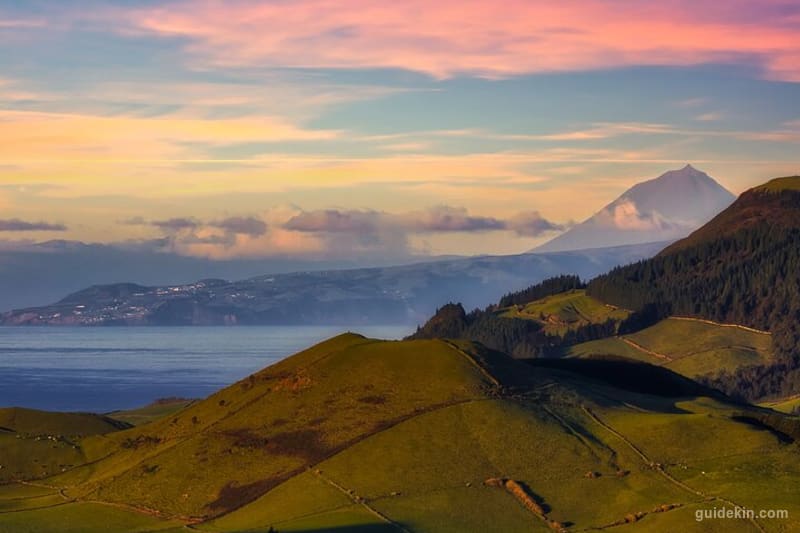
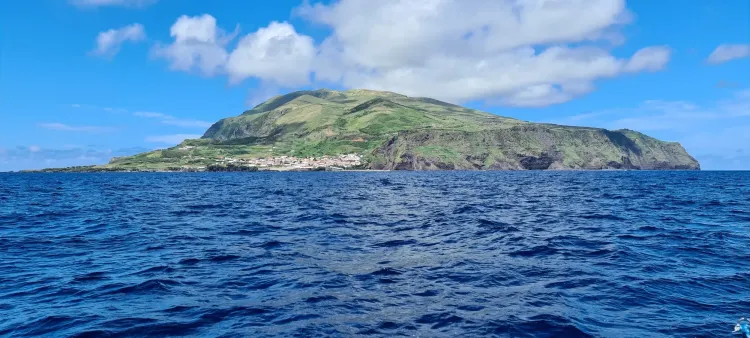
Nine volcanic islands in the middle of the Atlantic, roughly 1,500 kilometers west of Lisbon. That's the Azores. The archipelago sits on the junction of three tectonic plates, which explains the hot springs, the crater lakes, the black basalt coastline, and the fact that the landscape looks nothing like mainland Portugal.
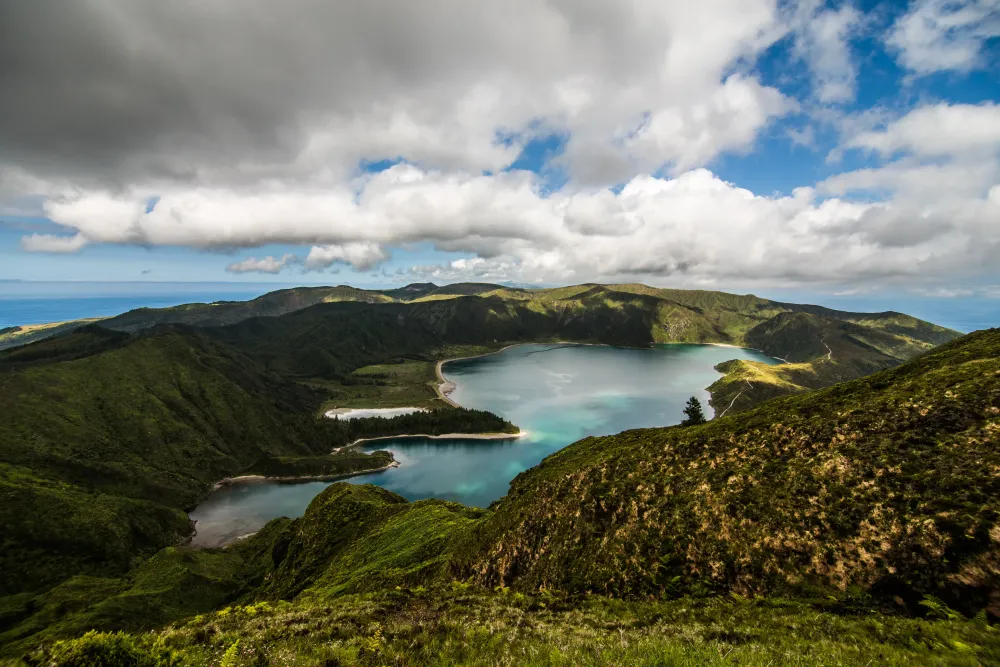
The numbers are striking. Sete Cidades, the twin lakes on Sao Miguel, fill a volcanic caldera four kilometers wide. One lake is blue, the other green. From the rim you can see both at once, separated by a narrow bridge. On Pico, the volcano rises to 2,351 meters, the highest point in all of Portugal. And in the surrounding waters, over 20 species of whales and dolphins pass through each year. Local operators report a 98% sighting success rate during peak season.
Yet the islands never feel crowded the way the Algarve or Lisbon do. Around 250,000 people live across all nine islands combined. Tourism is growing, but the infrastructure hasn't been overbuilt. You can hike for two hours on Flores and not see another person.
The Azores earned certification as the world's first archipelago designated a Sustainable Tourism Destination by EarthCheck. That label reflects something real. The islands run largely on geothermal and hydro energy. The dairy farms, tea plantations, and vineyards operate at small scale. The whale watching boats follow strict approach distances.
For travelers coming from Lisbon, the flight takes 2.5 hours. From Porto, about the same. Direct flights from Boston and New York bring you there in under five hours. It's closer than most people assume.
If your Portugal itinerary has room for one more destination, make it this one. The Azores deliver something no other European destination quite matches: volcanic drama, Atlantic wildness, and a pace of life that hasn't caught up to mass tourism. Not yet, anyway.
When to Visit: A Month-by-Month Breakdown
Azorean weather has a reputation. "Four seasons in one day" is what locals say, and they mean it. A clear morning can turn to rain by noon and back to sunshine by 3 PM. Pack layers no matter when you go.
That said, the seasons do matter for planning.
High season (June - September): Temperatures sit between 20-26°C. Rain is least frequent. The ocean warms up enough for swimming (20-23°C). This is when most tourists come, and when prices peak. Book flights and rental cars at least two months ahead for July and August.
Shoulder season (April - May, October): The Guidekin team's pick. Fewer visitors, green landscapes at their most vivid (especially April after winter rains), and prices drop 20-30%. Hydrangeas bloom across every island from June into August, but May catches the early flowers without the summer crowds.
Off-season (November - March): Here's the part most guides skip. Winter in the Azores isn't cold. Temperatures rarely drop below 13°C. Rain is more frequent, yes. But the whale watching is excellent (sperm whales are present year-round, and blue whales pass through February to May). Hotel rates fall by 30-50%. And the thermal pools at Furnas feel even better when the air is cool.
| Month | Avg Temp | Rain Days | Ocean Temp | Crowds | Best For |
|---|---|---|---|---|---|
| Jan | 14°C | 16 | 17°C | Very low | Thermal pools, low prices |
| Feb | 14°C | 14 | 16°C | Very low | Early whale season (blue whales arrive) |
| Mar | 15°C | 14 | 16°C | Low | Blue whales, hiking in green hills |
| Apr | 16°C | 12 | 17°C | Moderate | Wildflowers, shoulder pricing |
| May | 17°C | 10 | 18°C | Moderate | Hydrangeas starting, great hiking weather |
| Jun | 20°C | 8 | 20°C | High | Swimming season begins, festivals |
| Jul | 23°C | 5 | 22°C | Peak | Beach weather, Sanjoaninas festival (Terceira) |
| Aug | 24°C | 6 | 23°C | Peak | Warmest ocean, Mare de Agosto festival (Santa Maria) |
| Sep | 22°C | 9 | 22°C | High | Warm water, fewer families (school starts) |
| Oct | 19°C | 13 | 20°C | Moderate | Wine harvest on Pico, autumn colors |
| Nov | 17°C | 15 | 19°C | Low | Storm watching, low prices return |
| Dec | 15°C | 16 | 18°C | Very low | Christmas traditions, thermal pools |
The Holy Ghost Festivals (Festas do Espirito Santo) run from May through September across all islands. These are the most important cultural events in the Azores, with processions, communal meals, and decorated impérios (small chapels) in every village. If you want to experience local culture, time your visit to catch one.
How to Get There
The Azores have four airports, but two handle most international traffic: Joao Paulo II Airport (PDL) on Sao Miguel and Lajes Airport (TER) on Terceira.
From mainland Portugal: SATA Azores Airlines and Ryanair both fly from Lisbon. TAP also operates the route. From Porto, SATA and Ryanair have direct flights. Budget fares start around €50 one-way if you book early.
From Europe: Ryanair connects the Azores to several European cities including London Stansted, Frankfurt, and Paris Beauvais. SATA flies from Amsterdam, Frankfurt, and other hubs. The route network keeps expanding each year.
From North America: Azores Airlines flies direct from Boston (4 hours), New York JFK (5 hours), and Toronto (4.5 hours). These routes operate year-round, with more frequency in summer. The Azores sit roughly halfway between Europe and North America, which makes them a natural stopover.
| Route | Airlines | Flight Time | Price From (one-way) |
|---|---|---|---|
| Lisbon → Sao Miguel | SATA, Ryanair, TAP | 2h 30min | €50 |
| Porto → Sao Miguel | SATA, Ryanair | 2h 20min | €45 |
| London → Sao Miguel | Ryanair | 4h | €60 |
| Boston → Sao Miguel | Azores Airlines | 4h | $250 |
| New York → Sao Miguel | Azores Airlines | 5h | $300 |
| Toronto → Sao Miguel | Azores Airlines | 4h 30min | CAD 350 |
| Lisbon → Terceira | SATA, Ryanair | 2h 25min | €55 |
If you're flying in from Lisbon, consider spending a day or two in the capital before heading to the Azores. The contrast between the two is part of the experience - Lisbon's tiled streets and tram bells, then the volcanic quiet of Sao Miguel.
Tip: Prices spike in July and August. If you can fly mid-week in June or September, you'll often save 40% compared to peak weekends.
The Nine Islands: Which One Is Right for You?
This is the question every first-time visitor asks. The honest answer: most people should start with Sao Miguel. It has the widest range of things to see, the best transport connections, and the most developed tourist infrastructure. But each island has a distinct personality, and what works depends on what you want from your trip.
The nine islands divide into three groups. The Eastern Group (Sao Miguel, Santa Maria), the Central Group (Terceira, Faial, Pico, Sao Jorge, Graciosa), and the Western Group (Flores, Corvo).
Sao Miguel - The Green Island
The largest island and the starting point for most visitors. Sete Cidades and its twin-colored lakes are the postcard shot, but there's much more. Furnas Valley with its hot springs, bubbling mud pools, and volcanic cooking pits. The tea plantation at Gorreana, operating since 1883, the only one in Europe. The coastal town of Mosteiros at sunset, with its sea stacks and tidal pools.
Population: 140,000. You won't feel isolated here. Good restaurants, reasonable nightlife in Ponta Delgada, and enough activities for a full week without repeating anything. We cover the island in detail in our complete Sao Miguel guide.
Terceira - History and Festivals
Angra do Heroismo, the island's main town, is a UNESCO World Heritage Site. The architecture tells a story of five centuries of Atlantic trade. But Terceira's real draw is cultural. The Sanjoaninas festival in June is one of the biggest in the Azores. The tourada a corda (rope bullfighting) tradition is unique to this island, with bulls running through village streets held by ropes instead of being fought in arenas.
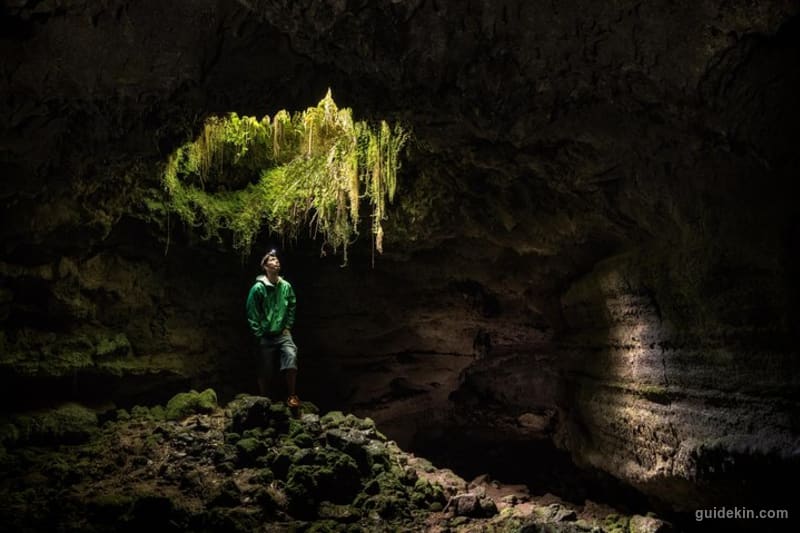
Less visited than Sao Miguel, but with its own airport and good car rental options. The lava caves at Algar do Carvao are a highlight (note: closed until June 2026 for the new CAVE visitor center). We cover the island in full in our complete Terceira guide.
Pico - The Volcano and the Wine
Pico is dominated by Mount Pico, that 2,351-meter cone visible from neighboring islands on clear days. The summit hike takes 3-4 hours up and 2-3 down, and requires decent fitness plus an early start. On a clear day you can see five islands from the top.
At sea level, the UNESCO-listed vineyards of Pico's coast are extraordinary. Vines grow in corrals of black basalt stone walls called currais, built to protect the grapes from Atlantic wind and salt spray. The resulting white wine (Verdelho) has a mineral character you won't find anywhere else. We cover the island in full in our complete Pico guide.
Faial - The Marina of the Atlantic
Faial is small but has outsized significance. Horta's marina has been the mid-Atlantic crossroads for sailors since the 1800s. Peter Cafe Sport, the legendary sailor bar on the waterfront, has served everyone from solo circumnavigators to research vessel crews. The Capelinhos volcano erupted in 1957-58, extending the island's western tip and leaving a lunar landscape you can still walk through today. Our complete Faial guide covers Horta, Capelinhos, and the Triangle strategy in detail.
Flores and Corvo - Wild and Remote
The Western Group is where the Azores get truly remote. Flores has waterfalls dropping off cliff edges directly into the ocean, seven volcanic crater lakes, and a UNESCO Biosphere Reserve covering the entire island. Our complete Flores guide covers logistics, waterfalls, and hiking. Corvo, the smallest island, has fewer than 500 residents, one village, and a volcanic crater that takes up half the island. In October, it becomes one of Europe's top birdwatching spots for American vagrant species. Our Corvo island guide covers the crater, transport from Flores, and whether to visit for a day or stay overnight.
Santa Maria, Graciosa, and Sao Jorge - Quick Notes
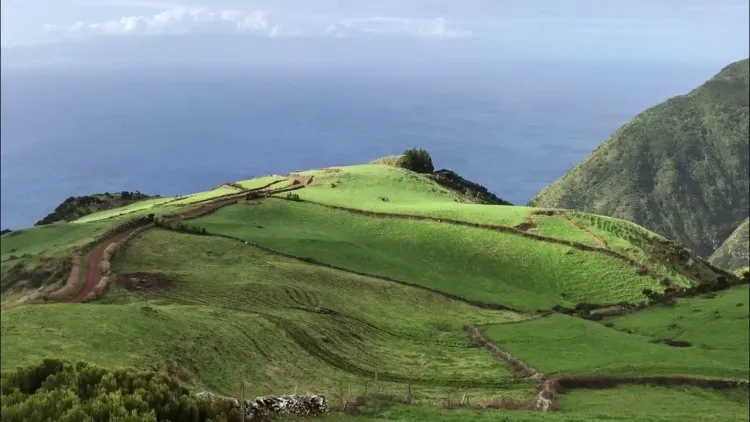
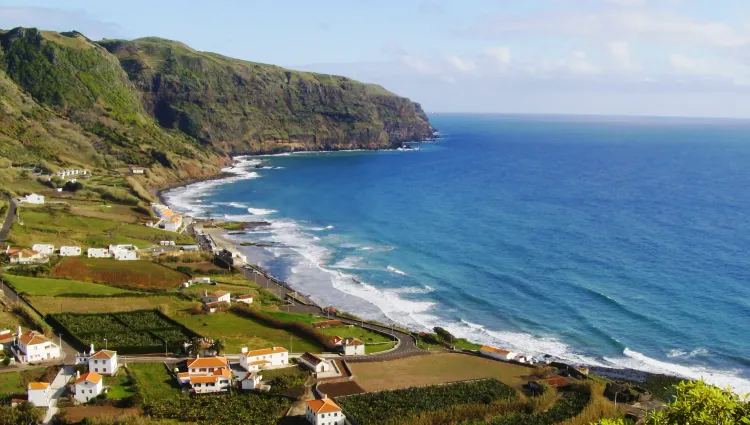
Santa Maria has the warmest and driest climate, plus some of the archipelago's only sandy beaches (most Azorean beaches are volcanic rock). Graciosa has underground caves and a quiet charm. Sao Jorge is famous for its fajas - flat coastal strips beneath towering cliffs - and for producing some of Portugal's best cheese.
| Island | Best For | Days Needed | Airport | Car Rental | Crowds |
|---|---|---|---|---|---|
| Sao Miguel | First-timers, variety | 3-5 | Yes (PDL) | Essential | Moderate-High |
| Terceira | History, culture, festivals | 2-3 | Yes (TER) | Essential | Moderate |
| Pico | Volcano hiking, wine | 2-3 | Yes (PIX) | Essential | Low |
| Faial | Sailing culture, geology | 1-2 | Yes (HOR) | Recommended | Low |
| Flores | Wilderness, waterfalls | 2-3 | Yes (FLW) | Essential | Very low |
| Corvo | Total isolation | 1 | Yes (CVU) | Not needed | Almost none |
| Santa Maria | Beaches, sunshine | 1-2 | Yes (SMA) | Recommended | Low |
| Graciosa | Caves, quiet escape | 1-2 | Yes (GRW) | Recommended | Very low |
| Sao Jorge | Hiking, cheese, fajas | 2-3 | Yes (SJZ) | Essential | Low |
How Many Days Do You Need?
3 days: Enough for Sao Miguel's highlights. Sete Cidades, Furnas, Gorreana tea plantation, a whale watching trip, and a couple of meals in Ponta Delgada. It's tight but doable.
5-7 days: The sweet spot for a first visit. Spend 3-4 days on Sao Miguel, then fly to Terceira or Pico for the rest. This gives you two distinct island experiences without feeling rushed.
10-14 days: Now you can island-hop properly. Sao Miguel (4 days), Terceira (2 days), Faial (2 days), Pico (2 days), and maybe squeeze in Flores if weather cooperates. This is the trip that converts people from visitors into repeat visitors.
2+ weeks: Add Sao Jorge for the hiking and cheese, Santa Maria for the beaches, and slow down the pace. Some travelers spend a month cycling through the islands. The Azores reward patience.
One thing to note: inter-island travel depends on weather. Flights and ferries get canceled when conditions are rough, especially in the Western Group. Build buffer days into any multi-island itinerary. Trying to visit four islands in five days is a recipe for stress.
Getting Around: Cars, Ferries, and Inter-Island Flights
Rental Cars
Short answer: yes, you need one. On every island you visit.
Public buses on Sao Miguel run a few routes, but they're designed for commuters, not tourists. The best viewpoints, hiking trailheads, and thermal pools sit at the end of narrow mountain roads that no bus reaches. On smaller islands, public transport is even more limited.
Rental prices vary by season. Expect €30-45 per day in summer on Sao Miguel, less on smaller islands. Book ahead for July and August, when cars genuinely sell out. The roads are good, well-maintained, and mostly two-lane. Driving is on the right. An EU or international license works fine.
"Book your car the moment you book your flights, especially for summer. Sao Miguel has a limited fleet and late bookers end up paying double or taking whatever's left. Smaller islands like Flores may have only a handful of vehicles available on any given day." - Guidekin team
Inter-Island Flights
SATA Air Acores operates small prop planes between the islands. Flights are short (20-45 minutes) and relatively affordable (€60-120 one-way). The schedule changes seasonally. Between the Central Group islands, flights are frequent. To Flores and Corvo, less so.
Ferries
Atlanticoline runs ferry routes, mainly within the Central Group (Faial-Pico-Sao Jorge triangle). The Faial-to-Pico crossing is just 30 minutes and runs multiple times daily. Longer routes connect to Terceira and Graciosa.
Ferry service to the Western Group (Flores, Corvo) operates only in summer and depends heavily on sea conditions. Don't build a tight itinerary around ferry connections. Flights are more reliable.
Within Islands
Taxis exist but add up fast. Uber operates on Sao Miguel only. For day trips or if you'd rather not drive, guided tours handle all the logistics. Useful for whale watching, volcano hikes on Pico (where parking at the trailhead is limited), and full-day island circuits.
Top Things to Do in the Azores
Whale Watching and Dolphins
Twenty-four species of cetaceans visit Azorean waters. Sperm whales are resident year-round. Blue whales, the largest animals on the planet, pass through from February to May. Bottlenose dolphins, common dolphins, and Risso's dolphins show up regularly.
Most tours depart from Ponta Delgada (Sao Miguel), Lajes do Pico, or Horta (Faial). A half-day trip costs €55-75 per person. The sighting success rate sits around 98% in peak season (April-October). That's not a marketing number. The Azores' position in deep Atlantic water means you don't need to travel far from shore to reach the whales' habitat.
The whale watching industry here grew directly from the old whaling tradition. The last whale was hunted in the Azores in 1987. Many of today's spotters use the same clifftop vigias (lookout towers) that whalers used, now scanning the ocean for blows and breaches instead of harpoon targets.
Hiking
The Azores have over 80 official hiking trails across the archipelago. Some highlights:
- Sete Cidades (Sao Miguel): The rim walk around the crater lakes. 12 km, 3-4 hours, moderate. The views are exactly as good as the photos suggest.
- Faja de Santo Cristo (Sao Jorge): Descend from the cliff tops to a remote coastal strip accessible only on foot or by boat. 10 km round trip. Bring lunch.
- Mount Pico (Pico): The summit hike. 7 km round trip, 5-7 hours, strenuous. Requires registration and a GPS tracker (provided). Start before dawn for the best chance of clear skies.
- Caldeira do Santo Cristo to Faja dos Cubres (Sao Jorge): 10 km coastal trail with swimming lagoons at both ends.
- Poco Ribeira do Ferreiro (Flores): Short walk to a waterfall pool surrounded by vertical green cliffs. Easy, 30 minutes.
Hot Springs and Thermal Pools
Volcanic heat means free hot water. The best spots:
- Furnas (Sao Miguel): Terra Nostra park has a large thermal pool (35-40°C) surrounded by botanical gardens. Entry €10. The water is iron-rich and will turn your swimsuit orange. Bring an old one.
- Dona Beija (Sao Miguel): More intimate pools tucked into a fern-covered ravine. Open until 11 PM. Entry €8.
- Ferraria (Sao Miguel): A natural ocean pool where hot springs mix with Atlantic waves. Free. The temperature depends on the tide.
- Caldeira Velha (Sao Miguel): Warm waterfall in a forest setting. Entry €8. Arrive early to avoid crowds.
Diving and Snorkeling
The water clarity in the Azores is remarkable, often 30+ meters visibility. The Formigas Islets, a submerged volcanic ridge between Sao Miguel and Santa Maria, attract manta rays, mobula rays, and large schools of pelagic fish. Princess Alice Bank, an underwater seamount, is one of the few places in the Atlantic where you can dive with blue sharks and mako sharks in open water.
Dive centers operate on Sao Miguel, Faial, Pico, and Santa Maria. Expect €60-80 per dive with equipment.
Canyoning and Adventure Sports
Sao Miguel has several canyoning routes through narrow volcanic gorges with waterfalls, natural slides, and rappelling sections. Prices run €50-70 per person for a half-day trip. Coasteering (cliff jumping, swimming through sea caves) is available on multiple islands.
What to Eat: Azorean Food Worth the Trip
The Azores don't have a Michelin-star dining scene. What they have is better for most travelers: honest food made from ingredients that don't travel far.
Cozido das Furnas is the dish everyone talks about, and rightfully so. Pots of meat, sausage, cabbage, potatoes, and root vegetables are buried in the ground near the volcanic fumaroles of Furnas. The earth cooks everything slowly over 5-6 hours. Several restaurants around Furnas Lake serve it, typically for lunch. Order a day ahead. Budget €15-20 per portion.
Sao Jorge cheese is hard, peppery, and aged for months. The island's cows graze on cliffs overlooking the Atlantic, and the cheese tastes like it. Buy a wheel at the cooperative factory in Beira and bring it home.
Pico wine comes from vines grown inside UNESCO-protected basalt corrals. The Verdelho grape produces a dry white with volcanic mineral notes. Cooperativa Vitivinicola on Pico Island offers tastings for €5-10.
Gorreana tea plantation on Sao Miguel has been growing green and black tea since 1883. It's the only commercial tea operation in Europe. The factory tour is free, and you can walk the rows of tea plants overlooking the ocean.
Ananases dos Acores - Sao Miguel grows pineapples in glass greenhouses, a tradition that started in the 1800s. They're smaller and sweeter than tropical pineapples, with an intense flavor. Buy them at any local market.
"Try the lapas (grilled limpets) at any seaside restaurant. They come sizzling in garlic butter, and they taste like the sea concentrated into one bite. Pair with a cold Especial beer or Pico Verdelho. The Guidekin team considers this the single best casual meal in the Azores." - Guidekin team
Other dishes to look for: alcatra (slow-braised beef in a clay pot, a Terceira specialty), morcela doce (sweet blood sausage, surprisingly good), and bolo levedo (a slightly sweet bread from Furnas, served warm).
Budget and Costs
The Azores sit in a middle ground. Cheaper than Iceland or Switzerland. More expensive than mainland Portugal's interior. Roughly comparable to the Algarve in high season.
Here's what to expect per person per day, in euros:
| Category | Budget | Mid-Range | Comfort |
|---|---|---|---|
| Accommodation | €30-50 (hostel / basic guesthouse) | €60-100 (hotel / nice Airbnb) | €120-200 (boutique hotel / luxury) |
| Food | €15-25 (markets + cheap eats) | €30-50 (restaurants) | €50-80 (fine dining) |
| Car rental | €25-35 (shared) | €35-45 | €45-70 (SUV / premium) |
| Activities | €20-40 | €50-80 | €80-150 |
| Daily total | €90-150 | €175-275 | €295-500 |
Flights from Lisbon: €100-180 return in shoulder season, €150-300 in summer.
Car rental tips: Rent from local companies (Autatlantis, Ilha Verde) for better rates than international brands. Book online, pick up at the airport. Insurance is mandatory; the CDW excess is typically €1,000-1,500. Consider buying the full coverage (€8-12/day extra) since island roads are narrow and parking in old towns is tight.
Free things: Many of the best experiences cost nothing. Hiking trails, natural swimming pools (Ferraria, Biscoitos on Terceira), viewpoints, and village festivals are all free. The tea plantation tour at Gorreana costs nothing. Church festivals often include free communal meals.
Saving money: Travel in April-May or October. Eat the daily menu (prato do dia) at local restaurants for €8-12 including soup and dessert. Fill your water bottle from the tap. It's safe and good across all islands.
Practical Tips
- Layers, always. The weather changes fast. A sunny morning can turn to sideways rain in 30 minutes. Bring a waterproof jacket even in August.
- Book cars and whale watching early. In July-August, both sell out weeks ahead on Sao Miguel. Other islands are less pressured but still book ahead for peak season.
- Cash matters in small villages. Ponta Delgada and Angra do Heroismo have plenty of card machines. But small cafes, roadside fruit stands, and rural restaurants on the smaller islands may be cash-only. ATMs (Multibanco) are easy to find in main towns.
- The Azores use Type F power outlets (same as mainland Portugal and most of Europe). Voltage is 230V. US/UK travelers need an adapter.
- Mobile coverage is good on main islands. 4G works in most populated areas of Sao Miguel and Terceira. Expect dead zones on mountain roads and remote trails, especially on Flores and Corvo. Download offline maps.
- The tap water is safe to drink on all islands. It comes from natural springs. Bring a reusable bottle.
- Learn three Portuguese phrases. "Bom dia" (good morning), "obrigado/obrigada" (thank you), and "a conta, por favor" (the bill, please). English is spoken in tourist areas, less so in rural villages. Basic Portuguese goes a long way.
- Wear proper hiking shoes. Many trails cross wet volcanic rock, which gets slippery. Trainers won't cut it on the mountain paths.
- Don't plan too tightly. Inter-island flights and ferries cancel in bad weather. Always have a backup plan and buffer days between islands.
- Travel insurance is a good idea. Not because the Azores are dangerous (they're among the safest destinations in Europe). But because weather cancellations can disrupt multi-island itineraries, and the nearest major hospital is in Ponta Delgada.
If you're combining the Azores with time on the mainland, our Sintra day trip guide covers one of the best excursions from Lisbon, perfect for the day before you fly out to the islands.
FAQ
Are the Azores expensive?
Not by European island standards. A mid-range trip costs €175-275 per person per day including accommodation, car, food, and activities. That's less than the Canary Islands at similar hotel levels, and significantly less than Iceland or the Greek islands in peak season. Eating at local restaurants (prato do dia for €8-12) and hiking instead of booking tours every day keeps costs down.
Is one week enough for the Azores?
For a first visit, yes. A week gives you 4 days on Sao Miguel and 2-3 days on a second island (Terceira or Pico work well). You'll see the highlights without rushing. If you want to visit three or more islands, plan for 10-14 days.
Azores vs. Madeira: which is better?
Different experiences. Madeira is one island, more developed, with a warmer and drier climate. It's better for levada hiking, luxury resorts, and a single-base trip. The Azores are nine islands, wilder, more varied, and better for whale watching, volcanic landscapes, and island-hopping adventures. Madeira is easier to plan. The Azores reward more effort with more surprises.
Do I need a car in the Azores?
On Sao Miguel and Terceira, strongly yes. The best viewpoints, trailheads, and thermal pools are scattered across the islands with minimal public transport connecting them. Taxis work for single trips but cost more over a full day. On Corvo (the smallest island), you can walk everywhere. On all other islands, a car makes the difference between seeing the highlights and missing half of them.
Are the Azores safe?
Very. Crime rates are extremely low across all islands. Solo travelers, including women, report feeling safe at all hours. The main safety considerations are natural: watch your footing on wet volcanic rock while hiking, respect the ocean (waves and currents can be strong), and check weather forecasts before mountain hikes. No dangerous land animals. No poisonous snakes or spiders.
What language do they speak in the Azores?
Portuguese. The Azorean dialect has some distinct pronunciation and vocabulary compared to mainland Portuguese, but it's the same language. English is spoken in hotels, tourist restaurants, and tour companies, especially on Sao Miguel and Terceira. In rural areas and smaller islands, English is less common. A translation app helps. Learning basic Portuguese phrases earns genuine warmth from locals.
Start Planning Your Azores Trip
The Azores don't try to impress you the way a resort island does. There are no manicured beaches, no infinity pools overlooking the sea, no tourist strips with cocktail bars. What you get instead is a landscape that feels genuinely alive. Volcanic craters with lakes inside them. Whales surfacing off the coast. Hot springs bubbling through forest floors. And food that tastes like the ground it grew in, because it's volcanic, mineral-rich soil that you can feel in every bite.
Start with Sao Miguel. Give yourself at least three or four days. If you have longer, add Pico for the volcano and wine, or Terceira for the history and festivals. And build in space for weather delays. They're part of the experience, not a flaw.
Browse all available tours in the Azores to see what's running during your dates. Some experiences, like the Pico summit hike and small-group whale watching trips, book up in advance. Others you can arrange the day before.
The Azores are still at that point where the word hasn't fully gotten out. That's changing, year by year. Going now means going before the change.