Key Takeaways
- Corvo is the smallest island in the Azores and the smallest municipality in Portugal. 17.1 square kilometers, one village, around 430 residents. Everything here is the least, the last, the smallest. That's the appeal. Why Corvo →
- The Caldeirão crater is the main event. A volcanic caldera 300 meters deep and 2 kilometers across, with two small lakes at the bottom. You can reach the rim by taxi in 15 minutes from the village. Crater details →
- Getting here requires Flores first. No direct flights from mainland Portugal. You fly to Flores, then take a 45-minute boat or a 10-minute SATA flight. Weather cancellations are normal. Plan around them. How to get there →
- October turns Corvo into Europe's top vagrant birdwatching spot. American birds blown across the Atlantic land here before anywhere else in Europe. In 2023, birders recorded 53 Nearctic vagrant species in a single season. Birdwatching →
- Most visitors come for a half-day trip. Staying overnight is a different experience. A day trip covers the crater and the village. An overnight stay gives you sunset, silence, and the sense of living at the edge of the map. Day trip vs overnight →
- Bring cash, food, and low expectations for connectivity. One ATM that sometimes runs out. No rental cars. Limited phone signal. Two or three places to eat. Corvo runs on its own schedule. Practical tips →
Why Corvo: The Smallest Island in the Azores
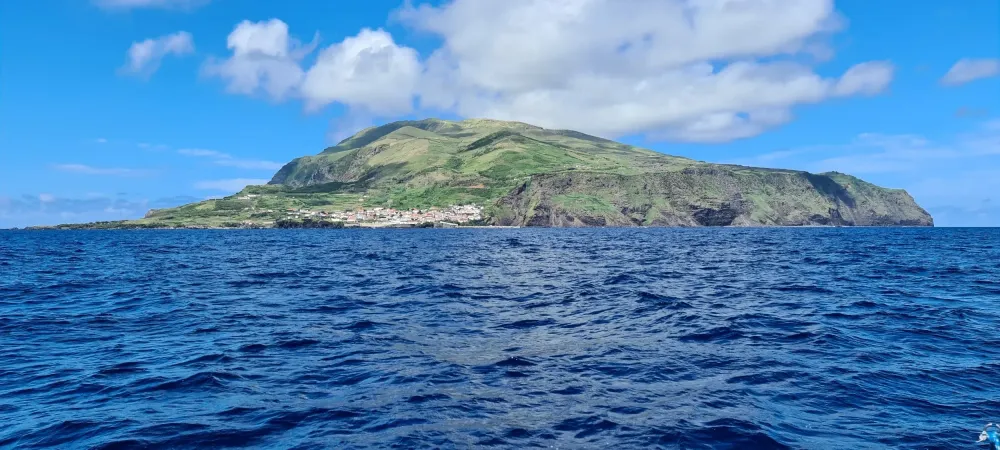
Corvo sits 18 kilometers north of Flores, at the far northwestern edge of the Azores. It measures 6.5 km long and 4 km wide. The population of about 430 makes it the smallest municipality in all of Portugal. There are no traffic lights, no chain stores, no hotels in the traditional sense, and no rental cars.
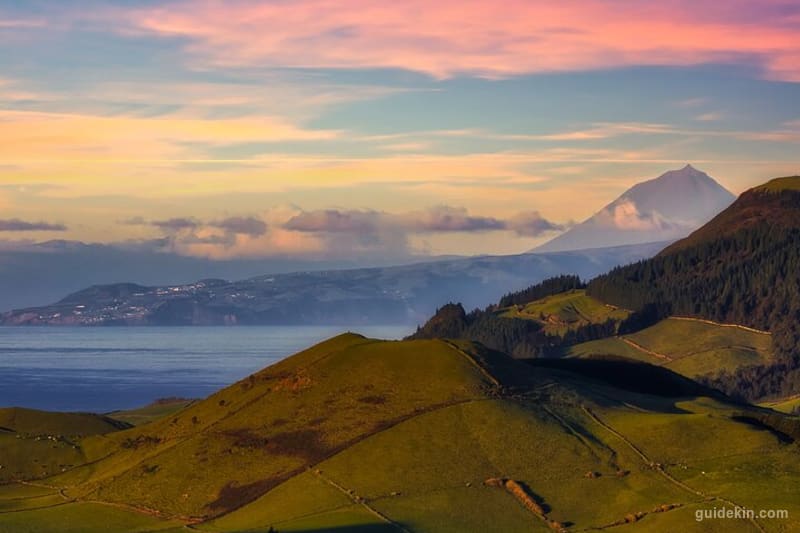
The island is a single volcanic cone. The northern half is dominated by the Caldeirão crater. The southern half slopes gently down to Vila do Corvo, the only settlement. One main road, a handful of secondary lanes, and that's it.
The numbers tell a story of departure. In the 19th century, over 1,000 people lived here. The same emigration waves that emptied Flores hit Corvo harder. Families left for New England, mostly New Bedford and Providence, looking for work in textile mills and fishing fleets. The population dropped below 400 in the 1990s before stabilizing slightly. Today, the school has fewer than 30 students. Every summer, descendants of Corvo emigrants return for festivals, briefly doubling the island's population.
UNESCO designated Corvo a Biosphere Reserve in 2007, covering the entire island and the surrounding marine area, including the rocky Ilhéus do Corvo off the south coast. Where Faial in the Central Group has the busy marina at Horta and a string of restaurants, Corvo has a single village with two functioning cafes. The designation recognizes both the ecological value and the simple reality that modern development barely reached this island.
What does that mean for a visitor? The grocery store stocks what the supply boat brings. The bakery opens when it opens. Conversations happen in the street because there's no other way to pass the time. For some travelers, that's deeply appealing. For others, six hours is plenty.
How to Get There
Corvo has no direct connection to mainland Portugal. The standard route runs through Flores, which itself requires a connection through Ponta Delgada (Sao Miguel) or Terceira.
By boat from Flores. This is the most common option. Tour operators in Santa Cruz das Flores run half-day boat trips to Corvo for around €55-65 per person. The boat takes roughly 45 minutes, departing around 9 AM and returning by 3-4 PM. The trip usually includes the passage along the Flores coastline with views of sea caves and waterfalls, plus a taxi to the Caldeirão crater and free time in the village.
The Transmaçor ferry also connects Flores and Corvo, running about twice weekly for roughly €10-12 one-way. Schedules change every two months. Cancellations for weather are frequent, particularly outside summer.
By air. SATA Air Açores flies between Flores and Corvo. The flight takes about 10 minutes. One-way tickets cost around €55-65. Schedules are limited, sometimes just a few flights per week, and weather cancellations are common. The Corvo airstrip is short, exposed to crosswinds, and often foggy.
| Route | Method | Time | Approx. Cost |
|---|---|---|---|
| Flores → Corvo | Tour boat | 45 min | €55-65/person (half-day tour) |
| Flores → Corvo | Ferry (Transmaçor) | ~45 min | €10-12 one-way |
| Flores → Corvo | SATA flight | 10 min | €55-65 one-way |
Weather is the variable. Rough seas cancel boats. Fog and wind cancel flights. In July and August, cancellation rates are lower but not zero. In October and November, plan for the possibility of being stuck an extra day on either side of the crossing. If you're making a day trip, confirm with your operator on the morning of departure.
"Always have a Plan B for Corvo. If your boat gets cancelled, you still have a full day on Flores. If you're staying overnight and the return gets delayed, you get a day of unexpected quiet. Either way, you're fine. The Azores reward flexibility." - Guidekin team
From other Azores islands. There's no direct connection from Sao Miguel, Terceira, Faial, or any other island to Corvo. Everything routes through Flores first, which is part of why Corvo stays so quiet.
Caldeirão: The Volcanic Crater
The Caldeirão is why most people come to Corvo. A volcanic caldera roughly 2 kilometers in diameter and 300 meters deep, occupying the entire northern half of the island. Two small lakes sit at the bottom. Patches of bright green vegetation stripe the inner slopes. On a clear day, the view from the rim is startling in its scale.
Getting to the rim. From Vila do Corvo, a road climbs about 5 kilometers to the Caldeirão viewpoint. Most visitors take a taxi, which costs €5-10 each way or comes included in the day-tour package from Flores. The drive takes about 15 minutes. You can also walk, but the road is steep and exposed, and the round trip takes 2-3 hours on foot.
Descending into the crater. A trail leads from the rim down to the lakes at the bottom. The descent takes 30-45 minutes. The path is steep, uneven, and slippery after rain. Proper hiking shoes are not optional here. At the bottom, the crater feels enclosed and eerily quiet. The lakes are shallow and not for swimming, but the perspective looking up at the walls from the caldera floor is worth the effort of getting down.
| Trail | Distance | Time | Difficulty | Notes |
|---|---|---|---|---|
| Road to crater rim (by foot) | 5 km one way | 1-1.5h up | Moderate | Steep paved road, no shade |
| Crater rim circuit (PRC01COR) | ~4 km | 1.5-2h | Moderate | Best panoramic views, uneven terrain |
| Descent to crater lakes | ~1.5 km one way | 30-45 min down | Hard | Steep, slippery when wet, harder going back up |
| Vila coastal walk | ~3 km | 1h | Easy | South coast, flat, harbor views |
The view from above. On clear days, Flores is visible to the south, and the ocean stretches out in every direction without interruption. On cloudy days, and there are plenty, the crater fills with fog and you see grey. That's the risk. The payoff on a clear morning is a view that makes the logistics of reaching Corvo feel trivial.
The crater looks different at every hour. Morning fog burns off to reveal sharp edges and deep green. Midday sun flattens the colors. Late afternoon light turns the inner walls golden. If you're staying overnight, visit the rim twice.
Vila do Corvo: The Only Village
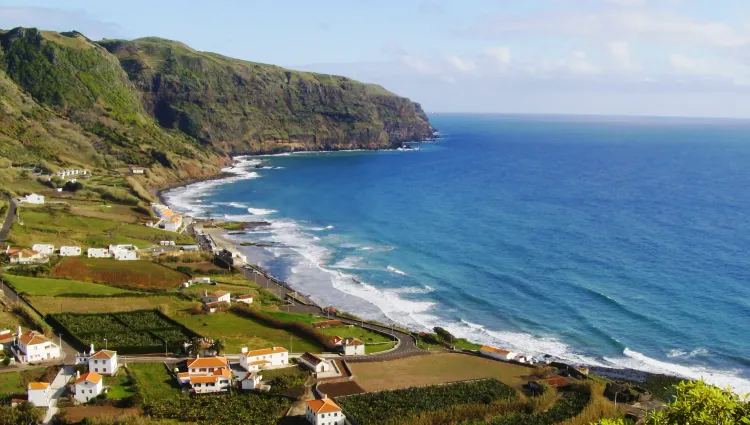
Vila do Corvo (formally Vila Nova do Corvo) sits on the island's southern tip, the only part flat enough for buildings and a harbor. Around 430 people live here in stone and plaster houses arranged along narrow lanes. The village has a church (Igreja de Nossa Senhora dos Milagres, dating to the 1500s), a small environmental interpretation center, a health post, one school, a handful of bars and restaurants, and a tiny harbor where the Flores boats dock.
Walking the village takes about an hour if you stop to look at things. The houses are traditional Azorean, some freshly painted, others weathered and leaning. Cats outnumber tourists on any given day.
The environmental center (Casa do Ambiente) has exhibits on the island's ecology, birdlife, and volcanic geology. Small but worth 30 minutes, and free to enter.
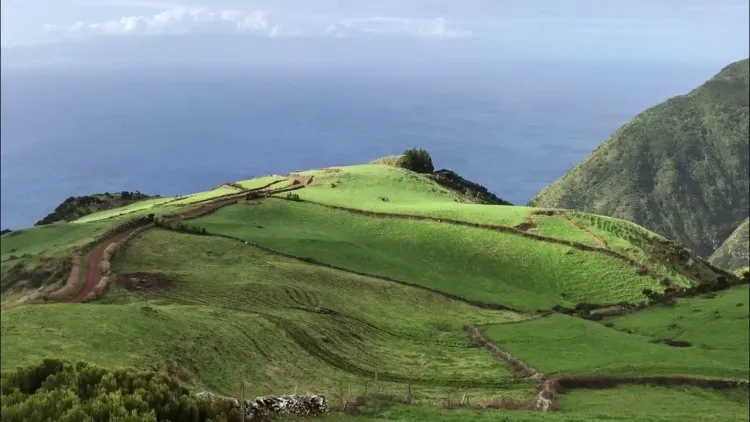
A local detail that visitors notice from above. Corvo's traditional land division system, the "Baldios," dates back centuries. Common pastureland around the village was divided by stone walls into narrow strips assigned to each family. Seen from the crater rim or from the air, the pattern looks like a green patchwork quilt draped over the hillside. This system of communal agriculture persisted well into the modern era, long after the rest of Europe moved on.
The village's most visible modern addition is the wind turbine on the hillside above Vila do Corvo. It generates a portion of the island's electricity, with the rest coming from a diesel generator. The turbine is a constant visual marker from almost anywhere on the island, a reminder that even Corvo is slowly changing.
After the day-trip boat leaves around 3 PM, the village returns to itself. The visitors are gone, the handful of restaurants prepare for a quiet dinner service, and the lanes empty out. This is when Corvo feels most like Corvo.
Birdwatching on Corvo
This section matters deeply to a specific audience, and that audience crosses oceans for it.
Corvo sits on the North American tectonic plate, roughly 1,900 kilometers from the nearest point in North America and 1,700 kilometers from mainland Europe. When autumn storms push across the Atlantic in October, North American birds get caught in the weather systems and carried east. Corvo is the first landfall they find. It's small, isolated, and sits right in the path of the prevailing winds.
The result is one of Europe's most productive sites for Nearctic vagrant species. Birds that have no business being in Europe show up on Corvo regularly in autumn. Buff-breasted Sandpipers, American Golden Plovers, Yellow-billed Cuckoos, Philadelphia Vireos, Blackpoll Warblers, Red-eyed Vireos, and dozens of other American species have been recorded here.
The October phenomenon. October is peak season. In strong years, birders on Corvo record over 50 Nearctic vagrant species in a single month. The 2023 season was exceptional, with 53 American vagrant species documented on this 17-square-kilometer island. That number exceeds what most European countries record in an entire year. Birders from the UK, the Netherlands, Sweden, and Portugal itself fly in specifically for "Corvo October."
Where to watch. The island is small enough that every key spot is walkable from the village. The agricultural fields and garden walls around Vila do Corvo attract passerines and waders. The Caldeirão rim provides views of seabirds on the approach. The coastline near the harbor draws shorebirds. The community water reservoir at Ribeira da Ponte is another reliable hotspot. No car needed. A scope, patience, and waterproof boots are the essentials.
The birding community. During October, the island's population increases by 30-50 birders who stay for one to three weeks. They share sightings in real time, scan fields with scopes from dawn, and post records to eBird and birding forums each evening. The atmosphere is focused and collaborative. Some accommodation providers on Corvo now adjust their availability specifically for birding season, knowing that October is their busiest month.
"October on Corvo is not a casual birdwatching trip. It's targeted, weather-dependent, and sometimes frustrating when the winds don't cooperate. But when a Philadelphia Vireo appears on a garden wall 3 meters away from you, nothing else in European birding comes close." - Guidekin team
Outside October, Corvo still offers good birding. Resident species, breeding Cory's Shearwaters offshore from spring through autumn, and the occasional spring or winter vagrant keep things interesting year-round. But October is the reason birders put Corvo on the map.
Where to Stay and Eat
Corvo has no hotels. Accommodation consists of a few local guesthouses (residenciais), private rooms, and the occasional Airbnb listing. Everything is in Vila do Corvo because there is nowhere else.
Residencial Comodoro is the most established option. Simple rooms, shared or private bathrooms, breakfast sometimes included. Expect to pay €35-60 per night depending on season and room type. Book ahead for October (birding season) and July-August.
A handful of other local properties rent rooms or small apartments. Check Booking.com and Airbnb, but don't expect much choice. In total, Corvo has fewer than 40 tourist beds on the entire island.
Eating options are minimal but honest. Two or three restaurants serve lunch and sometimes dinner. A Caldeira, near the harbor, is the default for day-trip visitors. Grilled fish, caldeirada (fish stew), soup, and simple desserts. Portions are generous. Expect to pay €10-15 for a full meal.
Fresh fish dominates every menu because that's what's available. The fish was caught hours before it reaches your plate, sometimes by the person cooking it. If you want variety, Corvo is not the place. If you want freshness, it's hard to beat.
The grocery store (mini-mercado) carries basics: bread, milk, cheese, canned goods, some fruit and vegetables when the supply boat has come through recently. If you're staying multiple nights, bring supplementary food from Flores. Wine, coffee, snacks, and anything specific are better purchased before arrival.
Tap water on Corvo is safe to drink.
Day Trip vs Overnight Stay
Most visitors experience Corvo as a half-day trip from Flores. That works. You see the crater, walk the village, eat lunch, and take the boat back. Staying overnight gives you something the day trippers miss entirely.
| Factor | Day Trip | Overnight Stay |
|---|---|---|
| Time on island | 5-6 hours | 20+ hours |
| Crater visit | One visit, midday light | Multiple visits, different light |
| Village experience | Quick walk between boat and lunch | Evening quiet, morning routines |
| Sunset and sunrise | Miss both | Both available from the crater rim |
| Birdwatching | Minimal, midday only | Full dawn survey possible |
| Cost per person | €55-65 (boat tour) | €90-130 (transport + room + meals) |
| Weather risk | Low (one-day commitment) | Higher (return may be delayed) |
| Overall pace | Efficient | Unhurried |
The day trip is the right choice for most Flores visitors. The organized tours handle all logistics: boat, taxi to crater, free time in village, return. You see the highlights and get back to Flores by late afternoon. If your Flores itinerary is tight, this makes sense.
The overnight stay changes the experience fundamentally. After the day-trip boat leaves around 3 PM, the village empties of visitors. What remains is Corvo as it actually lives. Fewer than 500 people on 17 square kilometers of Atlantic rock. The silence at night is total. No car traffic, no nightlife, no ambient noise beyond wind and waves. Morning on Corvo, before any boat arrives, feels like standing at the edge of the inhabited world.
If birdwatching is your reason for visiting, overnight is mandatory. Dawn is when the best sightings happen, and there's no way to arrive from Flores early enough. Serious birders stay for a week or more.
When to Visit
Corvo's weather follows the same Atlantic patterns as Flores, with slightly more wind exposure due to its smaller size and lower profile. The highest point, Morro dos Homens, reaches 718 meters.
| Month | Avg Temp | Rain Days | Wind | Best For |
|---|---|---|---|---|
| Jan-Feb | 14°C | 16-17 | Strong | Solitude, storm watching |
| Mar-Apr | 15-16°C | 13-15 | Moderate | Green landscapes, whale season starts |
| May-Jun | 17-19°C | 9-11 | Light-moderate | Hiking, clearest crater views |
| Jul-Aug | 22-23°C | 6-7 | Light | Best weather, most boat services |
| Sep | 21°C | 10 | Light-moderate | Warm, quieter than August |
| Oct | 19°C | 14 | Variable | Birdwatching peak - Nearctic vagrants |
| Nov-Dec | 15-16°C | 16-17 | Strong | Deep off-season, rough seas |
July and August offer the most reliable weather and the most frequent boat services from Flores. Day trips are easiest to plan in these months. Accommodation books up well in advance.
October is birdwatching season. Weather is unpredictable. Strong Atlantic fronts bring the vagrant birds but also bring rough seas and flight cancellations. Birders budget extra days for weather delays and consider it part of the experience.
November through March is genuine off-season. Fewer boat services, more cancellations, shorter days. The island is at its most isolated and some accommodation closes for winter.
The Guidekin team recommends June or September for visitors who aren't coming for the birds. Reasonable weather, fewer crowds than peak summer, and a better chance of clear skies at the crater rim.
Budget and Costs
Corvo is not expensive by European standards, but options are limited. The total cost depends heavily on the format: a quick day trip from Flores or an overnight stay on the island.
| Category | Day Trip (from Flores) | Overnight (1 night) | Overnight (2 nights) |
|---|---|---|---|
| Transport | €55-65 (boat tour incl. taxi) | €10-24 (ferry + taxi) | €10-24 |
| Accommodation | - | €35-60 | €70-120 |
| Food | €10-15 (lunch) | €25-40 (lunch + dinner + breakfast) | €50-80 |
| Extras | €0-5 | €5-10 | €10-20 |
| Total per person | €65-85 | €75-134 | €140-244 |
The day trip is straightforward. The organized boat tour covers the crossing, crater taxi, and return. Lunch on Corvo is the only additional cost. This is the most popular and most budget-friendly approach.
Staying overnight adds accommodation and extra meals. If you take the Transmaçor ferry (€10-12 one-way) instead of the tour boat, transport costs drop significantly. The tradeoff is a less flexible schedule.
Free things on Corvo. Walking the village, the crater viewpoint (if you walk up instead of taking a taxi), the coastline, the environmental center, and the experience of standing on the smallest municipality in Portugal. The best things on Corvo don't require a ticket or a reservation.
Cash is essential. The single ATM in Vila do Corvo occasionally runs dry, especially after a wave of day-trip visitors withdrawing small amounts. Bring enough cash from Flores before crossing. Most restaurants and the grocery store accept cash only.
Practical Tips
- Bring cash from Flores. The ATM on Corvo is unreliable. Withdraw what you'll need in Santa Cruz das Flores before the boat.
- Pack food if staying overnight. The grocery store has basics but limited variety. Bring snacks, wine, coffee, and anything specific from Flores. The supply boat doesn't come every day.
- Wear proper shoes for the crater. The descent involves steep, slippery volcanic terrain. Waterproof hiking shoes with ankle support make a real difference. Sandals are for the village, not the trail.
- Check the weather the morning of your crossing. Confirm your boat or flight with the operator. Departures are not guaranteed, especially outside July and August.
- Phone signal is patchy. Coverage exists in and around the village but drops out on the road to the crater and along the coast. Download offline maps before arriving.
- There are no rental cars or scooters. The island is small enough to walk everywhere. Taxis cover the crater road. Some accommodation owners can arrange bicycle loans.
- Bring layers for the crater rim. The rim is exposed and significantly windier than the village below. A waterproof jacket and fleece fit in a daypack and prevent a miserable walk.
- Respect the quiet. Corvo has 430 permanent residents. You are a guest in their community. The village is not a scenic backdrop. It's where people live, raise children, and know each other by name.
Browse available tours in the Azores for whale watching, hiking, and guided experiences across the archipelago.
FAQ
Is Corvo island in the Azores worth visiting?
Yes, if you value remoteness and simplicity over activities and infrastructure. Corvo offers one of the most isolated inhabited places in Europe. The volcanic crater is impressive. The village is authentic. If you need restaurants, nightlife, or variety, Corvo will feel limiting. If "smallest municipality in Portugal" sounds like an invitation rather than a warning, go.
How do you get to Corvo from Flores?
The most common option is a half-day boat tour from Santa Cruz das Flores, costing €55-65 per person with a crater taxi included. The Transmaçor ferry runs roughly twice weekly for about €10-12 one-way. SATA Air Açores flies the route in about 10 minutes for €55-65 one-way. All options are weather-dependent. Confirm the morning of departure.
Can you stay overnight on Corvo?
Yes. Residencial Comodoro and a handful of private rentals offer rooms in Vila do Corvo. Total island capacity is fewer than 40 beds. Book ahead for July-August and October (birding season). Expect €35-60 per night for basic, clean accommodation.
Is Corvo good for birdwatching?
Corvo is one of Europe's premier sites for Nearctic vagrant species. October is peak season, when North American birds carried across the Atlantic by autumn storms make first landfall here. In record years, over 50 vagrant species from North America are documented. Birders from across Europe travel to Corvo specifically for this. Outside October, resident and marine species provide year-round interest, but October is the draw.
How much time do you need on Corvo?
A half-day trip (5-6 hours) from Flores covers the crater and village comfortably. That's enough for most visitors. One overnight night adds sunset, sunrise, and genuine solitude. Birders in October typically stay 5-14 days. For non-birders who want more than a quick visit, two nights is the sweet spot.
Start Planning Your Corvo Trip
Corvo is the island you add to an Azores itinerary as an afterthought and remember longer than anything else. It doesn't have Flores' waterfalls, Pico's volcano, or Sao Miguel's hot springs. What it has is a volcanic crater that takes up half the island, a village of 430 people who know the supply boat schedule by heart, and a silence after 3 PM that most of Europe has forgotten exists.
The logistics take effort. You fly to the Azores, connect to Flores, and then cross 18 kilometers of open Atlantic by boat or small plane. Weather may delay you. The ATM may be empty. The restaurant may be serving whatever the fisherman caught that morning. None of that matters when you're standing on the Caldeirão rim watching fog lift off two green lakes 300 meters below.
Start with our complete Azores travel guide for planning a multi-island trip. If you're combining Corvo with its neighbor, our Flores island guide covers everything you need for the western group. Book your Flores accommodation and rental car early, especially for summer, and add Corvo as the day you'll talk about most when you get home.
Corvo is not convenient. That's exactly why it's still like this.