Key Takeaways
- The Blue Island earns its name. Hedgerows of blue hydrangeas line every road on Faial from July through August. The volcanic soil's acidity turns them blue. No other Azores island comes close. Why Faial →
- Capelinhos is the main event. A volcano erupted off Faial's coast in 1957 and didn't stop for 13 months. It added 2.4 km2 of new land to Portugal. The buried lighthouse and underground museum are worth the trip alone. Full story →
- Horta is the most cosmopolitan small town in the Azores. Sailors from around the world dock here, paint murals on the marina walls, and drink gin at Peter Cafe Sport, a bar that's been open since 1918. Exploring Horta →
- Faial works as a day trip or a destination. The ferry from Pico takes 30 minutes. You can see the highlights in one day. But two to three days lets you hike the Caldeira, swim at Porto Pim, and eat your way through Horta properly. Itineraries →
- The Triangle strategy starts here. Faial, Pico, and Sao Jorge sit close enough to explore from a single base. Horta is the best hub for all three. Day trips →
- History hides in plain sight. Fifteen transatlantic telegraph cables once landed in Horta. The town was a global communications hub decades before the internet existed. No other guide covers this. The cable story →
Why Faial: The Blue Island
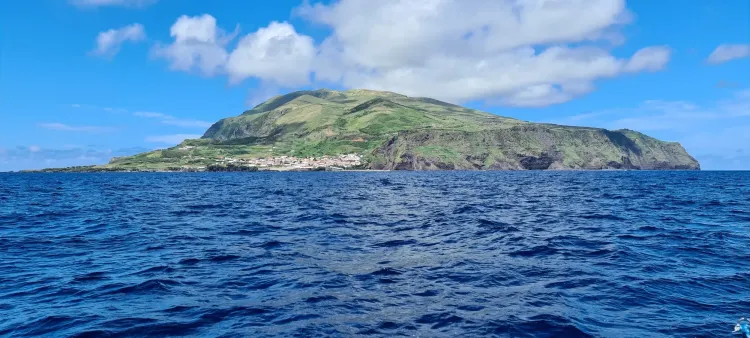
Faial is the fifth largest island in the Azores, roughly 21 km long and 14 km wide. You can drive around it in about an hour. Around 15,000 people live here, most of them in Horta, the main town on the southeast coast.
The nickname "Ilha Azul" (Blue Island) comes from the hydrangeas. Thousands of hedgerows line the roads, field boundaries, and garden walls across the island. In July and August they bloom in dense, vivid blue. The color is not random. Faial's volcanic soil is highly acidic, and acidic soil turns hydrangea flowers blue. The same species planted in alkaline soil would bloom pink. On Faial, they're blue everywhere you look.
The Portuguese poet Raul Brandao visited in 1926 and wrote about the island in "As Ilhas Desconhecidas" (The Unknown Islands). His descriptions of blue-drenched landscapes helped fix the nickname in Portuguese culture. A century later, the hydrangeas are still the first thing visitors photograph.
But Faial is more than flowers. It's the most internationally connected island in the Azores, and that's been true for over a century. Horta's natural harbor made it a stop for transatlantic ships, then for submarine telegraph cables, then for seaplanes, and now for sailing yachts crossing between Europe and the Americas. That layered history shows up in the architecture, the food, the languages you hear on the marina, and the general atmosphere of a town that's been welcoming strangers since the 1400s.
Compared to Sao Miguel, Faial is tiny and quiet. Compared to Terceira, it lacks the UNESCO city but offers a different kind of depth. What Faial has is Capelinhos (one of the most dramatic volcanic sites in Europe), Horta (the most characterful port town in the Azores), and a position at the center of the Triangle islands that makes it a natural base for exploring Pico and Sao Jorge.
The island was settled in 1432 by Flemish colonists. The name "Faial" comes from "faia" (beech tree), which covered the island when they arrived. The Flemish influence faded over the centuries, replaced by Portuguese culture, but you'll still see Dutch-sounding surnames in the phone book and Flemish architectural echoes in older buildings.
A History Written by Volcanoes and Cables
Faial's history has two chapters that no visitor should skip. One is geological. The other is technological. Both explain why this small island matters more than its size suggests.
Capelinhos: The Eruption That Changed Everything
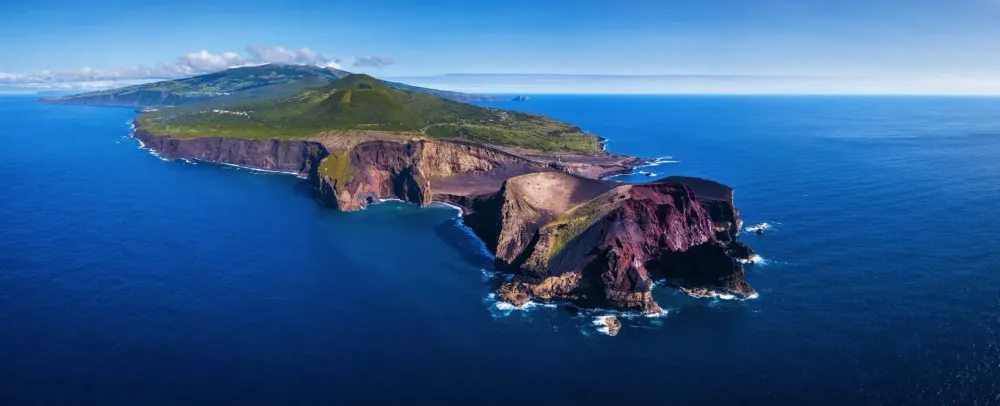
On September 27, 1957, the ocean off Faial's western tip began to boil. A submarine volcano was erupting. Over the following days, a new island appeared above the waves, roughly 600 meters across and 30 meters high. The locals called it Ilha Nova (New Island).
The eruption didn't stop. For 13 months, until October 24, 1958, Capelinhos threw ash, rock, and lava into the sky. The eruptive column reached 1,450 meters. Ash carried 20 km on the wind and buried the western end of Faial under meters of grey volcanic debris. The lighthouse at Ponta dos Capelinhos, once standing at the cliff's edge, was buried up to the third floor.
Eleven people died. Around 1,500 lost their homes. Crops were destroyed. The western parishes were evacuated. And then came the exodus. Roughly 40% of Faial's working-age population emigrated in the years following the eruption, most of them to the United States.
That emigration had political consequences. Senator John F. Kennedy championed the Azorean Refugee Act of 1958, which allowed displaced Azoreans to enter the US outside normal immigration quotas. Between 1960 and 1980, over 175,000 Azoreans settled in America, concentrated in New England and California. Today, more than a million Americans trace their ancestry to the Azores, and a significant portion of that diaspora began with Capelinhos.
The eruption was the first submarine volcanic event documented from start to finish by scientists. The data collected at Capelinhos still informs volcanology research. And the 2.4 square kilometers of new land it created remain Portugal's newest territory. Walk on the Capelinhos lava fields today and you're standing on ground that didn't exist 70 years ago.
The Cable Capital of the Atlantic
This is the part of Faial's history that almost nobody writes about.
Starting in 1893, submarine telegraph cables began landing in Horta. The harbor's mid-Atlantic position made it the ideal relay point for messages crossing between Europe and the Americas. By the early 1900s, fifteen separate cables connected Horta to England, Ireland, France, Italy, Germany, the United States, and Canada.
German, English, and American telegraph companies set up headquarters in town. Their employees lived in Horta, built houses, opened clubs, and introduced sports that had never been seen in the Azores: football, rowing, sailing, water polo, tennis. For six decades, this small Azorean port was a genuine crossroads of international communication.
The cable buildings near Porto Pim beach are still standing. Some have been converted to other uses, but the scale of the infrastructure hints at how important Horta once was. Before radio, before satellites, before fiber optics, the world's messages passed through this town.
That cosmopolitan past explains why Horta feels different from other Azorean towns. The architecture is more varied, the food has more international influence, and there's a comfort with outsiders that comes from 130 years of welcoming them.
During World War II, Horta served as a communications hub during the Battle of Normandy in 1944. In the 1930s, it was a refueling station for seaplanes making early transatlantic crossings. Pan American Airways used Horta harbor for its Clipper flying boats on the New York to Lisbon route. The terminal building is gone, but the harbor infrastructure remains.
Layer after layer of global connection, all concentrated in a harbor town of 7,000 people. If Terceira is the cultural capital of the Azores, Faial is the communications capital. Terceira looks inward, to Azorean traditions and festivals. Faial has always looked outward, across the ocean.
Getting There and Getting Around
Flights
Horta Airport (HOR) receives flights from Lisbon via SATA Azores Airlines (2.5 hours, from about €55 one-way). Seasonal connections from Porto and European cities exist but are less frequent than flights to Sao Miguel or Terceira. Inter-island flights connect Faial to Sao Miguel (50 minutes) and Terceira (30 minutes).
Many visitors reach Faial via Pico. Fly into Pico Airport (PIX), then take the ferry across. Or fly into Sao Miguel first, spend a few days there, then hop to Faial on a short SATA flight.
| Route | Airline | Time | From |
|---|---|---|---|
| Lisbon → Faial | SATA | 2h 30m | ~€55 |
| Sao Miguel → Faial | SATA | 50m | ~€50 |
| Terceira → Faial | SATA | 30m | ~€40 |
| Pico → Faial | Ferry (Atlanticoline) | 30m | ~€7 |
The Pico-Faial Ferry
Atlanticoline operates the crossing between Madalena (Pico) and Horta (Faial) multiple times daily. Thirty minutes, about €7 walk-on per person, €15-20 with a car. In summer, 8-10 daily departures. Winter drops to 3-4 per day with more weather cancellations.
The crossing is short but can be choppy. If you're prone to motion sickness, sit outside, watch the horizon, and take medication 30 minutes beforehand. On calm days, the views of Mount Pico rising above the channel are spectacular.
Car Rental
Faial is small enough that you could technically see it without a car if you stayed in Horta and took taxis to Capelinhos and the Caldeira. But a rental car makes everything easier. The island rewards spontaneous stops at viewpoints, natural pools, and village cafes that taxis won't wait for.
Local companies like Autatlantis and Ilha Verde operate on Faial. Budget €25-35 per day. Book ahead for July and August. The roads are well-maintained and mostly two-lane. Parking in Horta is easy outside of festival weeks.
One loop around the island takes about an hour of driving. Add stops and you've got a full day. Fill up at the gas station in Horta. There's one in Flamengos too, but hours can vary.
When to Visit
Faial's climate mirrors the rest of the Azores: mild year-round, rain possible any day, and microclimates that shift in minutes. The Caldeira creates its own weather. Horta can be sunny while the crater rim sits in cloud.
| Month | Avg Temp | Rain Days | Ocean Temp | Crowds | Best For |
|---|---|---|---|---|---|
| Jan | 14°C | 15 | 17°C | Very low | Low prices, quiet Horta |
| Feb | 14°C | 13 | 16°C | Very low | Early whale season |
| Mar | 15°C | 13 | 16°C | Low | Blue whales, green hills |
| Apr | 16°C | 11 | 17°C | Moderate | Wildflowers, hiking |
| May | 17°C | 9 | 18°C | Moderate | Whale watching peak |
| Jun | 20°C | 7 | 20°C | High | Swimming season starts |
| Jul | 23°C | 4 | 22°C | Peak | Hydrangeas bloom, Semana do Mar |
| Aug | 24°C | 5 | 23°C | Peak | Warmest ocean, full hydrangeas |
| Sep | 22°C | 8 | 22°C | High | Warm water, fewer tourists |
| Oct | 19°C | 12 | 20°C | Moderate | Autumn light, lower prices |
| Nov | 17°C | 14 | 19°C | Low | Off-season begins |
| Dec | 15°C | 15 | 18°C | Very low | Christmas traditions |
Semana do Mar (Sea Week) happens in Horta every August. Sailing regattas, rowing races, swimming competitions, live music on the waterfront, and seafood stalls along the marina. This is when Horta is at its liveliest. Book accommodation well ahead if you want to catch it.
Hydrangea season peaks in July and August. The roads between Horta and the Caldeira are lined with blue walls of flowers. For photographs, the stretch between Flamengos and the Caldeira parking area is the most dense.
Whale watching runs year-round but peaks April through October. Blue whales pass through February to May. Sperm whales are resident year-round.
Exploring Horta
Horta is the reason many travelers put Faial on their itinerary. It's a port town with more layers than its size suggests. You can walk the center in 30 minutes, but you'll want longer.
The Marina: Painted Harbour Walls
Horta Marina welcomes nearly 1,500 boats per year, making it the fourth most visited oceanic marina in the world. Sailors crossing the Atlantic between Europe and the Americas stop here to rest, resupply, and by tradition, paint a mural on the harbor breakwater.
Thousands of paintings cover every surface of the marina walls. Boat names, crew portraits, route maps, flags, dates. Some are crude. Others are genuinely artistic. The collection has been building for decades and represents one of the largest maritime painting collections anywhere.
The tradition comes with a superstition. Sailors who leave Horta without painting their mark are said to invite bad luck at sea. The cautionary tale involves the yacht Ariadne, which allegedly skipped the tradition and was later shipwrecked. Whether the story is true matters less than the fact that almost no crew skips the painting anymore.
Walk the breakwater in the morning when the light is best for photographs. The older paintings near the inner harbor are fading, which gives them their own charm.
Peter Cafe Sport
The most famous bar in the Azores, and arguably the most famous sailors' bar in the Atlantic. Founded in 1918 by the Azevedo family, still run by the fourth generation. The original owner's son earned the nickname "Peter" from locals, and it stuck.
The cafe sits on the waterfront facing the marina. Downstairs is a bar with dark wood, nautical flags, and photographs of famous sailors who've stopped in. The gin and tonics are strong and reasonably priced. Upstairs, the Scrimshaw Museum houses the world's largest private collection of scrimshaw art: carved whale teeth and jawbone pieces from Faial's whaling era. Entry to the museum is about €5. Worth it for the craftsmanship.
Peter Cafe Sport rose to international fame during World War II, when Horta became a refuge for castaways and wounded sailors. In the late 1950s, recreational sailing yachts began arriving in numbers, and the cafe became the unofficial meeting point for every crew crossing the Atlantic. That reputation holds today. Sit at the bar long enough and you'll hear conversations in five languages.
"Peter Cafe Sport is not a tourist bar pretending to have history. It's a bar with genuine history that happens to attract tourists. The difference shows in the details. The staff know every regular. The scrimshaw collection upstairs is museum-quality. And the gin arrives without ceremony, which is exactly right." - Guidekin team
Porto Pim and Monte da Guia
South of the marina, a short walk takes you to Porto Pim. This is Faial's most sheltered beach, a crescent of pale sand (rare in the Azores, where most beaches are dark volcanic sand) tucked into a bay below Monte da Guia. The water is calm, the swimming is safe for children, and on summer afternoons the beach fills with local families.
The old whale processing factory at Porto Pim has been converted into a museum and interpretation center. The building alone is worth a look. Massive stone walls built to contain an industrial-scale operation, now quiet and sun-warmed.
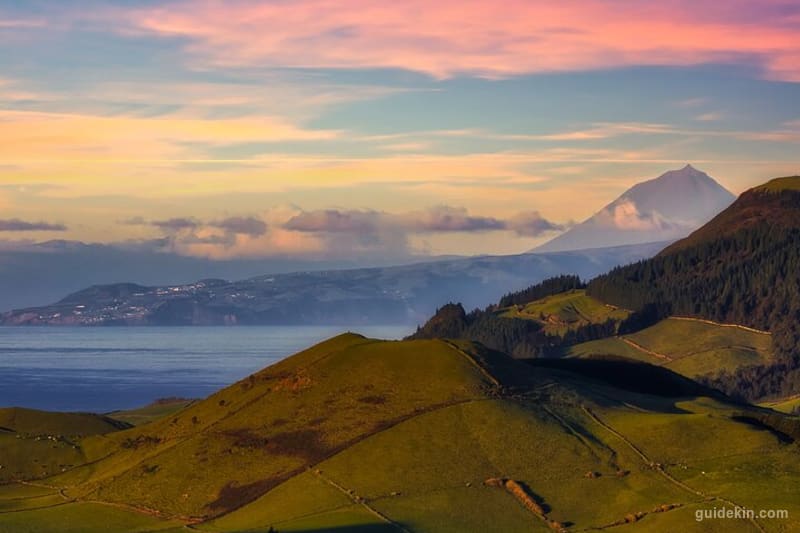
Monte da Guia, the volcanic cone above Porto Pim, has a walking trail to the summit (about 20 minutes up). The views from the top cover Horta, the marina, Porto Pim beach below, and Pico's volcano across the channel. Come at sunset. The light on the water and the silhouette of Mount Pico is one of the best views in the Azores.
The Old Town
Horta's center is compact and walkable. Rua Conselheiro Medeiros is the main commercial street: cafes, bakeries, a few shops. The Igreja de Sao Salvador (Church of St. Savior) dates to the late 1600s, with azulejo tile panels inside that survived the 1998 earthquake. The Praca da Republica, the main square, is where locals sit with espresso in the morning.
The streets off the main square have more character. Faded pastel facades, iron balconies, small grocery shops that still weigh cheese on mechanical scales. This is not a gentrified old town. It's a working Portuguese neighborhood that happens to be old.
The Museu de Horta, in the old Jesuit college near the church, covers the island's history from Flemish settlement through the cable era to the present. Small but well-curated. Allow 45 minutes. Entry is about €3.
Walk east along the waterfront from the marina and you'll reach the old cable landing area near Porto Pim. The buildings where the telegraph companies operated are still standing. Some are being restored. Others are slowly fading. Either way, they're a physical reminder of the decades when every telegram between New York and London passed through this street.
Evening in Horta
Horta has the best evening scene of any small town in the Azores. Not nightlife in the club sense, but a genuine evening energy around the marina and waterfront.
Start with a drink at Peter Cafe Sport. The terrace fills up around 6 PM in summer. Move to dinner (see the restaurant section below). After dinner, walk the marina breakwater. In summer, crews from docked yachts gather on deck with drinks and music drifting across the water. The atmosphere is relaxed, international, and unlike anything else in the Azores.
A few bars along the waterfront stay open until midnight or later in summer. Nothing loud. Wine, beer, quiet conversation. The kind of evening where you realize you're on a volcanic island in the middle of the Atlantic, and that's enough.
For something different: drive to Monte da Guia after dinner. The viewpoint at the top, with the lights of Horta below and the dark mass of Pico across the channel, is a good place to end a day. In clear conditions, the stars above the harbor are vivid. Faial has minimal light pollution outside Horta center.
Capelinhos: Portugal's Newest Land
Capelinhos sits at Faial's western tip, 20 minutes by car from Horta. If you visit one site on Faial beyond Horta itself, make it this one.
The Landscape
The eruption left a grey, barren moonscape of ash, cinder, and hardened lava. Seventy years later, vegetation is slowly reclaiming the edges, but the core of the lava fields remains bare. The contrast with the green farmland just a few hundred meters inland is stark.
The old lighthouse stands partially buried. Three stories of ash surround the base. The tower pokes out above the grey surface like a monument to what the eruption left behind. This single image, the half-buried lighthouse against the volcanic desert, is Faial's most recognizable photograph.
Walk the paths through the lava fields. The ground crunches underfoot. In some places, you can see the layered ash deposits in cross-section where erosion has cut channels. The scale is larger than photographs suggest. You're walking on land that didn't exist before 1957. The Atlantic crashes against the new coastline below.
The Interpretation Centre
Built underground, inside the base of the buried lighthouse, the Capelinhos Interpretation Centre is one of the best small museums in Portugal. The design is clever: you descend into the earth, following the timeline of the eruption through rooms filled with seismograph readings, photographs, film footage, and geological samples.
The footage of the eruption is remarkable. Shot from boats and from the shore, it shows the column of ash and steam rising from the ocean, the new island forming, and the slow burial of the western landscape under layers of debris.
Entry is about €10 per adult, €5 for children. Allow 45 minutes to an hour. The museum is well-designed for all ages. Even if volcanology doesn't interest you, the human story of the eruption, the evacuation, the emigration, the community that rebuilt, makes it compelling.
"The Capelinhos museum is better than most museums in Lisbon. It's underground, it's immersive, and it tells a story that's still unfolding. The land outside is still shifting. Vegetation is still colonizing the ash. You're watching geology happen in real time. Allow at least an hour, and walk the lava fields afterward." - Guidekin team
The Emigration Story
Most guides mention the eruption. Few explain what happened next. The destruction of Faial's western farmland left thousands without livelihoods. Emigration was the response. The Azorean Refugee Act of 1958, championed by Senator Kennedy and signed by President Eisenhower, opened the door for displaced Azoreans to enter the United States.
The wave of emigration transformed both Faial and the American communities that received the migrants. New Bedford, Massachusetts. Fall River. Providence. San Jose, California. These cities still have active Azorean cultural associations, Portuguese-language newspapers, and festivals rooted in Azorean traditions. Over a million Americans today trace their roots to the Azores, and the Capelinhos eruption was the single largest trigger for that migration.
On Faial, the population never fully recovered. Before the eruption, around 30,000 people lived on the island. Today, roughly 15,000 do.
Hiking Faial
Faial has four marked trails. The two essentials are the Caldeira rim and the Capelinhos coastal trail.
Caldeira Rim Trail (PRC04 FAI)
The Caldeira is Faial's central crater: 2 km across, 400 meters deep, and filled with dense endemic vegetation. The rim trail circles the top. It's the island's signature hike.
| Detail | Info |
|---|---|
| Distance | 6.8 km (loop) |
| Time | 2-2.5 hours |
| Elevation | Highest point 1,043m (Cabeco Gordo) |
| Difficulty | Moderate |
| Start/End | Caldeira parking area |
| Cost | Free |
The trail is well-maintained with wooden boardwalks and railings in most sections. A few spots on the northern rim are more exposed and can be slippery after rain. On clear days, you see Pico, Sao Jorge, and Graciosa from the rim. On cloudy days (common), you walk through mist with the crater appearing and disappearing below. Both are good.
Bring a windbreaker even in summer. The rim sits above 1,000 meters and the wind can be fierce. On a calm, clear morning, this is one of the finest walks in the Azores. On a windy, foggy day, it's atmospheric but you'll see less.
The crater interior is off-limits without a licensed Faial Natural Park guide. Guided descents into the crater take about 4 hours and let you see 60% of the Azores' endemic plant species up close: Azorean juniper, heather, blueberry, angelica, and euphorbia. The floor of the crater is a different world from the rim. Quiet, sheltered from wind, and thick with vegetation. Book through the park office in Horta. The descent is steep and the terrain is muddy, but it's a genuine wilderness experience that very few visitors have.
Tip: Drive to the Caldeira parking area in the morning. Clouds tend to build through the day. By afternoon, the rim is often socked in. The road from Horta to the Caldeira passes through the densest hydrangea hedgerows on the island, peaking in late July. Even if the crater is cloudy, the drive is worth it for the flowers.
Capelinhos Coastal Trail (PRC05 FAI)
This trail runs along the coast from the Capelinhos lighthouse west through the volcanic landscape and back. About 4 km, easy to moderate, 1.5-2 hours. The terrain alternates between hardened lava, ash paths, and coastal cliffs. Bring sun protection. There's no shade on the lava fields.
Dez Vulcoes Trail (PRC01 FAI)
The longest trail on Faial. Connects the Caldeira to Capelinhos through the island's volcanic interior, crossing ten small volcanic cones along the way. About 14 km one-way, 5-6 hours, moderate to strenuous. You'll need to arrange transport at one end since it's not a loop.
| Trail | Distance | Time | Difficulty | Highlight |
|---|---|---|---|---|
| Caldeira Rim (PRC04) | 6.8 km | 2-2.5h | Moderate | Crater views, endemic plants |
| Capelinhos Coast (PRC05) | 4 km | 1.5-2h | Easy-Moderate | Volcanic landscape, lighthouse |
| Dez Vulcoes (PRC01) | 14 km | 5-6h | Moderate-Hard | Ten volcanic cones, interior highlands |
| Rocha da Faja (PRC07) | 4.5 km | 2h | Moderate | Coastal cliffs, east Faial |
Beaches, Natural Pools, and Swimming
Faial has limited beaches but makes up for it with volcanic natural pools and calm bays.
Porto Pim
The main beach. Pale sand (unusual for the Azores), sheltered bay, calm water. Good for families. Located 10 minutes on foot from Horta center, below Monte da Guia. Small bar on the beach in summer. Gets busy on weekend afternoons in July and August. Arrive early or late.
Praia do Almoxarife
A long dark-sand beach on the northeast coast, 5 km from Horta. Less sheltered than Porto Pim, with stronger waves and occasional surf. The view across to Mount Pico from this beach is extraordinary. On a clear day, the volcano fills the entire horizon, rising directly from the ocean with no other land in the way. This is one of those views that stops you mid-sentence.
A few restaurants and bars line the road behind the beach. The village of Almoxarife is small and quiet. Better for walking, sunbathing, and views than for swimming, though locals swim here regularly. The Guidekin team prefers Almoxarife over Porto Pim. The sand is darker, the crowd is smaller, and that view of Pico is unmatched.
Varadouro Natural Pools
On the west coast, between Horta and Capelinhos. Volcanic rock pools filled with ocean water, with changing rooms, ladders, and a small bar. Water temperature around 22°C in summer. This is the most developed swimming spot outside Porto Pim. Entry is free.
Poca da Rainha
Near Feteira on the south coast. A basalt rock pool that fills at high tide. Smaller and less developed than Varadouro, but beautiful in a raw, unmanaged way. No facilities. Bring your own water and towel.
Praia do Varadouro
A small dark-sand beach near the natural pools. Quiet and rarely crowded. Surrounded by volcanic rock formations. Not ideal for long swimming sessions (the seabed is rocky), but good for a quick cool-down after hiking at Capelinhos.
The 1998 Earthquake: Ribeirinha Lighthouse
On July 9, 1998, a magnitude 5.8 earthquake struck the central Azores. On Faial, the northeast coast was hit hardest. The village of Ribeirinha suffered serious damage, and the old lighthouse on the headland partially collapsed. The ruins were left standing as a memorial.
Today, you can walk to the Ribeirinha lighthouse ruins from the road (5-minute walk). The crumbling tower and walls, set against the ocean and the green hillside, are striking. A small information board explains the earthquake. The site is free and usually empty. It's a sobering reminder that the Azores sit on active geological fault lines, and that volcanic beauty comes with seismic risk.
Whale Watching from Horta
Horta is a strong base for whale watching. The deep water between Faial and Pico holds resident sperm whales year-round, and the mid-Atlantic position brings migratory species through seasonally.
Several operators run from Horta marina. Half-day trips (3-4 hours) cost €55-75 per person. Peter Cafe Sport organizes excursions, as do Horta Cetaceos and Norberto Diver. The boats are rigid inflatables (RIBs) or small catamarans.
| Species | Best Months | Notes |
|---|---|---|
| Sperm whale | Year-round | Resident, most common large whale |
| Blue whale | Feb-May | Migratory, the world's largest animal |
| Fin whale | Mar-Jun | Second largest, often seen feeding |
| Common dolphin | Year-round | Nearly every trip |
| Bottlenose dolphin | Year-round | Playful, often approaches boats |
| Risso's dolphin | Year-round | Scarred grey skin, distinctive |
The Azorean vigia system (land-based lookout towers on the cliffs) gives Faial-based operators the same high sighting rates as Pico, around 98% in peak season. The vigias scan with binoculars and radio the boats when they spot a blow. It works. The deep water between Faial and Pico is just 6 km wide, and sperm whales feed in these depths regularly. Most trips reach whale territory within 15-20 minutes of leaving the harbor.
Book at least 2-3 days ahead in summer. Morning trips tend to have calmer seas. Bring layers and a waterproof jacket. Even on sunny days, the spray at speed soaks through. Sunscreen is essential. The reflection off the water is brutal.
If you're also visiting Pico, you can do whale watching from either island. The operators share the same waters. But Horta departures tend to be slightly less booked than Lajes do Pico, especially in peak summer.
Where to Stay
Faial's accommodation is concentrated in Horta. Outside town, options exist but are fewer and mostly self-catering.
By Area
Horta center: The best base for most visitors. Walk to the marina, restaurants, Peter Cafe Sport, and the ferry terminal. A mix of small hotels, guesthouses, and apartments. The streets around Praca da Republica and the marina have the most choice.
Almoxarife: 5 km northeast of Horta. Quieter, beachfront, with views of Pico. A handful of vacation rentals and small pensions. Good if you prefer space over walkability.
Rural / west coast: Scattered rural houses and quintas. Closest to Capelinhos and the Caldeira. Best for hikers and travelers who want isolation. Bring groceries from Horta.
Prices
| Type | Range (per night, summer) | Notes |
|---|---|---|
| Hostel / budget | €25-40 | Limited, mostly in Horta |
| Apartment / vacation rental | €45-80 | Good value, kitchen access |
| Boutique hotel / guesthouse | €70-120 | Character stays, breakfast included |
| Premium | €120-180+ | Marina-view properties, design stays |
Off-season prices drop 30-40%. Book ahead for August, especially during Semana do Mar.
Food and Drink in Horta
Horta punches above its weight for a town of 7,000. The fishing fleet brings fresh catch daily, the dairy farms supply cheese and butter, and the international sailing crowd has raised expectations for quality.
What to Eat
Cracas (barnacles). Boiled and served warm. You crack them open and eat the soft flesh inside. Briny, intense, unlike anything else. Seasonal (spring and summer). Not available everywhere. When you see them on a menu, order them.
Polvo guisado (stewed octopus). The Azorean staple. Slow-cooked in wine and garlic until the octopus melts. Every restaurant does it slightly differently. Ask which version the house recommends.
Lapas grelhadas (grilled limpets). Pulled from the rocks, grilled with garlic butter, served on the shell. Pair with a cold Especial beer. Simple and perfect.
Queijo da Ilha (island cheese). Faial's soft cheese is mild and creamy. Sao Jorge cheese, available everywhere on Faial, is harder and more peppery. Try both as starters.
Cozido a Portuguesa. The Azorean version of the Portuguese meat-and-vegetable stew. Heavy, filling, and designed for cold weather. On Faial, it appears on menus mostly in winter and shoulder season. If you see it, it's a proper meal for two.
Bolo levedo. The sweet, soft bread of the Azores. Buy from any bakery. Fill with butter and local cheese for a quick lunch. Every bakery claims theirs is the best. Try several. They're €0.50-0.80 each.
Azorean pineapple. Smaller and sweeter than tropical pineapples, grown in glass greenhouses on Sao Miguel since the 1800s. Available in restaurants and markets on Faial. Often served as dessert, sometimes with local honey.
Pico wine. Faial doesn't produce its own wine, but Pico Verdelho is on every menu and in every wine bar. Dry, mineral, volcanic. Order it. A glass runs €3-5 at most restaurants.
Best Restaurants
| Restaurant | Location | Known For | Price Range |
|---|---|---|---|
| Genuino | Horta marina | Seafood, harbor view, fresh catch | €20-35/person |
| Canto da Doca | Horta waterfront | Grilled fish, local atmosphere | €15-25/person |
| Taberna de Pim | Porto Pim area | Petiscos (small plates), wine | €12-20/person |
| O Cantinho das Provas | Horta center | Wine bar, cheese, charcuterie | €10-18/person |
| Internacional | Horta center | Traditional Azorean, family-run | €12-22/person |
Restaurants in Horta are busier than on other islands because the sailing crews eat out nightly. Reserve ahead for dinner at Genuino and Canto da Doca in summer. Lunch is easier. Most places open at noon and serve until 2:30-3 PM.
A few practical notes. Portions in Azorean restaurants are large. A main course plus a starter is often enough for two people to share. Some smaller places close on Sundays or Mondays. Cash is useful at lunch spots and village cafes outside Horta center. Credit cards work at all the restaurants listed above.
"O Cantinho das Provas is easy to miss. It's a small wine bar on a side street with no flashy signage. But the wine list covers every Azores island, the cheese comes in generous portions, and the owner can explain every bottle. Go for a pre-dinner tasting. Two glasses and a plate of Sao Jorge cheese costs under €15." - Guidekin team
Day Trips: Pico and Sao Jorge
Faial sits at the center of the Triangle. Horta is the best hub for exploring all three islands without changing hotels.
Pico: 30 Minutes by Ferry
The most popular day trip from Faial. Morning ferry from Horta to Madalena (30 minutes, €7 walk-on). Rent a car on Pico or join a guided tour. See the UNESCO vineyards, drive the EN3 highway, visit the Whalers Museum in Lajes, swim in a natural pool. Return on the evening ferry.
For the full picture of what to see, check our complete Pico Island guide.
If you have more time, Pico's Mount Pico summit hike (6-7 hours round trip) justifies an overnight stay rather than a day trip. But the vineyards, villages, and Lajes fit comfortably into one day from Faial.
Sao Jorge: The Third Point
Sao Jorge is the least-visited island in the Triangle and the most rewarding for hikers. Famous for its fajas, flat coastal strips at the base of tall cliffs formed by landslides and lava flows.
Getting there from Faial takes about 2 hours by Atlanticoline ferry (seasonal, check schedules) or a 20-minute SATA flight. The ferry route goes via Pico.
What to see in one day:
- Faja da Caldeira de Santo Cristo. A hike from the cliff top down to a remote coastal lagoon famous for its clams. 3 hours one-way, moderate.
- Sao Jorge cheese. The Azores' most prized cheese. Hard, aged, peppery. Buy it at the Cooperativa in Beira or from farm stands along the road.
- Topo. The oldest settlement, at the eastern tip. Small port, historic church, quiet.
A Sao Jorge day trip works best with an early ferry and an evening return. Check Atlanticoline schedules before committing. Off-season, the ferry may not run daily.
Making It Work
Base yourself in Horta. Keep your rental car on Faial. Walk-on the ferry to Pico (rent a car there for the day). For Sao Jorge, same approach or fly. One base, three islands, minimal logistics.
Sample Itineraries
1 Day: The Day Trip from Pico
For visitors based on Pico who want to see Faial in a day.
- 09:00: Morning ferry from Madalena to Horta (30 min)
- 09:45: Walk Horta marina, see the painted walls
- 10:30: Peter Cafe Sport + Scrimshaw Museum (45 min)
- 11:30: Drive to Capelinhos (20 min)
- 12:00: Capelinhos Interpretation Centre + lava field walk (1.5 hours)
- 13:30: Lunch at a restaurant in the Capelo area, or drive back toward Horta
- 14:30: Drive to Caldeira parking area (15 min from Capelinhos)
- 15:00: Caldeira rim trail (2-2.5 hours)
- 17:30: Drive back to Horta. Quick swim at Porto Pim if time allows
- 18:30: Evening ferry back to Pico
This is tight but doable. Skip the Caldeira hike if you'd rather spend more time in Horta.
2-3 Days: The Full Island
Day 1 - Horta and Porto Pim:
Morning walk through the old town, marina, Peter Cafe Sport, Scrimshaw Museum. Lunch in Horta. Afternoon at Porto Pim beach and Monte da Guia viewpoint at sunset. Dinner at Genuino or Canto da Doca.
Day 2 - Capelinhos and the Caldeira:
Morning drive to Capelinhos. Interpretation Centre + lava field walk (2 hours). Continue to the Caldeira. Rim trail hike (2.5 hours). Afternoon swim at Varadouro natural pools on the way back. Evening at O Cantinho das Provas.
Day 3 - Beaches and Whale Watching:
Morning whale watching from Horta (3-4 hours, book ahead). Lunch. Afternoon at Praia do Almoxarife (views of Pico). Drive the east coast. Evening stroll and dinner in Horta.
4+ Days: With the Triangle
Day 4 - Pico Day Trip:
Morning ferry to Madalena (30 min). Rent a car on Pico. Drive the north coast UNESCO vineyards. Wine tasting at the Cooperativa. Lunch in Madalena. Afternoon: Whalers Museum in Lajes, natural pool swim. Evening ferry back to Horta.
Day 5 - Sao Jorge or Repeat:
Option A: Day trip to Sao Jorge (check ferry schedule). Hike to Faja da Caldeira de Santo Cristo, buy Sao Jorge cheese, explore Velas.
Option B: Stay on Faial. Go diving or kayaking. Revisit the Caldeira on a clearer day. Explore the east coast villages. Drive to Ribeirinha lighthouse ruins. Spend the afternoon at Almoxarife beach doing absolutely nothing.
With five days, Faial stops feeling like a stop on an itinerary and starts feeling like a place you're actually staying. The rhythm changes. You eat at the same restaurant twice. The barman at Peter Cafe Sport remembers your drink. That's the version of Faial worth having.
Budget and Prices
Faial is comparable to Pico in pricing. Slightly cheaper accommodation than Sao Miguel, but limited supply means summer prices hold steady.
| Item | Budget | Mid-Range | Comfort |
|---|---|---|---|
| Accommodation (per night) | €30-45 | €55-90 | €100-180 |
| Car rental (per day) | €25-35 | €30-40 | €45+ |
| Meals (per day) | €20-30 | €35-50 | €55-75 |
| Whale watching | €55-75 | €55-75 | €80-100 |
| Capelinhos museum | €10 | €10 | €10 |
| Scrimshaw Museum | €5 | €5 | €5 |
| Pico ferry (walk-on, return) | €14 | €14 | €14 |
| Daily total (per person) | €75-110 | €120-180 | €220+ |
Practical Tips
- Drive to Capelinhos in the morning. The western tip catches more wind and cloud in the afternoon. Morning light on the lava fields is also better for photographs.
- Check Caldeira weather before hiking. The SpotAzores app has live webcams. If the rim is in cloud, postpone. On a clear day the views justify the effort. In fog, you see nothing.
- Reserve dinner at Genuino. It's the most popular restaurant in Horta. In summer, walk-ins after 8 PM often get turned away. Book by phone the morning of, or the day before.
- Bring layers for the Caldeira. The rim sits at 1,000+ meters. Even in summer, it can be 8-10°C cooler than Horta with strong wind. A windbreaker and a light fleece will keep you comfortable.
- Ferry schedules change seasonally. Check Atlanticoline the night before any crossing. Winter cancellations are common. Summer is reliable, but delays happen in rough weather.
- Don't skip the Scrimshaw Museum. It's above Peter Cafe Sport and most visitors walk past it. The carved whale teeth are museum-quality work, and the collection tells a story about Faial's whaling past that the bars and restaurants don't.
- Carry cash for smaller spots. Horta center takes cards everywhere. But Varadouro natural pools, village cafes, and some beach bars are cash-only.
- The 1998 earthquake ruins at Ribeirinha are worth a detour. The old lighthouse on the northeast coast was damaged by a magnitude 5.8 earthquake and left standing as a memorial. A short walk from the road.
FAQ
Is Faial island worth visiting?
Yes. Capelinhos alone justifies the trip, and Horta is the most atmospheric small town in the Azores. If you're visiting Pico, adding Faial is effortless (30-minute ferry).
How many days do you need in Faial?
One day covers the highlights on a day trip from Pico. Two to three days lets you hike the Caldeira, explore Horta properly, and go whale watching without rushing.
Why is Faial called the Blue Island?
The blue hydrangea hedgerows that cover the island. The volcanic soil's high acidity turns the flowers blue. They bloom most intensely in July and August.
Do you need a car on Faial?
Recommended. The island is small and you could use taxis, but a car lets you stop spontaneously at viewpoints, natural pools, and village cafes. Budget €25-35 per day.
Can you do a day trip to Faial from Pico?
Yes. The Atlanticoline ferry runs Madalena to Horta in 30 minutes, multiple times daily. Morning ferry over, evening ferry back. You can cover Horta, Capelinhos, and the Caldeira in one full day.
What is the best time to visit Faial?
July and August for hydrangeas and the best weather. June or September for fewer tourists and lower prices. April through May for whale watching. Semana do Mar (August) for the maritime festival.
Start Planning
Faial is the island that surprises people who think they already know the Azores. They expect a green volcanic rock in the Atlantic. They find a town with a 100-year-old sailors' bar, a volcano that erupted within living memory, marina walls covered in paintings from every ocean, and hedgerows of flowers so blue they look artificial.
It's small enough to see in a day and interesting enough to fill a week. It works as a day trip from Pico, a standalone destination, or the central hub for exploring all three Triangle islands. However you fit it in, don't skip it.
Browse available tours in the Azores to book whale watching, guided hikes, and Capelinhos experiences. The best operators fill up in summer.