Key Takeaways
- Europe's westernmost island sits on the wrong tectonic plate. Flores belongs to the North American Continental Plate, not the Eurasian one like the rest of Portugal. That geological accident created waterfalls, crater lakes, and basalt columns unlike anything on the other Azores islands. Why Flores →
- Poco da Ribeira do Ferreiro is the single most dramatic sight in the Azores. Dozens of waterfalls cascade 150 meters down a vertical cliff face into a green pool. A 20-minute walk from the parking area. Nothing else in the archipelago looks like this. All waterfalls →
- Getting here takes effort. No direct flights from mainland Portugal. You fly to Sao Miguel or Terceira, then connect on SATA. But SATA's free routing service means the connection doesn't cost extra. How to get there →
- Book your car six months ahead. Flores has a tiny rental fleet. In July and August, every car on the island gets reserved months in advance. Late bookers are stuck with taxis or hitchhiking. Car rental details →
- Three days is the minimum. Five is better. You need buffer days because weather cancels flights. One day for waterfalls and west coast, one for crater lakes and hiking, one for Corvo. Add two for fog delays and slow exploration. Itineraries →
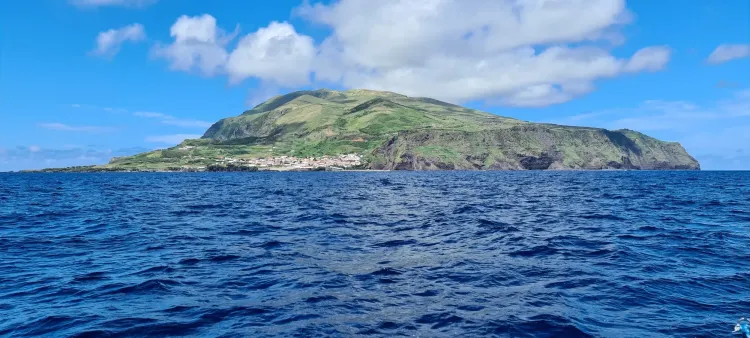
- Corvo is 45 minutes by boat and 500 years from anywhere. The smallest island in the Azores has 430 residents, one village, and a volcanic crater you can see from the rim. A half-day trip from Flores. Corvo details →
Why Flores: Europe's Westernmost Wild Island
Flores sits 236 kilometers west of Faial, separated from the Central Group by open Atlantic. It's the second smallest inhabited island in the Azores, 143 square kilometers, roughly 17 km long and 12 km wide. The name means "Flowers" in Portuguese. When the first explorers arrived in 1452, they found the island covered in wildflowers and named it on the spot.
The population tells a story. In 1900, over 8,000 people lived here. Today, about 3,400 remain. The rest left for America. The emigration wave that started after the Capelinhos eruption on Faial in 1957 hit Flores even harder. Fewer economic opportunities, harder access, rougher winters. Families sold farms, packed trunks, and boarded ships to New Bedford, Massachusetts, or San Jose, California. The Festa do Emigrante, held every July, celebrates those who left and those who come back to visit.
What the emigrants left behind is extraordinary. Seven volcanic crater lakes sit across the island's central plateau at 600-700 meters elevation. Coastal cliffs exceed 500 meters in places. Waterfalls drop directly off cliff edges into the Atlantic. The island's interior is covered in "turfeira," a sponge-like peat ecosystem unique to the Azores that absorbs 20 times its weight in water and feeds every stream and waterfall on the island.
UNESCO designated Flores a Biosphere Reserve in 2009, covering the entire island plus the surrounding marine zone. That designation recognizes something you feel the moment you arrive. This island has not been tamed. The roads are narrow and often foggy. Cows wander across them. The supermarkets carry what the last supply boat brought. The phone signal drops out in the central highlands.
Compared to Sao Miguel, Flores has almost no tourist infrastructure. Compared to Pico or Terceira, it's harder to reach and harder to plan around. What it has instead is the kind of raw, undeveloped landscape that the rest of the Azores had 20 years ago. If you want the Azores before the Azores changed, Flores is where to find it.
When to Visit
Flores gets more rain than any other Azores island. The central highlands intercept Atlantic weather systems and squeeze out moisture all year. "Four seasons in one day" applies here more than anywhere else in the archipelago.
The tradeoff is real. Summer means drier weather but less powerful waterfalls. The rainy season brings dramatic cascades but challenging conditions for hiking and driving.
| Month | Avg Temp | Rain Days | Ocean Temp | Crowds | Best For |
|---|---|---|---|---|---|
| Jan | 14°C | 17 | 17°C | Almost none | Powerful waterfalls, solitude |
| Feb | 14°C | 15 | 16°C | Almost none | Waterfalls, low prices |
| Mar | 15°C | 15 | 16°C | Very low | Green hills, whale season |
| Apr | 16°C | 13 | 17°C | Low | Wildflowers, whale watching |
| May | 17°C | 11 | 18°C | Low | Wildflowers, hiking weather |
| Jun | 19°C | 9 | 19°C | Moderate | Swimming starts, long days |
| Jul | 22°C | 6 | 21°C | High | Hydrangeas bloom, Festa do Emigrante |
| Aug | 23°C | 7 | 22°C | Peak | Warmest ocean, driest month |
| Sep | 21°C | 10 | 22°C | Moderate | Warm water, fewer visitors |
| Oct | 19°C | 14 | 20°C | Low | Autumn light, lower prices |
| Nov | 16°C | 16 | 19°C | Almost none | Storm watching, waterfalls at full force |
| Dec | 15°C | 17 | 18°C | Almost none | Christmas traditions, cheapest month |
The Guidekin team's pick: June or September. You avoid the peak-season car rental crunch, get reasonable weather, and still find the waterfalls running strong from spring rains. July and August bring the hydrangeas and the best weather, but accommodation and cars sell out months ahead.
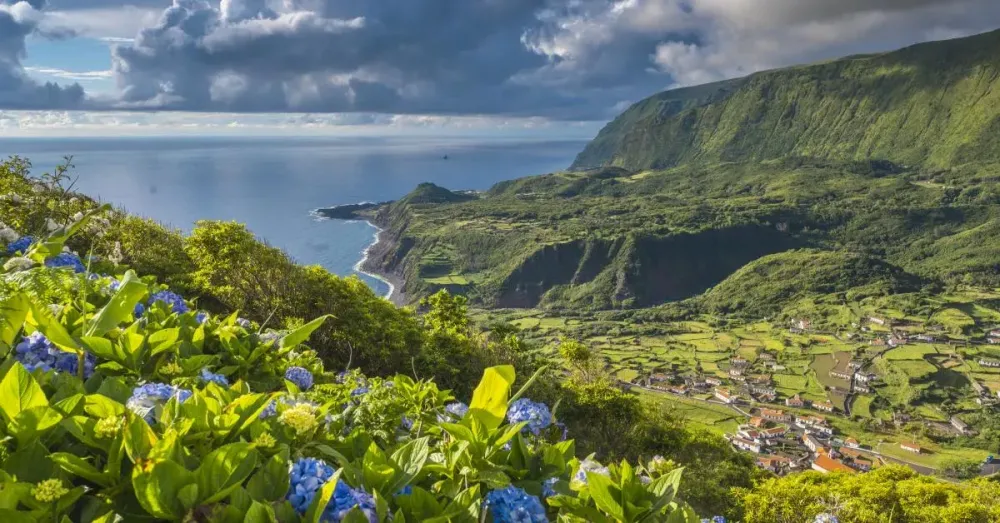
Hydrangea season peaks mid-July through August. The roadsides between Faja Grande and the central plateau turn into hedgerows of blue and purple. The Miradouro Craveiro Lopes, where hydrangeas frame a view of waterfalls and ocean cliffs, is the most photographed spot on the island during bloom.
Holy Ghost Festivals (Festas do Espirito Santo) run May through September. Every parish takes its turn hosting a celebration with processions, communal meals, and the symbolic coronation of an "emperor." These festivals are not tourist events. You're a guest of the community. The food is free and generous.
How to Get There
Here's the part that stops many travelers. There are no direct flights to Flores from mainland Portugal. No international connections. No ferry from the Central Group. The only way in is on a SATA Air Acores inter-island flight, typically connecting through Ponta Delgada (Sao Miguel) or Terceira.
That sounds complicated. It's less so than it appears.
The free routing trick. SATA is required by Portuguese law to provide free inter-island connections for passengers traveling to or from mainland Portugal. If you book a round-trip flight from Lisbon to the Azores and include Flores on the routing, the Ponta Delgada-to-Flores leg costs nothing extra. Book through SATA directly, not through third-party sites, to access this.
Flight schedules. SATA flies Ponta Delgada to Flores (FLW) several times weekly. In summer 2026, SATA is increasing frequencies on this route due to demand. The flight takes about 55 minutes. From Terceira, occasional flights connect to Flores as well. Check schedules carefully. Some days have no flights at all.
| Route | Airline | Time | Approx. Price (one-way) |
|---|---|---|---|
| Ponta Delgada → Flores | SATA | 55 min | €80-160 (or free with routing) |
| Terceira → Flores | SATA | ~45 min | €60-120 |
| Lisbon → Flores | SATA (via connection) | 4-5h total | €240-300 return |
Buffer days are not optional. Fog and wind cancel flights to Flores more frequently than to any other Azores island. The airport sits at sea level on the east coast, exposed to incoming weather. Being stuck an extra day happens regularly. Build at least one buffer day into your itinerary, ideally two. If you have a connecting flight from Ponta Delgada back to Lisbon, don't schedule it the same day as your Flores departure.
By ferry. There is no regular ferry service between Flores and the other Azores islands. The only ferry connection is the short crossing between Flores and Corvo (about 45 minutes), which runs twice weekly with schedules changing every two months. For getting to Flores itself, flights are the only option.
Getting Around: Cars, Roads, and Fog
You need a car on Flores. There's no public transport worth mentioning. No Uber. No hop-on tourist buses. Taxis exist in Santa Cruz das Flores but they're few, expensive for full-day use, and you'd need to arrange them in advance.
The rental car situation. This is the single biggest planning challenge on Flores. The island has a tiny fleet spread across two or three rental companies. In July and August, every car gets booked months in advance. Six months ahead is not too early. The Guidekin team has heard from travelers who tried to book two months out in summer and found zero availability.
| Company | Fleet Size | Deposit | Notes |
|---|---|---|---|
| Ilha Verde | Largest on Flores | ~€1,200 | Most vehicles, airport pickup |
| AutAtlantis | Medium | ~€700 | Lower deposit, book early |
| ADDCAR Rental | Small | Varies | Sometimes available when others sold out |
Expect to pay €40-70 per day in summer for a small manual car. Off-season drops to €18-30 per day. Full insurance coverage costs about €17 per day extra and is worth it. The roads are narrow, steep in places, and when fog rolls in, visibility drops to 20 meters.
"Flores has two gas stations. One in Santa Cruz das Flores, one in Lajes das Flores. That's it. Fill up whenever you pass one. Running out of fuel on the central plateau is not the adventure you want." - Guidekin team
Driving conditions. The main roads are paved and in decent shape. Secondary roads to viewpoints and trailheads can be rough, with potholes and no guardrails. Cows genuinely wander onto mountain roads, especially in the highlands. Drive slowly, especially in fog. The speed limit is mostly 50 km/h outside towns, and the curves deserve it.
Waterfalls and Natural Pools
Flores has more waterfalls per square kilometer than any other island in the Azores. The turfeira plateau acts as a giant sponge, soaking up rain and releasing it slowly through hundreds of streams that spill off the island's cliffs. After heavy rain, temporary waterfalls appear everywhere. After a dry week, only the permanent ones flow. Both are worth seeing.
Poco da Ribeira do Ferreiro
This is the one. The image that sells Flores to every traveler who sees it.
A short, slippery path (20 minutes, bring proper shoes) leads from the parking area near Fajazinha down to a hidden amphitheater. Vertical cliff walls, 150 meters high, covered in dense green vegetation. Dozens of thin waterfalls pour down the rock face from every level, feeding a still, dark pool at the bottom. The sound is constant. Water on rock, water on water, water on ferns.
The pool is swimmable but cold. Even in August, the water stays around 15-16°C. Fog often fills the amphitheater in the morning, which creates an atmosphere that photographs can't fully capture. The clearing tends to happen by late morning on summer days.
The path is slippery after rain. Wear waterproof hiking shoes, not sandals. The parking area has space for maybe 10 cars. In peak season, arrive before 10 AM or after 4 PM to avoid the crowd, such as it is. On Flores, a "crowd" means 15 people.
"Poco da Ribeira do Ferreiro on a foggy morning is a different experience from a sunny one, and both are worth having. The fog makes the waterfalls appear one by one as you walk closer. The sound hits before the view does. Go twice if the weather gives you the chance." - Guidekin team
Poco do Bacalhau
A 90-meter waterfall dropping into a swimmable natural pool, reached by a trail from Faja Grande. The walk down takes about 40 minutes from the village. The last section is steep. The pool at the base is warmer than Poco da Ribeira do Ferreiro and more sheltered, making it better for actual swimming.
The waterfall is most impressive after rain, but the trail becomes more challenging in wet conditions. The return hike is uphill and takes longer. Bring water and a snack.
Cascata da Ribeira Grande
One of the tallest waterfalls on the island, visible from Miradouro do Portal on the west coast. You see it from across the valley rather than from its base. Late afternoon light hits the waterfall directly, which is the best time for photographs.
Natural Pools in Santa Cruz das Flores
The capital has volcanic rock pools along the waterfront, filled by the ocean at high tide. Calm water, concrete platforms, ladders for entry. A practical swim spot between sightseeing days, especially when the west coast is foggy.
The Seven Crater Lakes
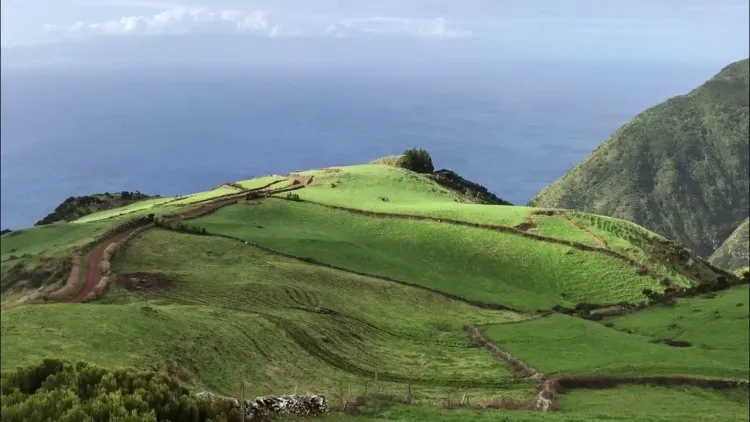
Flores has seven volcanic crater lakes scattered across the central plateau. The landscape up here feels different from the coast. Rolling green hills, low scrub, occasional fog banks, and absolute quiet. The plateau sits at 600-700 meters and the weather can change in minutes.
Lagoa Negra and Lagoa Comprida are the most visited pair. A miradouro (viewpoint) on the main road lets you see both lakes at once, separated by a narrow strip of green. Lagoa Negra is dark and deep. Lagoa Comprida is longer and lighter colored. On a clear day, the view extends to the ocean on both sides of the island. On a cloudy day, the lakes disappear into mist, which has its own strange beauty.
Lagoa Funda and Lagoa Rasa sit close together on the southwestern plateau. Less visited than the main pair, quieter, and the hiking trails connecting them cross through turfeira landscape that feels closer to Iceland than Portugal.
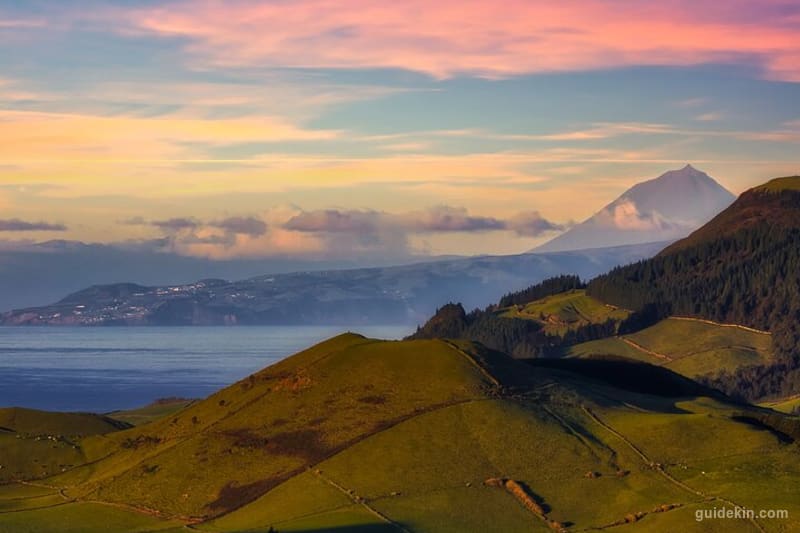
Morro Alto (914 meters) is the island's highest point, reachable by road. On the rare clear day, you can see Corvo to the north and sometimes the outline of Faial far to the east. The summit is often in cloud. When it clears, even for a few minutes, the view justifies the drive.
A driving loop from Santa Cruz through the central plateau, hitting the main viewpoints and lakes, takes about 2-3 hours with stops. Add hiking and it becomes a full day. The roads are good but narrow, with hairpin turns and occasional cattle.
Rocha dos Bordoes and Volcanic Geology
On the southwest coast, a wall of basalt columns rises 20 meters from the hillside. Rocha dos Bordoes is a geological monument formed when volcanic lava cooled slowly and contracted into hexagonal pillars, the same process that created the Giant's Causeway in Ireland and Reynisfjara in Iceland.
The columns are best viewed from the miradouro on the road above. In July and August, hydrangeas grow at the base of the columns, blue flowers against grey stone. That contrast is one of the most photographed scenes on Flores.
What makes the site distinctive is the setting. Unlike the Giant's Causeway (boardwalks, visitor centers, gift shops), Rocha dos Bordoes has a small parking area and a viewpoint. That's it. No entrance fee. No crowds. Just volcanic geometry in a green hillside above the Atlantic.
The geology of Flores deserves a moment. The island sits on the North American tectonic plate, separated from the rest of the Azores (on the Eurasian and African plates) by the Mid-Atlantic Ridge. This plate boundary explains the island's isolation. It's drifting west, away from Europe, at about 2.5 centimeters per year. In geological terms, Flores is leaving Portugal.
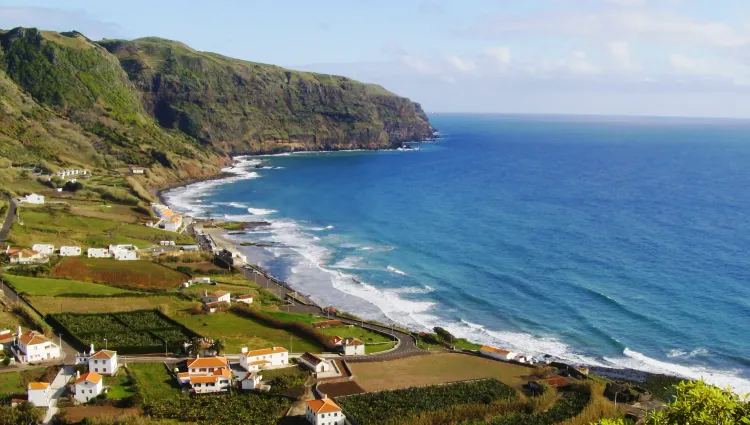
The "fajas" along the coast are another geological feature worth understanding. These flat coastal platforms formed when cliffs collapsed or lava flows extended the shoreline. Faja Grande is the largest and most accessible. The villages built on fajas sit between the ocean and vertical cliffs, with waterfalls as neighbors. It's a landscape that exists nowhere else in Europe.
Hiking Flores
The island has eight officially marked trails maintained by the Azores regional government. Trail conditions vary with weather and season. After heavy rain, some paths become muddy streams. Proper hiking boots are not optional.
Grande Rota das Flores (GR01 FLO)
The big one. A 52-kilometer multi-day coastal trail that crosses the island, hitting most major viewpoints and attractions. Total elevation gain around 3,200 meters. Rated high difficulty. Most hikers split it across 3-4 days, staying in villages or rural accommodation along the way.
This trail is for experienced hikers comfortable with unmarked sections and changing weather. Navigation skills matter. The full route is rarely completed by casual visitors, but individual sections make excellent day hikes.
Miradouro das Lagoas to Faja Grande
The most popular day hike on Flores. Starts at the crater lakes viewpoint on the central plateau and descends through green valleys to Faja Grande on the west coast, passing Poco do Bacalhau along the way. About 10 km, mostly downhill, 3-4 hours. You'll need to arrange a car shuttle or taxi for the return unless you want to hike back uphill.
Faja de Lopo Vaz
A steep descent from the cliff top to a remote faja on the south coast. The trail drops about 400 meters in elevation. At the bottom, a flat coastal strip with endemic plants found nowhere else on Flores. The return climb is strenuous. Bring lunch and plenty of water. Allow 4-5 hours round trip.
Lagoa Comprida to Lagoa Funda
A moderate trail connecting two crater lakes through the central turfeira landscape. About 6 km, 2-3 hours. Relatively flat by Flores standards. The terrain is spongy underfoot, waterlogged in places. Waterproof boots are essential.
| Trail | Distance | Time | Difficulty | Highlight |
|---|---|---|---|---|
| Grande Rota (GR01) | 52 km | 3-4 days | Hard | Complete island traverse |
| Lagoas to Faja Grande | 10 km | 3-4h | Moderate | Lakes, valleys, Poco do Bacalhau |
| Faja de Lopo Vaz | 8 km RT | 4-5h | Hard | Remote faja, endemic plants |
| Lagoa Comprida to Funda | 6 km | 2-3h | Moderate | Turfeira landscape, crater lakes |
| Lajedo to Faja Grande | 4 km | 1.5h | Easy-Moderate | Coastal, accessible |
Canyoning: World-Class and Under the Radar
Flores is one of Europe's top canyoning destinations, and almost nobody outside the adventure sports community knows it. The island has over 40 canyoning routes, ranging from beginner-friendly descents to advanced routes with rappels over 50 meters.
The geology makes it perfect. Narrow volcanic gorges, abundant water, steep drops, and natural pools at the bottom of every cascade. The routes run through terrain that hikers can't reach.
Ribeira Grande Canyon is the standout. Multiple rappels, swims through narrow rock channels, and jumps into deep pools. A half-day with an operator costs about €50-70 per person including equipment. No prior experience needed for the beginner routes, though you should be comfortable in water and heights.
WestCanyon is the main operator on Flores, offering routes for all levels. They provide wetsuits, helmets, harnesses, and ropes. Book at least a week ahead in summer.
The canyoning season runs May through October. Water levels are highest (and routes most dramatic) in spring and early summer. By August, some routes have lower water flow but remain operational.
If you've done canyoning elsewhere in Europe and want something wilder, less polished, and less crowded, Flores is the place. You might have an entire canyon to yourself.
Day Trip to Corvo
Corvo is 18 kilometers north of Flores. The smallest island in the Azores. One village, one road, around 430 residents, and a volcanic crater called Caldeirao that you can see from the rim in about 20 minutes by taxi.
Getting there. Two options. A boat from Santa Cruz das Flores takes about 45 minutes, passing along the Flores coastline with views of sea caves and coastal waterfalls along the way. Organized tours cost around €58 per person for a half-day trip (typically 9 AM to 3 PM), including the boat ride, a taxi to the crater, and time in the village. The ferry runs twice weekly for about €10 one-way, but schedules change every two months and cancellations for weather are frequent.
SATA also flies to Corvo, about a 10-minute hop, for roughly €60 one-way. The schedule is limited and weather-dependent.
What to see. The Caldeirao crater is the main attraction. A taxi from the village takes you to the rim (the walk is also possible but steep). The crater is about 300 meters deep and 2 km across, with two small lakes at the bottom. On a clear day, the panorama of Flores to the south is striking. On a cloudy day, you see grey.
The village itself is worth a slow walk. Stone houses, narrow lanes, a small church, a couple of cafes, and an environmental interpretation center. There are no rental cars on Corvo. You walk, bike, or take a taxi. The island is small enough that walking covers everything.
Bring cash. There's one ATM on Corvo and it occasionally runs out of money. One or two restaurants serve lunch. The portions are generous and the fish is fresh. Expect to pay €10-15 for a meal.
The Corvo day trip works best in stable weather. Check the forecast the day before and confirm with your operator. Cancellations happen regularly, especially outside July and August.
Villages Worth a Stop
Faja Grande and Fajazinha
Faja Grande is a village of about 150 people on the west coast, sitting on a flat coastal faja beneath vertical cliffs. The waterfalls behind the village are visible from the main road. At sunset, the light hits the cliffs and turns everything golden.
This is the best base for exploring the island's top attractions. Poco da Ribeira do Ferreiro is a short drive from here. Poco do Bacalhau is walkable. The village has a handful of restaurants, a small grocery store, and accommodation options.
Fajazinha sits just above Faja Grande, connected by a short road. The village is known for its traditional water mills, some still operational. The drive between the two villages passes through dense hydrangea hedgerows in summer.
Aldeia da Cuada
A 17th-century farming village abandoned in the 1960s when its residents emigrated to America. In the 1990s, a local family began restoring the stone houses into self-catering holiday accommodation. Today, 16 stone cottages sit among gardens and fields, with a heated pool and an on-site restaurant serving traditional Azorean cuisine.
Aldeia da Cuada books up to a year in advance for July and August. Prices range from €125 to €220 per night depending on the cottage and season. It's the most distinctive accommodation on Flores and worth reserving early.
Santa Cruz das Flores
The capital and largest settlement, on the east coast. The airport, health center, main supermarket, and most services are here. The town has a church dating to the 1500s, a small museum, and the volcanic rock swimming pools along the waterfront.
Santa Cruz is practical rather than charming. Use it for groceries, fuel, and flights. Stay here if you want proximity to the airport, especially with an early morning departure.
Lajes das Flores
The second town, on the south coast. Smaller and quieter than Santa Cruz. The whaling museum documents the island's history with the sea, including the tools, boats, and stories of Flores' whaling past. The harbor is pretty at sunset.
Where to Stay
Flores has limited accommodation. No chain hotels, no big resorts. The options are small guesthouses, vacation rentals (Airbnb and Booking.com), and a few distinctive properties.
Where to base yourself:
- Faja Grande (west coast): Best for attractions. Closest to Poco da Ribeira do Ferreiro, Poco do Bacalhau, and the best sunset views. A handful of restaurants and a small shop. Limited but growing options.
- Santa Cruz das Flores (east coast): Best for logistics. Airport, fuel, health center, biggest supermarket. More accommodation options. Farther from the main natural attractions (30-40 minutes by car to the west coast).
- Lajes das Flores (south coast): Quietest. Historic, pretty harbor. Good for travelers who want solitude. Fewer services.
| Type | Price Range (per night) | Notes |
|---|---|---|
| Budget (Airbnb / rental) | €17-40 | Basic but functional, kitchen access |
| Mid-range (guesthouse) | €80-125 | Breakfast often included |
| Premium (Aldeia da Cuada) | €125-220 | Restored village, unique experience |
Book 5-6 months ahead for summer. The island has limited stock. In peak season, everything from budget Airbnbs to Aldeia da Cuada sells out. Off-season, you'll have your pick and pay 30-50% less.
What to Eat
Flores' food is simpler than what you'll find on Sao Miguel or Terceira. Fewer restaurants, shorter menus, less variety. What it lacks in range, it makes up for in freshness. The fish was caught that day. The cheese was made down the road. The watercress in the soup grew in a stream you probably drove past.
Sopa de agriao (watercress soup). The signature dish. Wild watercress grows in every stream on the island. The soup is simple, green, and tastes like the landscape.
Lapas (grilled limpets). Pulled off the rocks, grilled with garlic butter, served on the shell. The standard Azorean appetizer. On Flores, they're particularly good because the coastline is clean and the limpets are large.
Percebes (goose barnacles). Harvested from wave-battered rocks by collectors who risk their necks for them. Boiled in seawater and eaten with your hands. Salty, chewy, and expensive because the harvesting is genuinely dangerous.
Queijo das Flores. The local soft cheese. Mild, creamy, fresh. Nothing like the hard, peppery Sao Jorge cheese. Buy it at the small dairies or at the market in Santa Cruz.
Grilled rabbit. An island specialty. O Mergulhador in Lajes serves a version that locals swear by.
Best restaurants:
- Por do Sol (Faja Grande) - ocean views, best limpets and percebes on the island
- Maresia (Faja Grande) - contemporary take on Azorean ingredients, local sourcing
- O Mergulhador (Lajes) - grilled rabbit, rustic atmosphere
- A Tasca do Porto (Santa Cruz) - traditional, no-frills, generous portions
A practical note. The supermarkets on Flores are small and stock what arrives by boat or plane. If you're staying in self-catering accommodation, don't expect the variety you'd find in Ponta Delgada. Bring specialty items (wine, coffee, snacks) from the mainland or from Sao Miguel. Fresh bread, dairy, meat, and basic vegetables are available locally. Plan meals simply and eat at restaurants when you want variety.
Sample Itineraries
3 Days: The Highlights
Day 1 - West Coast Waterfalls:
Fly into Santa Cruz. Pick up rental car. Drive to Faja Grande (40 minutes). Poco da Ribeira do Ferreiro in the morning (arrive before 10 AM). Lunch at Por do Sol. Afternoon: Poco do Bacalhau hike (2 hours round trip). Watch the sunset from Faja Grande.
Day 2 - Crater Lakes and Geology:
Drive the central plateau. Lagoa Negra and Lagoa Comprida viewpoint. Continue to Morro Alto if weather is clear. Rocha dos Bordoes (late morning for best light). Lunch at A Tasca do Porto in Santa Cruz. Afternoon: swim at the natural pools in Santa Cruz. Explore the town.
Day 3 - Corvo Day Trip:
Morning boat to Corvo (confirm the day before). Taxi to Caldeirao crater. Walk the village. Lunch on Corvo. Boat back to Flores mid-afternoon. Evening: pack and prepare for morning flight.
5 Days: Proper Exploration
Days 1-3: Same as above.
Day 4 - Hiking Day:
Miradouro das Lagoas to Faja Grande trail (10 km, 3-4 hours). Arrange a taxi or second car for the shuttle. Afternoon: rest, read, swim. Dinner at Maresia.
Day 5 - Buffer/Adventure:
Option A: Canyoning with WestCanyon (half day).
Option B: Revisit west coast viewpoints in different light. Drive the south coast. Lajes das Flores whaling museum. Miradouro Craveiro Lopes for hydrangeas (July-August).
Option C: Weather recovery day. If fog disrupted earlier plans, use this day to catch up.
7 Days: Deep Flores
Add two more days for: the Grande Rota trail (or sections of it), a second attempt at Corvo if weather canceled the first, exploring every village on the island, stargazing from the central plateau (minimal light pollution makes Flores one of the best spots in the Azores for night sky), or simply slowing down. On Flores, slowing down is the point.
Budget and Costs
Flores is slightly more expensive than the main Azores islands for car rental and accommodation (limited supply), but cheaper for food and activities. Flights add cost compared to Sao Miguel or Terceira, where direct mainland connections are available.
| Category | Budget | Mid-Range | Comfort |
|---|---|---|---|
| Accommodation (per night) | €20-40 | €80-125 | €150-220 |
| Car rental (per day) | €30-45 | €45-60 | €70+ |
| Food (per day) | €15-25 | €30-45 | €50-70 |
| Activities | €0-20 | €50-70 | €80-120 |
| Daily total (per person) | €65-130 | €205-300 | €350-480 |
Flights: Round trip from Lisbon via connection starts around €240. Use SATA's free routing service to reduce costs.
Free things: Hiking trails (all free), viewpoints, natural pools in Santa Cruz, Rocha dos Bordoes, village exploration, and the waterfalls themselves cost nothing. The best things on Flores don't require a ticket.
Practical Tips
- Weather dictates everything. Check the forecast each morning and adjust your plan. If the west coast is clear, go immediately. The fog can roll in by noon.
- Download offline maps. Phone signal drops out across the central plateau and on secondary roads. Google Maps and Maps.me both work offline. Download the Flores map before you leave your accommodation.
- Fill the tank whenever you pass a gas station. Two stations on the entire island: Santa Cruz and Lajes. Neither is open 24 hours. Running dry on the central plateau means a long walk.
- Bring groceries for self-catering. The supermarkets are small and stock is unpredictable. If you're cooking at your rental, buy staples (coffee, wine, pasta, olive oil, snacks) in Ponta Delgada before your connection flight.
- Cash matters. Some restaurants and most rural shops are cash-only. The ATMs in Santa Cruz are reliable. The single ATM on Corvo is not. Withdraw enough before the Corvo trip.
- Wear proper hiking shoes. Every trail on Flores involves wet volcanic rock, mud, or both. Waterproof boots with ankle support are the minimum. Sandals are for the natural pools, not the paths.
- Layers, always. The coast can be 22°C while the plateau is 14°C with wind. A waterproof jacket and a fleece fit in a daypack and prevent misery.
- Stargazing from the plateau. On clear nights, the Milky Way is visible to the naked eye from the central highlands. Flores has almost zero light pollution outside the two towns. Bring a tripod if you're into astrophotography.
- Don't skip the Corvo boat ride. Even if Corvo itself doesn't interest you, the boat passes along the Flores coastline with views of sea caves and waterfalls you can't see from land. The ride alone is worth the price.
- Build buffer days. Weather cancels flights regularly. A one-day delay is common. A two-day delay happens. Don't book a connecting flight from Ponta Delgada to Lisbon on the same day you're supposed to leave Flores.
Browse available tours in the Azores to plan whale watching, canyoning, and guided hikes. Some experiences on the smaller islands book up fast.
FAQ
Is Flores island in the Azores worth visiting?
Absolutely. Flores has the most dramatic natural scenery in the Azores. Poco da Ribeira do Ferreiro alone justifies the effort of getting there. The tradeoff is logistics: harder to reach, fewer services, weather delays. If you want polished tourism, stay on Sao Miguel. If you want raw Atlantic wilderness, Flores delivers.
How do you get to Flores from Lisbon?
Fly SATA Azores Airlines from Lisbon to Ponta Delgada (Sao Miguel), then connect to Flores. The total journey takes 4-5 hours including the connection. SATA's free routing service means the inter-island leg costs nothing extra when booked as part of a mainland itinerary. No direct flights from Lisbon to Flores exist.
How many days do you need in Flores?
Three days covers the main waterfalls, crater lakes, and a Corvo day trip. Five days adds hiking and buffer time for weather delays. Seven days lets you explore every corner, try canyoning, and move at the island's own pace. The Guidekin team recommends five days for a first visit.
Do you need a car in Flores?
Yes. There's no public transport, no Uber, and taxis are scarce. Rent a car and book it six months ahead for summer. The island is small (you can drive end to end in 40 minutes), but the attractions are spread across both coasts and the central highlands.
Can you do a day trip to Corvo from Flores?
Yes. Organized boat tours run from Santa Cruz das Flores for about €58 per person, typically 9 AM to 3 PM. The trip includes the boat ride along the Flores coast, a taxi to the Caldeirao crater on Corvo, and time in the village. Check weather and confirm the day before. SATA also flies the route but schedules are limited.
Is Flores the most beautiful island in the Azores?
Many returning visitors say yes. The waterfalls, crater lakes, and coastal cliffs on Flores are more dramatic than anything on Sao Miguel or Terceira. The tradeoff is that Flores has less variety (no hot springs, no UNESCO cities, fewer restaurants) and harder logistics. Beauty is not the only reason to choose an island, but if raw landscape is your priority, Flores wins.
Start Planning Your Flores Trip
Flores is the island that travelers discover last and remember longest. It doesn't have Sao Miguel's infrastructure, Terceira's festivals, or Pico's volcano. What it has is waterfalls pouring off cliff faces into green pools, crater lakes that disappear into fog, and a population smaller than a single apartment block in Lisbon.
Getting there takes planning. The car rental situation requires early booking. The weather will change your plans at least once. None of that matters after you stand at the edge of Poco da Ribeira do Ferreiro and watch dozens of waterfalls cascade 150 meters into silence.
Start with our complete Azores travel guide if you're planning a multi-island trip. Our Pico Island guide covers the volcano, vineyards, and whale watching on the neighboring island. Check SATA schedules early and book that rental car the moment you have flight dates.
Flores is not convenient. That's exactly why it's still like this.