Key Takeaways
- The volcano defines everything: Mount Pico rises 2,351 meters straight out of the Atlantic. The summit hike takes 6-7 hours round trip, costs €20 per person, and on a clear day you see five islands from the top. Hike details →
- Wine from volcanic rock: Pico's UNESCO-listed vineyards grow inside black basalt corrals called currais. No soil, no shade, just lava stone and Atlantic wind. The Verdelho white is unlike anything you've tasted. Vineyards and tastings →
- Whale watching capital: Lajes do Pico was a whaling town until 1987. Now the same spotters who tracked whales to kill them guide boats to watch them. Over 20 species pass through these waters. Details →
- The Triangle trick: Pico sits 30 minutes by ferry from Faial and a short hop from Sao Jorge. Use Pico as a base and explore all three islands without changing hotels. Triangle day trips →
- You need a car. Public transport on Pico is almost nonexistent. Rent a car, drive the EN3 highway through the island's volcanic interior, and stop at every miradouro. Getting around →
- Three days minimum. Two days covers the highlights. Three to four days lets you hike the volcano, visit vineyards, go whale watching, and still have time for a slow lunch in Lajes. Itineraries →
Why Pico
Pico is the second largest island in the Azores and the one with the sharpest identity. Everything here connects back to two things: the volcano and the sea.
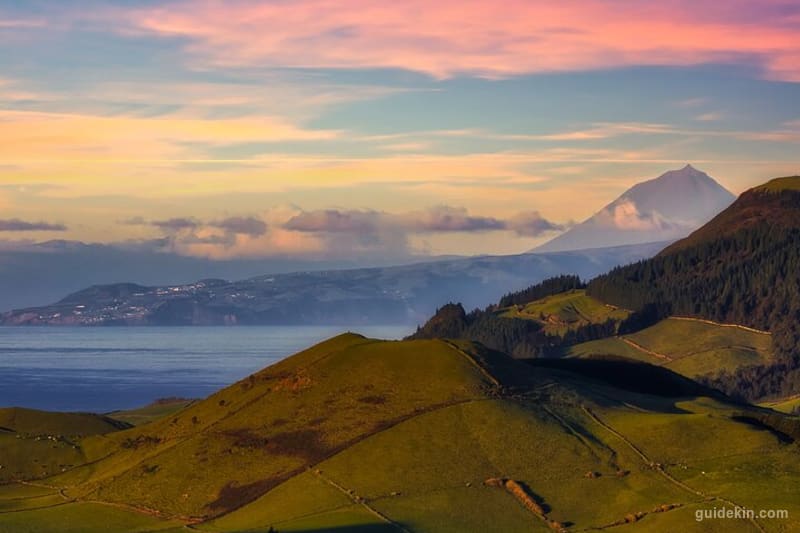
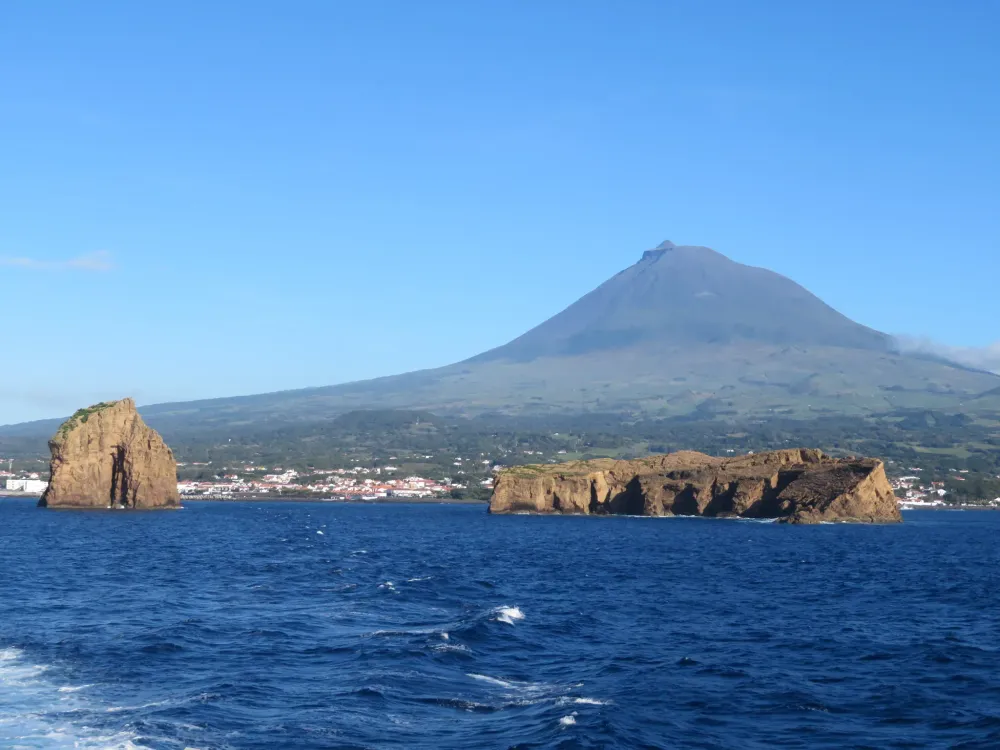
Mount Pico is the highest point in all of Portugal. At 2,351 meters, the cone rises so steeply from the ocean that on cloudy days the summit floats above the clouds like a separate world. From neighboring Faial, it dominates the horizon. Locals on other islands use it to predict weather. If Pico's peak is clear in the morning, it'll be a good day. If it's wearing a cloud hat, rain is coming.
At sea level, the island tells a different story. Pico's coast is covered in black basalt lava fields where, for centuries, farmers built thousands of small stone corrals to grow grapes. These currais - walls of stacked lava rock just high enough to block the wind - create a landscape so distinctive that UNESCO gave it World Heritage status in 2004. The wine that comes out of these vineyards, mostly Verdelho whites, has a mineral bite that makes sommeliers pay attention.
Then there's the whaling history. Pico was the center of Azorean whaling from the 18th century until 1987, when Portugal banned the practice. The old whaling stations in Lajes do Pico and Sao Roque now house museums. The vigias (lookout towers) that once spotted sperm whales for harpoon boats now spot them for tour operators. The transition from hunting to watching happened within a single generation, and many of today's whale watching guides are sons and grandsons of whalers.
Around 14,000 people live on Pico, split between three main towns: Madalena on the west coast (ferry port, closest to Faial), Lajes do Pico on the south coast (whale watching hub), and Sao Roque do Pico on the north coast (airport, fishing port). Outside these towns, the island is volcanic rock, pastures, hydrangea-lined roads, and silence.
Compared to Sao Miguel, Pico has far fewer tourists, no proper nightlife, and limited dining options. Compared to Terceira, it lacks the UNESCO city and the festival calendar. What Pico has instead is a clarity of purpose. You come here to hike the volcano, taste wine grown in lava rock, watch whales from a former whaling port, and eat fish that was swimming that morning. There's no filler.
The island also serves as the best base for exploring the Central Group. Faial is a 30-minute ferry ride. Sao Jorge is reachable by ferry or short flight. From Pico, you can cover three islands without packing and unpacking.
If your Azores trip includes more than just Sao Miguel, Pico should be the next island on your list. It's raw, it's quiet, and it rewards the kind of traveler who prefers substance over polish.
When to Visit
Pico's weather follows the same Atlantic patterns as the rest of the Azores. Mild year-round, rain possible any day, and microclimates that change every few kilometers. The volcano creates its own weather system. The south coast can be sunny while the north gets horizontal rain.
June through September is peak season. Temperatures sit between 20-25°C, the ocean warms to 21-23°C, and rain is least frequent. This is the best window for the summit hike (clearer skies) and swimming in natural pools. Book accommodation and car rental at least a month ahead for July and August.
April through May and October is shoulder season. The Guidekin team's pick. Fewer visitors, green landscapes, lower prices, and whale watching at its peak. Blue whales migrate through Azorean waters from February to May. Sperm whales are present year-round but most active April through October.
November through March is off-season. Temperatures stay between 13-17°C. More rain, shorter days, but also 30-50% lower prices on everything. Sperm whale sightings remain strong. The summit hike is often closed due to weather, but the vineyards, museums, villages, and food are all the same. Thermal pools on neighboring Sao Miguel feel even better in cool weather if you combine the islands.
| Month | Avg Temp | Rain Days | Ocean Temp | Crowds | Best For |
|---|---|---|---|---|---|
| Jan | 14°C | 15 | 17°C | Very low | Low prices, whale watching |
| Feb | 14°C | 13 | 16°C | Very low | Blue whales arriving |
| Mar | 15°C | 13 | 16°C | Low | Blue whales, green hills |
| Apr | 16°C | 11 | 17°C | Moderate | Whale watching peak, wildflowers |
| May | 17°C | 9 | 18°C | Moderate | Hydrangeas starting, great hiking |
| Jun | 20°C | 7 | 20°C | High | Summit hike season opens, Whalers Week |
| Jul | 23°C | 4 | 22°C | Peak | Swimming, clearest skies |
| Aug | 24°C | 5 | 23°C | Peak | Warmest ocean, peak tourism |
| Sep | 22°C | 8 | 22°C | High | Warm water, wine harvest begins |
| Oct | 19°C | 12 | 20°C | Moderate | Wine harvest, vindimas, autumn light |
| Nov | 17°C | 14 | 19°C | Low | Off-season prices return |
| Dec | 15°C | 15 | 18°C | Very low | Christmas traditions, quiet island |
Festivals and Events
Whalers Week (Semana dos Baleeiros) happens in Lajes do Pico every August, usually the last week of the month. The festival celebrates the island's whaling heritage with traditional whaleboat races in the harbor (teams row the original wooden boats), live music, street food stalls, and cultural exhibitions. The regata de baleeiras is the highlight. Six-man crews race the same narrow canoes their grandfathers used to chase sperm whales. The whole town turns out. If you can time your visit for Whalers Week, do it. This is the one week when Pico feels busy, and the energy is genuine.
Holy Ghost Festivals (Festas do Espirito Santo) run from May through September in villages across the island. Each village has an imperio, a small decorated chapel. The local brotherhood organizes a communal meal, usually sopas do Espirito Santo (bread soaked in beef broth with mint and spices). These aren't tourist events. You're invited as a guest of the community.
Vindimas (wine harvest) runs late August through October. The grapes are picked by hand because the narrow stone corrals make machinery impossible. If you visit during harvest, some producers welcome visitors who want to help pick. The Cooperativa Vitivinicola da Ilha do Pico sometimes organizes harvest experiences. Ask when you arrive. It's physical work in the sun, but you'll understand the vineyards differently after spending a morning bent between the lava walls.
Festa de Sao Joao (St. John's Festival) in Sao Roque, around June 24, brings bonfires, music, and a street party to the north coast town. Smaller than Whalers Week but more local in character.
Getting There and Getting Around
Flights to Pico
Pico Airport (PIX) sits on the north coast near Sao Roque. It's small. SATA Azores Airlines operates flights from Lisbon (2.5 hours, from about €60 one-way) with a stop on some routes. Direct inter-island flights connect Pico to Sao Miguel (45 minutes) and Terceira (30 minutes).
The flight schedule is limited compared to Sao Miguel or Terceira. Many visitors fly into Sao Miguel or Terceira first, then hop to Pico on a short SATA flight. Book inter-island flights early in summer. They sell out.
| Route | Airline | Time | From |
|---|---|---|---|
| Lisbon → Pico | SATA | 2h 30m | ~€60 |
| Sao Miguel → Pico | SATA | 45m | ~€45 |
| Terceira → Pico | SATA | 30m | ~€40 |
| Faial → Pico | Ferry (Atlanticoline) | 30m | ~€7 |
The Faial-Pico Ferry
This is the most popular way to reach Pico. Atlanticoline ferries run between Horta (Faial) and Madalena (Pico) multiple times daily. The crossing takes 30 minutes and costs around €7 one-way per person, plus €15-20 for a car.
In summer (June through September), there are 8-10 daily departures in each direction. Winter schedules drop to 3-4 per day. Seas can get rough, and cancellations happen, especially November through March. Build buffer time into your plans if you're catching a flight from Faial or Pico.
Many travelers fly into Horta (Faial has more flight connections than Pico), rent a car there, and ferry it across to Pico. This works well, but confirm with your rental company that they allow the car on the ferry. Most local companies do. Some international chains don't.
"If you're coming from Faial for the day, leave the rental car in Horta and rent a separate one on Pico. The ferry car fee adds up over multiple crossings, and parking in Madalena is easy. You'll also avoid the stress of tight ferry schedules." - Guidekin team
Car Rental
You need a car on Pico. There is no way around this.
Public buses connect Madalena, Lajes, and Sao Roque, but they run a few times per day at best. The natural pools, viewpoints, vineyards, and trailheads sit at the end of roads that no bus reaches.
Local companies like Autatlantis and Ilha Verde operate on Pico. Budget €30-40 per day in summer, €20-30 off-season. Manual transmission is cheaper and more common. The roads are well-paved but narrow in places, especially along the coast between villages. Get full insurance. Stray cows occasionally appear on rural roads.
Fill up in Madalena or Sao Roque. Gas stations in smaller villages may have limited hours or only accept Portuguese bank cards at self-service pumps.
Driving Notes
The island is roughly 42 km long and 15 km wide. You can drive around the perimeter in about two hours without stops. But you won't manage that, because every few kilometers there's a viewpoint, a natural pool, or a village worth slowing down for.
Google Maps works for main roads. For smaller tracks, especially near vineyards and coastal paths, it occasionally sends you the wrong way. Download offline maps as backup.
Climbing Mount Pico
This is the hike that puts Pico on every Azores itinerary. The summit of Mount Pico, at 2,351 meters, is the highest point in Portugal. The trail climbs from 1,230 meters at the Casa da Montanha (mountain house) to the top in about 3.5 km. Sounds short. It isn't.
What to Expect
The ascent is steep, unrelenting, and almost entirely over loose volcanic rock. There are no switchbacks in the traditional sense. The trail goes more or less straight up, marked by wooden posts every 50 meters or so. In the lower section, you walk through scrubby vegetation. Above 1,800 meters, it's bare rock, scree, and increasingly thin air.
The final stretch to Piquinho, the true summit (a small rocky pinnacle on top of the main cone), involves a short scramble with fixed chains. It's exposed but manageable if you're comfortable with heights. Skip it if you're not.
| Detail | Info |
|---|---|
| Distance | ~7 km round trip |
| Elevation gain | ~1,120 m |
| Time | 3-4 hours up, 2-3 hours down |
| Difficulty | Strenuous |
| Cost | €20/person (mandatory registration at Casa da Montanha) |
| GPS tracker | Provided with registration (mandatory, returned after descent) |
| Season | Typically May through October (closed in bad weather/winter) |
| Start time | Early morning recommended (5-7 AM start) |
| Max daily hikers | Limited. Book online at trails.visitazores.com |
Preparation
Bring layers. At the base it might be 18°C and sunny. At the top, 5°C with wind. A waterproof jacket is essential even on clear days. Clouds roll in fast. Sturdy hiking boots with ankle support are non-negotiable on the loose volcanic rock. Bring at least 1.5 liters of water per person, snacks, sunscreen, and a headlamp if you're starting pre-dawn.
The registration at Casa da Montanha is mandatory. Show up without a booking and you won't go up. Book several days ahead in summer. The mountain house also has a small exhibit about the volcano's geology and eruption history, worth 10 minutes before you start.
The Sunrise Hike
Start at 2 or 3 AM with headlamps. Reach the summit for sunrise. This is the version that stays with you. You climb in darkness, the stars overhead, the lights of Faial and Sao Jorge below. As you approach the summit, the sky lightens. Then the sun comes up over a sea of clouds and you're standing above all of it.
The sunrise hike is harder logistically (you need a headlamp, warm layers for the cold pre-dawn hours, and enough energy to descend safely afterward) but the payoff is enormous. The mountain is also quieter at that hour. You might share the summit with five people instead of fifty.
"The mountain sets the rules. Check the forecast the night before, call Casa da Montanha in the morning, and be ready to postpone if conditions are bad. A clear summit day on Pico is worth waiting for. A foggy one gives you nothing but sore legs." - Guidekin team
What Happens at the Top
The summit crater is about 500 meters across and 30 meters deep. Inside, you'll see fumaroles releasing sulfurous gas. The smell is noticeable. The ground is warm in places. The true summit, Piquinho, is a rocky pinnacle inside the crater that adds another 70 meters. Climbing Piquinho requires a short scramble with fixed chains. It takes about 15 minutes and the exposure is real. Look down and you see the crater floor. Look up and there's nothing but sky. Skip it if heights bother you. The main crater rim view is already spectacular.
On a clear day from the top, you can see Faial, Sao Jorge, Graciosa, Terceira, and occasionally Flores. Five islands. Below you, the sea of clouds that forms around the mid-elevation is one of those sights that photographs can't reproduce. The scale is too large. You're standing on a point above the Atlantic, above the weather, and the silence at that altitude is complete.
After the Hike
Your legs will know they did something. The descent is harder on the knees than the ascent because of the loose rock. Trekking poles help significantly. Plan nothing strenuous for the rest of the day. A long lunch in Madalena, a natural pool swim, or just a nap. You earned it.
If You Don't Hike
If the full summit hike isn't for you, drive to Casa da Montanha anyway. The parking area at 1,230 meters already offers a dramatic view of the surrounding coastline, Faial, and Sao Jorge. There's also a shorter loop trail nearby (Trilho da Montanha) that follows the lower slopes for about an hour, staying below the treeline. Moderate difficulty, no registration needed, and you still get the volcanic landscape experience.
UNESCO Vineyards and Pico Wine
In 2004, UNESCO inscribed the Landscape of the Pico Island Vineyard Culture as a World Heritage Site. The recognition covers a specific stretch of coastline, mostly along the north and west of the island between Madalena and Santa Luzia, where vineyards grow in currais - small rectangular enclosures built from stacked black basalt lava rock.
The Currais
The system is centuries old. Portuguese settlers discovered that grapevines could survive in Pico's harsh conditions if protected from Atlantic wind and salt spray. They built thousands of low stone walls, creating a grid of tiny plots. Each corral holds a few vines. No soil was added. The roots grow directly into the porous lava rock.
Walking through the vineyards feels like crossing a volcanic labyrinth. Black stone walls stretch in every direction, knee to waist high, with green vines spilling over the tops. The contrast between the dark basalt, the green leaves, and the blue Atlantic behind it is one of the most striking landscapes in all of Portugal.
The best area to see the currais is between Madalena and Cachorro on the north coast. The Museu do Vinho (Wine Museum) in Madalena, housed in a former Carmelite convent, explains the history and techniques. Entry is around €3.
Wine Tasting
Pico's signature grape is Verdelho, a white variety that produces a dry wine with sharp mineral notes and a salty finish. The volcanic terroir comes through clearly. If you've had Verdelho from Madeira or Australia, the Pico version is different. Leaner, drier, more angular.
The Cooperativa Vitivinicola da Ilha do Pico in Madalena is the main producer. Tastings start at €5 for a flight of three wines. They also produce reds from local and imported grape varieties, though the whites are the reason to visit.
Smaller producers offer tastings too. Look for Czar, Curral Atlantis, and Picowines. Some require advance booking. Ask at your accommodation or at the wine museum for current recommendations. Production is small-scale and wines change year to year.
A bottle of good Pico Verdelho costs €10-20 at the cooperative. In Lisbon or Porto, the same bottle runs €25-35 when you can find it. Buy on the island.
Wine harvest (vindimas) runs late August through October. The grapes are still picked by hand due to the terrain. The walls of the currais make machine harvesting impossible. If you're on Pico during harvest, some producers welcome visitors who want to help pick. It's physical work, bending between low stone walls under the sun, but it's a real experience.
Whale Watching from Pico
Pico was the whale hunting capital of the Azores. Sperm whale oil fueled lamps across Europe. Whale teeth became scrimshaw. The industry shaped every coastal town on the island. Portugal banned commercial whaling in 1984 (the last Azorean whale was taken in 1987), and within a decade, the same communities pivoted to whale watching tourism.
The transition worked because the infrastructure was already there. The vigias - stone lookout towers on the cliffs - still have spotters scanning the ocean with binoculars. When they see a blow, they radio the boats. This land-based spotting system gives Azorean whale watching an unusually high success rate, around 98% during peak season (April through October).
What You'll See
Over 20 species of cetaceans pass through Azorean waters. Sperm whales are the headliners. They're resident year-round, diving to depths of 1,000+ meters to hunt giant squid, then surfacing to breathe for 10-15 minutes between dives. You'll often see the distinctive angled blow, the dark back rolling at the surface, and with luck, the tail fluke as they dive.
Blue whales, the largest animals ever to live on Earth, migrate through from February to May. Fin whales, sei whales, and humpbacks also pass through seasonally. Common dolphins, bottlenose dolphins, and Risso's dolphins are spotted on nearly every trip.
| Species | Best Months | Frequency |
|---|---|---|
| Sperm whale | Year-round (peak Apr-Oct) | Very common |
| Blue whale | Feb-May | Seasonal, less predictable |
| Fin whale | Mar-Jun | Common in spring |
| Sei whale | Mar-Jun | Occasional |
| Common dolphin | Year-round | Almost every trip |
| Bottlenose dolphin | Year-round | Very common |
| Risso's dolphin | Year-round | Common |
| Beaked whales | Year-round | Rare but possible |
Where to Book
Most operators are based in Lajes do Pico, the historic whaling center. A half-day trip (3-4 hours) costs €55-75 per person. Companies like Espaço Talassa, CW Azores, and Aqua Acores have solid track records. Full-day trips that combine whale watching with swimming alongside dolphins run €80-100.
Lajes is the better departure point because the deep water where sperm whales feed is closer to the south coast. Some operators also run from Sao Roque on the north coast and from Horta on Faial.
Book at least a few days ahead in summer. Trips go out in rigid inflatable boats (RIBs) or larger catamarans. RIBs are faster and get closer, but rougher in choppy seas. Catamarans are steadier and more comfortable. Motion sickness is real. Take medication before boarding if you're prone.
The Whaling Museums
Two museums on Pico preserve the whaling history. The Museu dos Baleeiros (Whalers Museum) in Lajes do Pico, inside a former boathouse, has whaling canoes, harpoons, scrimshaw, and photographs from the last decades of whaling. Small but powerful. Entry is about €3.
The Museu da Industria Baleeira (Museum of the Whaling Industry) in Sao Roque occupies a converted whale processing factory. The scale of the machinery - the rendering vats, the cutting platforms - brings the industrial reality of whaling into focus. Entry is about €5.
Visit both. They tell different parts of the same story. Together, they take maybe 2-3 hours and give you a deep understanding of why whaling defined this island for 200 years, and why its end was both an economic blow and a moral relief.
Choosing Your Trip
If you only have time for one whale watching trip, go in the morning. Conditions are usually calmer before noon, and the light is better for spotting blows. Dress in layers. It's always cooler on the water than on land. Bring a waterproof jacket even on sunny days. The spray from the RIB at speed will soak you otherwise. Sunscreen is essential. The reflection off the water doubles the UV exposure.
Seasickness tip: sit near the center of the boat (least movement), keep your eyes on the horizon, and take medication 30-60 minutes before departure. Ginger sweets help some people. An empty stomach helps no one. Eat a light breakfast.
Exploring Pico: Village by Village
Pico has no resorts, no boardwalks, no tourist strips. The island's charm is in its small towns, volcanic coastline, and the spaces in between. Here's what's worth your time.
Madalena
The main ferry port and the closest town to Faial. Madalena is where most visitors arrive and where the best wine infrastructure is. The Cooperativa Vitivinicola sits at the edge of town. The Wine Museum is a short walk from the ferry terminal. The waterfront has a few cafes and restaurants. From the harbor, the view of Faial across the channel is constant.
Madalena is practical more than atmospheric. Use it for ferry connections, wine, and supplies. The supermarket here is the island's largest.
Lajes do Pico
The soul of the island. Lajes was the whaling capital, and the town still carries that identity. The Whalers Museum sits on the waterfront. The harbor is where whale watching boats depart. The streets are narrow, the buildings old, and the restaurants serve what the fishermen brought in that morning.
Lajes has a slower pace than Madalena. There's a small marina, a handful of cafes, and an evening energy in summer when the fishing boats come in and locals gather at the harbor wall. The weekly market sells local cheese, fruit, and honey.
For a base on Pico, the Guidekin team recommends Lajes over Madalena. You're closer to whale watching, the atmosphere is more genuine, and the south coast gets more sun.
Sao Roque do Pico
The third town and home to Pico's airport. Sao Roque is a working fishing port without much tourist infrastructure, which is precisely its appeal. The Whaling Industry Museum here is excellent. The harbor is small and authentic. A few restaurants serve fresh fish at prices below what you'd pay in Lajes or Madalena.
The north coast around Sao Roque catches more weather than the south, but the dramatic cliff views and empty roads make it worth driving through.
The Villages Between
The smaller villages along Pico's coast are where the island feels most itself.
Cachorro, between Madalena and Santa Luzia on the north coast, has the best examples of accessible UNESCO vineyards. Walk the interpretive trail through the currais. The name means "puppy" in Portuguese, named after a dog-shaped rock formation on the shore.
Lajido (also called Lajido da Criacao Velha) is a beautifully preserved wine village south of Madalena. The Lajido Interpretation Centre explains the vineyard culture, and the surrounding fields of black basalt walls stretching to the sea are the most photogenic on the island.
Santa Luzia, further east on the north coast, has a natural swimming pool carved into the basalt rock. It fills with ocean water at high tide and stays calm enough for swimming. Free access.
Santo Antonio, at the eastern tip of the island, feels remote. Few tourists make it this far. The road narrows, the villages shrink, and the volcanic landscape turns wilder. Worth the drive for the isolation and the coastal views.
Piedade, near the eastern end, has a small church on a headland with one of the best sunset-to-sea views on the island. The village itself is tiny. Bring your own water and snacks. There are no shops or restaurants.
Sao Mateus, between Madalena and Lajes on the south coast, has a small fishing harbor and a couple of restaurants that serve grilled fish in portions meant for people who've been working the sea all day. The village church is simple and old. The harbor wall is a good spot to sit in the evening.
EN3: The Scenic Highway
The EN3 (Estrada Nacional 3) runs 9 kilometers through Pico's volcanic interior, from the north coast to the south coast. The road climbs through lava fields dotted with cryptomeria trees, passes Lagoa do Capitao (a small volcanic lake that reflects Mount Pico on still days), and crosses the island's empty central highlands.
Drive it slowly. There are several pullover spots for photos. On a clear day, the volcano looms above the road and the landscape feels lunar. On a cloudy day, you drive through mist with volcanic rocks fading in and out of view. Both are good.
Lagoa do Capitao itself is small and modest. Don't expect the drama of Sete Cidades on Sao Miguel. But the reflection of Pico's cone in the water, when conditions are right, is one of the island's signature views.
Gruta das Torres
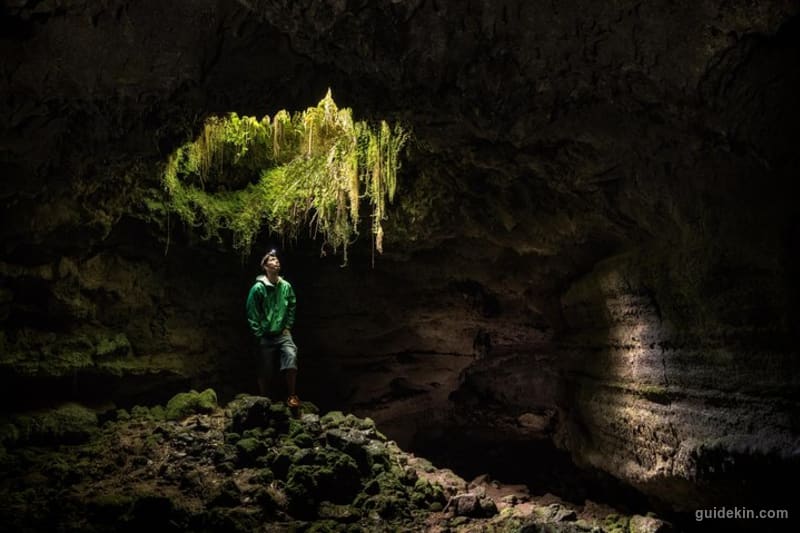
Pico's lava cave, and the largest in Portugal. The tube stretches about 5 km underground, though only a portion is open to visitors. Guided tours run about 45 minutes, taking you through basalt chambers with stalactites, lava formations, and near-total darkness. Entry is around €10 per adult, €5 for children. Book at the visitor center.
The cave maintains a constant temperature of about 15°C inside. Bring a layer even in summer. The terrain inside is uneven. Wear closed shoes with grip.
Natural Pools
Pico's coastline is volcanic basalt, not sandy beaches. But the island makes up for it with natural pools, places where lava formations create sheltered pools that fill with ocean water.
Piscinas Naturais de Santa Cruz das Ribeiras is the most developed, with changing rooms, ladders, and a small bar. Easy access for families.
Poça Branca near Prainha is a white-bottomed natural pool (the white comes from a layer of calcareous deposits over the basalt). Unusual and beautiful.
Santa Luzia has a raw, unmanaged pool cut into the rocks. Best at high tide when waves top up the pool.
The island also has a few actual beaches. Prainha, on the south coast near Lajes, is a small beach with dark sand sheltered by cliffs. During summer weekends, local families fill it by mid-morning, so arrive early. There's a small bar for drinks and snacks. Praia da Baia de Canas, further east, is another option with darker sand and fewer people.
Neither beach is large, and neither competes with mainland beaches. But for cooling off after a hike, they work. Bring water shoes. The entry to the water over volcanic rock can be sharp.
Miradouros (Viewpoints)
Pico has viewpoints that rival anything on Sao Miguel, but they get a fraction of the visitors. A few worth marking on your map:
Miradouro da Terra Alta, between Madalena and Cachorro on the north coast, looks out over the vineyard landscape to the ocean. In the foreground, the black basalt currais stretch like a geometric puzzle. Behind them, Faial floats on the horizon.
Miradouro do Cabeloco, near Lajes on the south coast, offers a wide panorama of the coastline and the open Atlantic. Good for sunset.
The EN3 pullovers along the cross-island highway have views of Mount Pico from its mid-slopes. Lagoa do Capitao, described above, is the most photographed spot, but the unnamed pullover about 1 km before it (heading south) catches the volcano at a different angle with less foot traffic.
Casa da Montanha parking area at 1,230 meters. Even if you're not hiking to the summit, the view from here covers the south coast, Faial, and on clear days, Sao Jorge. Drive up in the late afternoon for the light.
The Triangle: Day Trips to Faial and Sao Jorge
Pico sits at the heart of the Azores' "Triangle" - three central islands (Pico, Faial, Sao Jorge) close enough to visit as day trips from a single base. If you're spending three or more days on Pico, use at least one for a Triangle excursion.
Faial: 30 Minutes by Ferry
Faial is the easiest day trip from Pico. The Atlanticoline ferry runs Madalena to Horta in 30 minutes, multiple times daily. Walk-on fare is around €7 each way.
What to see in one day:
- Horta Marina. Famous among Atlantic sailors. Boats crossing from Europe to the Americas stop here, and by tradition each crew paints a mural on the harbor wall. Thousands of colorful paintings cover every surface. Peter Cafe Sport, the bar overlooking the marina, has been the sailors' meeting point since 1918.
- Capelinhos Volcano. On Faial's western tip, the Capelinhos eruption of 1957-58 added new land to the island and buried the lighthouse in ash. The landscape still looks like the surface of the moon. The underground Interpretation Centre tells the story with seismographs and footage from the eruption. Entry is about €10. Don't skip this.
- Caldeira. Faial's central crater, 400 meters deep and 2 km wide, surrounded by hydrangeas in summer. A walking trail (7 km, 2.5 hours) circles the rim with views of Pico across the channel.
You can cover all three in a full day. Catch the morning ferry, walk Horta and the marina, drive to Capelinhos (30 minutes from Horta), then loop to the Caldeira on the way back. Return on an evening ferry.
Sao Jorge: By Ferry or Flight
Sao Jorge is longer and thinner than Pico, famous for its fajas - flat coastal strips at the base of cliffs, created by landslides and lava flows. Getting there from Pico takes about 1-2 hours by Atlanticoline ferry (seasonal, check schedules) or a short SATA flight.
What to see:
- Faja dos Cubres and Faja da Caldeira de Santo Cristo. Two fajas connected by a trail that drops from the cliff top to the coast (3 hours one-way, moderate difficulty). Santo Cristo has a lagoon famous for its clams.
- Sao Jorge cheese. The island produces the Azores' most prized cheese, aged for months into a hard, peppery wheel. Visit the Cooperativa in Beira or buy from local farms.
- Topo. The oldest settlement on Sao Jorge, at the eastern tip. Quiet, historic, with a small port and views across to Pico.
A Sao Jorge day trip requires planning because ferry schedules are less frequent than the Faial crossing. Check Atlanticoline timetables before committing. In summer, morning departures usually allow a full day and evening return. Off-season, it may be easier to fly.
Making the Triangle Work
The Triangle strategy works best with 5+ days total. Base yourself on Pico (Lajes or Madalena), keep your rental car, and use ferries for day trips. Here's the logic:
- Faial: Walk-on the morning ferry from Madalena. Rent a car on Faial for the day (or join a guided tour). Return on the evening ferry. No car ferry fee needed.
- Sao Jorge: Check the Atlanticoline schedule first. If ferries align, walk-on and rent a car on arrival. If schedules are awkward, consider an early SATA flight and evening return.
- Pico itself: Your rental car stays on Pico for the days you're not ferry-hopping.
This approach saves you the hassle and cost of three separate hotel check-ins. One base, three islands.
Diving, Kayaking, and Adventure Sports
Pico's volcanic underwater landscape and marine diversity make it one of the best dive destinations in the Azores.
Diving
Visibility ranges from 15 to 40 meters depending on conditions. Water temperature sits between 17-23°C throughout the year. The underwater terrain is dramatic: volcanic arches, walls, caves, and pinnacles covered in marine life.
Key dive sites include the waters off Madalena (where basalt formations create swim-throughs and caverns), the south coast near Lajes (deeper dives with chance of mobula rays and blue sharks), and around the offshore islet of Ilheu em Pe.
CW Azores, based in Madalena, is the main dive operator on Pico. A single dive with equipment costs around €60-80. Certification courses are available. Experienced divers can arrange drift dives and night dives.
Kayaking
Sea kayaking along Pico's basalt coastline gives you access to sea caves, arches, and rock formations that you can't reach on foot. Operators in Madalena and Lajes offer guided tours (half-day €40-60) that paddle along the UNESCO vineyard coast or through volcanic formations.
The water is generally calmer on the south coast (Lajes side). The north coast is more exposed. Listen to your guide about conditions.
Coasteering and Canyoning
A few operators offer coasteering (climbing, jumping, and swimming along the rocky coast) and canyoning trips. These are newer activities on Pico and availability varies by season. Ask locally for current operators. Expect €50-70 per person for a half-day guided session.
Snorkeling
You don't need to be a certified diver to see Pico's underwater life. Snorkeling from the natural pools and rocky shores along the south coast reveals colorful fish, starfish, sea urchins, and occasional octopus hiding in the basalt crevices. The water clarity is excellent on calm days, especially June through September.
Bring your own mask and snorkel. Rental on the island is limited. The natural pool at Santa Cruz das Ribeiras is a good starting point for families, with calm, shallow water and easy access. More adventurous snorkelers can try the rocky coast south of Lajes, where the water deepens quickly and the fish life is more varied.
Hiking Beyond the Summit
Mount Pico gets all the attention, but the island has other trails worth your time.
Trilho dos Vinhateiros (PR2 PIc) runs through the UNESCO vineyard landscape along the coast. About 6.5 km, easy to moderate, 2-3 hours. The trail weaves between currais, past old wine-pressing structures (rilheiras carved into the rock), and along the waterfront. Flat terrain, no major elevation. This is the best way to experience the vineyards on foot.
Trilho da Longitudinal (GR2 PIc) is a long-distance trail that runs nearly the full length of the island through the interior highlands. You can walk sections of it as day hikes. The stretch between EN3 and Lagoa do Capitao is about 3 hours and passes through volcanic moorland with views of the summit.
Caminho dos Burros, near Sao Roque, follows an old donkey trail along the north coast cliffs. About 5 km, moderate, with views down to the ocean and across to Sao Jorge. Less maintained than the PR trails, so wear proper shoes.
Where to Stay
Pico doesn't have resort hotels. Accommodation is small-scale: boutique hotels, rural houses, apartments, and a handful of distinctive properties. That's part of the island's character.
By Area
Lajes do Pico (Guidekin team's pick for base): Closest to whale watching, best restaurant selection, atmospheric harbor town. A few small hotels and plenty of vacation rentals. Quieter than Madalena, more character.
Madalena: Most practical for ferry connections to Faial and wine touring. Slightly larger town with more services. Better supermarket and fuel station access. The Wine Museum and Cooperativa are walkable.
Sao Roque do Pico: Near the airport. Less touristy, more local. Good for travelers who want to be away from the (relative) bustle. Fewer dining options.
Rural stays: Scattered across the island, converted farm houses and quintas offer a quieter experience. Look for properties in the vineyard areas between Madalena and Cachorro for the full UNESCO landscape feel.
Budget Breakdown
| Type | Range (per night, summer) | Notes |
|---|---|---|
| Hostel / budget | €25-40 | Limited options, mostly in Madalena |
| Apartment / vacation rental | €50-90 | Best value, kitchen for self-catering |
| Boutique hotel / rural house | €80-140 | Small properties, character stays |
| Premium / unique stays | €140-200+ | Wine estate stays, design properties |
Off-season prices drop 30-40% across the board. Book ahead for July and August. The rest of the year, you'll have options on shorter notice.
Specific Recommendations
Alma do Pico (Lajes area): A restored stone house with modern interiors. Views over the south coast. Quiet location, good for couples. Around €90-120/night in summer.
Casas de Incensos (near Prainha): Traditional Azorean houses converted into self-catering units. Stone walls, wooden ceilings, garden with fruit trees. The owners grow their own herbs and vegetables. Mid-range pricing, great character.
Lava Homes Pico (Madalena area): Modern apartments with vineyard views. Close to the Cooperativa and ferry terminal. Clean, functional, good value at €60-80/night.
Pocinho Bay (Lajes): Directly overlooking a natural pool. Simple rooms but the location is hard to beat. Wake up, walk downstairs, swim. Budget-friendly.
For the adventurous: a few properties sit directly within the UNESCO vineyard zone, surrounded by currais on all sides. Ask on Booking.com or Airbnb for "vineyard" or "vinha" in the Madalena-Cachorro area. Sleeping inside the World Heritage landscape is something you won't forget.
Food and Wine
Pico's food is Azorean at its core: heavy on dairy, fish, and beef, shaped by volcanic soil and Atlantic waters. Portions are large. Refinement is not the point. Freshness is.
What to Eat
Polvo guisado (stewed octopus). Slow-cooked in wine and onions until tender. The octopus is local, caught by small-boat fishermen. Nearly every restaurant on Pico does a version.
Lapas grelhadas (grilled limpets). Pulled from the rocks that morning, grilled with garlic and butter, served sizzling. Pair with a cold Especial beer. This is the essential Azorean bar snack.
Linguica. Smoky pork sausage, often served as a starter or with eggs at breakfast. The Azorean version uses local spices and a longer cure than mainland Portuguese linguica.
Queijo do Pico. The island's own cheese. Soft, creamy, mild. Different from the hard, aged Sao Jorge cheese. Ask for it at any restaurant as a starter.
Alcatra (Terceira-style pot roast). Not originally from Pico, but available at some restaurants. Beef slow-cooked in clay pots with wine, garlic, and spices. If you see it on a menu, order it.
Pico wine. Already covered above, but it bears repeating: drink the Verdelho here. It doesn't taste the same anywhere else.
Best Restaurants
| Restaurant | Location | Known For | Price Range |
|---|---|---|---|
| O Petisco | Lajes do Pico | Grilled fish, octopus, lapas | €15-25/person |
| Cella Bar | Madalena | Design bar in wine warehouse, tapas | €12-20/person |
| Ancoradouro | Lajes do Pico | Harbor-view seafood, fresh catch | €18-30/person |
| Taberna do Pico | Madalena | Traditional dishes, local wine list | €12-22/person |
| Pocinho Bay | Lajes do Pico | Casual seafood, natural pool nearby | €10-18/person |
A few practical notes. Restaurants on Pico close early by mainland standards. Don't expect to walk in at 10 PM and get a table. 7:30-8:30 PM is the sweet spot for dinner. Some restaurants close on Mondays. Cash is still useful in smaller spots, though most accept cards.
For lunch on the go, grab a bolo levedo (soft, slightly sweet bread unique to the Azores) from a bakery, add some local cheese and sausage, and eat it at a viewpoint. The best picnic on the island.
Evening on Pico
Pico doesn't have nightlife in any traditional sense. No clubs. No late-night bars with DJs. What it has instead: Cella Bar stays open until late and serves cocktails in an architect-designed space. A handful of bars in Madalena and Lajes serve beer and wine until 11 PM or midnight in summer. During Whalers Week in August, Lajes has outdoor concerts and street celebrations that run late.
The real evening activity on Pico is simpler. Drive to a viewpoint at sunset. Watch the sky turn orange over Faial. Then have a long dinner with a bottle of Verdelho. The stars on Pico are remarkable. With minimal light pollution, the Milky Way is visible to the naked eye from most of the island, especially the south coast and interior. If you're into stargazing or astrophotography, Pico is one of the best locations in Europe.
"Cella Bar in Madalena is worth visiting for the building alone. It's a converted wine warehouse right on the waterfront, designed by architect Paulo Merlini. The interior is all curved wood and dramatic lighting. The food is tapas-style, good but not the main event. Go for a glass of Pico wine at sunset and watch Faial across the channel." - Guidekin team
Sample Itineraries
2 Days: The Highlights
Day 1 - West Coast and Wine:
- Morning: Arrive in Madalena (ferry from Faial or flight). Pick up rental car
- 10:00: Drive north coast to Cachorro. Walk the vineyard interpretive trail through the UNESCO currais (1.5 hours)
- 12:00: Wine Museum in Madalena (30 minutes), then wine tasting at the Cooperativa (30-45 minutes)
- 13:30: Lunch in Madalena (try Taberna do Pico)
- 15:00: Drive south coast road to Lajes do Pico. Stop at Sao Mateus for the harbor view
- 16:30: Whalers Museum in Lajes (1 hour)
- 18:00: Walk the Lajes harbor area
- 19:30: Dinner at O Petisco or Ancoradouro
Day 2 - Whales, Caves, and the Interior:
- 08:00: Whale watching from Lajes (3-4 hour trip, return by noon)
- 12:30: Lunch in Lajes
- 14:00: Drive EN3 cross-island highway. Stop at Lagoa do Capitao for the volcano reflection photo
- 15:30: Gruta das Torres lava cave tour (45 minutes, book ahead)
- 17:00: Natural pool swim at Santa Cruz das Ribeiras or Poca Branca
- 18:30: Sunset at Miradouro da Terra Alta
- Evening ferry back to Faial or overnight on Pico
3-4 Days: The Full Island
Add to the above:
Day 3: Mount Pico summit hike (start early, 6-7 hours round trip). Afternoon recovery: slow lunch, natural pool, or just rest. Evening at Cella Bar.
Day 4: Day trip to Faial. Morning ferry to Horta. Walk the marina, drive to Capelinhos, hike part of the Caldeira rim. Return on evening ferry.
5+ Days: The Triangle
With five or more days, add:
Day 5: Day trip to Sao Jorge (check ferry schedule in advance). Hike to Faja da Caldeira de Santo Cristo. Buy Sao Jorge cheese at the source.
Extra days: Diving or kayaking. The Whaling Industry Museum in Sao Roque. Vineyard harvest participation (seasonal). A second attempt at the summit if weather blocked the first. Or simply slow down. Pico rewards unhurried days.
Budget and Prices
Pico is not expensive by European standards, but it's not the cheapest Azores island either. The limited supply of accommodation and restaurants means prices hold steady in summer.
| Item | Budget | Mid-Range | Comfort |
|---|---|---|---|
| Accommodation (per night) | €30-50 | €60-100 | €120-200 |
| Car rental (per day) | €25-35 | €35-45 | €50+ (automatic) |
| Meals (per day) | €20-30 | €35-55 | €60-80 |
| Whale watching | €55-75 | €55-75 | €80-100 (full day) |
| Mount Pico hike (registration) | €20 | €20 | €20 |
| Wine tasting | €5-10 | €10-20 | €20-40 (premium) |
| Gruta das Torres | €10 | €10 | €10 |
| Faial ferry (walk-on, return) | €14 | €14 | €14 |
| Daily total (per person) | €80-120 | €130-200 | €250+ |
Tips are not expected in the Azores, but rounding up or leaving 5-10% for good service is appreciated. Credit cards work at most restaurants and hotels in the three main towns. Carry some cash for smaller villages, natural pool facilities, and rural vendors.
Practical Tips
- Book the summit hike registration online at trails.visitazores.com as soon as you know your dates. Summer slots fill up, especially for weekend mornings.
- Download offline maps. Cell service is reliable in towns but drops in the interior and along remote stretches of coast. Google Maps offline mode or Maps.me covers the gap.
- Check ferry schedules the night before. Atlanticoline cancels crossings in rough seas. In winter, have a backup plan. In summer, it's rarely an issue but delays happen.
- Bring a dark swimsuit for hot springs. If you're combining Pico with Sao Miguel (recommended), the mineral water at Furnas stains fabric orange. This applies less on Pico itself (no thermal pools), but if you're island-hopping, you'll thank us later.
- Restaurants close early and some close Mondays. Plan dinner for 7:30-8:30 PM. On Mondays, your options shrink. Stock up on picnic supplies from the Madalena supermarket.
- The SpotAzores app shows live webcam feeds from viewpoints across the islands. Use it to check if Mount Pico's summit is clear before committing to the hike. Free and genuinely useful.
- Mosquitoes exist in summer, especially near stagnant water and in the interior. Bring repellent for evening hikes and outdoor dining.
- Pico's hospital is in Lajes do Pico (Hospital da Lajes do Pico). For emergencies, call 112. Pharmacies exist in all three main towns.
FAQ
Is Pico island worth visiting?
Yes, especially if you want something rawer than the typical Azores experience. Pico is quieter, less developed, and centered around three genuinely unique attractions: the volcano hike, the UNESCO vineyards, and the whale watching.
How many days do you need in Pico?
Three to four days is the sweet spot for hiking the volcano, whale watching, and exploring the vineyards without rushing. Five or more days lets you add day trips to Faial and Sao Jorge.
How hard is the Mount Pico hike?
Strenuous. The trail gains 1,120 meters over 3.5 km, mostly over loose volcanic rock with a chain scramble to the true summit. Most reasonably fit adults manage it, but allow 6-7 hours total.
Do you need a car on Pico island?
Yes. Public transport barely exists outside the three main towns, and the natural pools, viewpoints, and trailheads are reachable only by car.
How do you get from Faial to Pico?
Atlanticoline ferries run Horta to Madalena in 30 minutes, 8-10 departures daily in summer. Walk-on fare is about €7 one-way, plus €15-20 if you bring a car.
What is the best time to visit Pico?
June through September for hiking and swimming, April through May for whale watching and fewer tourists. October for wine harvest.
Start Planning
Pico is the island that surprises people. They come for the volcano and leave thinking about the wine, or the whales, or the quiet lunch in Lajes where the octopus was the best thing they ate all year.
It's not the easiest Azores island to reach, and it's not the one with the most tourist infrastructure. That's the point. Pico gives you volcanic drama without the crowds, Portuguese food without the markup, and Atlantic wildness without having to rough it.
If you're building an Azores itinerary, start with Sao Miguel for the widest range of experiences, then come to Pico for depth. Three days on Sao Miguel plus three on Pico is a trip that covers both breadth and substance.
Browse available tours in the Azores to book whale watching, guided hikes, and wine experiences. The best operators fill up in summer. Book early and leave room in your schedule for the weather to cooperate.