Key Takeaways
- Santa Maria is the oldest island in the Azores. It's also the only one with white sand beaches. Every other island has black volcanic grit. Santa Maria has golden sand at Praia Formosa and Sao Lourenco, and locals have called it Ilha do Sol for as long as anyone remembers. Why Santa Maria →
- Divers come from across Europe for Santa Maria, and most tourists have no idea why. Manta rays at Baixa do Ambrosio. Whale sharks between July and September. Visibility past 30 meters at Formigas Islets. Diving →
- Barreiro da Faneca is 835 hectares of red clay desert. At 210 meters altitude. On an overcast day it looks like Mars. On a sunny day it still looks like Mars. Things to do →
- Mare de Agosto puts a concert stage 20 meters from the ocean. Last week of August, every year, on the sand at Praia Formosa. Over 30 editions. Festivals →
- You can drive the whole coast in two hours. Don't. Three days minimum. Five if you want to dive and hike. Practical tips →
Why Visit Santa Maria
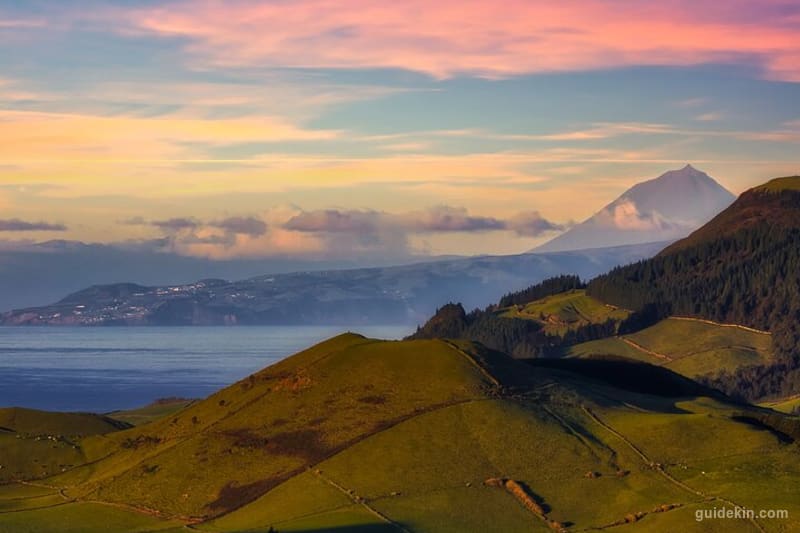
Start with what you see first: the light. It's warmer here than on any other Azores island. Golden, not grey. You land and the sky feels different.
That's not an impression. Santa Maria sits further south and lower than the rest of the archipelago. Half the rainfall of Flores. In July, weeks go by without clouds. People have called this place Ilha do Sol for generations. Not a marketing slogan. Just accurate.
Here's what makes Santa Maria genuinely strange among the Azores. It's 8.12 million years old, the oldest island in the chain, and its volcanoes went quiet millions of years ago. Every other island in the archipelago still has hot springs, fumaroles, the occasional tremor. Santa Maria just... settled. And because it settled, its geology did something unique: it produced white sand beaches. Limestone and calcareous sediments broke down over millions of years into fine golden sand. No other Azores island has that. Praia Formosa feels more like the Mediterranean than the mid-Atlantic.
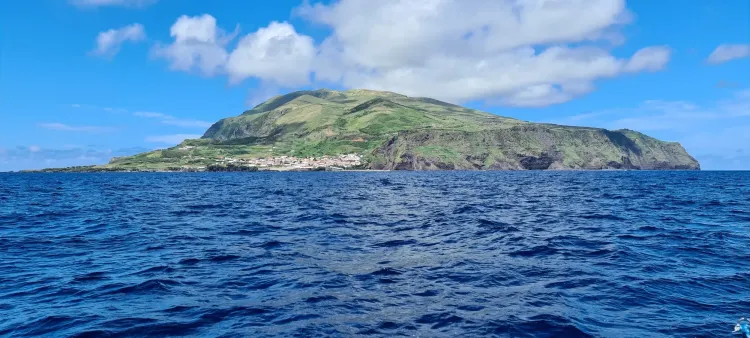
About 6,000 people live on the island. One town, Vila do Porto, founded in the 1430s. Oldest settlement in the Azores. A handful of villages. Roads where you won't see another car for minutes at a time. Columbus stopped at Anjos in 1493, heading back from the Americas, and his crew prayed at a small chapel there. Still standing.
You could hit the main sights in two days. But then you'd miss the manta ray dives at Baixa do Ambrosio. And the fossil museum where shark teeth are 8 million years old. And the terraced vineyards above Sao Lourenco where 300 families press wine that nobody outside Santa Maria has ever tasted. And a red clay desert that makes visitors stop and stare because nothing in their experience prepared them for it. Two days isn't enough.
Best Time to Visit Santa Maria
Warmest island in the Azores, all year. But seasons do change things.
| Season | Temp | Sea Temp | Rain | Best For |
|---|---|---|---|---|
| Summer (Jun-Sep) | 24-29C | 21-23C | Low | Beaches, diving, Mare de Agosto, whale sharks |
| Spring (Apr-May) | 18-21C | 17-18C | Moderate | Hiking, wildflowers, fewer visitors |
| Autumn (Oct-Nov) | 19-22C | 20-21C | Moderate | Diving (warm water, fewer divers), calm beaches |
| Winter (Dec-Mar) | 14-17C | 16-17C | Higher | Geology walks, Vila do Porto, lowest prices |
Summer fills up the beaches, such as it goes. "Crowded" on Santa Maria means maybe 30 people on Praia Formosa. Mare de Agosto packs the island in the last week of August. Whale sharks pass through from July to September.
Spring is for hiking. Wildflowers on the hillsides, green trails, and you can walk the Grand Route without overheating. Water's still cold for swimming, though.
Autumn is when the Guidekin team would go. September, early October. Sea's still warm. Dive operators have openings. Accommodation costs drop. Fewer people on every beach and trail.
Winter is mild for Europe. Expect 14-17C, some rain, almost no tourists. You'll have the Red Desert to yourself, which is either lonely or exactly what you wanted.
How to Get to Santa Maria
Fly. That's basically it. Santa Maria has an airport (SMA), but you can't get here from most places directly.
| Route | Method | Time | Approx. Cost |
|---|---|---|---|
| Ponta Delgada → Santa Maria | SATA flight | 35 min | ~EUR100 return |
| Lisbon → Santa Maria | Azores Airlines | 2.5 hours | ~EUR150-250 return |
| Ponta Delgada → Santa Maria | Ferry (seasonal) | ~3 hours | ~EUR40-60 return |
SATA Air Acores has about 13 flights a week from Sao Miguel. 35 minutes in the air. Book these first, before accommodation, before anything. Summer seats go fast.
Azores Airlines does a direct from Lisbon in summer. 2.5 hours. Schedules change year to year, so check early.
There's a ferry too. Runs May through October from Ponta Delgada, takes about three hours. Sounds convenient. The problem is it cancels a lot. Enough that you shouldn't count on it unless your dates are fully flexible and you have a plan B for getting back.
Best Beaches in Santa Maria
Praia Formosa
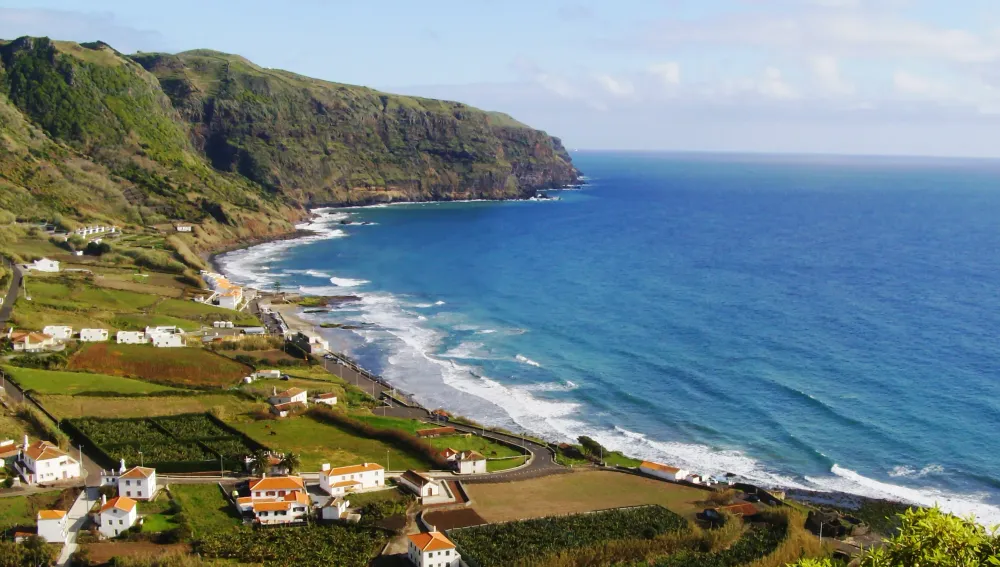
If you've been to any other Azores island, you've accepted that beaches here mean black volcanic sand and wind. Praia Formosa changes the rules. Half-moon of white sand, backed by low cliffs. Blue Flag. Showers, parking, a beach bar, accessibility ramps. Water warmer than anywhere else in the archipelago.
For 51 weeks a year, it's just a genuinely great beach in a place where nobody expects one. Week 52, it hosts Mare de Agosto, and a concert stage goes up practically in the surf.
Sao Lourenco Bay
White sand inside a natural amphitheatre. That alone would be enough. But look up. Stone-terraced vineyards climb the cliffs in layers that look almost pre-Portuguese, like something older built them. These are the Vinho de Cheiro vineyards. Each family tends a few rows by hand. That wine they make never leaves the island, and you can only understand why it tastes the way it does when you see where it grows.
Part of a Natural Reserve. Water calmer than the south coast. Probably the single most unexpected beach view in the Azores.
Maia and Other Swimming Spots
Rock pools on the north coast at Maia. Ocean-fed, no crowds. Good for a quiet morning swim.
Anjos Bay has a small beach next to the Columbus chapel. Combine a swim with the history. Praia dos Lobos, near Vila do Porto, is where settlers first landed in 1439. It's small and stony, honestly more interesting for the story than for lying on. But if you want to be alone near the water, Praia dos Lobos delivers.
Top Things to Do in Santa Maria
Barreiro da Faneca (The Red Desert)
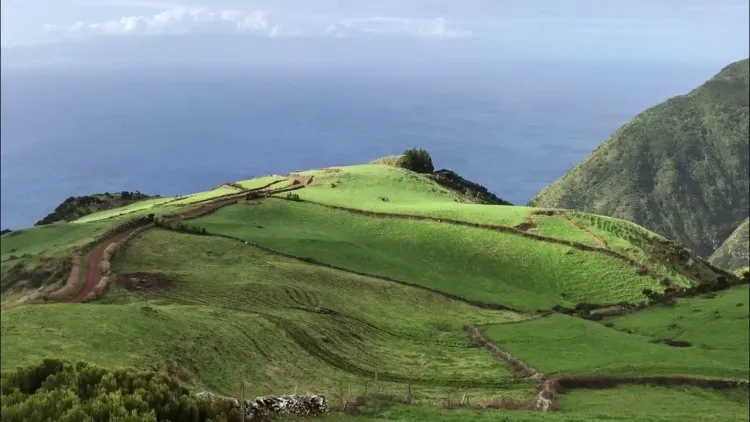
You drive up to 210 meters, you get out of the car, and you stop. Red. Rust-red clay, 835 hectares of it, treeless and flat and completely wrong for the Azores. Formed during the Pliocene, 3-4 million years ago, when subtropical weathering turned basalt to iron-rich soil. Protected Landscape. On an overcast day, red ground against grey sky, you'd swear you were somewhere in Iceland. Or not on Earth at all.
A trail crosses the area. Wear shoes you're willing to sacrifice. After rain, the clay sticks to everything. Every step gets heavier. Locals know to avoid it on wet days. Most visitors don't get the memo.
Vila do Porto
Oldest town in the Azores. 1430s. Fortaleza de Sao Bras looking over the harbor. A few cafes on the main square. Church that's been there forever. On a Tuesday morning, you might be the only person walking.
What you don't expect is the Dalberto Pombo Environmental Interpretation Centre. Looks like an ordinary building from outside. Inside: shark teeth that are millions of years old. Fossils of sea urchins. Whale bones. Santa Maria is the only Azores island old enough to have significant fossil deposits. There's also a 3D simulation of how the island formed. Small museum. The kind of place where you walk in for 15 minutes and come out an hour later. Free, or nearly.
Anjos and Columbus
February 1493. Columbus is sailing back from the Americas. His crew goes ashore at Anjos, a village on Santa Maria's north coast, and prays at the Ermida de Nossa Senhora dos Anjos. That chapel is still there. Whitewashed, simple. A bust of Columbus outside.
Every August there's a festival commemorating the visit. Rest of the year, Anjos is a fishing village where not much happens and the Atlantic light is very good.
Pico Alto and Viewpoints
587 meters. Dense forest up top. On a clear morning you can see the whole island and the open ocean past it. On a cloudy morning, which is most mornings, you see fog. Go early. Bring something warm.
Ponta do Castelo, southeast tip, has a lighthouse and one of the best coastal panoramas on the island. Miradouro da Macela looks out over terraced coastline. You don't need to hike to either. You do need clear weather, or there's no point driving up.
Diving and Snorkeling
So here's the thing about Santa Maria that most Azores guides skip over or mention in passing. The diving here is legitimately among the best in the Atlantic. Not "good for the Azores." Good, full stop.
Warmer water than anywhere else in the archipelago. Better visibility. And marine life that brings divers from the UK, Germany, France, who fly in specifically for this and never bother visiting Sao Miguel.
Baixa do Ambrosio
Seamount, 6 miles south. Marine Protected Area. And one of the most reliable manta ray spots in the Atlantic. Large mantas congregate from June through October. Devil rays show up in bigger numbers. Strict rules: 90 minutes per dive, limited divers in the water at any time. Not a tourist circus. You're in open water with mantas and you're a guest.
Formigas Islets
Twenty miles northeast. Underwater visibility regularly exceeds 30 meters. Blue sharks, barracuda, turtles, big groupers, schools of jacks. Open-ocean diving, so you need experience and good sea conditions. When it works, it's some of the best diving in Europe. When the sea doesn't cooperate, you wait.
Whale Sharks
July to September. Not guaranteed. More frequent here than anywhere else in the Azores, though. Operators like Manta Maria track conditions and time trips accordingly. When a whale shark does appear, there's nothing quite like it.
Manta Maria is the local dive operator. Based on Santa Maria, runs trips to all key sites, offers PADI courses and snorkeling for non-divers.
| Marine Life | Best Months | Where |
|---|---|---|
| Manta rays | Jun-Oct | Baixa do Ambrosio |
| Devil rays (mobula) | Jun-Sep | Baixa do Ambrosio, Formigas |
| Whale sharks | Jul-Sep | Open water south of Santa Maria |
| Blue sharks | May-Oct | Formigas Islets |
| Turtles | Year-round | Coastal waters, Formigas |
"We keep saying this: most people go to Sao Miguel or Faial. But the serious divers? They come here. Warmer water, better visibility, and mantas that show up from June like clockwork." - Guidekin team
Hiking Trails
Seven marked trails plus the Grand Route. For a small island, there's a lot of ground to cover on foot.
Great Route of Santa Maria (GR01SMA)
78.6 km around the entire island. Circular. Takes most people 4-5 days. You follow the coast, climb through Pico Alto, connect both white sand beaches, and cross the Red Desert. Along the route, trekking shelters called "Ilha a Pe" (Island on Foot) offer basic overnight stays.
Day Hikes Worth Doing
Praia Formosa to Sao Lourenco. Links the two white sand beaches through the interior, over the Pico Alto ridge. Full day, ~15 km. If you only hike once on Santa Maria, do this one.
Pico Alto Circuit. Loop through cloud forest near the summit. Endemic laurel, lush undergrowth, views of the whole island when clouds cooperate. About 8 km, 3-4 hours.
Santo Espirito to Maia. Southeast coast, about 7 km. You pass the ruins of an old whaling factory at Ponta do Castelo. Moderate difficulty. Interesting for the history as much as the scenery.
| Trail | Distance | Time | Difficulty |
|---|---|---|---|
| Grand Route (GR01SMA) | 78.6 km | 4-5 days | Moderate-Hard |
| Praia Formosa to Sao Lourenco | ~15 km | 5-6 hours | Moderate |
| Pico Alto Circuit | ~8 km | 3-4 hours | Moderate |
| Santo Espirito to Maia | ~7 km | 2.5-3 hours | Easy-Moderate |
Fair warning: sun exposure here hits harder than on other Azores islands because there's less cloud cover. Pack water, sunscreen, a hat. And if it rained recently, the red clay sections get slippery. Clay on your boots, clay on your hands, clay on everything.
Festivals and Events
Mare de Agosto
Stage on the sand at Praia Formosa. Twenty meters from the ocean. Last week of August, over 30 consecutive editions now. World music, rock, jazz, electronic. Mariza has played here. So have Extreme, Angelique Kidjo, Michael Kiwanuka. Biggest music festival in the Azores, and it happens on a beach where bass notes carry across the water and mix with the waves.
The island's population swells for the week. Accommodation sells out months ahead. You want this? Book in spring.
Holy Ghost Festivals
Between May and September, each parish takes a turn. Children get crowned as symbolic emperors. Communal pots of Sopas do Espirito Santo are handed out, free, to anyone who shows up. On Santa Maria, the recipe uses dill. That detail sets it apart from the mainland islands.
These aren't organized for tourists. They're community events. If you're here during one, you're welcome. Nobody will check your ticket because there are no tickets.
| Festival | When | Where |
|---|---|---|
| Holy Ghost Festivals | May-Sep | Island-wide |
| Mare de Agosto | Last week of August | Praia Formosa |
| Columbus Festival | Mid-August | Anjos |
| Santa Maria Blues | Summer (varies) | Various venues |
Local Food and Wine
What to Eat
Fish. Every restaurant, every day. Sopa de Peixe and Caldeirada appear on most menus. Lapas Grelhadas (limpets, grilled, garlic butter) are what you order at a bar while you figure out what else to eat. What fish specifically? Depends on what the boats brought back that morning. Bream, amberjack, mackerel, snapper. You don't choose. The sea chooses.
Sopas do Espirito Santo is the ceremonial dish from the Holy Ghost festivals. On Santa Maria, they add dill to the recipe. Nobody else in the Azores does this. If someone hands you a bowl during a festival, don't overthink it. Eat.
Sweets: Melindres are small honey-and-spice cakes. Cavacas are hollow, crunchy, dipped in sugar syrup. Biscoitos de Aguardente taste like brandy because they contain brandy. All three are Santa Maria originals. Vila do Porto bakeries stock them. Don't expect to find them anywhere else because they don't ship well and nobody's trying to scale production.
Meloa de Santa Maria
Cantaloupe melon. Grown only here. Greenish-yellow rind, sweet orange inside. Available from local markets in summer and sometimes as dessert in restaurants. Drier, sunnier climate than the mainland means higher sugar content. Ask for it in July and August.
Vinho de Cheiro
Most local thing you can drink here. Aromatic wine from the "Isabella" grape (American variety, Vitis labrusca), grown in stone-terraced vineyards at Sao Lourenco and Maia. Lower alcohol than mainland Portuguese wine. Fruity, slightly sweet, floral. Over 300 families on the island make it. Nobody exports it. Some families barely bottle it, just press it and drink it and share it with neighbors.
"You won't find Vinho de Cheiro in any wine shop, anywhere. Three hundred families make it, each with a few rows of terraced vines above the ocean. Want to try it? Come to Santa Maria. That's the only way." - Guidekin team
Practical Tips
- Rent a car. No buses. No rideshare apps. Ilha Verde is a local rental company with a small fleet. Book ahead because summer availability is limited, and without a car you can't reach the Red Desert, Sao Lourenco, or most trailheads.
- Budget. EUR50-180 per night for accommodation. EUR15-25 for a full meal with fish at a restaurant. Groceries at Pingo Doce and Continente Bom Dia cost more than on the mainland. Bring cash. Smaller places don't take cards.
- How long to stay. Two days covers beaches and Vila do Porto. Four to five lets you add diving, hiking sections, and buffer time for weather at viewpoints. Guidekin team says three nights minimum.
- A 3-day plan. Day 1: Vila do Porto, fossil museum (Dalberto Pombo Centre), afternoon on Praia Formosa. Day 2: Barreiro da Faneca in the morning, Sao Lourenco Bay for swimming and lunch, drive to Ponta do Castelo for sunset. Day 3: book a dive trip with Manta Maria, or hike Santo Espirito to Maia, then spend the afternoon at Anjos.
- Phone signal. Works fine in Vila do Porto and on main roads. Drops out in the interior and around Pico Alto. Download your maps offline before you head inland.
Browse Santa Maria tours and experiences to see what's available with local guides.
FAQ
Is Santa Maria Azores worth visiting?
Yes. Only white sand beaches in the Azores, some of the best diving in the Atlantic, a red desert that exists nowhere else in Portugal, and more sunshine than any other island in the archipelago. It's quieter than Sao Miguel or Terceira. For some people that's a limitation. For others it's the whole reason to go.
How many days do you need in Santa Maria?
Two for beaches and the town. Three or four if you want diving and hiking. Five if you're doing Grand Route sections and want weather buffer days.
How do you get to Santa Maria island?
SATA Air Acores from Ponta Delgada. 35 minutes. There's a seasonal ferry too, May through October, but it cancels often enough that you shouldn't rely on it.
What is Santa Maria known for?
White sand beaches (only ones in the Azores), manta ray diving at Baixa do Ambrosio, Barreiro da Faneca red desert, Mare de Agosto music festival, and being the oldest island in the archipelago.
Are there white sand beaches in the Azores?
Only on Santa Maria. Praia Formosa and Sao Lourenco Bay have golden sand. Every other island: black volcanic sand or rocky coast.
Is it easy to get around Santa Maria without a car?
No. No buses. Taxis exist but there aren't many. Rent a car.
Start Planning Your Santa Maria Trip
Santa Maria doesn't advertise itself the way Sao Miguel does. No hot springs, no whale watching PR campaigns, no crater lakes on every Instagram reel. What it has: white sand in a place where white sand shouldn't exist, diving that serious divers cross Europe for, a red desert that looks wrong on this planet, and a fossil museum where the oldest exhibits are older than the Alps.
Fly in from Ponta Delgada. Rent a car. Give it at least three days. Pair it with Sao Miguel if you want, or don't. Santa Maria works fine on its own.
Browse all Azores tours and experiences on Guidekin to start putting your trip together.