Key Takeaways
- Start here: Sao Miguel is the largest Azores island, the best connected, and the most varied. If you only visit one island, this is the one. Why Sao Miguel →
- The big three: Sete Cidades (twin-colored crater lakes), Furnas (hot springs and volcanic cooking), and Lagoa do Fogo (wild volcanic lagoon). All three fit into a 3-day trip. Sete Cidades → | Furnas →
- Rent a car: Public transport won't get you to the best spots. Book early for summer. Manual transmission cars are cheaper and better for steep mountain roads. Getting around →
- Hot springs prices: Terra Nostra €17, Caldeira Velha €10, Dona Beija €8, Ferraria ocean pool free. Bring a dark swimsuit - the mineral water stains everything orange. Full price list →
- Where to eat: A Tasca for grilled limpets and live music, Bar Caloura for fish by the ocean, Tony's in Furnas for cozido cooked underground. Restaurant guide →
- Best timing: April through June for green landscapes and hydrangeas, July through September for swimming weather, winter for whale watching and low prices. When to visit →
Why Sao Miguel Is the Island to Start With
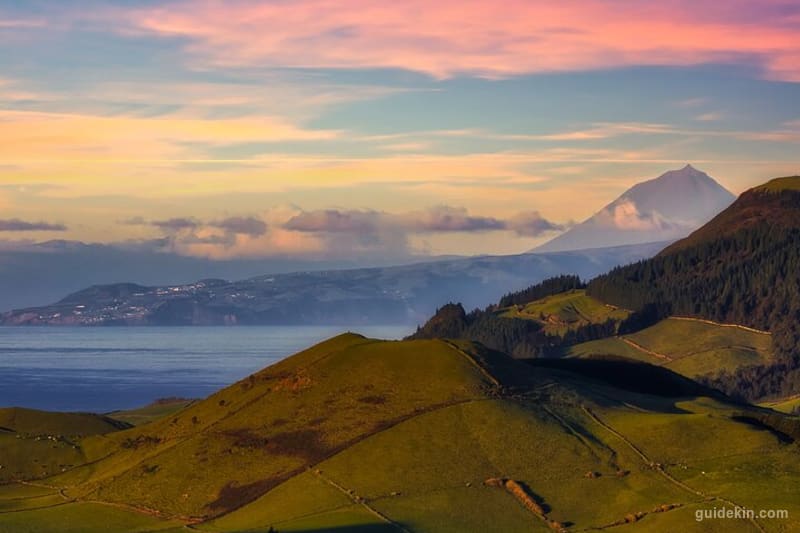
Sao Miguel is the biggest of the nine Azores islands and the one that packs the most variety into the smallest amount of travel time. In three or four days you can stand on the rim of a volcanic caldera, soak in iron-rich hot springs, eat stew cooked underground by geothermal heat, watch sperm whales surface half a mile offshore, and drink tea from the only plantation in Europe.
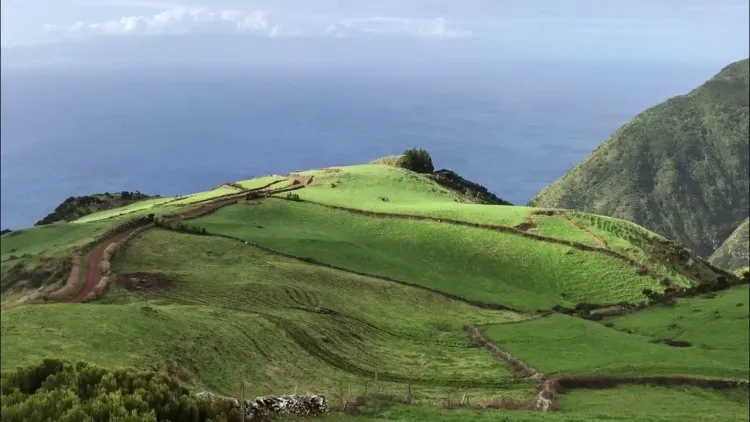
The island is 65 kilometers long and 16 wide. Driving from one end to the other takes about 90 minutes with no stops, but you won't manage that because there's a viewpoint or a waterfall every few kilometers. The population of 140,000 is concentrated around Ponta Delgada on the south coast, the only real city in the Azores. Good restaurants, a proper marina, a handful of wine bars, and the kind of nightlife where you can find a cocktail but not a club. The rest of the island is green hills, dairy farms, hydrangea-lined roads, and small villages that close for lunch.
What makes Sao Miguel the obvious starting point: it has the most frequent flights from Lisbon, Porto, and international destinations. It has the widest range of rental cars. It has the most tour operators, the most accommodation options, and the most restaurants. Other Azores islands are wilder and quieter, which is exactly their appeal. But for a first trip, Sao Miguel gives you the best foundation.
When to Visit
Sao Miguel's weather changes fast. A clear sky at breakfast can turn to horizontal rain by 10 AM and back to sunshine by lunch. The locals have a saying for it, and the SpotAzores app (free, shows live webcams at key viewpoints) is the closest thing to a reliable forecast.
April - June: The Guidekin team's pick. Temperatures around 16-20°C, landscapes at peak green, hydrangeas starting to bloom in late June. Fewer tourists than summer. Whale watching is excellent, with blue whales passing through until May.
July - September: Warmest weather (22-26°C), ocean temperatures hit 22-23°C, safe for swimming at natural pools and beaches. This is peak season. Book flights, cars, and accommodation well ahead. August is the busiest month.
October - March: Off-season, but far from dead. Temperatures stay between 13-17°C. Rain is more frequent, but the thermal pools feel even better when it's cool outside. Sperm whales are present year-round. Hotel prices drop 30-50%. The island is yours.
Key events: Senhor Santo Cristo dos Milagres, the largest religious festival in the Azores, falls on the fifth Sunday after Easter (usually May). Tens of thousands attend the procession through Ponta Delgada. Tremor, an international music and arts festival, runs in March or April. The Holy Ghost festivals (Festas do Espirito Santo) happen in villages across the island from May through September, with free communal meals and decorated impérios.
Getting There and Getting Around
Flights
Joao Paulo II Airport (PDL) sits on the south coast, 3 kilometers from central Ponta Delgada. SATA Azores Airlines, Ryanair, and TAP fly from Lisbon (2.5 hours, from €50 one-way). Ryanair also connects from Porto, London Stansted, and Frankfurt. Azores Airlines flies direct from Boston (4 hours) and New York JFK (5 hours).
If you're routing through Lisbon, the cheapest fares tend to be on midweek flights in April-June or October.
| Route | Airlines | Time | From |
|---|---|---|---|
| Lisbon → Sao Miguel | SATA, Ryanair, TAP | 2h 30m | €50 |
| Porto → Sao Miguel | SATA, Ryanair | 2h 20m | €45 |
| London → Sao Miguel | Ryanair | 4h | €60 |
| Boston → Sao Miguel | Azores Airlines | 4h | $250 |
| New York → Sao Miguel | Azores Airlines | 5h | $300 |
Rental Cars
You need one. There's no way around it.
Public buses on Sao Miguel run a few routes between Ponta Delgada and larger towns, but they're designed for commuters. The best viewpoints, hiking trailheads, hot springs, and restaurants sit at the end of mountain roads that no bus reaches.
Book the moment you book your flights. In July and August, cars sell out weeks in advance on the island. Local companies like Micauto, Autatlantis, and Ilha Verde often beat international brands on price. Expect €30-45 per day in summer, less in shoulder and off-season.
"Get a manual transmission if you can drive one. The steep roads down to Ferraria and some of the mountain viewpoints have tight switchbacks where a manual gives you more control. Automatics cost 20-30% more and are the first to sell out. Also, the gas stations in smaller villages sometimes close between 1-3 PM for lunch and accept only Portuguese bank cards at the pump. Fill up in Ponta Delgada or Ribeira Grande to be safe." - Guidekin team
Lagoa do Fogo shuttle: From mid-June through September, a shuttle (€5 return) runs from the base parking area to the Lagoa do Fogo viewpoint. Outside shuttle season, you drive up yourself. Parking at the top is limited.
Driving notes: Roads are well maintained but narrow. Google Maps works for major routes but leads you wrong about 25% of the time on smaller roads, according to multiple local reports. Download offline maps as backup. Convex mirrors at blind corners help. Drive slowly through villages.
Exploring Ponta Delgada
Most visitors use Ponta Delgada as a base and drive out to the island's natural attractions. That's the right move, but the city itself deserves at least half a day of walking.
Historic Center
Start at Largo da Matriz, the main square. The Igreja Matriz de Sao Sebastiao dates to the 1500s, with a Gothic-Manueline portal that survived centuries of earthquakes and rebuilds. Walk south to the Portas da Cidade, three basalt arches built in 1783 that have become the city's symbol. The streets around here are paved in black-and-white Portuguese cobblestones with geometric patterns. Ducking into side alleys off the main square turns up small shops, tiled facades, and occasional bakeries selling bolo levedo fresh from the oven.
The Sao Roque neighborhood, a short walk east from the center, still feels like the fishing village it used to be. Narrow streets, low traditional houses, and a small church. It's quieter than the center and gives a better sense of how Ponta Delgada looked before the marina and waterfront developments arrived.
Graca Market
The Mercado da Graca (Graca Market) is the real grocery run for locals, not a tourist market. That's what makes it worth a visit. Look for Azorean pineapples (smaller and sweeter than tropical ones, grown in glass greenhouses since the 1800s), Sao Jorge cheese at various ages (the 7-month is peppery, the 3-month is milder), jars of spiced jams, yams, and bunches of herbs you won't recognize. The "King of Cheeses" shop inside sells wheels and wedges from across the Azores. A good place to stock up on picnic supplies before a day of driving.
Waterfront and Marina
The Portas do Mar waterfront complex stretches along the harbor with cafes, a marina, and views across to the breakwater. Forte de Sao Bras, a 16th-century military fortress, anchors the west end. Walk the promenade at sunset when the light turns the basalt walls gold.
Gardens
Antonio Borges Botanical Garden is a green pocket in the middle of the city with exotic trees, lily ponds, and a grotto. Free entry. Inside, Jardim Natural Food & Coffee serves giant pancakes and specialty coffee (Chemex, V60) in a garden setting. Nearby, Jose do Canto Botanical Garden (plants collected since 1840) charges a small entry fee and sees fewer visitors.
Evening Scene
Ponta Delgada's nightlife is modest but better than you'd expect. Wine & Art by 1001 Garrafas pours six Azorean whites, including volcanic Pico Island wines. Reserva does Portuguese cheeses and charcuterie with rare Azorean bottles. Resves Street Bar mixes cocktails (€9-12) with a speakeasy atmosphere. Ta Gente serves "broken eggs" with cured ham and has a gin-cave downstairs.
For something different: Poca da Dona Beija hot springs stay open until 11 PM. Soaking in thermal water under the stars in a fern-covered ravine, 20 minutes from the city center, is a better way to end a day than any bar.
Browse available tours on Sao Miguel if you'd rather have a guide show you the island's highlights, especially for whale watching and the more remote eastern viewpoints.
Sete Cidades and the West
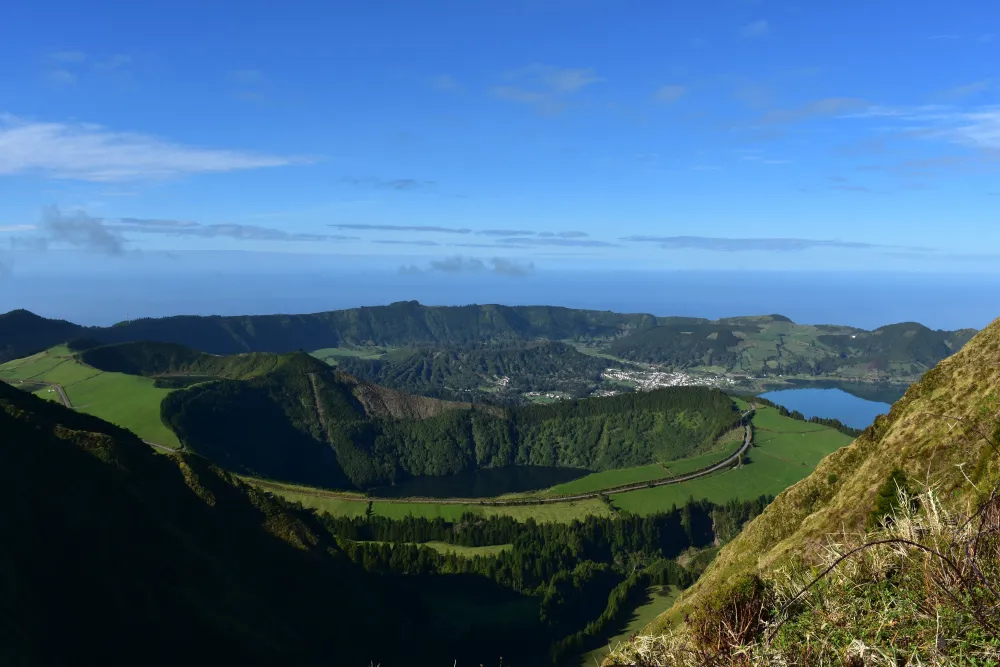
The western third of Sao Miguel is volcanic caldera country. Sete Cidades is the headline: two crater lakes sitting side by side inside a caldera four kilometers wide. One lake is blue. The other is green. The local legend says a princess with blue eyes and a shepherd with green eyes wept when they were forbidden to marry, and their tears filled the caldera.
The geology is simpler. Different depths and algae concentrations create the color contrast. But standing on the rim at Vista do Rei (named after King Carlos I, who visited in 1901), the effect is striking enough that legends feel appropriate.
The Viewpoints
Miradouro da Boca do Inferno is the viewpoint most used in Azores tourism photography. A short, flat walk from the parking area leads to the caldera rim. On clear mornings the reflection in the lakes is perfect. This is the one to reach early, ideally before 9 AM. By 10:30, tour buses arrive and the viewpoint fills up.
Vista do Rei is larger, more developed, and directly above the twin lakes. The abandoned Monte Palace Hotel sits here, slowly being reclaimed by vegetation. There's been talk of demolishing or renovating it for years. For now it's fenced off but visible. The viewpoint itself has a parking lot and a small cafe.
Miradouro do Cerrado das Freiras is on the opposite (southern) side of the caldera and gets far fewer visitors. From here you look across to Vista do Rei and see the lakes from a different angle entirely. Worth the detour.
Ponta do Escalvado faces west toward the sea stacks of Mosteiros and the Ferraria lighthouse. Best at sunset. The town of Mosteiros below has a black sand beach with dramatic rock formations offshore, and the surf catches the last light.
Kayaking on the Lakes
Several operators rent kayaks on the twin lakes of Sete Cidades (around €8 per person). Paddling between the blue and green sections, looking up at the caldera rim from water level, is a different experience from the viewpoints above. The water is calm, flat, and suitable for beginners. Early mornings are glassiest.
Ferraria Ocean Hot Spring
At the island's far western tip, volcanic heat meets the Atlantic. The Ponta da Ferraria ocean pool is free, open, and the water temperature depends entirely on the tide. At low tide, the volcanic heat wins and the pool can reach 30°C or more. At high tide, cold Atlantic water floods in. Aim for the second half of a falling tide. There's a paid spa complex next door (€6) with changing rooms and calmer pools, but the ocean pool is the real experience.
Hiking
The Sete Cidades caldera rim walk is the island's most popular trail. About 12 kilometers, 3-4 hours, moderate difficulty. The trail runs along the crater's edge with views down to both lakes. Start early to have the path mostly to yourself.
For something shorter, the Serra Devassa trail (PRC05, 5 km, 1.5 hours, easy) is a circular route through highland meadows with detours to smaller lagoons, including Lagoa do Canario.
Furnas Valley: Hot Springs, Mud, and Underground Cooking
Furnas is where Sao Miguel's volcanic identity is most visible. Steam rises from the ground in the village center. Mud pools bubble next to the sidewalk. The air smells faintly of sulfur. And in the park along the lakeshore, pots of meat and vegetables cook underground, heated by the earth itself.
The Hot Springs
| Hot Spring | Entry | Hours | What to Know |
|---|---|---|---|
| Terra Nostra Park | €17 | 10 AM - 7 PM (pool), park opens 9:30 AM | Enormous iron-rich pool (35-40°C), botanical garden with 2,000+ plant species. The water WILL stain your swimsuit orange permanently. Bring an old one or buy a dark one |
| Poca da Dona Beija | €8 | 7 AM - 11 PM | Five smaller pools in a fern-covered ravine. More intimate than Terra Nostra. The night session (after dark) is atmospheric |
| Caldeira Velha | €10 | 9 AM - 8 PM (summer), 10 AM - 5:30 PM (winter) | Warm waterfall in a forest setting. 2-hour time limit. Book the 9 AM slot online to avoid crowds |
| Ponta da Ferraria | Free | Always open | Ocean pool on the west coast. Temperature depends on tide. Best at low tide |
Tip on swimwear: The mineral content in the thermal water, especially at Terra Nostra, permanently stains light-colored fabric a rusty orange. Every travel forum has someone who ruined a white bikini. Wear dark colors or buy a cheap suit for the thermal pools.
Cozido das Furnas
This is the dish. Pots packed with beef, pork sausage, chicken, cabbage, sweet potatoes, kale, and other root vegetables are lowered into holes in the ground near the fumaroles along Furnas Lake. The volcanic steam cooks everything slowly over 5-6 hours. The result is tender, smoky, and unlike anything you can replicate in a kitchen.
Several restaurants around the lake serve cozido. Tony's (Restaurante Tony's) and Caldeiras & Vulcoes are the most established. Order at least a day in advance. Lunch only, typically served around 12:30-1 PM when the pots come out of the ground. Budget €15-20 per portion. It's enough food for a large appetite.
Furnas Lake and Fumaroles
The fumaroles along Furnas Lake are free to visit. Follow the boardwalk past the bubbling caldeiras where the cozido pots are buried. The parking area charges €3 per person. Nearby, the Terra Nostra botanical garden is worth visiting even if you skip the pool - 2,000 plant species across 12.5 hectares of manicured grounds.
The village of Furnas itself has a modest charm. Bolo levedo, a slightly sweet bread-cake hybrid that's a regional staple, comes from bakeries here. Buy a bag warm and eat it as you walk.
Terra Nostra Botanical Garden
Even if you skip the thermal pool, the garden alone is worth the €17 entry. Founded in the 1780s, it covers 12.5 hectares with over 2,000 plant species from five continents. Giant tree ferns, hundred-year-old camellias, cycad groves, and a maze of pathways through themed sections. The central avenue of towering native cedars and cryptomeria is the most photographed stretch. In February and March, the camellia collection blooms - hundreds of varieties in reds, pinks, and whites. Plan at least an hour for the garden, more if you're into plants.
What to Do When It Rains in Furnas
Rain in Furnas is common and, in some ways, makes the experience better. The steam from the fumaroles thickens. The hot springs feel even more rewarding. Beyond the pools, the Museu da Ermida de Nossa Senhora das Vitórias (a small chapel-museum) has painted wooden ceilings worth seeing. And a rainy afternoon is the right time to sit in one of the village cafes with a bolo levedo, a coffee, and nowhere to be.
Lagoa do Fogo and Central Sao Miguel
Lagoa do Fogo (Lake of Fire) is the wildest of Sao Miguel's three major volcanic lakes. No restaurants, no ticket booths, no developed infrastructure around the shore. It sits at 776 meters inside a nature reserve, and swimming is no longer permitted as of recent conservation regulations.
The drive up is steep and winding. In summer (mid-June through September), the shuttle from the base runs for €5 and saves you the parking hassle at the top. Outside shuttle season, you drive yourself up and find a spot.
From the miradouro at the top, the lake fills the crater below. On clear days the water is turquoise against black volcanic rock and green hillsides. On cloudy days - which is often - you see nothing but fog. Check the SpotAzores webcam before driving up.
Salto do Cabrito
On the way to or from Lagoa do Fogo, stop at this 40-meter waterfall. A short, steep trail (about 30 minutes down) leads to a swimming hole at the base. The path is muddy and requires decent shoes, but the waterfall is one of the most photogenic on the island.
Ribeira Grande and the North Coast
The north coast town of Ribeira Grande doesn't make most tourist itineraries, which is partly why it's worth a stop. It's the second-largest settlement on the island, with a lively market, surf beaches at Santa Barbara and Monte Verde, and a couple of good seafood restaurants. Alabote is the local pick for fish.
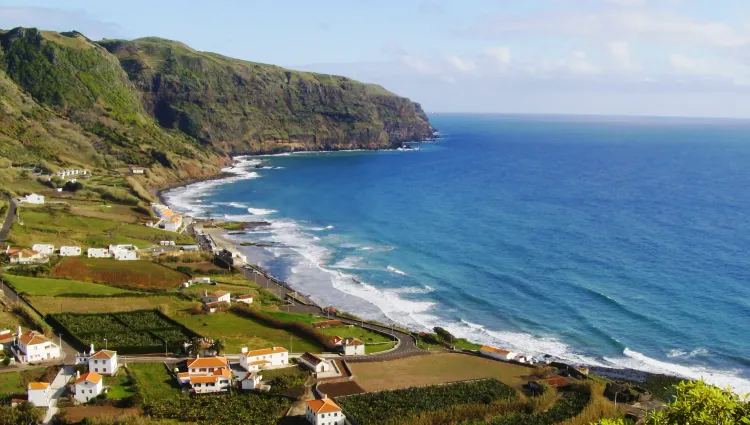
The north coast in general is wilder and less visited than the south. The waves are bigger, the cliffs steeper, and the viewpoints emptier. Praia de Santa Barbara has consistent surf, a surf school, and a beach bar. The road between Ribeira Grande and Nordeste hugs the coast through tiny villages and past the Gorreana tea plantation, Europe's only commercial tea operation since 1883. The factory tour is free, you can walk rows of tea plants overlooking the Atlantic, and the tasting at the end lets you try the black, green, and orange pekoe varieties. It's a 15-minute stop that most people stretch to 45 minutes because the setting is so good.
Nordeste: The Quiet East
The northeastern corner of Sao Miguel gets a fraction of the visitors that Sete Cidades and Furnas attract. The roads are narrower, the villages smaller, and the viewpoints emptier. If you have more than three days on the island, this is where to spend the extra time.
Viewpoints
Miradouro da Ponta do Sossego is a manicured garden perched on a clifftop, with sculpted hedges, flower beds, and views straight down to the Atlantic. It's maintained like a private estate and open to everyone for free.
Miradouro da Ponta da Madrugada faces east. The name translates roughly to "Point of Dawn." Come at sunrise and you'll understand why. The light hits the cliff faces and the ocean at an angle that photographs can't quite capture.
Miradouro de Santa Iria looks along the entire northern coastline of the island. On clear days you can see the ridge line stretching west toward Sete Cidades. It's one of the widest panoramas on Sao Miguel.
Salto do Prego Waterfall
From the village of Faial da Terra, a 4.5 km trail (about 2 hours round trip, moderate difficulty) leads through forest to a waterfall pouring into a pool surrounded by vertical green walls. Partway along, the trail passes through the abandoned village of Sanguinho, slowly being overtaken by vegetation. It's atmospheric and worth the detour.
Ribeira dos Caldeiroes
A small waterfall park on the north coast of Nordeste. Old stone water mills line the stream, and short trails wind through the gardens. Best visited in late afternoon when golden light hits the falls. Free entry.
Best Beaches and Natural Swimming Pools
Sao Miguel isn't a beach island. Most of the coastline is volcanic rock, dramatic but not exactly towel-friendly. That said, there are spots worth knowing about.
Mosteiros (west coast): Black sand beach with sea stacks offshore. Best at sunset. Strong currents mean swimming requires caution, but the scenery is extraordinary.
Praia de Santa Barbara (north coast): The island's best surf beach. Consistent waves, a surf school, and a beach bar. Sand is dark volcanic grey.
Praia do Populo (south coast, near Ponta Delgada): The closest proper beach to the city. Calm water, sand, and a beach bar. Fills up on summer weekends.
Ilheu de Vila Franca do Campo: A volcanic crater just offshore that forms a near-perfect natural swimming pool. Boat trip costs €10 return from Vila Franca do Campo. Limited to 400 visitors per day in summer. The water inside the crater is calm, warm, and sheltered. It's been used for the Red Bull Cliff Diving World Series.
Caloura natural pool (south coast): A protected tidal pool with steps cut into the rock. Calm water even when the ocean is rough. Bar Caloura restaurant sits right above.
Biscoitos-style rock pools: Several spots around the coast have natural rock pools formed by lava flows. Less developed than Terceira's famous Biscoitos, but functional and free.
A note on swimming: The Atlantic around Sao Miguel is not the Mediterranean. Water temperatures range from 16°C in winter to 23°C at peak summer. Currents and waves on the north coast are strong. Stick to protected natural pools and south-coast beaches for relaxed swimming. The ocean hot spring at Ferraria is warm regardless of season, but the entry requires climbing over slippery volcanic rocks, so go at low tide and wear water shoes.
Hiking: Best Trails by Difficulty
Sao Miguel has dozens of marked trails. These are the ones worth prioritizing.
| Trail | Distance | Time | Difficulty | Highlights |
|---|---|---|---|---|
| Grota do Inferno viewpoint | 2.6 km | 1 hr | Easy | Flat groomed path to the best Sete Cidades caldera view |
| Gorreana Tea (PRC28) | 3.4 km | 1.5 hrs | Easy | Rows of tea plants, ocean views, Europe's oldest tea plantation |
| Serra Devassa (PRC05) | 5 km | 1.5 hrs | Easy | Circular highland route, detours to Lagoa do Canario and Lagoa Rasa |
| Cascata do Limbo | 2 km | 30 min | Easy | Waterfall framed by blue hydrangeas (June-August) |
| Salto do Prego (Faial da Terra) | 4.5 km | 2 hrs | Moderate | Waterfall pool, abandoned village of Sanguinho |
| Janela do Inferno (PRC37) | 7.5 km | 2.5 hrs | Moderate | Forest trail, old water channels, volcanic landscape |
| Praia - Lagoa do Fogo (PR02) | 11 km | 4 hrs | Moderate | Descent to turquoise volcanic lake through dense vegetation |
| Sete Cidades caldera rim | 12 km | 3-4 hrs | Moderate | Full rim walk above both lakes. Start at Grota do Inferno, finish at Vista do Rei |
| Salto do Cabrito | 3 km | 1 hr | Moderate (steep) | 40-meter waterfall with swimming hole at base |
General trail tips: Most trails are well marked with wooden posts and paint. Wear waterproof hiking boots, not trainers. The volcanic rock gets slippery when wet, and it's wet often. Bring a rain jacket even if the forecast says sun. Start early for popular routes like Sete Cidades - by mid-morning the tour groups arrive.
Whale Watching and Marine Life
Sao Miguel is one of the best whale watching locations in the world. That's not marketing copy. The Azores sit above deep Atlantic waters, and the underwater geography (seamounts, ridges, nutrient-rich currents) draws cetaceans in numbers that shallow coastal waters can't match.
What you'll see: Sperm whales are resident around the Azores year-round. They're the most commonly sighted large whale. Blue whales, the largest animals on the planet, pass through from February to May during their migration. Bottlenose dolphins, common dolphins, and Risso's dolphins appear on most trips. Sei whales, fin whales, and beaked whales show up seasonally.
Practicalities: Most tours leave from Ponta Delgada marina. A half-day trip (3 hours on the water) costs around €65 per person. Zodiac-style rigid inflatable boats get you closer to the animals but are bumpier. Catamaran trips are smoother but keep more distance. Book 2-3 days ahead in summer. The sighting success rate runs around 98% from April through October.
The backstory: The Azores hunted sperm whales until 1987. The transition from whaling to whale watching happened within a generation. Many of today's lookouts (vigias) are former whalers or their children, using the same clifftop towers to spot blows on the horizon. Instead of launching harpoon boats, they radio coordinates to tour boats. The lookouts scan with binoculars for hours, waiting for a blow or a breach. When they spot one, they radio the GPS coordinates to the boat captain. It's a system that hasn't changed in structure since the whaling days, only the purpose.
Best months by species:
- Year-round: Sperm whales, bottlenose dolphins, common dolphins
- February - May: Blue whales (the best reason to visit off-season)
- March - June: Sei whales, fin whales
- April - October: Risso's dolphins (large groups, often 50+)
- Summer: Spotted dolphins, pilot whales
Diving: The Formigas Islets, a submerged volcanic ridge between Sao Miguel and Santa Maria, attract manta rays, mobula rays, and pelagic fish. Princess Alice Bank, an offshore seamount, offers encounters with blue sharks and mako sharks. Dive centers operate from Ponta Delgada. Expect €60-80 per dive with equipment. Visibility frequently exceeds 30 meters. The diving season peaks from June to October, when water temperatures reach 20-23°C and the big pelagic species are most active.
Where to Eat: A Restaurant Guide
The food on Sao Miguel is simple, ingredient-driven, and better than it has any right to be on a mid-Atlantic volcanic island. Dairy cows graze on mineral-rich pastures. Fish comes off the boats the same morning. Pineapples grow in greenhouses 10 minutes from the restaurants that serve them.
Ponta Delgada
A Tasca is the spot locals recommend first. Grilled limpets (lapas) in garlic butter, alcatra de novilho (slow-braised beef), and live music some evenings. Comes alive after 8 PM. Book ahead on weekends.
Taberna Acor does modern Azorean tapas from an open kitchen. Small plates, good wine list, casual atmosphere. Rua dos Mercadores, a short walk from the main square.
Tasquinha Vieira in the old town serves acorda (bread soup with swordfish) and mussels in coconut curry. The wine list includes hard-to-find Azorean bottles.
Rotas da Ilha Verde is the best vegetarian option. Zucchini cannelloni, spiced apple crumble. Good lunch deals.
Xurrex is a roadside grill stand. Grilled pork leg, piri-piri chicken, recheio (savory bread pudding). Takeaway. Budget.
Furnas
Tony's (Restaurante Tony's): The go-to for cozido das Furnas. Order 24 hours ahead. Lunch only.
A Quinta: Locally sourced, quieter than Tony's, and the cozido is just as good.
Ribeira Grande and the North
Alabote in Ribeira Grande is the local pick for seafood on the north coast. Less touristy than Ponta Delgada, lower prices, better portions. The grilled fish of the day is the safe bet.
Surf & Snacks Beach Club near Santa Barbara beach does casual food after a morning of surfing or walking the black sand coast. Burgers, pokes, fresh juices.
Around the Island
Bar Caloura sits above the Caloura natural pool on the south coast. Grilled fresh fish, tables overlooking the ocean. It gets packed at lunch. Arrive by noon or wait.
"Bar Caloura serves the freshest fish on the island, and the setting, right above a natural swimming pool, makes it hard to leave. The Guidekin team's order: whatever fish is chalked on the board that day, grilled simply with lemon. No need to overthink it." - Guidekin team
Quinta dos Sabores: Farm-to-table in the countryside. No menu. Five seasonal courses decided by the chef. Booking required.
Must-Try Dishes
- Lapas grelhadas - grilled limpets in garlic butter. Every seafood restaurant serves them. They're the Azorean equivalent of shrimp on the barbie
- Bife a regional - Azorean steak with pepper, garlic, and a fried egg on top. Comfort food, perfect after a day of hiking
- Cozido das Furnas - volcanic underground stew. Order ahead, eat at Furnas Lake
- Queijadas da Vila - custard pastries from Vila Franca do Campo. Small, sweet, and sold by the box
- Bolo levedo - the slightly sweet bread from Furnas. Buy warm from the bakery
- Cantaro - bright orange rockfish, caught offshore, grilled whole. Ask for it at any fish restaurant
- Gorreana tea - black, green, or orange pekoe. Free tastings at the plantation, or buy packets to take home
- Azorean pineapple - greenhouse-grown since the 1800s, intensely sweet, smaller than tropical varieties. Available at any market
Budget and Prices
Sao Miguel is mid-range by European island standards. Cheaper than the Canaries or the Greek islands. More expensive than mainland Portugal's smaller cities. Here's the full picture.
Activity and Attraction Prices
| Attraction / Activity | Price | Notes |
|---|---|---|
| Terra Nostra Park (thermal pool + garden) | €17 | Bring dark swimwear |
| Caldeira Velha | €10 | 2-hour time limit, book 9 AM slot |
| Poca da Dona Beija | €8 | Open 7 AM - 11 PM |
| Ponta da Ferraria ocean pool | Free | Best at low tide |
| Termas da Ferraria (spa complex) | €6 | Changing rooms, calmer pools |
| Whale watching (3 hours) | ~€65 | Book 2-3 days ahead in summer |
| Vila Franca islet boat | €10 return | Max 400 visitors/day |
| Lagoa do Fogo shuttle | €5 return | Mid-June - September only |
| Parque da Grena | €10 | Waterfall park |
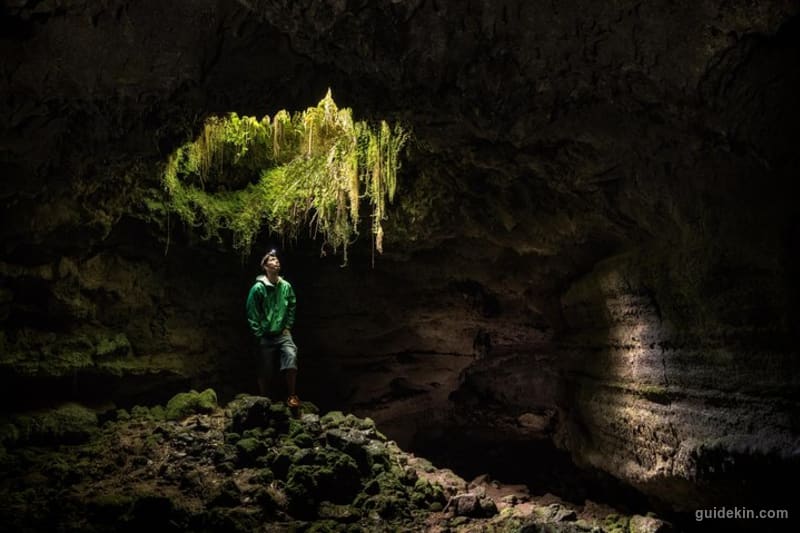
| Gruta do Carvao (lava cave) | €5 | Short underground tour |
| Fumaroles parking (Furnas Lake) | €3/person | |
| Gorreana Tea Plantation | Free | Factory tour + tastings |
| Pineapple plantation visits | Free | Self-guided or guided |
| Most miradouros and viewpoints | Free | |
| Most hiking trails | Free |
Daily Budget Estimate (per person)
| Category | Budget | Mid-Range | Comfort |
|---|---|---|---|
| Accommodation | €30-50 | €60-100 | €120-200 |
| Food | €15-25 | €30-50 | €50-80 |
| Car rental (shared) | €15-25 | €20-30 | €35-50 |
| Activities | €10-20 | €30-50 | €50-100 |
| Daily total | €70-120 | €140-230 | €255-430 |
Where to save: Hike instead of booking tours (the trails are free and well-marked). Eat the daily lunch menu (prato do dia, €10-15) at local restaurants instead of tourist spots. Visit Gorreana, the pineapple plantations, and viewpoints (all free). Use Ferraria's free ocean pool instead of paid thermal baths. Travel in April-May or October for lower car rental and accommodation rates.
Practical Tips
- Download SpotAzores (free app). It shows live webcams at viewpoints across the island. Check before driving 45 minutes to Sete Cidades - if the rim is in cloud, swap your plans and head east where it might be clear.
- Bring a dark swimsuit. The iron-rich thermal water at Terra Nostra and other hot springs permanently stains light fabrics orange. Not a little orange. Fully, irreversibly orange. Buy a cheap dark suit if needed.
- Book Caldeira Velha for 9 AM. The park limits visitors to 2-hour slots. The first slot of the day is the quietest. Afternoons can feel crowded, especially in summer.
- Google Maps gets it wrong sometimes. About 1 in 4 times on smaller roads, the app suggests routes that are unpaved, gated, or simply wrong. Keep offline maps as backup and trust road signs over GPS on mountain roads.
- Gas stations in villages close for lunch (1-3 PM) and the unmanned pumps sometimes only accept Portuguese bank cards. Fill up in Ponta Delgada or Ribeira Grande.
- Layer up, every day. You will see sun, clouds, and rain in a single morning. A waterproof jacket that fits in a daypack is essential. Don't leave it in the car.
- Eat early or late. Many restaurants outside Ponta Delgada close between lunch and dinner (roughly 3-6 PM). Some don't open for dinner at all. Check hours ahead.
- The tap water is safe and good. Comes from natural springs. Bring a reusable bottle.
- Carry cash for small villages. Ponta Delgada accepts cards everywhere. Smaller cafes, roadside fruit stands, and rural restaurants may not. ATMs (Multibanco) are in all main towns.
- Allow buffer days for weather. If Sete Cidades is fogged in today, it might be crystal clear tomorrow. A flexible itinerary beats a rigid one every time on Sao Miguel.
For a broader overview of all nine Azores islands, including inter-island flights and ferry logistics, see our complete Azores travel guide.
FAQ
How many days do you need in Sao Miguel?
Three days covers the big three: Sete Cidades, Furnas, and Lagoa do Fogo, plus a whale watching trip. Five days lets you add Nordeste, the Ponta Delgada food scene, and a couple of hikes without rushing. A full week means you can explore at a relaxed pace and handle weather delays. Most visitors wish they'd booked at least one more day than they did.
Is Sao Miguel expensive?
Not by European island standards. A mid-range trip costs €140-230 per person per day including car, accommodation, food, and activities. Many of the best experiences are free: hiking trails, viewpoints, Gorreana tea plantation, Ferraria ocean pool, village festivals. Eating at local spots with the daily menu (€10-15) instead of tourist restaurants keeps food costs low.
Can you swim in Sete Cidades?
The lakes themselves are not swimming spots. They're inside a protected nature area and the water is cold (around 16°C). Some visitors wade at the edge, but there are no facilities, no lifeguards, and it's not officially permitted. For swimming near Sete Cidades, head to Mosteiros beach (10 minutes west) or the Ferraria ocean hot spring (20 minutes southwest).
Is whale watching in Sao Miguel worth it?
Yes. The 98% sighting success rate is real, not a marketing number. The deep Atlantic waters around the Azores are home to resident sperm whale populations, and the underwater topography draws dolphins, pilot whales, and (February-May) blue whales close enough for small boats to reach within 20 minutes of leaving the marina. Even on the rare trip where the large whales don't appear, you'll see dolphins.
Does it rain a lot in Sao Miguel?
It rains frequently, but rarely for long. The weather shifts quickly due to the island's position in the mid-Atlantic and its mountainous interior. A morning shower doesn't mean a lost day. It usually means 30 minutes of rain followed by clearing skies. The wettest months are November through February. Summer rain is less frequent but still possible. The key is flexibility: have a Plan B for each day, and use the SpotAzores app to chase clear skies.
Sao Miguel vs Terceira: which should I choose?
Sao Miguel for nature, variety, and activities. It has the hot springs, the volcanic lakes, the best whale watching access, the tea plantation, and the most hiking options. Terceira for history, culture, and quieter tourism. Angra do Heroismo is a UNESCO World Heritage town, the Sanjoaninas festival is unmatched, and the food scene is arguably the best in the archipelago. If you have a week, do both: 4 days on Sao Miguel, 3 on Terceira. We cover the island in full in our Terceira travel guide.
Your Sao Miguel Game Plan
Start with the west. Drive to Sete Cidades on your first morning while the energy is high and the caldera views are clearest. Spend the afternoon at Ferraria's ocean pool or Mosteiros beach. Day two, head to Furnas for the hot springs and cozido. Day three, point the car northeast toward Nordeste's viewpoints and waterfalls. If you have a fourth day, use it for whale watching in the morning and Ponta Delgada's restaurants and wine bars in the evening.
The island is small enough that you can adjust on the fly. Fogged in at Sete Cidades? Drive to Nordeste, where the weather is often completely different. Rain at Lagoa do Fogo? Soak in Terra Nostra instead. The best Sao Miguel trips are the ones with a plan and the willingness to abandon it.
Book whale watching and guided day trips ahead of time, especially in summer when the best operators fill up. And if Sao Miguel leaves you wanting more, the flights to Terceira and Pico take 30 minutes.