Key Takeaways
- Terceira is the cultural capital of the Azores, with the best food, the biggest festivals, and a UNESCO World Heritage city - more on why it stands out →
- Algar do Carvao, the island's top attraction, is closed until June 2026 for the new CAVE visitor center - current status and alternatives →
- The Imperios do Espirito Santo tradition is unlike anything else in Europe, and Terceira has 56 of these colorful chapels - what they mean →
- Terceira arguably has the best food in the Azores, from slow-cooked alcatra to Verdelho wine aged in volcanic rock cellars - where to eat →
- You need a car. The island is small (30km across) but public transport barely exists outside Angra - logistics →
- Three days is the minimum. Five days lets you actually relax into the island's rhythm - sample itineraries →
Why Terceira
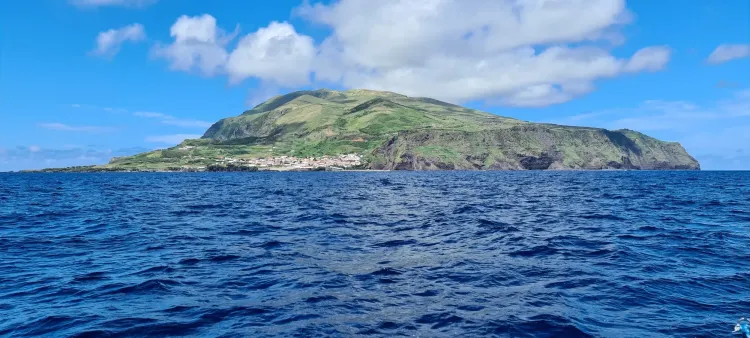
Terceira was the third Azorean island discovered by Portuguese sailors (hence the name, "third"), but it was the first to be fully settled. That head start shows. While Sao Miguel gets more visitors and Faial has the marina crowd, Terceira quietly holds the strongest cultural identity of any island in the archipelago.
The numbers are modest. Around 55,000 people live here, mostly split between Angra do Heroismo on the south coast and Praia da Vitoria on the east. The island is roughly 30 kilometers across. You can drive the perimeter in about two hours. But don't.
What makes Terceira different from the other Azores islands comes down to three things. First, Angra do Heroismo. It's a UNESCO World Heritage city, and one of the few in Portugal outside the mainland. The pastel-colored buildings, the 16th-century fort, and the grid of cobblestone streets feel more like a small European capital than a mid-Atlantic village. Second, the food. Terceira's volcanic-soil pastures keep cattle grazing year-round, and that dairy culture feeds everything from the cheese to the slow-cooked stews. Third, the festivals. The Imperios do Espirito Santo tradition here is deeper and more active than on any other island. Fifty-six colorful chapels dot the countryside, and each one has a brotherhood that still organizes communal feasts throughout the year.
One more thing. Charles Darwin stopped in Terceira on his return voyage from the Galapagos aboard the HMS Beagle in 1836. He spent a few days, climbed Monte Brasil, and wrote about the volcanic geology. If the island was interesting enough for Darwin to detour, it's interesting enough for a proper visit.
When to Go and How to Get There
Best Time to Visit
Terceira's weather runs mild year-round. Winter lows hover around 13-14°C, summer highs around 25°C. Rain is part of the deal in every season, but summer (June through September) is drier and warmer.
| Month | Avg Temp | Rain Days | What's Happening | Crowds |
|---|---|---|---|---|
| Jan-Mar | 14-16°C | 12-14/mo | Carnival (Feb/Mar), quiet island | Low |
| Apr-May | 16-19°C | 9-11/mo | Wildflowers, hydrangeas starting | Low-Med |
| Jun | 20-22°C | 6-7/mo | Sanjoaninas festival (late June) | Medium |
| Jul-Aug | 24-25°C | 3-5/mo | Peak summer, bullfighting season | High |
| Sep | 23-24°C | 6-7/mo | Warm water, smaller crowds | Medium |
| Oct-Dec | 17-20°C | 10-13/mo | Autumn storms, wine harvest | Low |
The sweet spot is June or September. June gets you the Sanjoaninas (the biggest festival in the Azores, with concerts, parades, and bullfighting in the streets) plus warm weather without August crowds. September means the ocean is at its warmest and summer prices start dropping.
Getting There
From mainland Europe: SATA Azores Airlines and Ryanair fly direct from Lisbon (2.5 hours). Seasonal connections from Porto, London, and other European cities.
From the US: SATA runs direct flights from Boston and New York (JFK) to Terceira, mostly in summer. Oakland also had seasonal service. These routes exist partly because of the large Azorean diaspora in New England - over a million Americans trace their roots to the Azores, and many have family on Terceira specifically. Flight time from Boston is about 5 hours.
From other Azores islands: SATA inter-island flights connect Terceira to Sao Miguel (30 minutes), Faial, and Pico. In summer, Atlanticoline ferries run to Graciosa (about 1 hour), making it an easy day trip. Ferries also occasionally connect to Sao Jorge and Faial, though schedules are weather-dependent.
Book flights early for summer. Terceira's airport (Lajes, TER) is small, and popular dates sell out fast, especially the US direct routes. Winter has fewer flight options but lower prices.
Getting Around
Rent a car. This is not optional advice. Terceira has limited bus service connecting Angra to Praia da Vitoria, but it runs infrequently, stops early in the evening, and doesn't reach most of the island's best viewpoints, natural pools, or trailheads.
The island is compact, so a small car works fine. Budget around 30-40 EUR per day in summer, less off-season. Book ahead through AutoAtlantis, Ilha Verde, or international chains at the airport. Full insurance is worth it. The roads are good but narrow in places, and parking at trailheads can mean tight squeezes.
A few specifics. The main highway (ER1) circles the island with a handful of shortcuts through the interior. You'll notice the vacaductos along the central expressway - elevated walkways that let the island's dairy cows cross safely overhead. Terceira might be the only place in Europe where cows have their own highway overpasses.
Taxis work for airport transfers and short hops in Angra. A handful of guided tours cover the main sights if you really prefer not to drive. But self-driving gives you the freedom to stop at viewpoints, chase breaks in the weather, and find empty natural pools.
Where to Stay
Angra do Heroismo is the best base for most visitors. It has the widest choice of hotels, restaurants, and services, plus the marina for whale-watching departures. Staying in the historic center puts you within walking distance of everything.
In the city center: Several boutique hotels occupy restored colonial buildings. Expect to pay 70-110 EUR per night in summer for a double room with breakfast. The streets around Praca Velha and Rua da Se have the best selection. Apartments and vacation rentals are plentiful on booking platforms, often cheaper than hotels and with kitchens for self-catering.
Praia da Vitoria works if you want a quieter beach-town atmosphere. Hotels here tend to be simpler and slightly cheaper. The trade-off is fewer dining options and a 20-minute drive to Angra for nightlife and whale watching.
Rural stays: A handful of quintas (rural estates) and farm stays offer something different. Quinta do Martelo near Santa Barbara is the best-known, a working farm converted into lodging with a restaurant. These places suit travelers who want green silence over city convenience.
Book ahead for June through August. The island is small and accommodation fills up, especially around Sanjoaninas in late June. Off-season, prices drop 30-40% and you'll have your pick.
Angra do Heroismo: Walking the UNESCO City
Angra was the Azores' first capital and served as a critical stopover for Portuguese ships returning from the Americas, Africa, and Asia. The harbor sheltered treasure fleets. The city grew wealthy. Then the 1980 earthquake hit and destroyed much of it. What you see today is a careful reconstruction that earned UNESCO World Heritage status in 1983.
The earthquake is worth knowing about. On January 1, 1980, a magnitude 7.2 quake struck the central Azores. In Angra, entire blocks collapsed. Churches lost their facades. Homes crumbled. The rebuilding effort that followed used historical records to reconstruct the city as close to its pre-earthquake state as possible. That commitment earned the UNESCO designation just three years later. Walking through Angra today, you're looking at both a 500-year-old city and a 45-year-old reconstruction at the same time.
A Walking Route
Start at Alto da Memoria, the obelisk at the top of the hill behind the city center. The view from here covers the bay, the fort on Monte Brasil, and the checkerboard of terracotta roofs. Walk downhill along Rua da Se to the cathedral (Se de Angra). It dates to 1570, and the interior has carved cedarwood ceilings worth a look.
Continue to Praca Velha, the main square. This is where locals sit with espresso in the morning. The surrounding streets - Rua Direita, Rua de Sao Joao - have the best-preserved colonial facades, painted in dusty yellows, blues, and pinks. Duck into the public market (Mercado Duque de Braganca) for local cheese, fruit, and pastries. The market is small but genuine. You'll find Sao Jorge cheese, fresh bread, bananas, and seasonal fruit at prices well below tourist shops.
Before heading to the marina, detour east to Igreja de Sao Sebastiao. This 15th-century church has wall paintings dating to the late 1400s or early 1500s, some of the oldest surviving artwork in the Azores. The frescoes are faded but visible, depicting religious scenes in a style you won't see repeated anywhere else on the islands. The church is free to enter and usually empty.
Walk south to the marina and the waterfront promenade. From here, Forte de Sao Sebastiao guards the eastern entrance to the bay. On the western side, the massive Forte de Sao Joao Baptista still functions as a military installation. It's the largest Spanish fortress ever built on Portuguese soil, dating to when Spain controlled Portugal (1580-1640). Free guided tours run on request - ask at the entrance. The fort sits on a promontory with views across the bay, and the thick stone walls are worth exploring even without a guide.
Monte Brasil
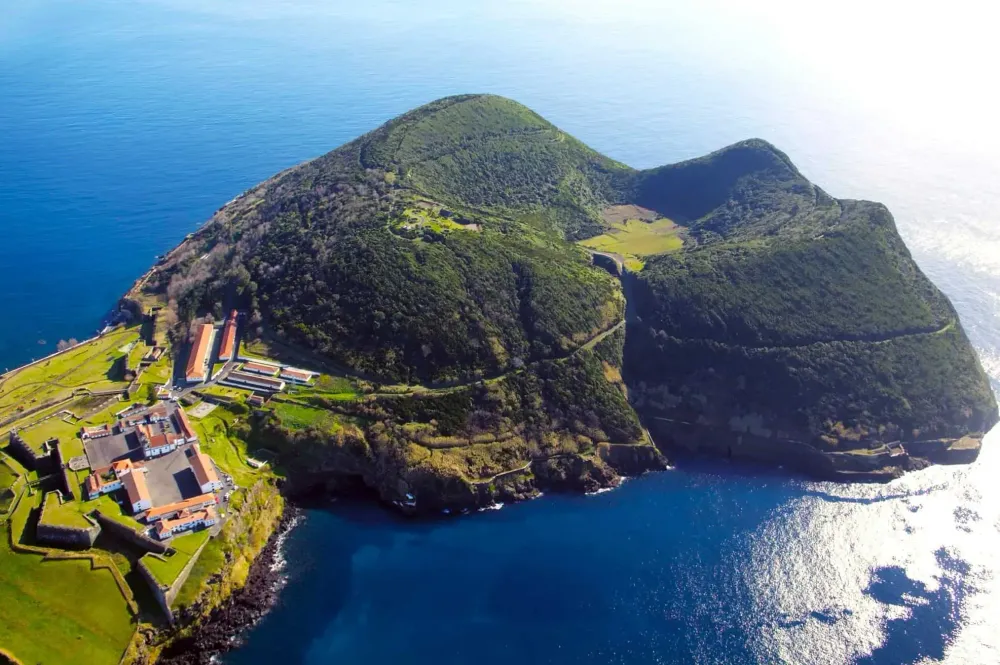
The big volcanic peninsula attached to Angra's west side. A paved road climbs to the summit (205m), but the walking trail is better. It takes about 45 minutes up through dense laurel forest and Azorean juniper. At the top, you get a full panorama of Angra, the coastline, and on clear days, the island of Sao Jorge in the distance.
Monte Brasil is also where the vigias (whale-watching lookouts) were historically positioned. Professional spotters would scan the horizon for whales and signal to boats below. The old vigia post is still there, and it's a peaceful spot to sit.
After Dark
Angra has a small but genuine nightlife, mostly concentrated around Rua de Sao Joao and the marina area. A few bars stay open late, especially during summer and festival season. For dinner, the marina restaurants are tourist-convenient but the better food is in the side streets and in Sao Mateus, ten minutes west along the coast.
Volcanic Underground
Terceira sits on a volcanic hotspot, and the underground shows it. Three main sites let you go below the surface, though one of them has a major update for 2026.
Algar do Carvao
This was Terceira's star attraction. A volcanic chimney formed roughly 3,200 years ago, descending about 90 meters underground into a cathedral-sized cavern with an underground lake. The lake's depth fluctuates between 0 and 14 meters depending on rainfall and season. Stalactites made of silica (not limestone, which is rare) line the upper walls.
"Algar do Carvao is closed until June 2026. The new CAVE - Centro Acoriano de Vulcano-Espeleologia visitor center is under construction at the site. When it reopens, expect an upgraded experience with a modern interpretation center. If you're visiting before June 2026, plan around the other two volcanic sites instead." - Guidekin team
Gruta do Natal
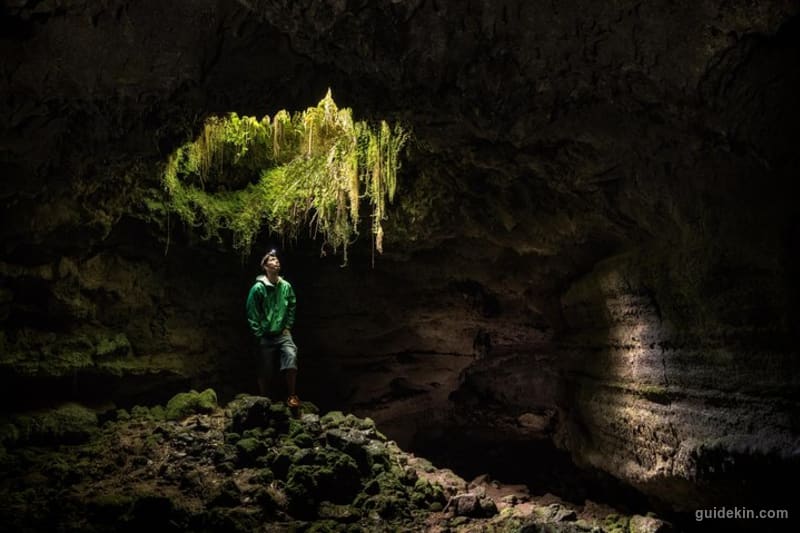
This lava tube stretches nearly 700 meters through the island's interior. It formed when the outer layer of a lava flow cooled and hardened while molten rock kept flowing underneath, eventually draining out and leaving a tunnel. The cave has good lighting, informational panels explaining the geology, and a flat walkway. It takes about 30-40 minutes to walk through. Open year-round.
The name means "Christmas Cave" because it was discovered on December 25, 1969, by a local farmer whose cow nearly fell into the entrance. Inside, the lava tube shows textbook volcanic features: pahoehoe flow textures on the walls, lava drips frozen in place, and sections where the ceiling varies from two meters to barely head height. It's cool inside (around 15°C year-round), which makes it a solid option on hot summer days.
Furnas do Enxofre
An active fumarole field in the island's central highlands. Steam rises from cracks in the ground, and the soil temperature reaches 95°C in places. Stay on the boardwalk. The interpretive center explains Terceira's volcanic system and how geothermal energy is monitored. The surrounding area smells of sulfur, which is normal.
The drive to Furnas do Enxofre passes through the island's green interior, with pastures, cryptomeria forests, and fog. Even if fumaroles don't excite you, the landscape on the way up is some of the prettiest driving on Terceira. Combine this stop with the Misterios Negros hiking trail, which starts nearby.
| Site | Status (2026) | Entry Fee | Time Needed |
|---|---|---|---|
| Algar do Carvao | Closed until June 2026 | TBD (was 8 EUR) | 45 min |
| Gruta do Natal | Open | 8 EUR (combo 12 EUR) | 30-40 min |
| Furnas do Enxofre | Open | Free | 20-30 min |
The combo ticket for Algar do Carvao and Gruta do Natal was 12 EUR. Pricing may change when CAVE reopens. Furnas do Enxofre is free and has parking.
Beaches, Pools, and the Coast
Terceira's coastline is mostly volcanic rock, which means the island's best swimming spots are natural pools carved into the lava - filled by the ocean, warmed by the sun, and protected from the open Atlantic swell.
Natural Pools
Biscoitos is the most famous. A complex of interconnected rock pools on the island's north coast, with changing rooms, showers, a lifeguard in summer, and a small cafe. The pools vary in depth and size, some shallow enough for children, others deep enough for real swimming. They get crowded on summer weekends. Weekday mornings are better.
Porto Martins on the east coast is less visited and just as good. Larger pools, fewer people, decent facilities. Locals favor this spot.
Cinco Ribeiras on the west coast has a scenic pool area with a dramatic backdrop of coastal cliffs. Basic facilities but a great sunset spot. The pools here are more exposed to the ocean, so conditions depend on the swell. Check before you go on rougher days.
Silveira near Angra is the most convenient if you're staying in town. Smaller pools, but you can walk there from the city center. Good for a quick morning swim before breakfast.
There's also Piscina Natural do Refugo on the north coast, formed by a historical volcanic eruption that reshaped the coastline. It's a quieter alternative to Biscoitos and has a distinctive black-rock setting.
Water shoes are smart everywhere. Volcanic rock is sharp. The ocean temperature ranges from about 17°C in winter to 23°C in late summer. Lifeguards are present at Biscoitos and Porto Martins in summer (roughly June through September), but most smaller pools are unsupervised. Swim with caution, especially on days with big Atlantic swells.
Beaches
Proper sandy beaches are rare on Terceira. The coastline is overwhelmingly volcanic rock. But two options stand out. Prainha in Angra is a small but charming city beach tucked inside a sheltered bay, walkable from the center. It has calm water and a backdrop of Monte Brasil's green slopes. Families like it for the calm conditions and proximity to cafes.
Praia da Vitoria has the island's longest sand beach - the town is literally named after it. It's wide, well-maintained, and popular with local families. A waterfront promenade runs the length of the beach, lined with restaurants and ice cream shops. In summer, the sand fills up by midday. Early morning or late afternoon is better if you want space.
Whale Watching and Marine Life
The waters around Terceira are part of the Azores' whale-watching corridor. Over 20 species of cetaceans pass through these waters. The season runs year-round, but what you see changes by month.
| Season | Species | Notes |
|---|---|---|
| Year-round | Sperm whales, common dolphins, bottlenose dolphins | Resident populations |
| Apr-Jun | Blue whales, fin whales, sei whales | Migration period, best months |
| Jul-Sep | Spotted dolphins, Risso's dolphins | Warm-water species arrive |
| Oct-Mar | Beaked whales | Harder to spot, but present |
Boat trips leave from Angra's marina. Half-day excursions run 50-65 EUR per person. Most trips last 2-3 hours and use rigid inflatable boats (RIBs) or small catamarans. Choose operators who follow responsible whale-watching codes (minimum distance, engine-off protocols). The Azores has strict regulations: boats must keep 50 meters from dolphins and 100 meters from whales. Good operators go beyond the minimum.
Success rates are high, around 95% for dolphins and 80%+ for whales during peak season. April through June is the prime window. Blue whales pass through on their northward migration, and on a good day you might spot blues, fins, and sperm whales on a single trip. Even outside peak season, resident sperm whale populations mean sightings are possible year-round.
Below the Surface
Here's something most guides skip. Angra do Heroismo has an underwater archaeological park off its coast. The bay's position as a transatlantic shipping hub for centuries means shipwrecks accumulated on the seafloor. Since 1552, at least 74 vessels have sunk here. Several wreck sites are accessible for scuba diving and even snorkeling in calm conditions. The Lidador, a 19th-century steamship, sits at around 14 meters depth and is one of the most popular dives.
Local dive operators run trips to multiple wreck sites and reef dives. Visibility is usually 15-25 meters. Even if you don't dive, the Angra do Heroismo Museum (Museu de Angra do Heroismo) has artifacts recovered from these wrecks.
The Culture That Defines Terceira
Imperios do Espirito Santo
You'll notice them driving around the island. Small, brightly painted chapels - red, blue, green, yellow - standing in villages, at crossroads, in fields. These are Imperios, and they're the physical heart of Terceira's most important cultural tradition.
The cult of the Holy Spirit (Espirito Santo) dates back to the 14th century and is woven into Azorean identity, but Terceira takes it further than any other island. There are 56 active Imperios on Terceira, each maintained by an irmandade (brotherhood) of local families.
The tradition works like this. Each year, a different family in the brotherhood is chosen to be the "emperor" or "empress." They're crowned in a ceremony at the Imperio, and they host communal feasts called sopas do Espirito Santo - thick bread-based stews cooked with beef and spices, served free to anyone who shows up. The feasts happen from Easter through late summer, peaking around Pentecost.
This isn't a museum exhibit or a tourist show. It's a living tradition. The brotherhoods fundraise year-round, the coronation ceremonies are real, and the communal meals feed hundreds. If you're visiting between May and September, check locally for feast dates. You'll be welcome to sit down and eat.
"The Imperios tradition is what makes Terceira feel genuinely different from any other place in Europe. It's communal generosity built into the calendar. Show up, eat, sit with strangers. No ticket required." - Guidekin team
Tourada a Corda
Rope bullfighting is Terceira's other signature tradition, and it's nothing like Spanish bullfighting. No swords, no killing, no matadors. A bull is released into a village street, held by a long rope managed by a team of pastores (handlers). Young men (and some women) dodge the bull. The crowd watches from walls, doorways, and balconies. The bull goes home alive.
The season runs May 1 through October 15. Touradas happen in different villages most weekends, sometimes several in a week. They're free to watch. The atmosphere is more local block party than formal event. Ask at your hotel or check the municipal calendar for schedules.
Sanjoaninas
The biggest festival in the Azores happens in Angra in late June (around the Feast of St. John, June 24). Ten days of concerts, parades, bullfighting, street food, and late nights. The city fills up. Rua de Sao Joao becomes an open-air party. Stages are set up around the marina and Praca Velha. Local bands, Portuguese pop acts, and international performers rotate through the program.
Sanjoaninas also includes daily touradas a corda, food markets featuring local producers, and the famous marchas populares - neighborhood dance troupes that compete in choreographed street performances. If you're on the island during Sanjoaninas, book accommodation months ahead. If you're not sure when to visit, this festival alone is a reason to pick late June.
Carnival
Less known internationally, Terceira's Carnival (February or March, depending on the year) has its own character. The tradition of dancos de Carnival - theatrical performances combining comedy, social satire, and music - is unique to Terceira. Troupes perform in theaters and village squares across the island. The Helio Costa Carnival Museum in Lajes public garden documents the history and costumes. Most tourists skip Terceira in winter, which means you'll have the performances and parades largely to yourself.
Food and Wine
Terceira's food reputation among Azoreans is simple: it's the best island to eat on. The volcanic-soil pastures produce rich dairy and beef. The surrounding ocean is full of fish. And centuries of isolated development created dishes you won't find anywhere else.
Must-Try Dishes
Alcatra is the island's signature. A slow-cooked beef stew made in a clay pot (alguidar) with wine, allspice, and bacon. It cooks for hours until the meat falls apart. Every family has a recipe, and most restaurants serve it. It's hearty, rich, and better than it sounds on paper.
Sopas do Espirito Santo are the ceremonial bread stews from the Imperios tradition. Thick slices of bread soaked in a spiced beef broth with mint. You can find them at restaurants, but the real version is at the communal feasts.
Dona Amelia is a spiced cake named after Queen Amelia, who reportedly tasted it during a royal visit in 1901. It's made with cinnamon, honey, dried fruit, and molasses. Every bakery in Angra sells them.
Queijadas da Graciosa and local fresh cheese (queijo fresco) are everywhere. Terceira's dairy industry is serious - the island's lush pastures allow year-round grazing, something most of mainland Europe can't match. The volcanic soil grows rich grass, the mild climate means cows stay out all year, and the result is milk and cheese with a flavor profile that's hard to replicate. Neighboring Sao Jorge gets more fame for its cured cheese, but Terceira's fresh dairy is just as good in its own way.
Polvo guisado (stewed octopus) shows up on most restaurant menus, cooked slowly with wine, garlic, and potatoes. The octopus is caught locally, and the stew is comfort food at its simplest. Torresmos (crispy pork belly bites) are a common bar snack and pair well with Verdelho wine.
Wine
Terceira's wine tradition centers on Biscoitos, a village on the north coast where grapevines grow inside small walled enclosures called curraletas. The walls protect the vines from Atlantic winds. Verdelho is the main grape, producing a dry white with a mineral edge.
The Museu do Vinho dos Biscoitos covers the history and offers tastings. The museum sits among the actual vineyards, and you can see the curraletas up close. Verdelho wines range from dry table whites to sweet dessert versions, and a tasting runs about 5 EUR per person.
For something more intimate, look for Dimas Adega, a small family-run cellar where you can taste wine aged in volcanic rock caves. The setting is a converted farmhouse, the host explains the winemaking process personally, and the atmosphere is more conversation than presentation. Contact ahead to arrange a visit - this isn't a walk-in spot.
Where to Eat
| Restaurant | Location | Known For |
|---|---|---|
| Beira Mar | Sao Mateus | Fresh seafood, grilled limpets |
| Ti Choa | Sao Mateus | Alcatra, local atmosphere |
| O Forno | Angra | Wood-fired dishes, queijadas |
| Caneta | Angra (outskirts) | Alcatra in clay pot, big portions |
| Quinta do Martelo | Santa Barbara | Farm-to-table, rural setting |
| Taberna Roberto | Angra | Petiscos (small plates), wine |
Sao Mateus, a small fishing village ten minutes west of Angra, has quietly become the island's best food street. Three or four restaurants line the waterfront, all serving fresh fish and local meat. Friday evenings are particularly good - the bread comes fresh from wood-fired ovens.
A meal for two with wine at a mid-range restaurant runs 30-50 EUR. Angra's fancier spots can reach 60-70 EUR. The village restaurants in Sao Mateus and around the island are generally cheaper and better than the tourist-facing places near the marina. Ask locals where they eat. In a place this small, everyone has an opinion.
Hiking Trails
Terceira's trails cover volcanic landscapes, coastal cliffs, and highland forests. The island is less dramatic than Sao Miguel's lake-filled calderas, but the hiking is quieter and you'll often have paths to yourself.
| Trail | Distance | Difficulty | Highlight |
|---|---|---|---|
| Misterios Negros (PRC01) | 5.6 km | Moderate | Lava fields, cryptomeria forest, volcanic craters |
| Monte Brasil | 4 km | Easy | City views, laurel forest, whale-watching lookout |
| Rocha do Chambre (PRC05) | 3.8 km | Easy-Mod | Coastal cliffs, sea stacks, Biscoitos area |
| Serra de Santa Barbara (PRC03) | 6.6 km | Moderate-Hard | Highest point (1,021m), endemic vegetation |
| Baias da Agualva (PRC04) | 3.7 km | Easy | Coastal path, sea caves, rock pools |
Misterios Negros is the standout. The trail loops through an otherworldly landscape of black lava fields (misterios) partially reclaimed by moss and cryptomeria trees. You pass two volcanic craters and sections where the ground is spongy underfoot. Morning is best - the mist adds to the atmosphere, and the trail gets muddy after rain. Start early, bring waterproof boots, and allow 2-3 hours including stops for photos and crater-gazing.
Serra de Santa Barbara reaches 1,021 meters, the island's highest point. On clear days, you can see Graciosa and Sao Jorge from the summit. The upper slopes hold some of the largest areas of primitive endemic vegetation in the entire Azores archipelago - Azorean heather, juniper, and laurel that have been growing here since before humans arrived. The trail starts from a forestry road above the village of Serreta. The final ascent is steep and exposed to wind.
Rocha do Chambre runs along the northern coast near Biscoitos. It's shorter and easier than the highland trails, with views of sea stacks, wave-battered cliffs, and the volcanic rock formations that make this stretch of coastline distinctive. Combine it with a visit to the Biscoitos natural pools and the wine museum for a full north-coast day.
Baias da Agualva is the gentlest option. A coastal path with sea caves, rock pools, and patches of endemic vegetation. Good for families or anyone who wants a walk without serious elevation gain.
Bring layers and rain gear for any trail. Weather shifts fast at altitude. Trails are well-marked with wooden posts. Trail maps are available at the Angra tourist office and online through Trails Azores.
Praia da Vitoria and the East
Most visitors never leave Angra's orbit. That means Praia da Vitoria, the island's second town, is often empty of tourists even in summer.
The town sits on the east coast around a wide, sandy beach - the longest in the Azores. The waterfront promenade is pleasant for a walk, and the town center has a few churches, a municipal market, and a slower pace than Angra. It's a good lunch stop on a driving day.
Nearby, Porto Martins has natural pools that rival Biscoitos without the crowds. The coastal area east of Praia da Vitoria also includes the Lajes airfield, a joint-use facility with a runway long enough for wide-body jets (it was built by the US military during World War II). The American presence has been reduced significantly since the Cold War, but the base remains and explains why you might spot English-language signage in unexpected places.
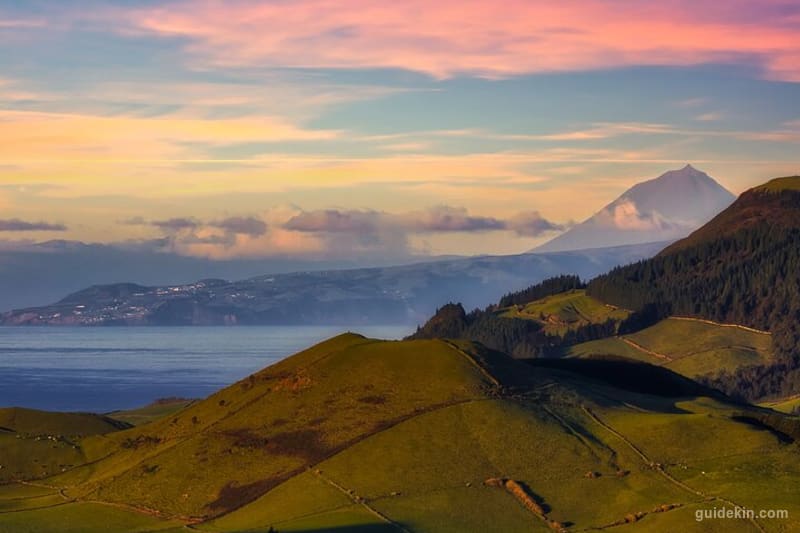
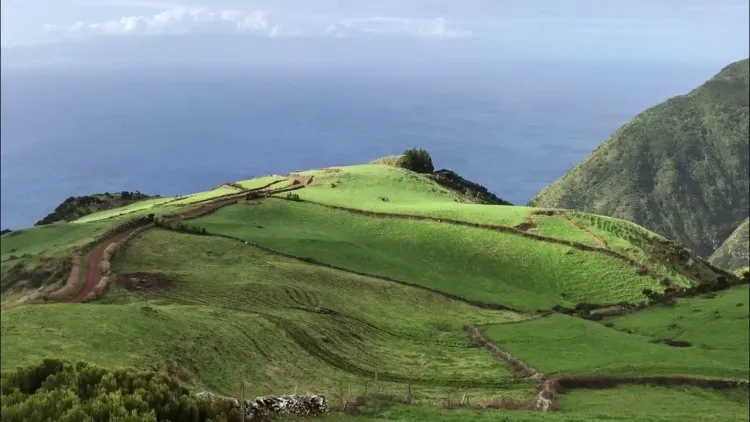
For a viewpoint that most tourists miss, drive to Miradouro da Serra do Cume above Praia da Vitoria. The patchwork of green pastures divided by stone walls, stretching from the ridge to the coast, is one of Terceira's most photographed scenes. Come before 10 AM for the best light. The drive up takes about 15 minutes from town on a winding but paved road.
Another hidden spot in the east: Miradouro Janela da Ribeirinha, a natural rock arch framing the ocean. It's a short walk from the road and genuinely striking, but it appears in almost zero guidebooks. Look for it along the coastal road between Sao Sebastiao and Porto Judeu. The arch is visible from the roadside viewpoint, no hiking required.
Sample Itineraries
3 Days (Express)
Day 1: Arrive, settle in Angra. Walk the UNESCO city center using the route above. Dinner in Sao Mateus.
Day 2: Morning at Gruta do Natal and Furnas do Enxofre. Lunch in Biscoitos, swim in the natural pools. Afternoon at Museu do Vinho. Drive to Serra do Cume viewpoint for late light.
Day 3: Monte Brasil morning hike. Whale watching from the marina (half day). Afternoon free for Angra shopping, pastries, and Forte de Sao Joao Baptista.
5 Days (Recommended)
Days 1-3: As above.
Day 4: Drive the island perimeter. Start east to Praia da Vitoria for coffee and the beach promenade. Continue to Porto Martins pools for a mid-morning swim. Drive north along the coast, stopping at Miradouro Janela da Ribeirinha. Lunch at Biscoitos (try the restaurants near the natural pools), then visit Museu do Vinho or Dimas Adega for wine tasting. End at Serra do Cume viewpoint for golden-hour light over the pastures.
Day 5: Hike Misterios Negros in the morning (start by 9 AM before the trail gets muddy). Drive to Sao Mateus for a late lunch at Ti Choa or Beira Mar. Afternoon at Cinco Ribeiras pools or Lagoa das Patas for a highland picnic. Final dinner at Caneta for alcatra in a clay pot.
7 Days (Deep Dive)
Days 1-5: As above.
Day 6: Day trip to Graciosa by ferry (summer only, about 1 hour each way). The island is tiny and peaceful. Visit Furna do Enxofre, a volcanic cave with a sulfur lake at the bottom. Walk the village of Santa Cruz, have lunch, take the afternoon ferry back.
Day 7: Slow morning. Revisit your favorite pool or beach. Browse the shops on Rua da Se for azulejo tiles, local honey, or Dona Amelia cakes to bring home. If you haven't seen the Vaquinha cheese factory, today is the day. Farewell dinner at Quinta do Martelo in the countryside.
Practical Tips
- Budget: Plan for 80-120 EUR per day for two people. That covers a mid-range hotel (60-80 EUR), car rental (30-40 EUR), meals (30-50 EUR), and one activity. Budget travelers sharing an Airbnb and cooking some meals can manage on less.
- Cash vs. cards: Most restaurants and shops accept cards, but bring some cash for small cafes, market vendors, and the odd parking meter. ATMs are available in Angra and Praia da Vitoria.
- Language: Portuguese is the language. English is spoken in hotels, tour offices, and tourist restaurants. Outside those, basic Portuguese phrases go a long way. Older locals often speak little English. A few people may surprise you with English learned from American military families stationed at Lajes.
- Weather strategy: Check the forecast, but don't cancel plans over a morning cloud. Weather on Terceira changes fast. A rainy start often clears by noon. Keep a rain jacket in the car always.
- Rainy day plan: If it's genuinely pouring all day, head to the Museu de Angra do Heroismo (shipwreck artifacts, island history), the Vaquinha cheese factory for a tour and tasting, or the Helio Costa Carnival Museum in Lajes public garden. Wine tasting in Biscoitos works in any weather.
- Water shoes: Essential for natural pools. Volcanic rock is beautiful but unforgiving on bare feet.
- Book ahead in summer: Car rental, accommodation, and whale-watching tours fill up June through August. Book at least a few weeks in advance.
- Tourada schedule: Rope bullfights happen May through October in rotating villages. Check the Camara Municipal da Praia da Vitoria or Angra do Heroismo websites for weekly schedules.
- SIM cards: You can buy a Portuguese SIM at the airport or in Angra. Vodafone and MEO both offer prepaid data plans. Most hotels and cafes have Wi-Fi.
- Tipping: Not expected in Portugal, but rounding up (leaving 1-2 EUR on a meal) is appreciated.
FAQ
Is Terceira worth visiting, or should I just go to Sao Miguel?
Both. They're different experiences. Sao Miguel has the dramatic crater lakes and hot springs. Terceira has the UNESCO city, the food culture, and the festivals. If you have time for only one Azores island, Sao Miguel is more visually striking. If you have 7-10 days for the Azores, adding Terceira gives you the cultural depth that Sao Miguel doesn't have. The inter-island flight is 30 minutes.
How many days do I need on Terceira?
Three days covers the highlights if you move fast. Five days is the sweet spot - enough to hike, eat properly, visit the volcanic sites, and take a whale-watching trip without rushing. Seven days works if you're adding a Graciosa day trip or want lazy beach days mixed in.
Do I need a car on Terceira?
Yes. Bus service connects Angra and Praia da Vitoria but doesn't reach most attractions. You'll want a car for viewpoints, trailheads, natural pools, and the villages. Roads are good and distances are short.
Is Terceira safe?
Very. The Azores are one of the safest regions in Europe. Violent crime is essentially nonexistent. Petty theft is rare. The main safety considerations are natural: respect the ocean (currents and waves at unprotected coastline can be dangerous, especially in winter and on the north coast), stay on boardwalks at Furnas do Enxofre (the ground is hot enough to burn through shoes), and watch your footing on volcanic rock near pools and cliffs. During touradas a corda, keep your distance from the bull unless you know what you're doing. The locals have grown up with this - tourists have not.
What's the deal with the US military base?
Lajes Field on the east side of the island has been a joint Portuguese-American military base since World War II. The US presence peaked during the Cold War and has been significantly reduced since. The base still operates but is largely out of sight for tourists. Its main legacy is the airport runway, cultural exchange, and a few American-style shops in the Praia da Vitoria area.
Can I island-hop from Terceira?
Yes. SATA inter-island flights connect Terceira to Sao Miguel, Faial, Pico, and other islands. In summer, Atlanticoline ferries run to Graciosa (1 hour) and occasionally to Sao Jorge and Faial. Graciosa is the easiest day trip - small island, volcanic cave, thermal baths, and a quiet village to explore.
Plan Your Terceira Trip
Terceira doesn't try to impress you with Instagram-ready scenery the way some Azores islands do. It impresses you with depth. The food takes hours to cook. The festivals take centuries to understand. The city took five hundred years to build, collapsed in an earthquake, and was rebuilt stone by stone.
Give it time. Walk Angra slowly. Sit at a sopas do Espirito Santo feast. Drive the back roads. Stop at a viewpoint you didn't plan. The island rewards patience more than checklists.
If you're planning a broader Azores trip, browse available tours and experiences on the islands for guided options that go beyond what you can do solo.