Key Takeaways
- What makes Chiado special: Lisbon's cultural district since the 1700s. Bookshops, ruined convents, rooftop views, and the best coffee streets in the city. History and context →
- Top sights: Convento do Carmo (roofless Gothic church), Livraria Bertrand (world's oldest bookstore, 1732), and MNAC art museum. Full list →
- Walk it yourself: Our 2-hour route covers 10 stops from the metro exit to the best viewpoint, with timing for each. Walking route →
- Where to eat: Skip the A Brasileira terrace markup. Locals drink their bica at the counter for half the price. Cafes and restaurants →
- Chiado or Bairro Alto? Chiado for daytime culture and shopping. Bairro Alto for nightlife. They share a border, so you don't have to choose. Comparison →
- Getting there: Metro Baixa-Chiado, exit Largo do Chiado. Two minutes and you're on Rua Garrett. Practical info →
A Short History of Chiado
The name "Chiado" comes from a 16th-century poet, Antonio Ribeiro, nicknamed "o Chiado" for his sharp, squeaky voice. He spent his days in this neighborhood's taverns, writing satirical verses about Lisbon society. The nickname stuck to the streets long after the poet was forgotten.
By the 1800s, Chiado had become Lisbon's literary salon. The cafes on Rua Garrett attracted writers, journalists, and intellectuals. Eça de Queirós set scenes of his novels here. Fernando Pessoa made A Brasileira his second office, drinking coffee and filling notebooks at the same marble table for years. The neighborhood sat at the intersection of the university, the theaters, and the publishing houses. If you had something to say in Lisbon, you said it in Chiado.
Then came August 25, 1988.
A fire broke out in the Grandella department store on Rua do Carmo around 5 AM. Strong winds pushed the flames through 18 buildings across two blocks. Two people died. Seventy-three were injured. The commercial heart of Chiado collapsed into rubble and ash. Residents stood in the streets watching five centuries of architecture burn.
"The reconstruction of Chiado was not about copying the past. It was about giving the neighborhood a future that respects what was here before." - Alvaro Siza Vieira, architect of the Chiado reconstruction
The Portuguese government hired architect Alvaro Siza Vieira to lead the reconstruction. He kept the 18th-century Pombaline facades but redesigned the interiors with modern engineering. The project took over a decade. Today you walk through Chiado and see buildings that look centuries old from the outside but are structurally brand new. Siza Vieira won the Pritzker Prize partly for this work.
The fire destroyed the old commercial district. What grew back was something more interesting: a mix of heritage shops that survived, new independent stores, and cultural spaces that turned Chiado into Lisbon's most walkable neighborhood.
What to See and Do in Chiado
Convento do Carmo
The ruined Carmelite convent is the most striking building in Chiado. The 1755 earthquake collapsed the roof, and instead of rebuilding it, the city left the Gothic arches open to the sky. You walk into the nave and look up at pointed arches framing clouds. Pigeons nest in the stonework. Rain falls on the floor where monks once prayed.
The small archaeological museum inside holds an odd collection: pre-Columbian mummies, Roman ceramics, medieval tombs, and two Peruvian shrunken heads. Entry costs €5 (2026). Open Monday to Saturday, 10 AM to 6 PM.
Livraria Bertrand
The world's oldest operating bookstore, open since 1732. Guinness confirmed the record. The shop sits on Rua Garrett and spreads across several connected rooms, each with a different section. The back room dedicated to Fernando Pessoa has first editions under glass and a painted ceiling.
You don't need to buy anything to visit. Walk through, look at the architecture, check the English-language section on the left side near the entrance. If you do buy a book, they'll stamp it with the official "oldest bookstore" seal. Free entry.
Museu Nacional de Arte Contemporânea (MNAC)
Portugal's national contemporary art museum, housed in a former monastery on Rua Serpa Pinto. The permanent collection covers Portuguese art from the mid-1800s to the present. Expect names you probably don't know yet: Columbano Bordalo Pinheiro, Amadeo de Souza-Cardoso, Paula Rego. The temporary exhibitions rotate every few months and often feature international artists.
Entry: €5, free on Sundays until 2 PM. The building itself is worth seeing. The cloister garden is a quiet break from the street noise.
Praça Luís de Camões and Largo do Chiado
These two connected squares form the social center of the neighborhood. Praça Luís de Camões has a statue of Portugal's national poet and serves as a meeting point for half of Lisbon. Street performers set up here on weekends. The square connects Chiado to Bairro Alto, so foot traffic flows through it all day and into the night.
Largo do Chiado, a block east, is quieter. Two churches face each other across the square: Igreja do Loreto (the Italian church, with azulejo panels inside) and Igreja de Nossa Senhora da Encarnação. Between them, a small terrace with benches looks down toward Baixa. Fernando Pessoa's bronze statue sits outside A Brasileira, getting more selfie requests than any living resident of Lisbon.
Igreja de São Roque
Most visitors walk past this church because the facade is plain. That is a mistake. Step inside and you'll find one of the most expensive chapels ever built. The Chapel of St. John the Baptist was assembled in Rome using lapis lazuli, amethyst, alabaster, Carrara marble, and gold. Pope Benedict XIV blessed it in 1744. Then the entire chapel was disassembled, shipped to Lisbon, and rebuilt piece by piece inside São Roque.
The adjoining museum displays religious art and vestments. Entry to the church is free. Museum: €2.50.
Terraços do Carmo
A rooftop terrace above the Carmo ruins, accessible from Largo do Carmo. This is the viewpoint most tourists miss because it doesn't appear on standard "best viewpoints in Lisbon" lists. You see the Baixa grid, São Jorge Castle, the Tagus river, and the rooftops of Alfama from a quiet platform with almost no crowds. Open daily. Free.
The Guidekin team considers this a better view than the Santa Justa Elevator observation deck, which costs €5 and always has a line.
A Self-Guided Walking Route
This route takes about 2 hours at a comfortable pace with time to look around at each stop. Start in the morning when the light is best and the cafes are still quiet.
| Stop | Location | Time at stop | Walking to next |
|---|---|---|---|
| 1 | Metro Baixa-Chiado, exit Largo do Chiado | - | 1 min |
| 2 | Largo do Chiado (Pessoa statue, A Brasileira) | 10 min | 3 min |
| 3 | Rua Garrett (window shopping, Bertrand bookstore) | 15 min | 2 min |
| 4 | Praça Luís de Camões | 5 min | 4 min |
| 5 | Igreja de São Roque (interior + museum) | 15 min | 3 min |
| 6 | Miradouro de São Pedro de Alcântara | 10 min | 5 min |
| 7 | Rua do Carmo (Luvaria Ulisses, shops) | 10 min | 2 min |
| 8 | Convento do Carmo + museum | 20 min | 2 min |
| 9 | Terraços do Carmo (viewpoint) | 10 min | 3 min |
| 10 | Rua Serpa Pinto (MNAC or coffee at Fabrica) | 15 min | - |
Total: ~2 hours including walking time.
Start at the metro and head to Largo do Chiado for orientation. Walk up Rua Garrett, Chiado's main commercial street. The bookstores, pastry shops, and clothing stores here have been serving customers since the 1800s. At the top, Praça Luís de Camões opens up. Cross the square toward Bairro Alto for São Roque and the Miradouro de São Pedro de Alcântara (not technically Chiado, but three minutes away and worth the detour for a panoramic view of the castle).
Loop back through Rua do Carmo, where the 1988 fire hit hardest. Stop at Luvaria Ulisses (number 87), a glove shop that has been custom-fitting leather gloves by hand since 1925. The shop is tiny, just a counter and a wall of drawers. Continue to Convento do Carmo, climb to the Terraços for the view, then finish at Rua Serpa Pinto with coffee or MNAC.
If you'd rather have a local guide lead you through Chiado's history and side streets, browse walking tours in Lisbon on our platform.
Where to Eat and Drink
Best Cafes
A Brasileira (Rua Garrett 120) is the most famous cafe in Lisbon. Open since 1905, it served as the living room for Pessoa, Almada Negreiros, and the rest of the literary crowd. The art deco interior is worth seeing. The bronze Pessoa statue outside draws a permanent crowd.
Here is the thing, though. The terrace seats charge a premium, the service is slow during peak hours, and the coffee is fine but not special. If you want the experience, go inside and order your bica (espresso) at the counter. It costs about €1 standing vs €3.50-4 at a terrace table. Same machine, same beans.
Fabrica Coffee Roasters (Rua das Flores 63, a short walk from Chiado) is where Lisbon's third-wave coffee scene started. Single-origin beans roasted in-house. A flat white costs €3. The space is small, industrial, and usually packed with locals working on laptops. No Pessoa statue, but better coffee.
Copenhagen Coffee Lab (Rua Nova da Piedade 10) sits on the border of Chiado and Príncipe Real. Scandinavian-style specialty coffee with excellent pastéis de nata sourced from a local bakery. Bright, airy space. Good for a longer sit-down.
"Most visitors go to A Brasileira for the photo with Pessoa. That's fine. But if you actually care about the coffee, walk five minutes to Fabrica. The difference is night and day." - Guidekin team
Best Restaurants
| Spot | Type | Price range (per person) | Why go |
|---|---|---|---|
| Taberna da Rua das Flores | Modern Portuguese tapas | €20-30 | No menu. Chef decides. Everything is good. No reservations. |
| Belcanto | Michelin 2-star fine dining | €150-200 | José Avillez's flagship. Tasting menu only. Book 3 weeks ahead. |
| O Trevo | Traditional tasca | €10-15 | Bifana (pork sandwich) that Anthony Bourdain praised. Cash only. |
| Cervejaria Trindade | Seafood brasserie | €25-40 | Beer hall since 1836 in a former monastery. Azulejo walls. Tourist-friendly. |
| Sacramento do Chiado | Contemporary Portuguese | €30-45 | Set inside a former church. Great atmosphere. Solid cooking. |
| Café de São Bento | Steakhouse | €25-35 | Not in Chiado proper (10 min walk), but Lisbon's best steak. Prego no pão at midnight. |
For a deeper food experience, a guided tasting walk covers more ground than eating at one restaurant. Check out food tours in Lisbon for small-group options that hit the neighborhood's best stops.
Budget lunch tip: Taberna da Rua das Flores doesn't take reservations and fills fast at lunch. Arrive at 12:15 or after 2 PM. The portions are meant for sharing, and two people can eat very well for €30-35 total with wine.
Shopping in Chiado
Rua Garrett and Rua do Carmo are the main shopping streets. The mix of heritage shops and modern retail is what makes Chiado different from a typical European shopping district.
Heritage shops (open for 100+ years):
- Luvaria Ulisses (Rua do Carmo 87A) - Custom-fitted leather gloves since 1925. The shopkeeper measures your hand and pulls a pair from a wall of wooden drawers. Gloves start at around €55. The fitting experience alone is worth the visit even if you don't buy.
- Caza das Vellas Loreto (Rua do Loreto 53) - Handmade candles since 1789. The original wooden shelves and packaging haven't changed. Candles from €5.
- Paris em Lisboa (Rua Garrett 77) - Haberdashery and fabrics since 1888. Buttons, ribbons, lace. A time capsule.
Modern shopping:
- A Vida Portuguesa (Rua Anchieta 11) - A curated shop of traditional Portuguese products: soaps, ceramics, tinned sardines, notebooks, tiles. Everything is sourced from small Portuguese manufacturers. The best souvenir shop in Lisbon.
- Armazéns do Chiado (Rua do Carmo 2) - A shopping center built into the Siza Vieira reconstruction. Fnac, clothing chains, food court on the top floor with a terrace view.
- Storytailors (Calçada do Ferragial 8) - Portuguese fashion house known for dramatic gowns and tailored coats. Not cheap, but the atelier is beautiful.
Tip: The best shopping hours in Chiado are weekday mornings before 11 AM. The heritage shops are open but not crowded, and the shopkeepers have time to talk.
Chiado vs Bairro Alto: Which Neighborhood?
Chiado and Bairro Alto share a border at Praça Luís de Camões. You can walk between them in two minutes. But they have very different personalities.
| Chiado | Bairro Alto | |
|---|---|---|
| Vibe | Cultural, polished, literary | Bohemian, gritty, loud after dark |
| Best time | Morning to early evening | Evening to 3 AM |
| Food scene | Upscale restaurants + heritage cafes | Cheap tascas + international street food |
| Shopping | Bookstores, heritage shops, boutiques | Vintage shops, record stores, independent designers |
| Nightlife | Quiet after 10 PM | 250+ bars in a 6-block radius |
| Architecture | Pombaline facades, rebuilt post-1988 | Crumbling 18th-century townhouses, graffiti |
| Staying | Higher-end hotels, quieter at night | Budget hostels, noisy on weekends |
| Crowds | Tourists + locals, steady all day | Quiet by day, packed Thu-Sat nights |
The short answer: visit Chiado during the day for sights, cafes, and shopping. Walk to Bairro Alto after dinner for drinks. They work best as a pair.
If you're deciding where to stay, Chiado is the better base for first-time visitors. Central location, close to everything, and you can sleep at night. Bairro Alto is for travelers who want to be in the middle of the nightlife and don't mind the noise.
Where to Stay in Chiado
Chiado is one of the most central and walkable neighborhoods for a Lisbon base. Prices reflect that. Expect to pay more than in Alfama or Graça, but you save on transport and gain convenience.
Budget (€60-100/night):
- Lisbon Destination Hostel (technically in Rossio, 5 min walk) - Best-rated hostel in Lisbon. Dorms from €25, private rooms from €70. Inside the Rossio train station building.
- Goodmorning Chiado - Small guesthouse on Rua dos Duques de Bragança. Clean, basic, central. Doubles from €80.
Mid-range (€120-200/night):
- Hotel do Chiado (Rua Nova do Almada 114) - Rooftop bar with castle views. Rooms from €150. Solid four-star option in the center of everything.
- Dear Lisbon Gallery House - Boutique hotel in a Pombaline building. Art on the walls, good breakfast. Doubles from €130.
Upscale (€250+/night):
- Bairro Alto Hotel (Praça Luís de Camões 2) - Five-star on the main square. Rooftop restaurant, spa, river views. From €280.
- Verride Palácio Santa Catarina - A converted 18th-century palace on the edge of Chiado. Suites from €350. The terrace restaurant alone is worth a visit.
Booking tip: Chiado hotels fill fast from April to October. Book at least 3-4 weeks ahead for mid-range options during peak season. Prices drop 30-40% from November to February.
Practical Tips
- Getting there: Take the metro to Baixa-Chiado station (Green or Blue line). Use the "Largo do Chiado" exit, which puts you directly on the square with A Brasileira. The other exit drops you in Baixa, several blocks downhill.
- Best time to visit: Weekday mornings (9-11 AM) for the quietest experience. Rua Garrett gets crowded after lunch on weekends. Summer evenings (June-September) are pleasant for walking as the heat fades around 7 PM.
- Shoes matter. Chiado is hilly and the sidewalks are Portuguese calçada (limestone mosaic). Beautiful but slippery when wet. Wear shoes with grip. Heels are a bad idea.
- Budget for a half-day: Coffee (€1-3) + Convento do Carmo (€5) + lunch (€15-25) + shopping browse (free to expensive) = roughly €25-35 per person without shopping.
- Combine with Bairro Alto. Walk west from Chiado after your afternoon coffee and explore the Bairro Alto streets before dinner. The neighborhoods connect seamlessly at Praça Luís de Camões.
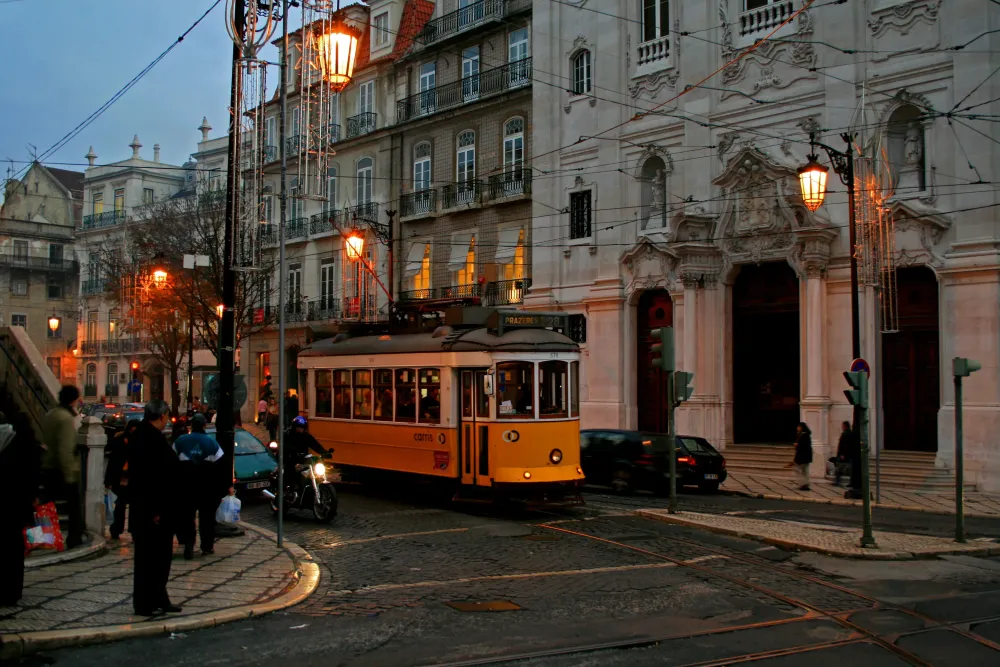
- Tram 28 passes through the lower edge of Chiado on Rua do Loreto. The line is almost always packed. If you want the tram experience without the crowd, walk to the Estrela terminus and board there to get a seat.
- Wi-Fi: Most cafes offer free Wi-Fi. A Brasileira, Fabrica, and Copenhagen Coffee Lab all have reliable connections.
If you're building a longer Lisbon itinerary and planning day trips, our Sintra day trip guide covers the most popular excursion from the city, including train times and a palace-by-palace schedule.
FAQ
What is Chiado known for?
Chiado is Lisbon's cultural and literary district. It is known for historic bookshops (Livraria Bertrand, open since 1732), the ruined Convento do Carmo, traditional cafes like A Brasileira, and a mix of heritage and contemporary shopping along Rua Garrett. Fernando Pessoa made the neighborhood famous as his daily writing haunt.
Is Chiado safe?
Yes. Chiado is one of the safest neighborhoods in Lisbon. It is well-lit, busy with foot traffic throughout the day, and popular with both locals and visitors. Standard city precautions apply: watch your phone and wallet in crowded areas and on Tram 28.
How do I get to Chiado from the airport?
Take the metro (Red line from Aeroporto to Alameda, transfer to Green line to Baixa-Chiado). Total journey: about 35 minutes, cost: €1.65 + €0.50 for the Viva Viagem card. A taxi or Uber from the airport costs €15-20 and takes 20-30 minutes depending on traffic.
Can I visit Chiado in one morning?
Yes. Two to three hours is enough to walk the main streets, visit Convento do Carmo, browse Bertrand, have coffee, and see the viewpoints. Add another hour if you want to visit MNAC or São Roque. A full half-day gives you time to eat lunch and shop.
Should I visit Chiado or Bairro Alto first?
Chiado during the day, Bairro Alto in the evening. They are next to each other. Chiado has the sights, cafes, and shops that work best in daylight. Bairro Alto's bars and restaurants come alive after 8 PM. You can easily do both in the same day.
Is the Santa Justa Elevator worth it?
The elevator connects Baixa to the Carmo area near Chiado. The ride costs €5.30 for tourists (free with a 24-hour Viva Viagem transport pass). The view from the top is fine but not dramatically different from what you get at Terraços do Carmo, which is free. If the line is longer than 10 minutes, skip the elevator and walk up Rua do Carmo instead. It takes 8 minutes.
Chiado After Dark
Most neighborhood guides tell you Chiado goes quiet at night. That is only half true.
The restaurants stay open. Sacramento do Chiado serves dinner until 11 PM. The bars on the Chiado side of Praça Luís de Camões stay busy until midnight. And "Fado in Chiado," a daily fado performance at 7 PM in a small theater on Rua da Misericórdia, is one of the most accessible introductions to Portuguese fado music. Tickets cost €25 and the show lasts 50 minutes. No dinner included, no pressure to buy drinks. Just fado.
But if you want the real Lisbon nightlife, you walk two blocks west into Bairro Alto, where 250 bars open their doors from Thursday to Saturday. Chiado is the civilized warm-up. Bairro Alto is the main event.
The Guidekin team's recommendation: book the 7 PM fado show, have dinner at Taberna da Rua das Flores or Sacramento, then walk to Bairro Alto for a drink at Pavilhão Chinês (Rua Dom Pedro V 89), a bar stuffed floor-to-ceiling with model ships, military helmets, and antique toys. It has been open since 1986 and feels like drinking inside a curiosity cabinet.
That is the best evening in Chiado. Culture, food, music, and a neighborhood that transitions from literary calm to nightlife chaos in the span of a two-minute walk.