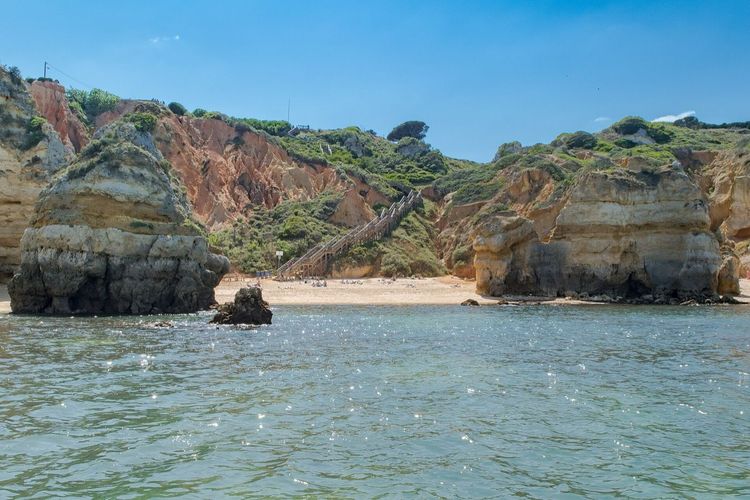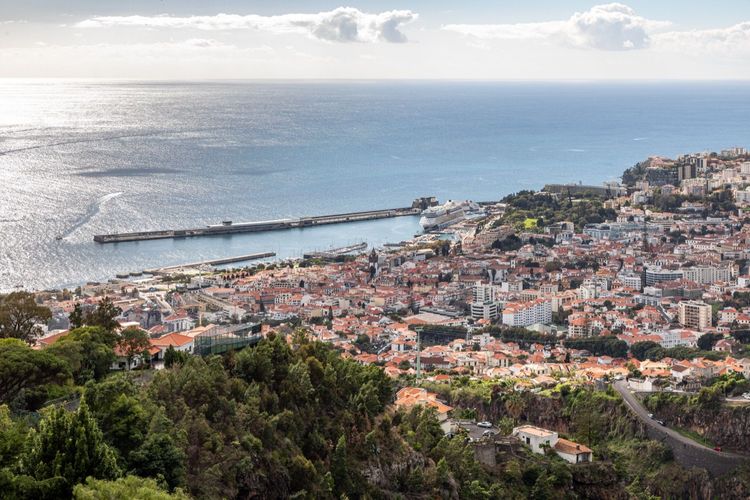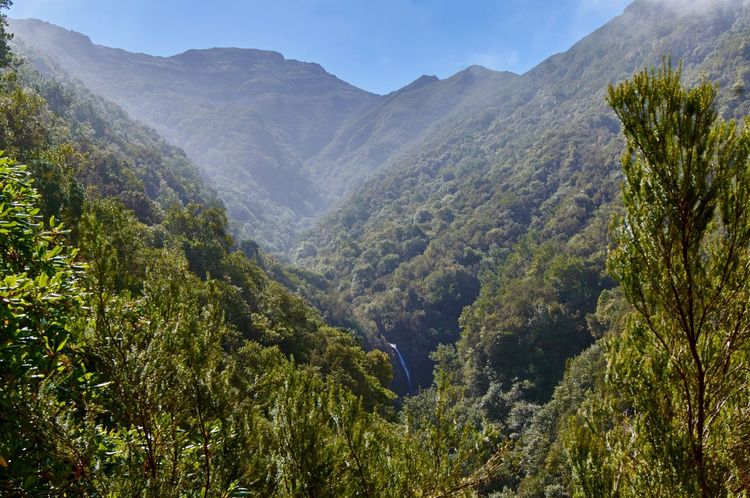
Everyone flies to Madeira for its cliffs and its levadas. Almost no one realizes that two and a half hours away by ferry sits its complete opposite: a flat, sun-bleached island ringed by nine kilometers of golden sand. Porto Santo is Madeira's quiet sibling, the "Golden Island," and where Madeira is all black volcanic rock and dripping forest, Porto Santo is dunes, warm shallow sea and a pace that slows to a stroll. If you want a beach in this corner of the Atlantic, this is the only real one. No black pebbles. No crashing surf. Just soft sand, steady sun and shallow blue water, for nine unhurried kilometers.
It is also the easiest day trip, or slow getaway, that most Madeira visitors skip. So here is a local's guide to Porto Santo: how to get there, what that famous beach is really like, and the handful of things worth doing when you peel yourself off the sand. For the wider archipelago, start with our things to do in Madeira guide, and pair this with our Funchal guide, since the ferry leaves from there.
Read on for the crossing, the beach and its famous healing sand, and the island beyond it.
Key Takeaways
- Porto Santo is Madeira's flat, sandy sister island, built around nine kilometers of golden beach. A different island →
- Get there by a 2.5-hour ferry from Funchal or a 15-minute flight; you can day-trip or stay. Getting there →
- The beach is the point, and its warm sand is famous for its claimed healing powers. The beach →
- Christopher Columbus once lived here; his house in Vila Baleira is now a small museum. Vila Baleira →
- Climb Pico Castelo for the view, then come back down to do very little, beautifully. Beyond the beach →
A Different Kind of Island
Porto Santo confuses people who know Madeira. The big island is young, steep and volcanic, all sea cliffs and laurel forest. Porto Santo, about 40km to the northeast, is older, lower and worn down to a gentle, semi-desert calm: rolling hills, ochre earth, scattered dragon trees, and that long golden beach down its south coast. Only about 11km long by 6km wide and home to roughly 5,000 people, it is the kind of place you can drive end to end in twenty minutes and then happily not drive again for days. Geologically it is far older than Madeira, its volcanoes long extinct and worn down into soft, rounded hills, which is exactly why it is dry where Madeira is green, and sandy where Madeira is sheer.
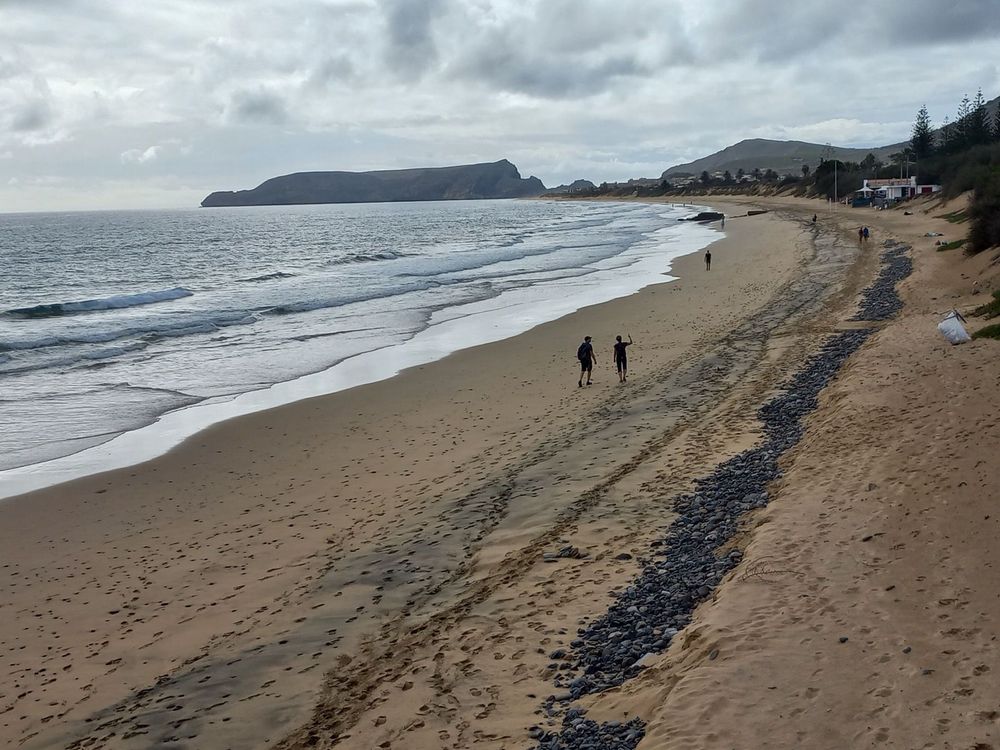
The beach is the headline, a near-unbroken nine-kilometer ribbon of fine, pale sand lapped by calm, shallow, turquoise water, a rarity in an archipelago of black-pebble coves. The locals call it the Ilha Dourada, the Golden Island, and the name does the work. People come for one reason above all: to slow down.
Porto Santo also holds the older claim to fame. It was the first land the Portuguese explorers Joao Goncalves Zarco and Tristao Vaz Teixeira reached, in 1418, when a storm drove their ship onto its shore. Grateful to have survived, they named it Porto Santo, the "Holy Port," and only spotted green Madeira on the horizon the following year. So the quiet sandy island most visitors skip is, in a sense, where the whole Madeira story began.
Local tip: Treat Porto Santo as the antidote, not another box to tick. After the levadas and the hairpin roads of Madeira, a couple of days here, doing little but swim, walk and eat, is the part of the trip people end up remembering most fondly.
How to Get to Porto Santo
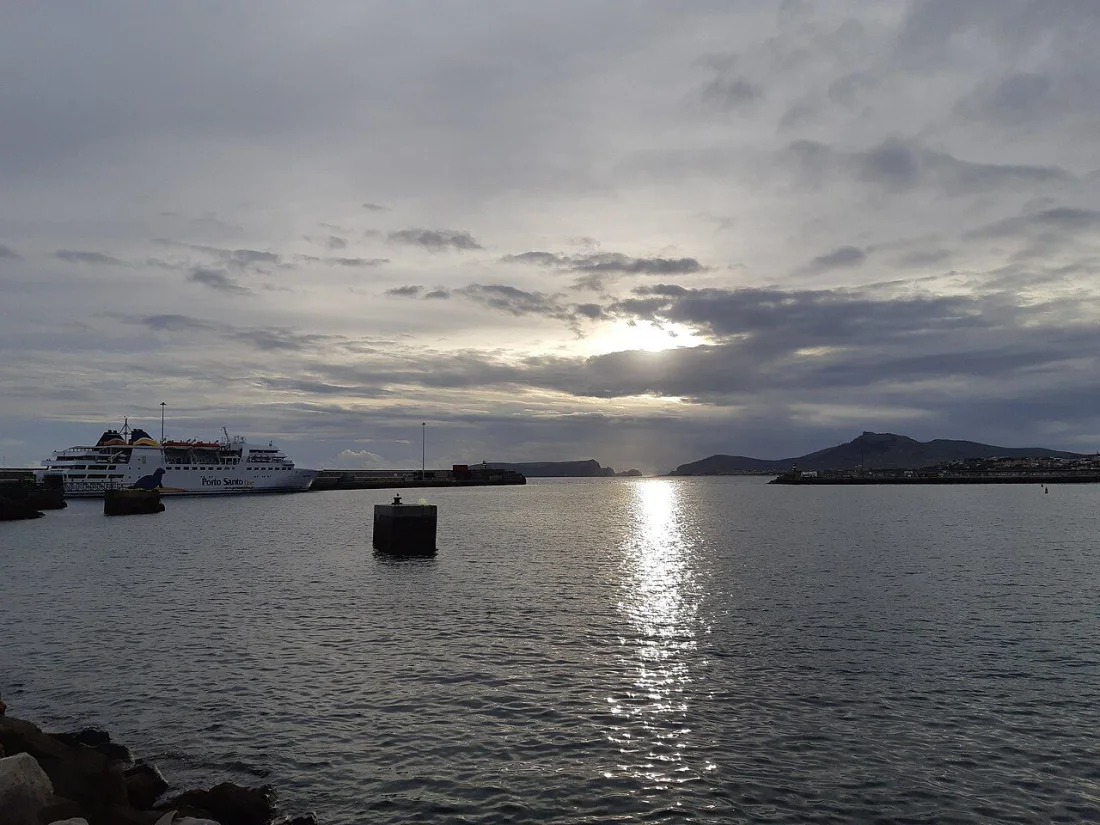
Photo: Asurnipal, CC BY-SA 4.0 (Wikimedia Commons)
There are two ways across, and they suit different trips. The classic is the ferry, the Lobo Marinho, run by Porto Santo Line, which sails from Funchal in about two and a half hours. There is usually one daily departure, leaving Funchal around 8am and returning from Porto Santo about 6pm, which makes a long but doable day trip; a round-trip passenger ticket runs roughly 28 to 40 euros depending on the season (2026). The big, comfortable ship has cafes and plenty of deck space, and the crossing itself, with Madeira shrinking behind you, is half the fun. It sails roughly seven times a week, and the Porto Santo terminal sits about 2km from Vila Baleira, with a shuttle bus meeting most arrivals, so you do not strictly need a car for a beach day.
The quicker option is to fly: a tiny inter-island plane covers the hop from Funchal in about 15 minutes, crossing the roughly 40km between the islands before you have finished your coffee. It runs a couple of times a day and is the move if you are short on time or prone to seasickness, though you trade the sea views for speed. In summer, some operators also run a Porto Santo day cruise that bundles the crossing with time on the beach, which you can compare among the island's boat tours and day cruises.
Planning tip: Decide early whether you are day-tripping or staying. The single daily ferry gives you only about six hours on the island, enough for the beach and Vila Baleira but not much more. To climb the peaks, ride a bike, or simply unwind, give it an overnight or two. Either way, book the summer ferry ahead, because it sells out in July and August.
The Beach and Its Famous Sand
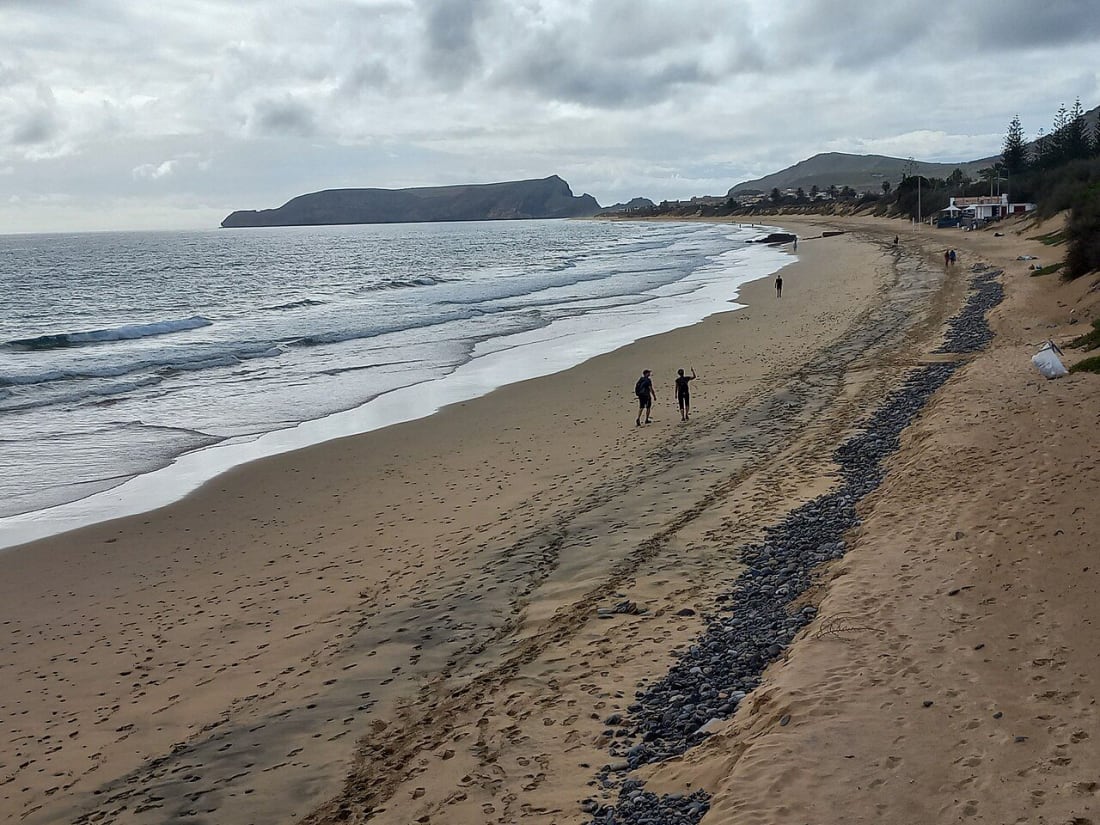
Photo: Asurnipal, CC BY-SA 4.0 (Wikimedia Commons)
The beach really is that good. Nine kilometers of soft golden sand shelve so gently into the warm, clear water that you can wade out a long way, and because the island is so flat and dry, the sun shines on it most of the year. There is room for everyone, from the lively stretch near Vila Baleira, with its bars and water sports, to the empty far ends where you may have a kilometer to yourself. Kayaks and paddleboards work the calm water near town, and at the day's end the whole western sky lights up over the sea, the kind of slow, pink sunset you watch with your feet still in the sand. Because the water stays shallow and gentle for so far out, it is one of the safest, easiest beaches in the region for small children, who can paddle for ages without ever being out of their depth.
Then there is the strange, lovely local belief, now taken seriously by science. Porto Santo's fine, carbonate-rich sand is said to have genuine healing properties, and people have buried themselves in the warm sand for generations to ease aching joints and rheumatism. The practice even has a name, psammotherapy (sand therapy), and the island's spas build treatments around it; researchers from a Norwegian university have studied the sand's mineral makeup and found something to the old claims. Whether it truly cures or not, lying half-buried in warm sand by a turquoise sea is its own kind of medicine.
"Walk ten minutes from the main beach bar in either direction and the crowd simply vanishes. The best stretch of Porto Santo's sand is always the next one along." - Guidekin team
Vila Baleira and the Columbus Connection
The island's one real town, Vila Baleira, is a sleepy, whitewashed grid of squares shaded by old dragon trees, with a palm-lined seafront promenade made for an evening stroll. It will not take long to see, and that is the charm. The little white Igreja de Nossa Senhora da Piedade, the island's main church, anchors the central square, rebuilt more than once over the centuries after the pirate raids that once plagued these shores.
Its claim to fame is surprising: Christopher Columbus, known to the Portuguese as Cristovao Colombo, lived here in the 1480s, having married Filipa Moniz, daughter of the island's first governor. He sailed from here on trading voyages, and the story goes that the strange driftwood and seeds washing up on Porto Santo's shore first set him wondering what lay west across the Atlantic. The house traditionally linked to him is now the Casa Colombo (Columbus House Museum), a small but genuinely interesting stop with old maps, a model of one of his ships and prints tracing his voyages. Admission is only about 2 euros, and it is open Tuesday to Sunday. It is the kind of small, unhurried museum that rewards twenty curious minutes, and it gives this lazy beach island an unexpected foothold in the story of the Atlantic.
Detour: While you are in town, look for the dragon trees, the gnarled, umbrella-shaped dragoeiros native to these islands, whose red sap was once prized across Europe. A few venerable specimens shade the Vila Baleira squares.
Beyond the Beach: Viewpoints and Walks
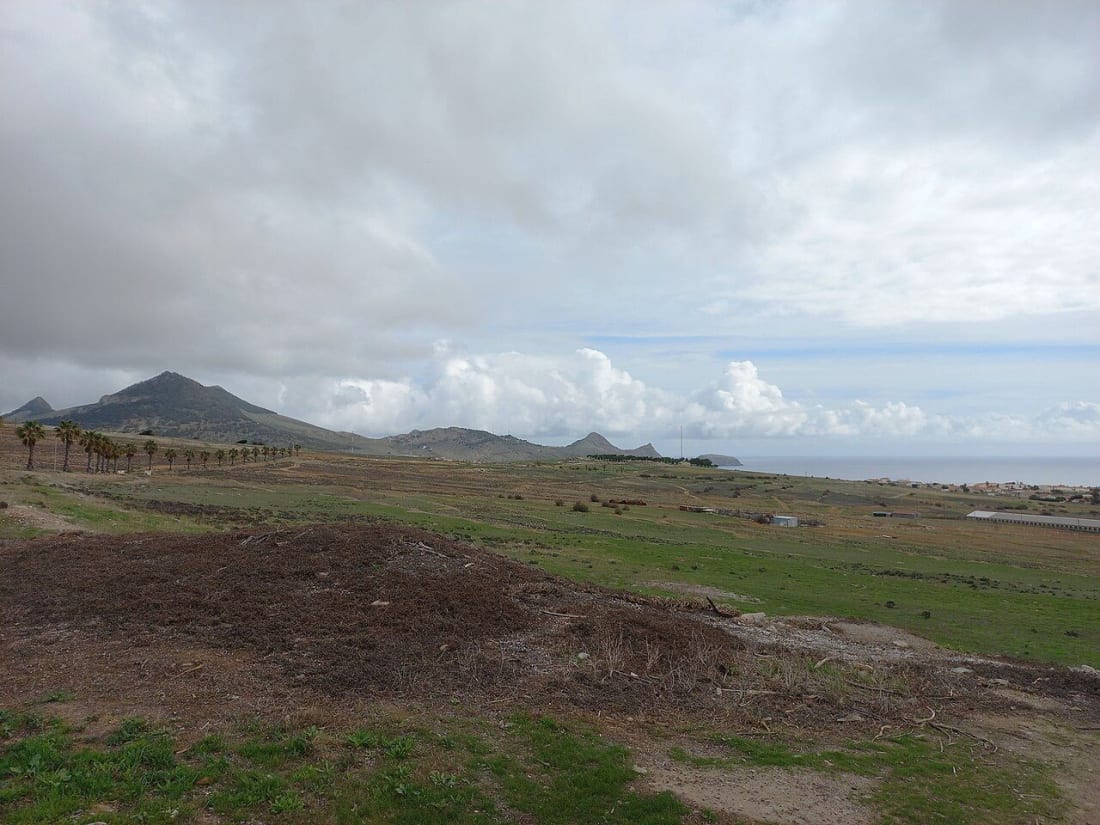
Photo: Asurnipal, CC BY-SA 4.0 (Wikimedia Commons)
When you want to move, the island's spine of little peaks gives you the views. The best is Pico Castelo, a green, pine-clad cone of about 437m topped by the remains of a 16th-century fort built as a refuge from pirate raids. The marked PR2 trail loops up to it over about 8.5km in around three hours, with the whole golden island and its sea laid out below; you can also simply drive most of the way up.
Elsewhere, the island rewards a slow potter. The highest point, Pico do Facho at about 517m, gives the widest view of the lot, while the eroded golden cliffs and old spring at Fonte da Areia are worth the short drive north. The Vereda do Pico Branco (a vereda is a marked footpath) threads through one of the island's few genuinely green pockets, a surprise of laurel and birdsong on so dry an island. Add the old moinhos (windmills), the offshore ilhéus (islets) you can reach by boat, and an excellent 18-hole golf course of about 6,434m, designed by Seve Ballesteros across the dunes, and you have enough to fill a second or third day. Bikes are easy to rent for the flat coast road, and small boats run out to the Ilheu de Cima with its old lighthouse, a fine half-day on the water. None of it is in a hurry, and neither should you be.
A Day (or Two) on Porto Santo
On a ferry day trip you have about six hours, so keep it simple. Walk the fifteen minutes, or hop the shuttle bus, from the port into Vila Baleira, drop into the Casa Colombo for half an hour, then give the rest of the day to the beach: swim, walk a quiet stretch, and have grilled fish and a cold drink at a seafront table before the 6pm sailing home. It is enough. You will not see all of it, but you will leave salty, sun-warmed and oddly reluctant to board the boat.
With an overnight, the island opens up. Rent a bike or a small car, climb Pico Castelo for sunrise or sunset, drive out to the cliffs at Fonte da Areia, and spend the warm middle of the day doing nothing at all on the sand. Two unhurried days is the sweet spot, one for the beach and one for the rest, and you will still leave feeling you could have stayed longer.
Planning tip: If you only have the day-trip window, do the town and the museum first thing and save the beach for last, on the stretch nearest the port, so you are never sprinting back for the ferry with sand still between your toes.
Where to Stay
Most of Porto Santo's hotels line the beach just outside Vila Baleira, and several are comfortable resort-style places, the Pestana group chief among them, with pools and direct sand access. They suit a do-nothing beach break perfectly, and several run on a half-board or all-inclusive basis that fits the island's gentle, go-nowhere rhythm, since there is little reason to leave the sand once you have arrived.
For something smaller and more local, Vila Baleira itself has guesthouses and apartments within walking distance of the restaurants and the sea. We'd choose by the kind of trip you want: a beachfront resort if the holiday is the beach, a town guesthouse if you would rather wander to dinner and feel the island's slow rhythm. Porto Santo is small, so even the "far" hotels are only a few minutes from the sand, and there is none of the sprawl you get on bigger resort islands.
Local tip: Whatever you book, ask how far it is from the sand. The island is small, but on a hot day the difference between a two-minute and a twenty-minute walk to the beach is the difference between three swims and one.
Porto Santo at a Glance
| What | Detail | Time | Cost (2026) |
|---|---|---|---|
| Ferry from Funchal | Lobo Marinho, ~2.5 hrs each way | day trip or stay | ~€28-40 return |
| Flight from Funchal | Inter-island hop | ~15 min | varies |
| The beach | ~9 km golden sand | half a day or more | Free |
| Casa Colombo museum | Columbus's island house | 45 min | ~€2 |
| Pico Castelo (PR2) | Peak viewpoint and walk | ~3 hrs | Free |
When to Go
Porto Santo is a summer island at heart. It is warm, dry and sunny far more reliably than green, cloud-catching Madeira, so June to September is peak beach season, with the sea at its most swimmable. Spring and autumn are quieter and still pleasant, and even winter stays mild, if cooler for swimming.
Sea temperatures climb to around 22 to 23 degrees in late summer, warm enough for long, lazy swims, and the flat, dry island catches some of the most sunshine hours in the whole archipelago. Whenever you come, it is the calm counterweight to Madeira. The crowds that fill Funchal thin out the moment you step off the ferry, which is rather the point of the place.
Practical Tips
- Book the summer ferry ahead. The single daily sailing sells out in July and August.
- Day trip or stay? A ferry day trip gives you about six hours; stay overnight for the peaks and the slow evenings.
- Bring sun cover. The island is flat, dry and short on natural shade, so pack sunscreen, a hat and water.
- Pack light for a day trip. Foot passengers walk on and off the ferry easily; you rarely need a car for the beach and town.
- Try the sand. If your joints ache, ask a spa about the local sand therapy, or just lie in the warm beach sand yourself.
- Eat the fish. The seafront restaurants in Vila Baleira do simple grilled fish and bolo do caco (the island's garlic-buttered flatbread) very well, often with lapas (grilled limpets) and a glass of poncha to finish.
FAQ
Is Porto Santo worth visiting?
Yes, if you want a proper beach and a slower pace. Its nine kilometers of golden sand are unique in the Madeira archipelago, and the island's quiet, sunny calm is the perfect contrast to busy Madeira. Think of it as the beach day Madeira itself cannot give you. The crossing is a real commitment for a single day, but for a sun-and-sand break it is the only game in the archipelago. Skip it only if beaches and downtime are not your thing.
How do you get from Madeira to Porto Santo?
By the Porto Santo Line ferry (the Lobo Marinho) from Funchal, about 2.5 hours each way, or by a roughly 15-minute inter-island flight. The ferry usually runs once a day, out around 8am and back about 6pm, and a round-trip ticket costs roughly 28 to 40 euros depending on the season. The flight is pricier but saves over two hours each way.
Can you do Porto Santo as a day trip?
Yes. The daily ferry leaves Funchal around 8am and returns about 6pm, giving you roughly six hours on the island, enough for the beach and a wander around Vila Baleira and the Casa Colombo. It is a long day, with five hours on the boat round trip, so for the peaks, the golf and the slow evenings, stay a night or two instead.
Is Porto Santo's sand really therapeutic?
The island has long claimed its warm, carbonate-rich sand eases rheumatic and joint pain, and some research supports it. The treatment, psammotherapy, is offered at local spas, and burying yourself in the warm sand is a popular free version.
What is there to do in Porto Santo besides the beach?
Visit the Casa Colombo museum in Vila Baleira, climb or drive up Pico Castelo for the view, walk the PR2 trail, play the dune-side golf course, or take a boat to the offshore islets. It is a small island and a slow one. Half a day of sightseeing is plenty, and the rest of your time is for the sand.
When is the best time to visit Porto Santo?
June to September for reliable beach weather and the warmest sea. Summer is also the busiest stretch, so for the same sun with fewer people, aim for June or late September. Spring and autumn are quieter and still pleasant, and the island stays mild, if cooler for swimming, through the winter.
What is there to eat on Porto Santo?
Simple, good island food. The Vila Baleira seafront does fresh grilled fish, lapas (limpets) and bolo do caco, washed down with poncha or a cold beer. It is holiday eating, unfussy and cheap, and best enjoyed slowly at a table near the sand.
Catch the Morning Ferry
Porto Santo is the part of a Madeira trip you did not know you needed: a long golden beach, a sleepy town with a Columbus story, and absolutely nowhere you have to be. Catch the morning ferry from Funchal, find your own stretch of sand, and let the Golden Island do the rest. Bring a book. Forget your watch. On Porto Santo, that is the whole itinerary. When you are ready to plan it, browse Madeira tours, day cruises and experiences and build in a day, or three, on Porto Santo. For more on the island and the wider region, the official Visit Madeira site is a useful next stop.