Key Takeaways
- From January 2026, classified PR trails need an advance online permit through the SIMplifica platform. Sort it before you arrive. How the rules changed ->
- Pick one levada that fits your legs: 25 Fontes for the famous lagoon, Caldeirão Verde for tunnels and a waterfall amphitheatre. Which one to choose ->
- PR1 from Pico do Arieiro to Pico Ruivo is now one-way only, and sunrise above the clouds is the reason to go. Plan the ridge walk ->
- The west coast (Cabo Girão, Porto Moniz, Fanal, Seixal) works best as one full jeep day. See the wild west ->
- You can do the highlights car-free in 7 full days, or rent a car for independent levada-hopping. Compare your options ->
- Funchal is the smartest base: most tours, transfers, and whale boats leave from there. Read the practical tips ->
If the trails are your main reason for coming, the dedicated guide to hiking in Madeira breaks down the 9 best routes, the new trail fees and what to pack.
Why Madeira
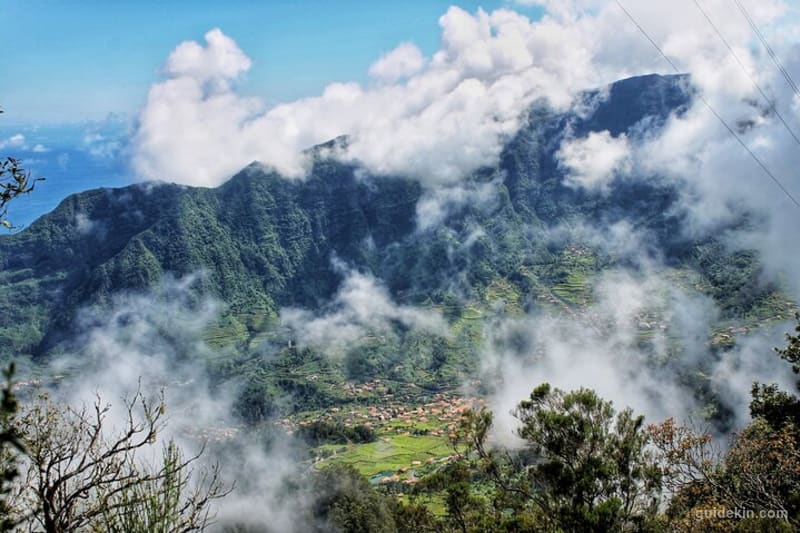
Madeira is a volcanic island in the Atlantic, closer to Africa than to mainland Portugal. It rises straight out of the ocean into a spine of mountains, so you go from sea-level harbours to 1,800-metre peaks in under an hour of driving.
The weather is mild all year. Locals call it the island of eternal spring, and that is fair, but the catch is microclimates. The sunny south and the wet, green north can feel like two islands on the same afternoon.
Two things shape almost every trip here. There is the outdoors: levada walks through laurel forest, ridge hikes, black-sand beaches, and lava pools. And there is Funchal, the capital, where the market, the wine lodges, and the cable car sit within walking distance.
This guide is not a list of thirty attractions. It is a shorter, opinionated one. We tell you which single levada to pick, which viewpoint earns the early alarm, and how to book it under the 2026 rules. If Atlantic islands are your thing, the Azores are the wilder, emptier cousin, and our Azores travel guide covers that side of Portugal. Madeira is the more polished of the two.
Walk a Levada
Levadas are the signature Madeira walk. They are centuries-old irrigation channels that carry water across the island, and flat-ish footpaths run beside them through the UNESCO-listed Laurissilva, the ancient laurel forest. The water did the climbing, so you mostly do not.
The 2026 permit change (read this first)
This is the part most older guides miss. From January 2026, the classified PR trails require advance booking through the official SIMplifica platform. You pay a small per-person trail fee online before you go. It is no longer a turn-up-and-walk system. Sort the permit the day before at the latest, and check the trail is open, because rockfall, tunnel works, and weather close routes through the year.
Which levada to pick
Two walks cover most people. Here is the honest split.
25 Fontes and Risco (PR6 / PR6.1), in the Rabaçal valley, is the popular one. It runs roughly 9 to 11 km round trip, takes about 3 to 5 hours, and is moderate, with around 300 m of gentle incline and no real danger. It ends at the Lagoa das 25 Fontes, a clear pool fed by twenty-five separate springs, with the tall Risco waterfall on a short add-on. It gets crowded, so start early or go late. The road into Rabaçal is narrow and restricted, which is exactly why a shuttle helps.
Levada do Caldeirão Verde (PR9) is the adventurous counterpoint: longer, wetter, with hand-carved tunnels (bring a light) and a green-walled waterfall amphitheatre at the end.
If you do not hike, the Vereda dos Balcões (PR11) from Ribeiro Frio is about 3.4 km return, almost flat, no tunnels, and ends at a wide viewpoint over the central peaks. Anyone can manage it.
Guided levada days handle the permit, the drive, and the parking for you. You can compare options on our Madeira levada hiking page.
The Pico do Arieiro to Pico Ruivo Hike
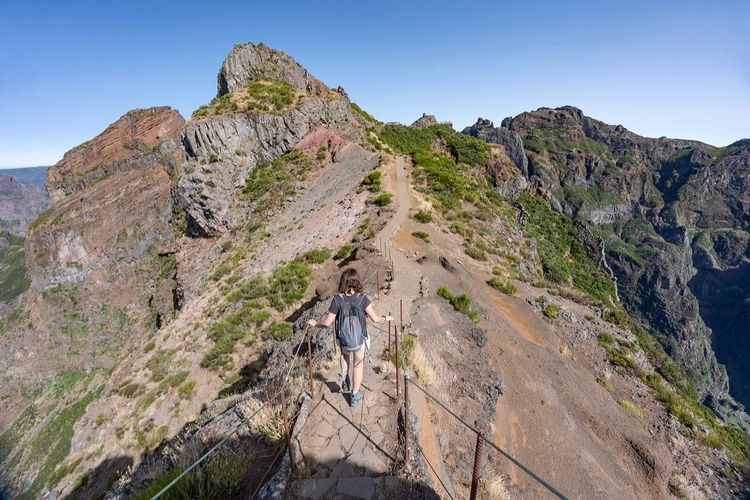
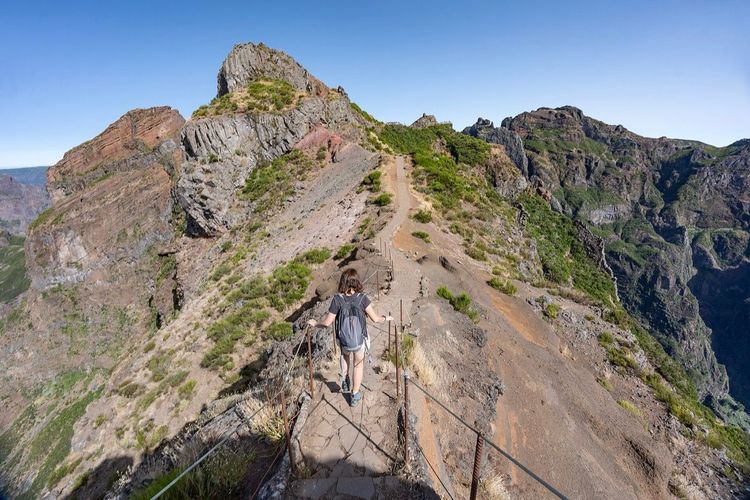
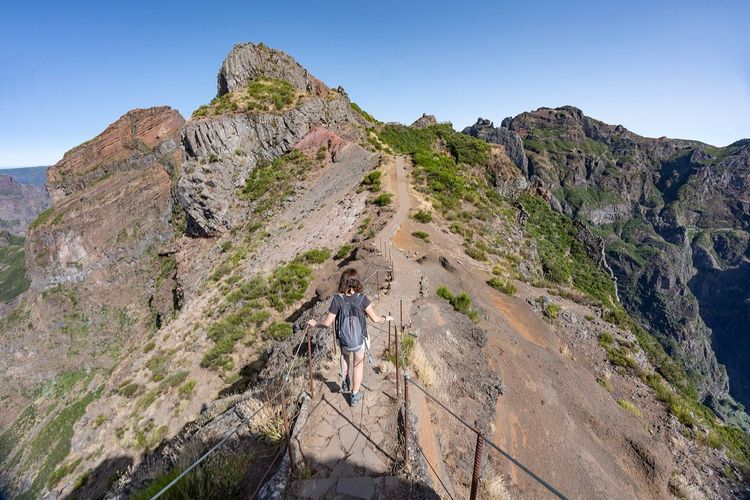
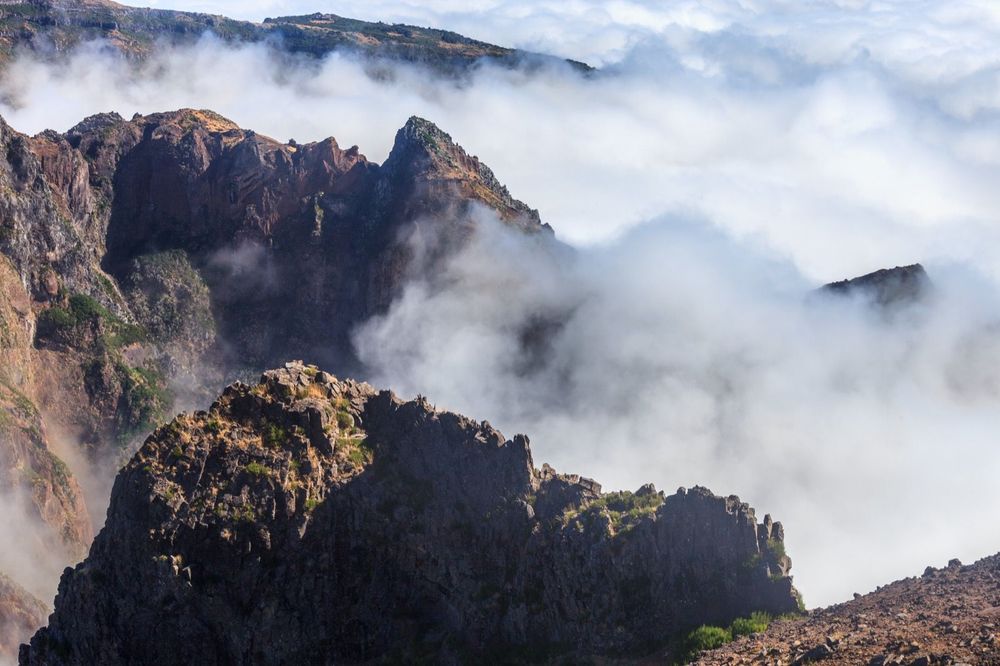
This is the big one. PR1 connects two summits along an exposed ridge, the section people call the Stairway to Heaven. Pico do Arieiro starts at 1,818 m, and Pico Ruivo is the highest point on the island.
The numbers are real. It runs about 9.4 km, with roughly 643 m of ascent and 744 m of descent, and takes 3 to 5 hours. Expect long stair sections up and down, and five tunnels carved into the mountain where a headtorch is essential. This needs genuine fitness, not a casual stroll.
One important 2026 detail: since the April reopening, PR1 is one-way only. You hike Pico do Arieiro to Pico Ruivo, and the reverse is no longer permitted. That changes your itinerary, because start and finish are different points, and you need a plan to get back.
The wow moment is sunrise above the cloud line. From the Arieiro summit you watch the sun come up over a sea of cloud with peaks poking through. The problem is parking. The car park at Arieiro is tiny and fills well before dawn, and most regulars arrive about an hour before sunrise to get a space.
"For the Pico do Arieiro sunrise, book a pre-dawn transfer rather than driving yourself. You skip the fight for a parking space in the dark, and you keep your eyes on the road instead of the clock." - The Guidekin team
Cabo Girão and the Wild West
The west and north of the island are where Madeira gets dramatic. Four sights anchor a full day here.
Cabo Girão Skywalk is a glass-floored platform on one of Europe's highest sea cliffs, with 580 m of open air straight down to the ocean and views over Câmara de Lobos. One practical note: the skywalk and cable-car facilities can shut for an operator lunch break in the early afternoon, roughly 1 to 2 pm, so plan around that.
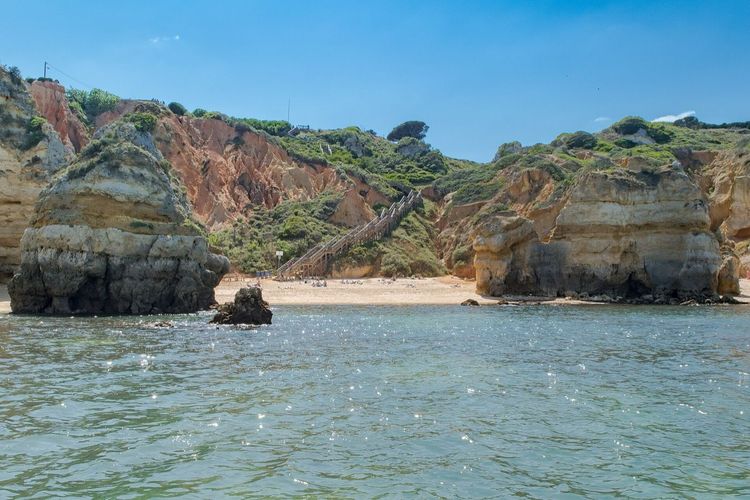
Porto Moniz sits on the north coast and holds the island's classic swim spot: natural pools carved by ancient lava flows, with the Atlantic refilling them.
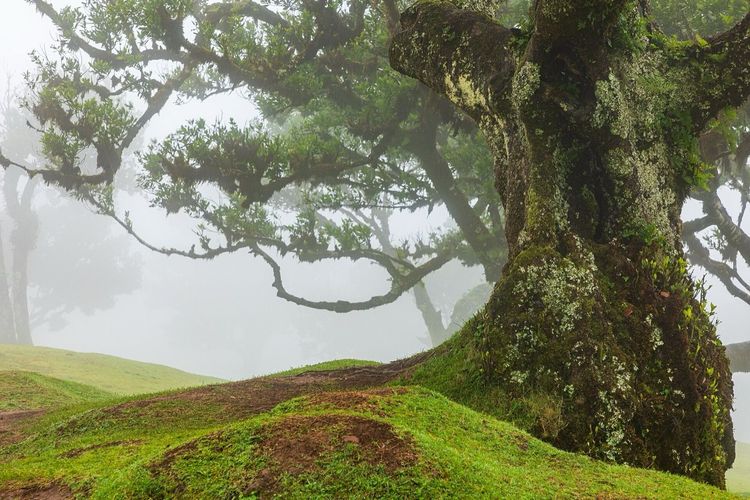
Fanal is part of the same laurel forest as the levadas, but the trees here are ancient, twisted, and draped in moss. When the fog rolls in and they fade into the grey, it is the most atmospheric spot on the island.
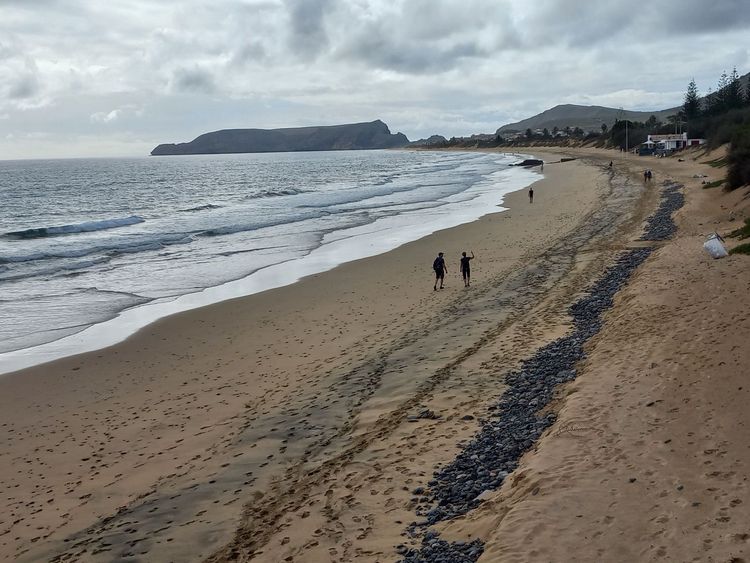
Seixal has a black volcanic-sand beach that regularly lands on lists of Europe's best-rated beaches.
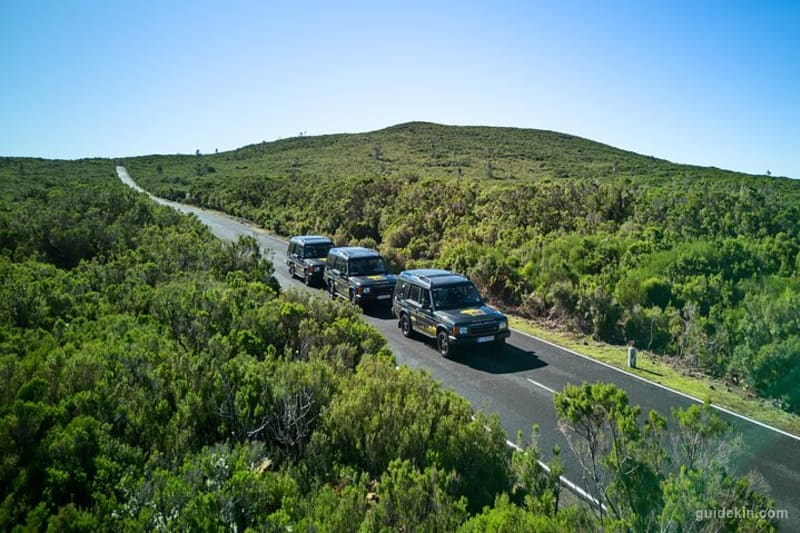
These four are spread far apart on slow, twisting roads, so the standard way to do them is one open-top 4x4 loop, usually a full day of around eight hours. The jeep handles the rough tracks and the driving, and you just look. You can see the routes on our Madeira 4x4 jeep tour page.
For one contrarian pick, swap a west day for Ponta de São Lourenço on the far eastern tip. It is the one corner with no forest at all: bare red and ochre cliffs, a treeless ridge trail, ocean on both sides. After a week of green, it feels like another planet.
Funchal: Old Town, Monte and the Toboggan
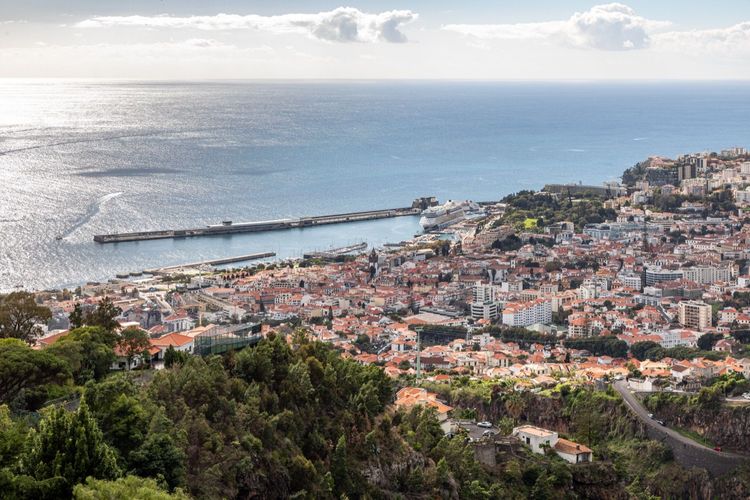
Funchal is compact and walkable, and it is the part of Madeira you do without hiking boots.
Start at the Mercado dos Lavradores, the art-deco market. The ground floor is piled with fruit and flowers, and the lower level holds a loud fish market where you can see espada, the long black scabbardfish that only comes from deep water here.
From there, walk into the Zona Velha, the Old Town. Rua de Santa Maria has more than 200 painted doors, turned into an open-air gallery by local artists. Each one is different, and it is free to wander.
Two things make Monte the other half of a Funchal day.
The Monte cable car climbs from the Old Town seafront up the terraced hillside in about 15 minutes, the coast falling away behind you. At the top sits the Monte Palace Tropical Garden.
Then there is the toboggan. The Carreiros do Monte is a wicker basket sled, steered downhill by two men in white outfits and straw boater hats who run and brake behind you. The run drops about 2 km down the steep streets toward town. Pricing depends on how many of you ride, but think in the region of a mid-range restaurant meal rather than a token fee.
Whale and Dolphin Watching
Madeira is one of the better places in Europe for this, and it runs year-round. Almost every boat leaves from Funchal's main marina, so it slots easily into a city day.
Some species live here all year: bottlenose dolphins, short-finned pilot whales (technically dolphins), and sperm whales, which are most common from about April to November.
Others are seasonal. Common dolphins show up roughly February to May, Atlantic spotted dolphins around June to September, and migratory fin and humpback whales in spring and early summer, around March to June. For variety and calm seas together, May to October is the sweet spot.
One honest word. This is open ocean, and the animals are wild, so sightings are never guaranteed. Calmer summer seas make for a more comfortable trip if you get seasick. Choose an operator that keeps a respectful distance over one that chases for a closer photo.
Wine, Poncha and Câmara de Lobos
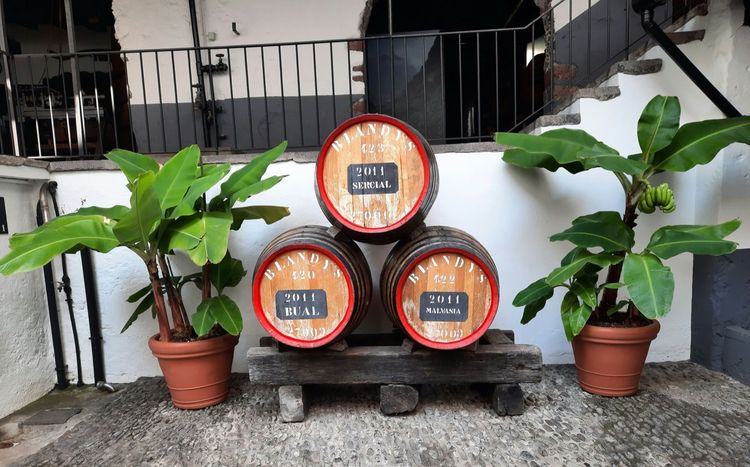
Madeira wine is fortified and heat-aged, which is why it lasts for decades after opening. In Funchal you can tour cellars and taste at Blandy's Wine Lodge, the big immersive one, or H.M. Borges, which is smaller and more personal. Both sit in the centre.
The island's signature drink is poncha. It has just three ingredients: aguardente de cana (sugarcane spirit), fresh citrus juice (traditionally lemon), and honey. They are whipped together until frothy with a grooved wooden stick called a mexelote. The original "poncha à pescador," the fisherman's version, came from the men of Câmara de Lobos, who drank it to stay warm at sea.
That takes you to Câmara de Lobos itself, one of Madeira's oldest fishing villages, just west of Funchal. Brightly painted boats sit pulled up on the harbour, the poncha bars are the real ones, and Winston Churchill set up his easel here to paint the bay. It is a short hop from the capital and pairs well with Cabo Girão.
| Funchal taste stop | What it is | Good for |
|---|---|---|
| Blandy's Wine Lodge | Large cellar tour and tasting | A proper Madeira-wine deep dive |
| H.M. Borges | Smaller family lodge | A quieter, personal tasting |
| Câmara de Lobos bars | Harbour poncha spots | The fisherman's drink, made fresh |
Tours vs Self-Drive: How to Actually See It
This is the decision that shapes your whole trip, so here is the straight version.
A car is the most flexible way to hop between levadas and remote viewpoints, because public transport is limited and trailheads are scattered. But Madeira's roads are steep, narrow, heavily tunnelled, and twisting, and parking at the popular trailheads (Arieiro and Rabaçal especially) is tight and fills early. Driving here is work.
You can also do the highlights car-free in seven full days using tours and transfers, basing yourself in Funchal. Guided days take the hard hikes, the west-coast loop, the whale boats, and the pre-dawn navigation off your plate.
| Guided tours | Rent a car | |
|---|---|---|
| Good for | Hard hikes (PR1, tunnel levadas), the west 4x4 loop, whale watching, stress-free transfers | Independent levada-hopping, remote viewpoints, your own schedule |
| Effort | Low. Someone else drives and parks | High. Hard driving, tight parking, pre-dawn navigation |
| Cost feel | More per day, but bundles transfers and a guide's expertise | Spreads cheaper over a full week, especially for a group |
| Flexibility | You give up control over exact timing | Fully your own pace |
The Guidekin team's take: mix the two. Rent a car for the easy south-coast and viewpoint days, and book guides for PR1, the harder levadas, and the west jeep loop where the driving is worst. Guides earn their keep on the days you would otherwise spend white-knuckling the wheel.
Best Time to Visit Madeira
There is no genuinely bad season. The island is mild all year, and you can hike and swim in most months. But some windows are clearly better.
The sweet spots are April to June and September to October. You get good weather, thinner crowds, and prime conditions for hiking and whale watching.
Spring also brings the Funchal Flower Festival, with big flower parades through the capital. It always falls after Easter, so April or May, and the exact dates shift each year. Check before you lock in flights if it matters to you.
Summer (July and August) is warmest, with the calmest seas, which makes it the best stretch for boat trips and swimming. It is also the busiest and priciest.
Whatever month you pick, plan for sun and rain on the same day, and for fog flipping conditions on a single trail. The mountains and north coast make their own weather, fast.
Practical Tips
- Wear proper boots or grippy shoes. Levadas are wet, narrow, and sometimes have drop-offs and dark tunnels. Trainers are not enough.
- Pack a headtorch. You need it for the 25 Fontes detour, Caldeirão Verde, and PR1, all of which run through unlit tunnels.
- Bring layers and a rain jacket, even on a sunny morning. The central mountains and north coast can be cold and wet while the south is in shorts weather.
- Book ahead for the two big bottlenecks. Reserve the Pico do Arieiro sunrise transfer early, and book your PR trail permits on SIMplifica online before the day.
- Base yourself in Funchal. Most tours and transfers depart from there, and the whale boats leave from its marina, so you cut dead travel time.
- Check trail status the day before. Closures for rockfall and works are common, and a guide or the official site will tell you what is open.
- Heading to the mainland too? Pair the island with a couple of city days using our Porto guide.
FAQ
Is Madeira worth visiting?
Yes, if you like the outdoors. The mix of mountain hikes, laurel forest, lava pools, and a walkable capital is hard to match in Europe, and it works in any month. It suits walkers and food-and-wine travellers more than people after a flat beach-resort week.
How many days do you need in Madeira?
Plan for at least a week to hit the highlights without rushing. Four to five days is doable but tight, and ten or more lets you slow right down. Seven full days is the comfortable target.
Do you need a car in Madeira?
No, you can do the highlights car-free in seven days using tours and transfers from Funchal. A car gives you more freedom for independent levada-hopping, but the roads are steep, narrow, and tunnelled, and trailhead parking is tight. Many people mix a rental with a few guided days.
When is the best time to visit Madeira?
April to June and September to October give the best balance of weather, crowds, and conditions for hiking and whale watching. July and August have the warmest, calmest seas and the biggest crowds. The Flower Festival lands in spring, after Easter.
Are the levada walks hard or safe?
It depends on which one. 25 Fontes is moderate and well-marked with no real danger, while Caldeirão Verde and PR1 are longer, with tunnels and exposure that need fitness and a headtorch. All classified PR trails now need an advance SIMplifica permit, and you should check the route is open before you set out.
Can you swim in the sea in Madeira?
Yes. The north-coast lava pools at Porto Moniz are the classic spot, and there are black-sand beaches like Seixal. The Atlantic is bracing rather than warm, and the calmest seas are in summer.
Where to Start
If you have one week, here is the shape we would build: two relaxed days around Funchal (market, Old Town, Monte cable car and toboggan, a wine lodge), one guided sunrise on PR1, one moderate levada like 25 Fontes, the west-coast jeep loop, a whale boat from the marina, and a slow day in Câmara de Lobos with poncha.
The two days worth booking a guide for first are the Pico do Arieiro sunrise and the west 4x4 loop, because those are where the driving is hardest and the local knowledge pays off most. Start there, then fill the rest at your own pace from all our Madeira tours.