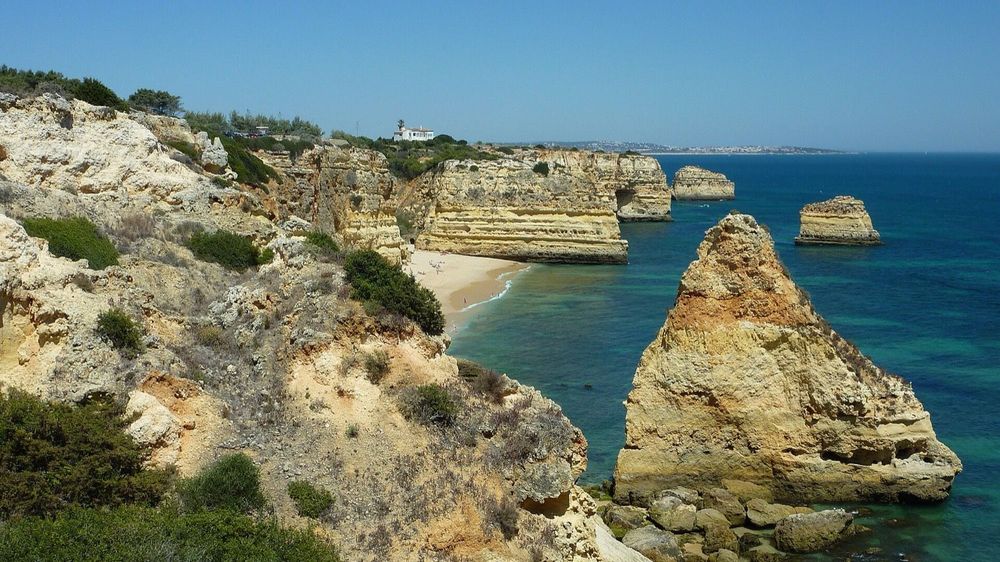
The Algarve has more than a hundred beaches, and almost nobody tells you the one detail that actually decides where you should go: which way the coast faces. (Weighing the region against the rest of the coast? Our best beaches in Portugal guide compares them all.) West of Faro, the shore buckles into ochre cliffs and coves you reach down wooden staircases. East of it, the land flattens into a string of warm, shallow sandbar islands you reach only by boat. Get that split right and the rest of the planning falls into place.
This guide is for anyone choosing between a week of cove-hopping and a few slow days on an island sandbar, and for day-trippers who want the famous shots without the August crush. We will keep it practical: which praia (beach) suits which mood, how to actually get down to the water, and where locals go when the postcard spots fill up. Almost every beach here is free; the only real costs are parking, a boat ticket to the islands, and a coffee at the esplanada (beach cafe terrace).
Read on for the best beaches in the Algarve, grouped the way a local would think about them. For the wider region around them, start with our guide to things to do in the Algarve.
Key Takeaways
- The coast splits in two: cliff coves west of Faro (Barlavento), warm sandbar islands east of it (Sotavento). Choose by which you want →
- The postcard cliffs sit in the central Algarve, around Lagoa and Carvoeiro →
- Lagos has the most dramatic coves, and the most crowded ones in August →
- For space and surf, the wild west coast trades calm water for wind and room →
- The east is for warm, shallow water and island sandbars reached by ferry →
- Blue Flag tells you about facilities and water quality, not beauty →
The Split That Decides Everything
Ask any local where the "real" Algarve beach is and you will get two completely different answers depending on which side of Faro they grew up on. That is the useful divide.
West of Faro is the Barlavento (the windward Algarve): tall sandstone cliffs the colour of toffee, sea stacks, and coves tucked between headlands. This is the Algarve of the postcards. East of Faro is the Sotavento (the leeward Algarve): no cliffs, just the Ria Formosa (a coastal lagoon) and a chain of low barrier islands with miles of soft sand and water that warms up earlier in the year.
Neither is better. They are different holidays. The cliffs photograph like nowhere else and pack a lot of drama into a short walk; the islands give you space, calm water and a slower pace, but you have to catch a boat to reach them.
Planning tip: If you have only a few days and a hire car, base yourself between Lagos and Carvoeiro for the cliffs, or around Tavira for the islands. Trying to do both ends in a week means a lot of driving on the A22.
The Central Cliffs: The Postcard Algarve
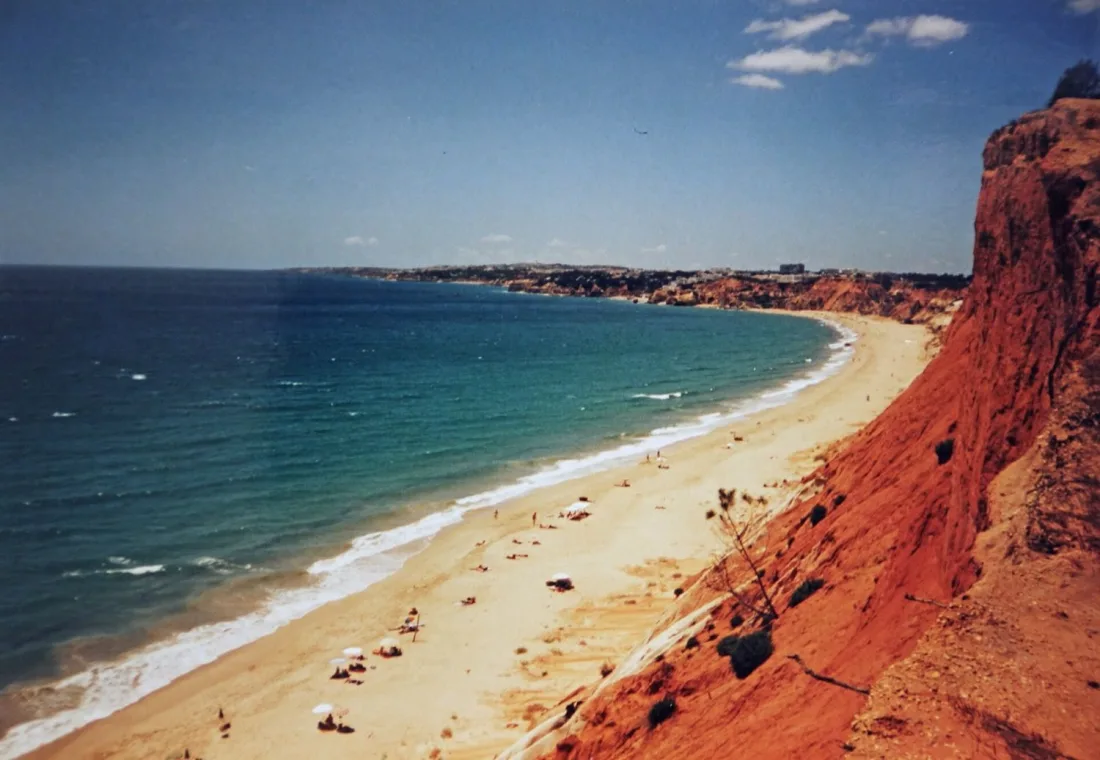
Photo: Tony Hisgett from Birmingham, UK, CC BY 2.0 (Wikimedia Commons)
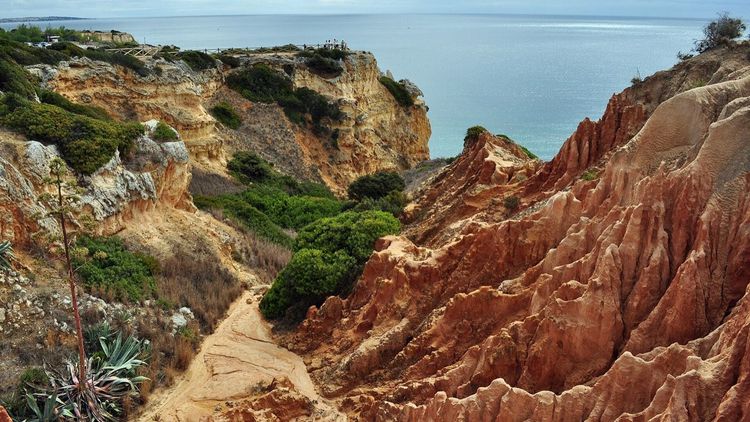
If you have seen one image of the Algarve, it was probably Praia da Marinha, the cove between Carvoeiro and Armação de Pêra with twin sea arches and water that turns from jade to deep blue. Come before 10am or after 5pm; the small car park fills fast and the staircase down gets shoulder to shoulder by midday. From the top, the Percurso dos Sete Vales Suspensos (the Seven Hanging Valleys trail) runs 5.7km (3.5 miles) west along the clifftop to Carvoeiro, past coves most day-trippers never reach.
A few minutes east is Praia de Benagil, the small beach beside the famous sea cave with the hole in its roof. You cannot walk into the cave; you reach it from the water by boat, kayak or SUP, and only in calm conditions. We cover the visit in detail in our Benagil Cave guide. The easiest way to see it and the neighbouring grottoes is a boat trip along the caves, which most people pair with a swim stop.
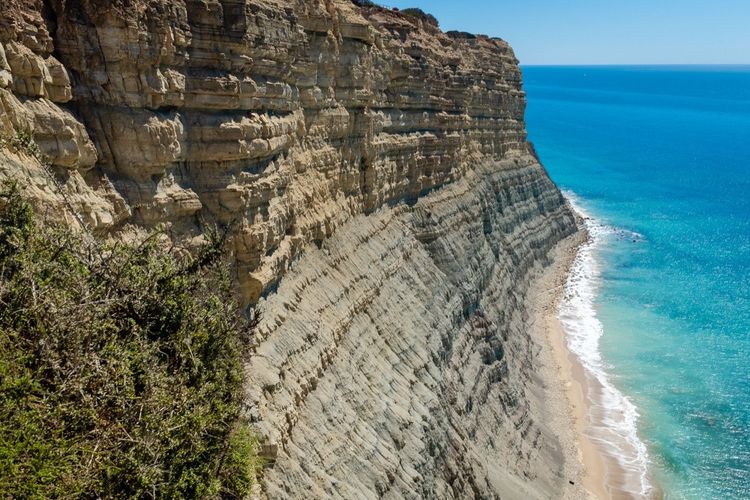
Further along, the cliffs soften into longer stretches. Praia da Falésia runs for 6km (3.7 miles) of red-and-white cliff between Olhos de Água and Vilamoura, room enough to walk away from any crowd. Praia da Rocha in Portimão is the big, brash one: a wide golden beach backed by a promenade, bars and high-rises, busy and well served rather than secluded.
Local tip: Skip the jammed staircase at Marinha at noon and walk ten minutes east along the clifftop to Praia da Mesquita or the smaller coves off the trail. Same water, a fraction of the people. Marinha is also the trailhead of the Seven Hanging Valleys Trail, if your beach day wants a walk attached.
Lagos and the West: The Drama Coast
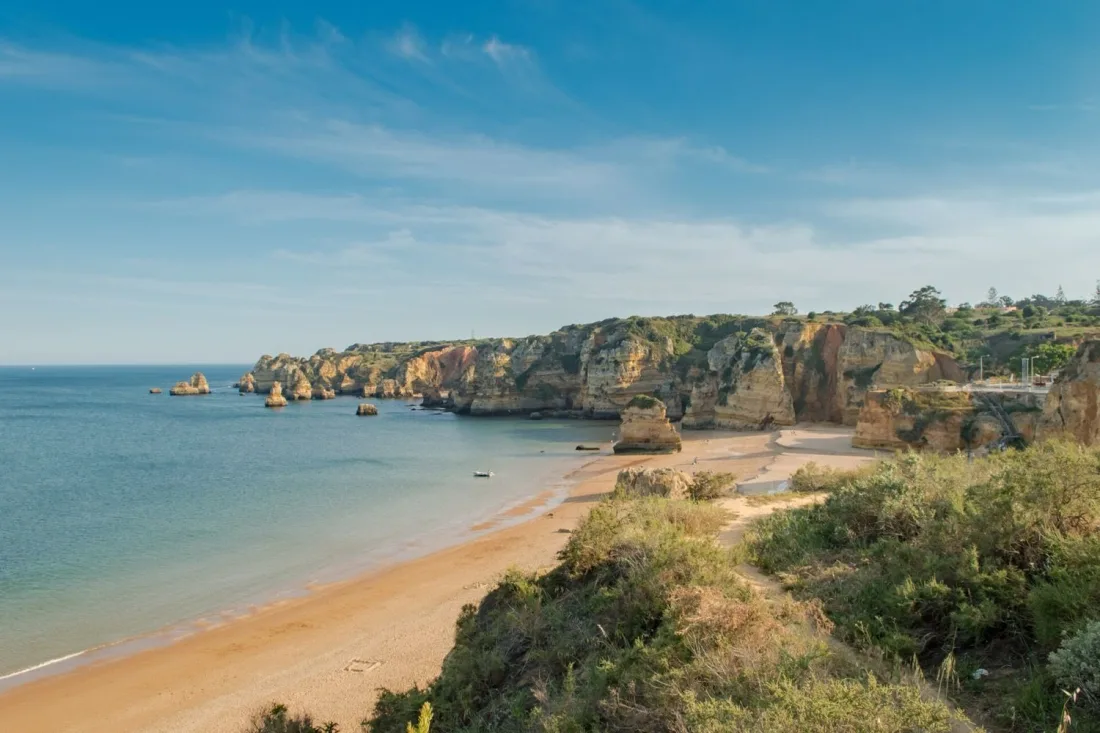
Photo: Dronepicr, CC BY 3.0 (Wikimedia Commons)
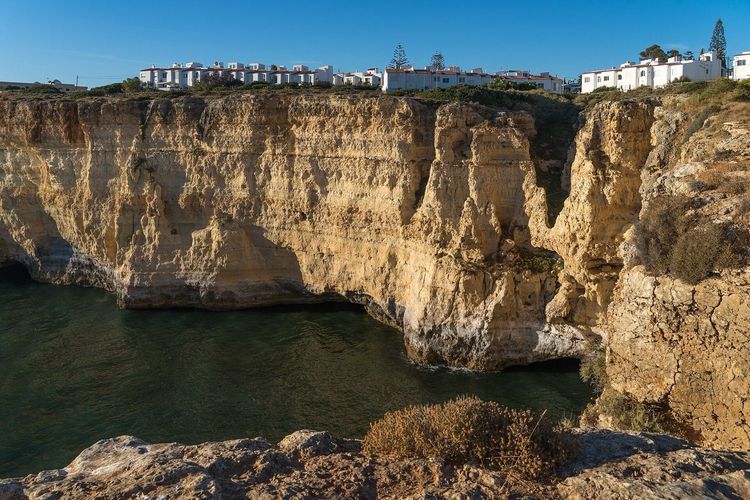
Around Lagos the cliffs reach their most theatrical. Ponta da Piedade is the headland where ochre stacks rise straight out of clear water; you can look down from the lighthouse, climb the 200-odd steps to the little jetty, or, better, see it from the sea on a kayak or grotto boat. The light is best in the late afternoon.
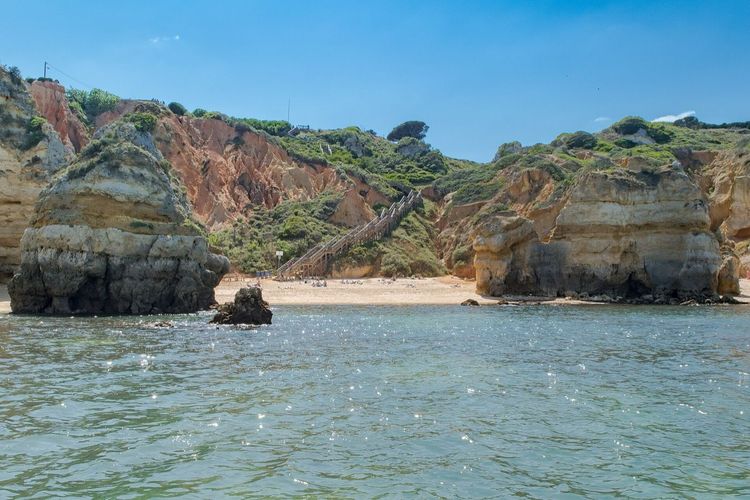
Below town sit two of the Algarve's most photographed coves. Praia Dona Ana is the wide one with golden rock formations offshore; Praia do Camilo is the smaller, steeper one reached by a long wooden staircase of around 200 steps. Both are stunning and both fill early in summer. West of Lagos, Praia da Luz gives you a longer, calmer family beach with a promenade and easy parking, and Meia Praia offers 4km (2.5 miles) of open sand if you just want to walk and swim without a staircase.
"Lagos rewards early risers. Be on the Camilo steps by 9am and you get the cove almost to yourself; arrive at noon in July and you queue to walk down." - Guidekin team
Planning tip: Parking near Dona Ana and Camilo is limited and gone by mid-morning in summer. Park in town and walk, or take the seasonal Onda minibus that loops the Lagos beaches.
The Wild West Coast: Surf and Space
Turn the corner past Sagres and the coast changes character completely. This is the Atlantic-facing Costa Vicentina, a protected stretch of cliffs, dunes and surf beaches with barely a building in sight. The water is colder and the wind stronger, but you trade that for space the south coast cannot offer.
Praia do Amado and Praia da Bordeira are the headline surf beaches, wide and wild, with surf schools running lessons for first-timers. Further north, Praia de Odeceixe sits where a river meets the sea, so you get a sheltered river side and an ocean side from the same sand. Down near Aljezur, Praia de Monte Clérigo and Praia da Arrifana are local favourites for sunset.
Short on patience for crowds? Point the car west. You will swap the warm, sheltered coves of the south for bigger skies, fewer people and the best surf in the region.
Detour: From Sagres, drive out to Cabo de São Vicente, mainland Europe's southwestern tip, for the cliff-edge lighthouse at sunset. It is free, raw and worth the wind.
The Eastern Sandbars: Warm Water and Islands
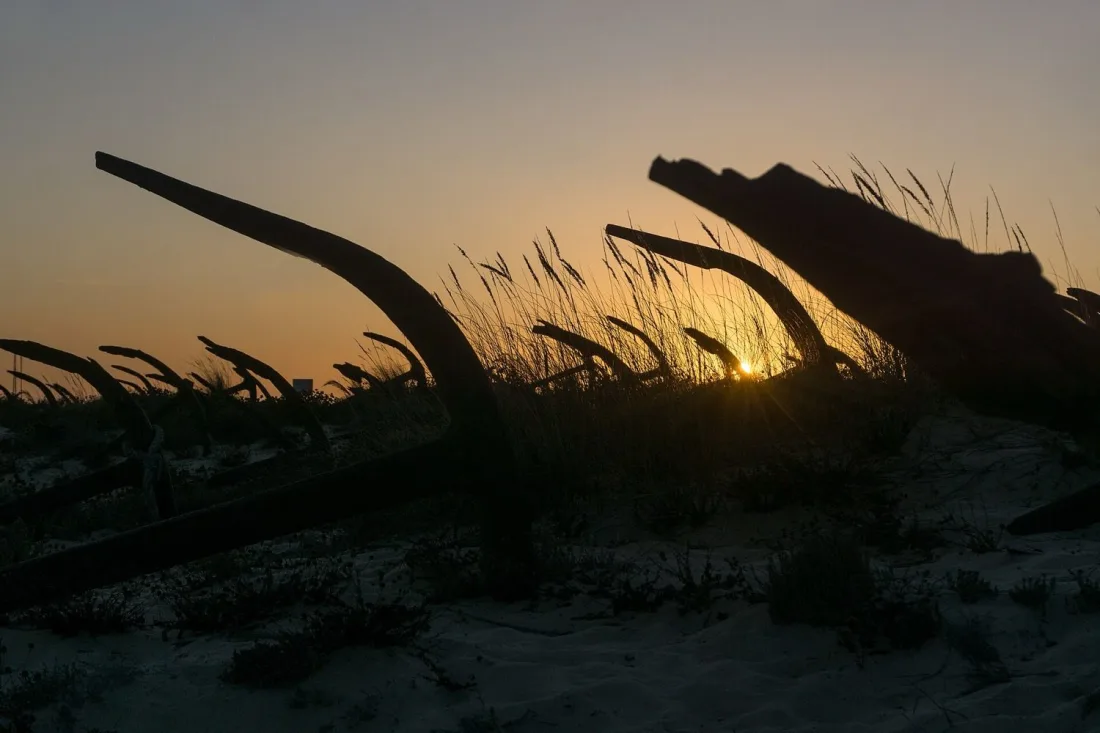
Photo: Alexey Komarov, CC BY-SA 4.0 (Wikimedia Commons)
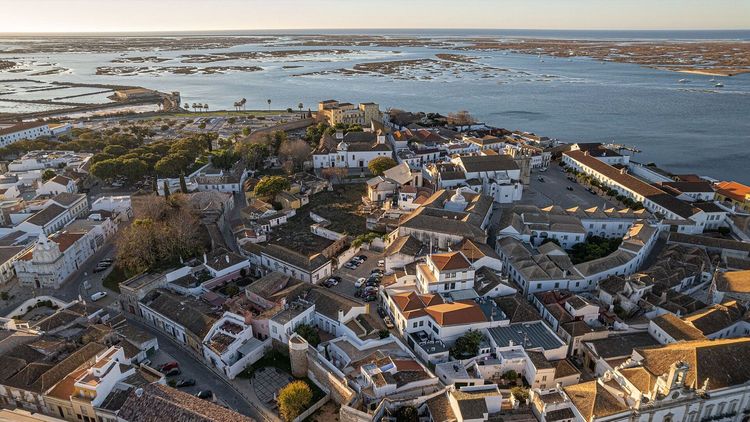
East of Faro the drama disappears and something rarer takes its place: warm, shallow, sheltered water over pale sand, on islands you reach by ferry. These barrier islands sit between the mainland and the open sea, protecting the Ria Formosa, a lagoon of channels, salt pans and birdlife that is a protected natural park. You can explore the lagoon itself on a Ria Formosa boat tour before choosing an island to land on.
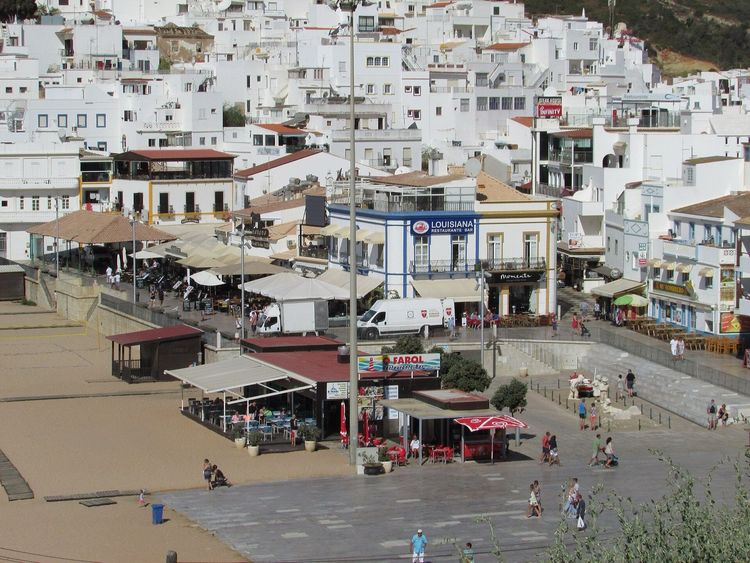
Ilha Deserta (also called Ilha da Barreta) is the wild one, a thin strip of sand with a single restaurant and no buildings, reached by ferry from Faro. Praia de Faro, on Ilha de Faro, is the one you can drive to, busy and lined with beach bars. Further east, Praia do Barril near Tavira is famous for its row of rusting anchors in the dunes, a memorial to the old tuna fishery, reached by a little train across the marsh or a 20-minute walk. Ilha de Tavira gives you kilometres of open sand a short ferry from town.
For something quieter, Cacela Velha is a tiny whitewashed village above a lagoon beach you wade out to at low tide, one of the calmest corners of the whole coast.
Local tip: The eastern water is noticeably warmer and calmer than the west, which makes the Sotavento the better bet for young families and for early-season swimming in May and June.
Blue Flag and How to Choose
You will see the Blue Flag on dozens of Algarve beaches, and it is worth knowing what it actually means. The Blue Flag is an international award for water quality, safety, facilities and environmental management. It is a useful signal for lifeguards, clean water and accessible facilities, but it says nothing about how beautiful or quiet a beach is. Some of the most striking coves carry no flag at all because they have no road, no lifeguard and no cafe.
So choose on two questions. First, cliffs or islands: drama and snorkelling on the Barlavento, or warm shallow water and space on the Sotavento. Second, how far you will walk: the prettiest coves usually mean a long staircase and a small, early-filling car park, while the long sandy beaches are flatter, busier and far easier with children or gear.
Quick Picks: The Best Beach For Your Day
Short on time and just want a shortlist? Match the beach to the day you have in mind.
- The photo you came for: Praia da Marinha or Ponta da Piedade, both at their best in soft early or late light.
- First-time surfing: Praia do Amado and Praia da Bordeira on the west coast, with Praia da Arrifana as a more sheltered backup.
- Young families: Praia da Luz in the west and the warm sandbar beaches around Tavira, all flat sand, lifeguards and easy parking.
- A proper long walk: Praia da Falésia for 6km of cliff, or Alvor's open sandbar by the boardwalk through the dunes.
- Snorkelling: the clear coves at Marinha and Carvoeiro's Praia do Paraíso, calmest on a windless morning.
- A sundowner: the promenade bars above Praia da Rocha, or Cabo de São Vicente for the wild, drinkless version.
- Getting away from everyone: Ilha Deserta off Faro, and the Costa Vicentina beaches north of Aljezur.
- A town beach you can walk to: Praia do Camilo at Lagos and the town cove at Carvoeiro, both a short stroll from a coffee.
At a Glance
| Beach | Area | Best for | Access | Vibe |
|---|---|---|---|---|
| Praia da Marinha | Lagoa (central) | The postcard shot, snorkelling | Staircase, small car park | Iconic, busy midday |
| Praia de Benagil | Lagoa (central) | The sea cave | Boat/kayak to cave | Small, sells out |
| Praia da Falésia | Albufeira/Vilamoura | Long walks, space | Steps or ramps | Wide, room to roam |
| Ponta da Piedade | Lagos | Cliff drama, kayaking | Steps or boat | Spectacular |
| Praia Dona Ana / Camilo | Lagos | Coves, photos | Long staircases | Stunning, early crowds |
| Praia do Amado | Costa Vicentina | Surf, space | Roadside car park | Wild, windy |
| Ilha Deserta | Faro (east) | Solitude, calm water | Ferry from Faro | Remote, one restaurant |
| Praia do Barril | Tavira (east) | Warm water, the anchors | Little train or walk | Quirky, family-friendly |
Practical Tips
- Transport: A hire car is the most flexible way to reach the cliff coves, since many sit at the end of small lanes. For the eastern islands you need a ferry from Faro, Olhão or Tavira, plus a short walk on the sand. Boat tours from Albufeira, Portimão and Lagos reach the caves and stacks you cannot see from land; see our guide to Albufeira for which beaches there you can reach on foot.
- Timing: July and August bring the warmest water and the biggest crowds. May, June and September give you near-summer sea with far more room. Arrive at the famous coves before 10am or after 5pm to beat both the heat and the queues.
- Budget: The beaches themselves are free. Budget for parking in summer, a sunbed-and-umbrella set if you want one, a ferry ticket of a few euros to the islands, and a half-day boat trip if you want to see Benagil and the caves from the water.
- Care: Many of the prettiest coves have no lifeguard. Check the flag, watch for falling rock under the cliffs at high tide, and never swim into the Benagil cave on a swell.
FAQ
What is the most beautiful beach in the Algarve?
Praia da Marinha near Lagoa is the most photographed, with its twin arches and clear water, and Ponta da Piedade at Lagos is its rival for sheer cliff drama. For warm, calm water rather than scenery, the eastern islands like Ilha Deserta and Praia do Barril win.
Where are the best beaches in the Algarve for families?
The eastern Sotavento beaches, such as Praia da Luz on the west and the sandbar islands around Tavira, have warmer, shallower and calmer water than the dramatic central coves, with easier, flatter access and more facilities.
Which Algarve beaches have the fewest crowds?
The wild west coast around Amado, Bordeira and Odeceixe stays far quieter than the south, and the eastern islands like Ilha Deserta thin out fast once you walk away from the ferry landing. Even on the busy central coast, walking ten minutes along the clifftop trail usually loses most of the crowd.
How do you get to the island beaches near Faro and Tavira?
By small passenger ferry. Boats run from Faro to Ilha Deserta and Ilha de Faro, from Olhão to Armona and Culatra, and from Tavira to Ilha de Tavira; Praia do Barril is reached by a little train or a short walk across the marsh from Pedras d'el Rei.
When is the sea warm enough to swim in the Algarve?
The eastern Sotavento water is swimmable from late May and stays pleasant into October. The western and Atlantic-facing beaches run a few degrees colder all year, which is why surfers favour the west and swimmers favour the east.
Pick Your Coast First, the Beach Second
The Algarve does not really have a single "best" beach, it has two coasts that want different things from you. Decide whether you are here for cliff coves or warm island sand, then let the named beaches above narrow it down. When you are ready to see the caves and stacks from the water, a boat trip from Albufeira is the way to reach the parts of this coast no staircase can.
Cover photo: LucT, CC BY-SA 3.0 (Wikimedia Commons)