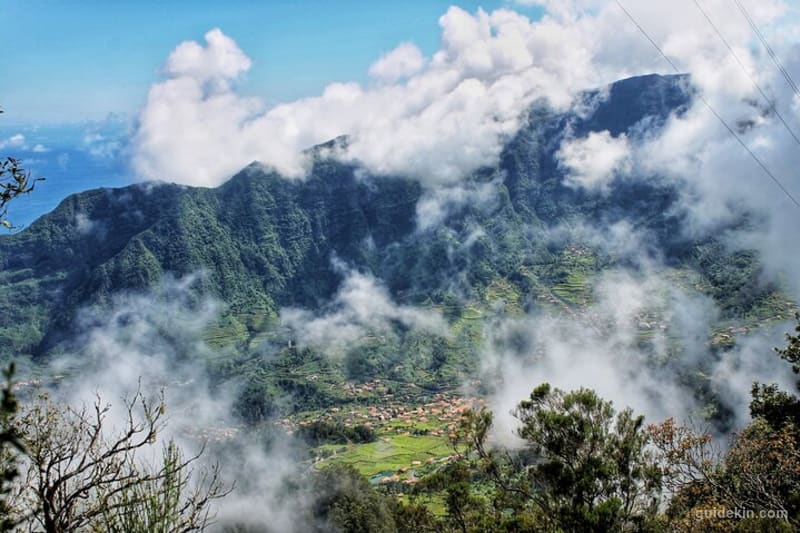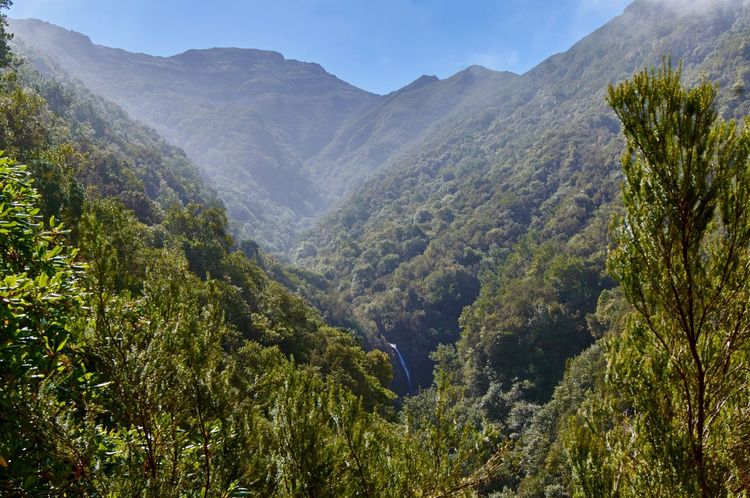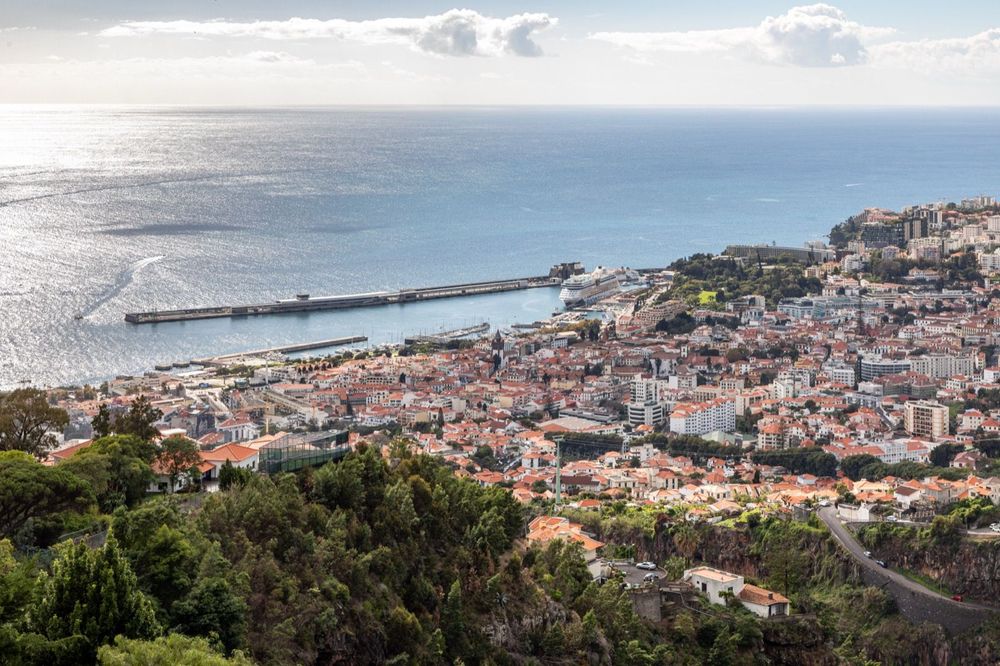
Funchal wraps around its bay like an amphitheater, a tumble of white houses and red roofs climbing from the marina to the mountains, with banana terraces filling every gap. Madeira's capital is where almost every trip to the island begins, and it deserves more than the night before your first levada walk. There is a working market that has fed the city since 1940, a cable car that floats you up to a garden in the clouds, a cobbled old town painted by artists, and a food scene that runs from grilled limpets to a fortified wine the world named after the island.
This is a city to wander rather than tick off. So here is a local's take on the best things to do in Funchal: the sights worth your time, the ones worth skipping, and how to eat and drink like you live here. For the wider island, pair it with our things to do in Madeira guide and, when your legs are ready, our Madeira levada walks guide.
Read on for the cable car and the toboggan, the market and the painted doors, and where to find the city's best food.
Key Takeaways
- Funchal is Madeira's capital, an amphitheater of a city best explored slowly on foot. Orientation →
- Ride the cable car up to Monte, then come back down in a wicker toboggan steered by two men in straw hats. The cable car →
- The Mercado dos Lavradores is the city's belly: fish, flowers, fruit and the fearsome black scabbard fish. The market →
- Eat in the Old Town, where painted doors line the lanes and poncha flows. Old Town →
- Come for the food: espetada, bolo do caco, espada com banana, and a glass of Madeira. Where to eat →
Getting Your Bearings
Funchal is small enough to walk and steep enough to make you feel it. Picture three layers: the seafront, with its marina, gardens and the long Avenida do Mar; the city center around the cathedral and the leafy Avenida Arriaga; and the Zona Velha, the old town to the east, where the cable car lifts off. Above it all sits Monte, the hill suburb you reach by cable car, and behind that the mountains where the levadas begin.
Home to a little over 100,000 people, more than a third of the whole island, Funchal has been Madeira's capital since the 1500s, when sugar money built its first churches and mansions. Almost everything worth seeing sits in that compact band along the water, so you can do the city on foot and save the car for the rest of the island. The hills are real, though, so wear comfortable shoes and let the cable car do the biggest climb for you.
Local tip: Base yourself near the Old Town or the center rather than out by the resort hotels to the west. You will walk to dinner, the market and the cable car instead of waiting for a taxi, and you will feel the city's pulse instead of watching it from a sun lounger.
The Cable Car to Monte and the Toboggan Down
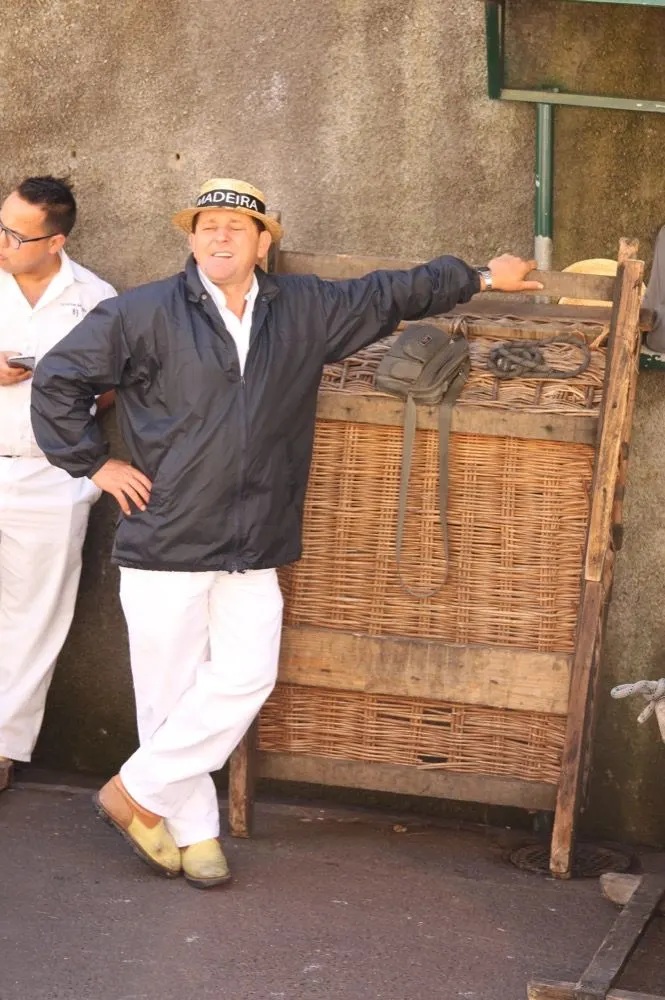
A carreiro in traditional whites beside a wicker toboggan at Monte, ready for the ride down. Photo: Hans Olav Lien, CC BY-SA 3.0 (Wikimedia Commons)
This is the one thing everyone does, and for once the crowd is right. The Funchal cable car (the teleferico) floats from the Zona Velha up to Monte, a fifteen-minute glide over the rooftops and gardens with the bay opening up behind you. A one-way ticket runs about 14 euros and a return about 20 (2026), but most people go up by cable car and come down a very different way.
At the top, the descent is the legend. The carros de cesto (wicker toboggan sledges) have run since the 19th century, when they were a quick way down the hill, and today two carreiros in white outfits and straw hats run alongside a wicker-and-wood sled, steering it on their boots down about 2km of public road to Livramento. It takes around ten minutes and costs roughly 27.50 euros for one rider or 35 for two (2026). The sleds began back in the 1850s as a genuine, if hair-raising, way for hill-dwellers to get down to town before there were cars, which makes the whole thing a working antique. It is touristy, it is faintly ridiculous, and it is enormous fun.
While you are up top, step into the twin-towered church of Nossa Senhora do Monte, the island's most important place of pilgrimage and the resting place of Karl I, the last emperor of Austria-Hungary, who died in exile on Madeira in 1922.
Detour: While you are up in Monte, step into the Monte Palace Tropical Garden, a lush 70,000 sq m hillside of koi ponds, Oriental pavilions and a replica of the native laurel forest, open daily with entry around 12.50 euros. It is the calm, green counterpoint to the toboggan adrenaline, and the cable car drops you almost at its gate.
Mercado dos Lavradores: the City's Belly
If you do one thing before lunch, make it the Mercado dos Lavradores, the "workers' market" that has been Funchal's larder since it opened in 1940. The building itself is a handsome piece of Art Deco, but the show is inside: stalls piled with Madeira bananas, passion fruit and the strange, sweet tree-tomato called tamarillo, flower sellers in traditional dress, and a downstairs fish hall that stops first-timers in their tracks.
The star there is the espada (black scabbard fish), a long, eel-black deep-sea creature with huge eyes and a mouthful of teeth, hauled up from 800 to 1,200m down on long night lines and sold by the slab. It looks like a nightmare and tastes, gently fried with banana, like a dream, and the whole city has built a signature dish around it. Upstairs, past the flower sellers in their red-and-white regional dress, the fruit stalls heap Madeira bananas, custard apples and the tamarillo, while the building itself, opened in 1940 to a clean Art Deco design by Edmundo Tavares, rewards a look for its tiled panels alone. Wander, photograph, taste the fruit the sellers offer, but know your prices before you buy.
Local tip: Go early, ideally before 10am, and treat the upstairs fruit stalls as a look-and-learn rather than a bargain. Some vendors price hard for cruise crowds, so the real value is the fish hall and the atmosphere. Come on a Friday morning, the market's busiest and best, when the whole island seems to be shopping.
The Old Town and the Painted Doors
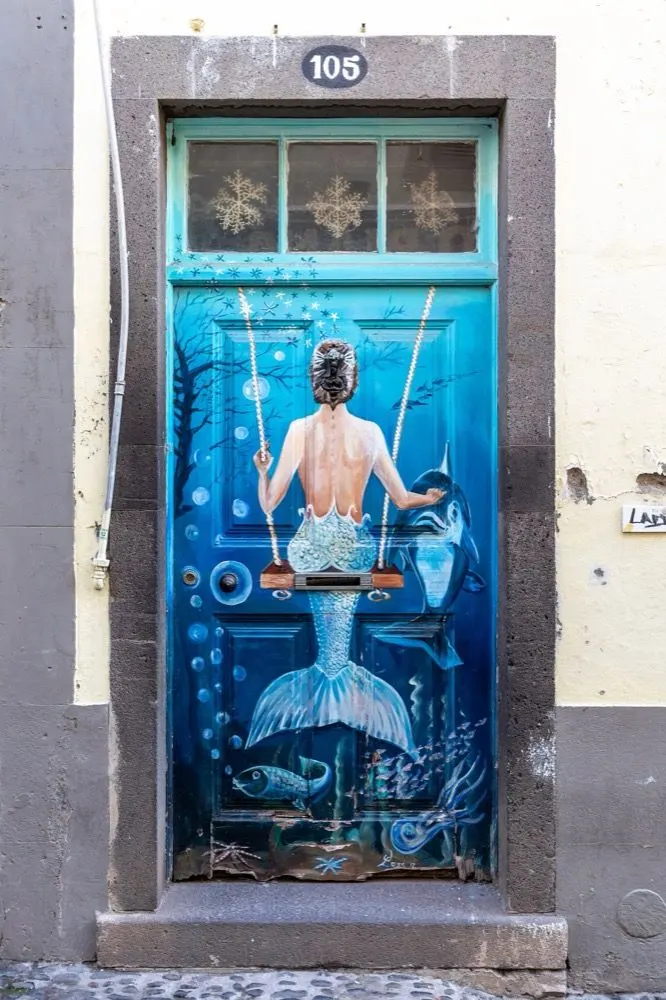
One of the painted doors of Rua de Santa Maria in Funchal's old town. Photo: Dietmar Rabich, CC BY-SA 4.0 (Wikimedia Commons)
East of the market, the Zona Velha (old town) is Funchal's most atmospheric quarter, a grid of narrow cobbled lanes that was the city's first settlement. Its centerpiece is Rua de Santa Maria, where in 2014 the "Arte de Portas Abertas" (Art of Open Doors) project invited artists to paint more than 200 of the street's doors, turning a once-faded lane into an open-air gallery. No two doors are alike, and the wander is free.
By night the same lanes fill with restaurants and poncha bars, and the smell of grilled meat drifts out of every doorway. This is where the city comes to eat, drink and talk, and it is the best place to spend a Funchal evening.
"Skip the seafront places with photo menus and a host waving you in. Walk two lanes into the Old Town, pick the spot full of locals, and order whatever the kitchen is grilling that night." - Guidekin team
The Se and the City Center
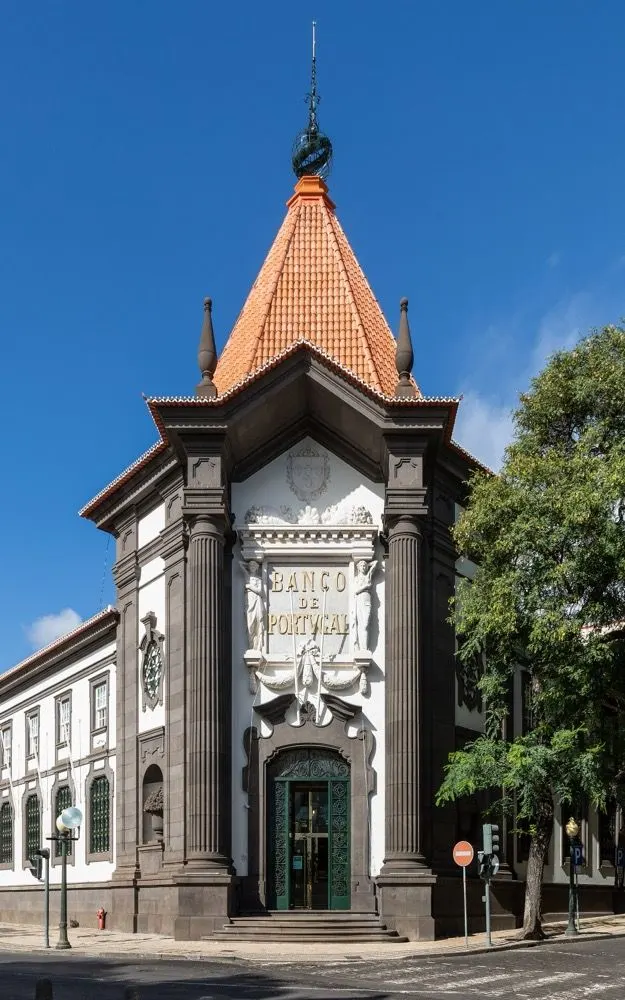
The ornate Banco de Portugal building in Funchal's city centre. Photo: Dietmar Rabich, CC BY-SA 4.0 (Wikimedia Commons)
Back in the center, the Se (Funchal's cathedral) is worth a quiet ten minutes for one thing above all: its ceiling. Built around 1500 in a mix of Gothic and Manueline styles, it is crowned by a teto of native cedar in intricate Mudejar geometry, inlaid with ivory, one of the finest wooden ceilings in Portugal and easy to miss if you forget to look up.
From there it is a short stroll down tree-lined Avenida Arriaga to the marina and the seafront gardens, where jacaranda trees turn purple in spring. And on the waterfront you will find the city's most unexpected stop: the CR7 Museum, a shrine to Cristiano Ronaldo, who was born and raised in Funchal. Opened in 2013, it packs around 400 sq m with his five Ballons d'Or, four Golden Boots and an augmented-reality kickabout. Football fan or not, it is a very Madeiran point of pride, and the marina cafes outside make a fine spot to watch the harbor while the kids queue for selfies.
Funchal's Gardens
Funchal is one of the greenest cities in Europe, and its gardens are a reason to visit in their own right. Above the city, the Jardim Botanico da Madeira (the Madeira botanical garden) terraces the hillside with geometric beds of cactus, native laurel-forest species and exotic blooms from across the old Portuguese world, all of it framed by sweeping views back over the bay. It even has its own small cable car, the Teleferico do Jardim Botanico, that links the garden across the valley toward Monte, so plant-lovers can ride between the two without dropping back into town.
Down at sea level, the Parque de Santa Catarina rolls greenly above the marina, and the Avenida Arriaga turns into a purple tunnel of jacaranda each spring. None of it costs much, and on a warm afternoon the gardens are the loveliest, slowest way to see the city.
Local tip: If you only have time for one garden, choose by mood. Monte Palace is the one for art and koi-pond calm; the botanical garden is the one for the plants and the panorama. Pair either with a cable car and you turn a simple transfer into a highlight of the day.
Where to Eat and Drink in Funchal
The best restaurants in Funchal are not the ones with the loudest waiters on the seafront. They are the tascas and family kitchens of the Old Town, and the island's food is worth coming hungry for.
Order the holy trinity. Espetada, chunks of beef rubbed with garlic and bay, grilled on a skewer of laurel wood and hung at your table. Bolo do caco, a flat, soft wheat bread cooked on a hot stone and slathered in garlic butter, the island's answer to a bread basket. And espada com banana, that fearsome black scabbard fish, filleted and fried with a slice of sweet Madeira banana, a combination that should not work and absolutely does.
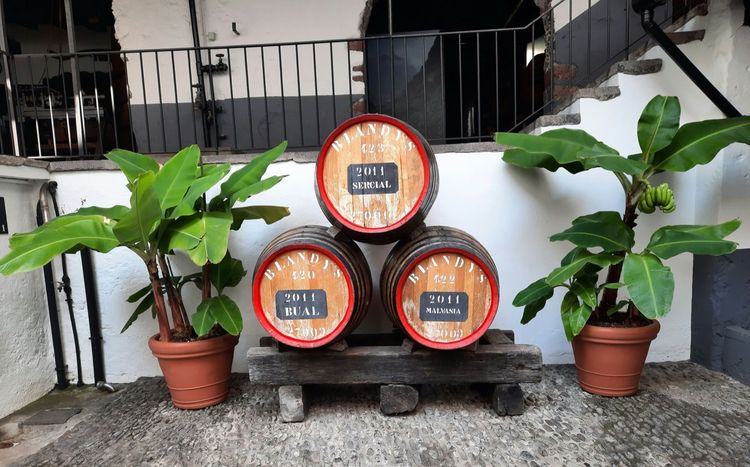
Wash it down the local way with a poncha, the island's punchy mix of sugarcane spirit, honey and citrus, stirred with a wooden mexelote. Finish with a glass of Madeira wine, the fortified wine the island has shipped around the world for centuries. It runs dry to sweet, from a crisp Sercial sipped as an aperitif to a rich Malmsey with dessert, and the old shipper lodges in the center, Blandy's chief among them, pour tastings that walk you through the styles. For more on the food and the famous wine, browse a Madeira wine and food experience.
Planning tip: Lunch is where the value is. Many Old Town spots run a prato do dia (dish of the day) at a fraction of the dinner price, so eat your big meal at midday and graze on petiscos (small plates) and poncha in the evening.
A Perfect Day in Funchal
If you have just one day, here is how a local would spend it. Start at the Mercado dos Lavradores by 9am, before the cruise crowds, for the fish hall and a strong coffee. Walk east into the Old Town, photographing the painted doors of Rua de Santa Maria as the cafes open their shutters. Mid-morning, ride the cable car up to Monte, give an hour or two to the Monte Palace garden, then point yourself downhill in a wicker toboggan.
Back in town, look up at the Se cathedral's cedar ceiling, stroll the seafront gardens along the Avenida Arriaga, and rest through the warm part of the afternoon. Come evening, return to the Zona Velha for espetada and a poncha, and end the night with a glass of Madeira. That is Funchal at its best, market to mountain to table, all inside a single walkable day.
Planning tip: Build the day around the cable car. Mornings are clearest up at Monte before the cloud climbs the hill, so do the heights early and save the long, lazy dinner for when your feet have earned it.
Funchal at a Glance
| Sight | What it is | Time | Cost (2026) |
|---|---|---|---|
| Cable car to Monte | Glide up over the city | 15 min each way | ~€14 one-way / €20 return |
| Carros de cesto (toboggan) | Wicker-sled descent from Monte | 10 min | ~€27.50 (1) / €35 (2) |
| Monte Palace Tropical Garden | Hillside gardens, koi, art | 1.5-2 hrs | ~€12.50 |
| Mercado dos Lavradores | Market: fish, fruit, flowers | 1 hr | Free |
| Old Town painted doors | Open-air street-art gallery | 1 hr | Free |
| Se Cathedral | Manueline cedar ceiling | 15 min | Free |
Where to Stay
Where you sleep shapes the trip. We'd base in or near the Old Town or the city center, within walking distance of the market, the cable car and the Zona Velha restaurants, so the city is on your doorstep rather than a taxi ride away.
Funchal also has a grand-hotel tradition worth knowing about. Out on the cliffs to the west, Reid's Palace has hosted writers and royalty since 1891 and still serves a famous afternoon tea on its terrace over the bay, while the Savoy name anchors the modern five-star strip nearby. They are lovely, but they sit a bus ride from the center, so weigh the pool-and-sea-view calm against the walk-everywhere buzz of the old quarter.
Local tip: For the New Year fireworks, any room facing the bay is gold, and they sell out a year ahead. The rest of the year, a simple guesthouse in the Old Town beats a resort for atmosphere, and puts dinner, the market and the morning cable car a few minutes' stroll from your door.
When to Go
Funchal is famously mild all year, with little to choose between the seasons beyond a wetter, cooler winter. Spring brings the city's flowers into bloom and the Festa da Flor (Flower Festival), usually held over two weeks in late April or May, when carpets of blossom and a children's parade take over the center. Late spring and early autumn give warm, dry weather without the peak-summer cruise crush, and the Atlantic Festival lights up June with weekly fireworks set to music over the bay.
If you can, time a visit for New Year's Eve, when Funchal stages one of the world's great firework displays over the bay, once a Guinness record-holder, watched by the entire amphitheater of the city at once. Book a room with a sea view a year ahead, because everyone wants one.
Practical Tips
- Walk the center, drive the island. Funchal's sights cluster along the water; save the rental car for levadas and the coast.
- Cable car up, toboggan down. Buy a one-way cable car ticket if you plan to sled back down to Livramento.
- Market mornings. Go to the Mercado dos Lavradores early, and know your prices upstairs.
- Eat in the Old Town. Skip the seafront photo-menus for the lanes of the Zona Velha.
- Try the poncha slowly. It goes down like fruit juice and arrives like a freight train.
- Wear grippy shoes. The cobbles are steep and polished smooth.
FAQ
What are the best things to do in Funchal?
Ride the cable car up to Monte and toboggan back down, browse the Mercado dos Lavradores, wander the painted doors of the Old Town, look up at the Se cathedral's cedar ceiling, and eat espetada and espada in a Zona Velha tasca. Most of it is walkable in a day or two. If you only have time for three, make them the cable car to Monte, the morning market and a long dinner in the Old Town.
How much is the Funchal cable car?
About 14 euros one way and 20 euros return (2026). Many people buy a one-way ticket up and ride the wicker toboggan (around 27.50 euros for one, 35 for two) back down toward town.
Is the Mercado dos Lavradores worth visiting?
Yes, especially the downstairs fish hall with its black scabbard fish, and a Friday morning for the full bustle. Treat the upstairs fruit stalls as a look rather than a bargain, since some price hard for cruise crowds. Go before 10am for the best light, the thinnest crowds and the freshest fish.
Where should you eat in Funchal?
In the Old Town (Zona Velha), not on the seafront. Look for busy local tascas serving espetada, bolo do caco and espada com banana, and drink poncha or a glass of Madeira. For the best value, eat your big meal at lunch from the prato do dia, the cheaper dish of the day, and graze on small plates in the evening.
How many days do you need in Funchal?
One full day covers the highlights, but two lets you slow down and add the Monte gardens. Many visitors use Funchal as their base for the whole island, sleeping in the city and day-tripping out to the levadas, the Cabo Girao skywalk and the green north, since nowhere on Madeira is much more than about 90 minutes away by car.
When is the best time to visit Funchal?
Almost any time, thanks to the mild climate. Spring brings the Flower Festival, late spring and early autumn are warm and quieter, and New Year's Eve brings a world-famous firework show.
Make Funchal More Than a First Night
Give Funchal the day it deserves. Float up to Monte and laugh your way back down on a sled, lose an hour among the painted doors, and let an Old Town kitchen show you what the island eats. Treat it as more than the place your flight lands, and the capital quietly becomes one of the best parts of a Madeira trip, the green, walkable heart that everything else circles around. When you are ready to turn the wandering into a plan, browse Funchal tours and experiences or the wider range of things to do across Madeira, and build the trip around the corners of the city that pulled at you most.