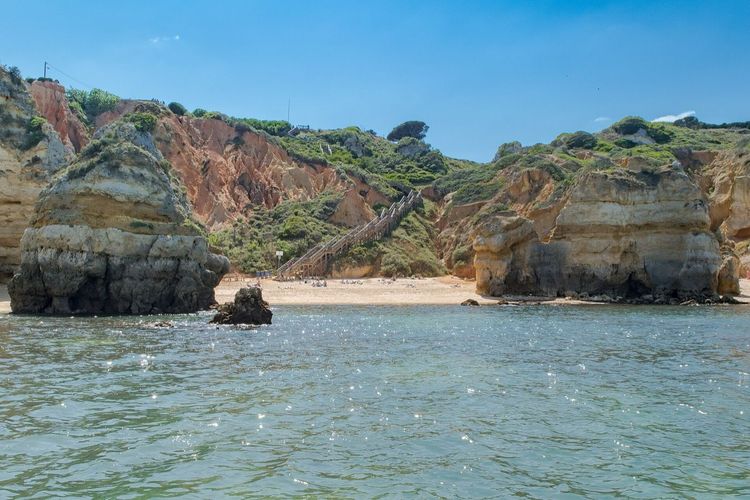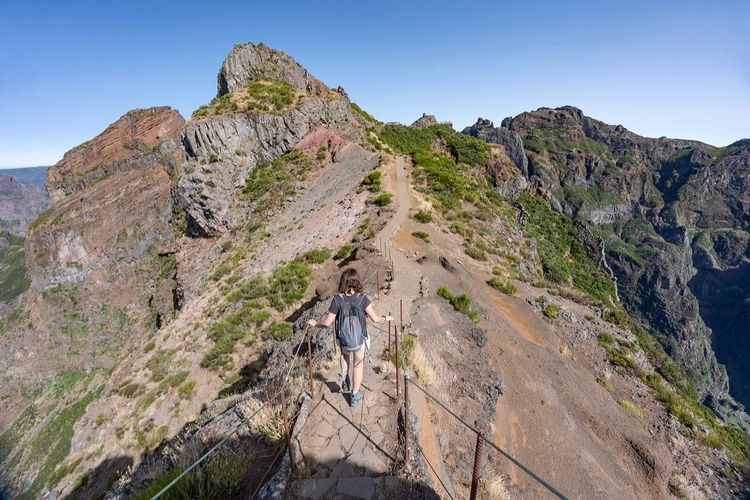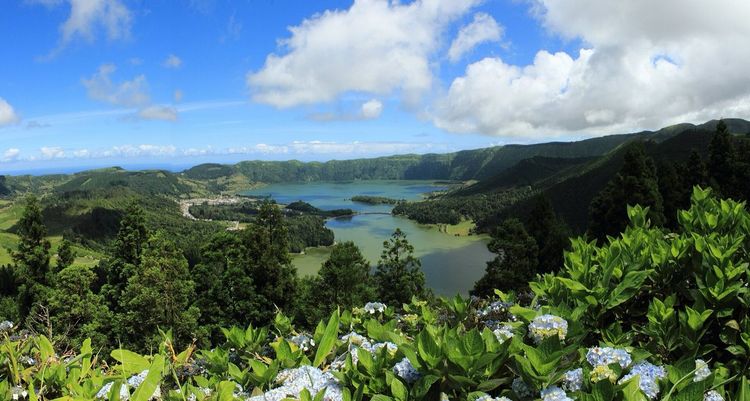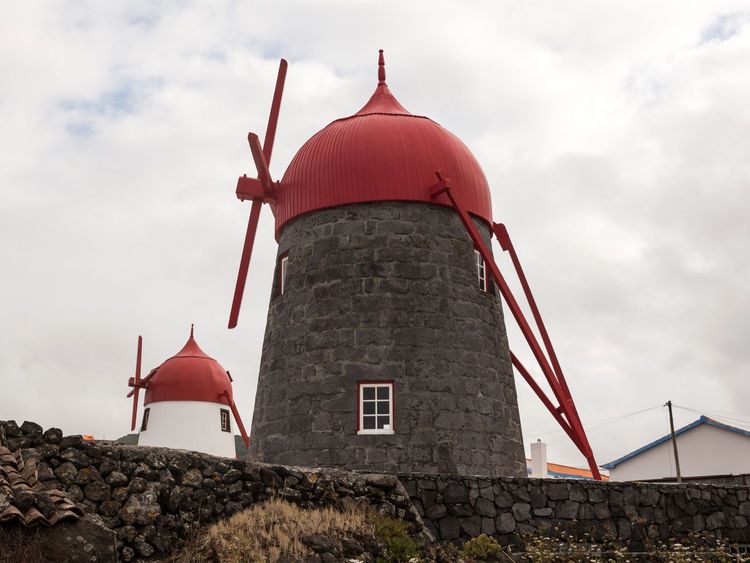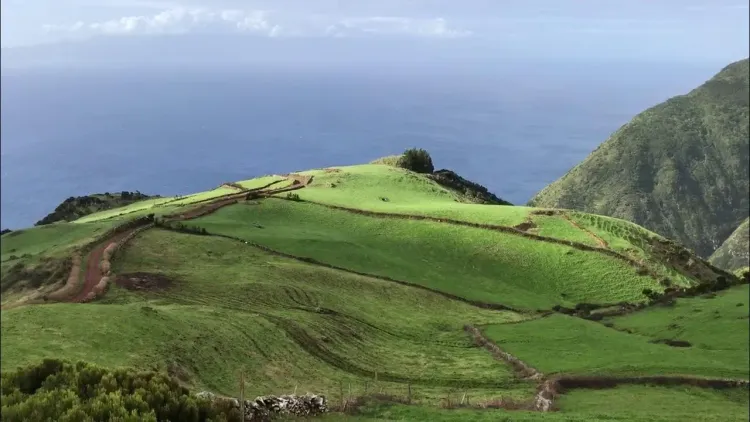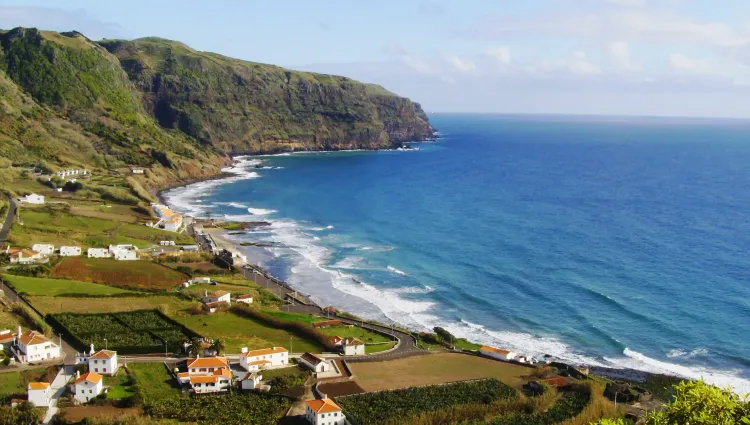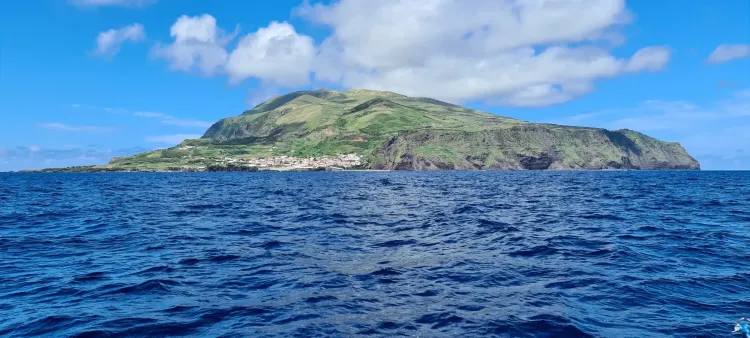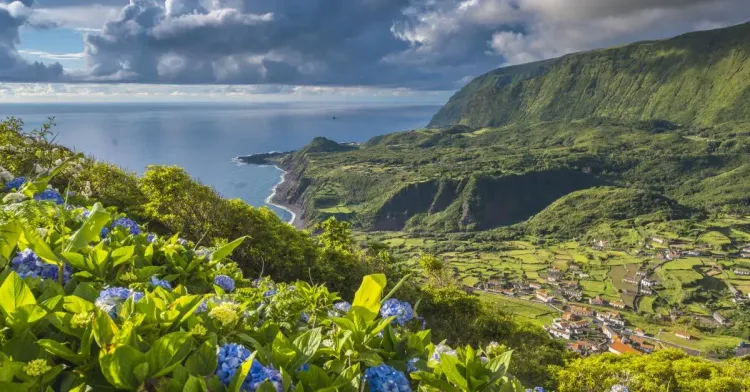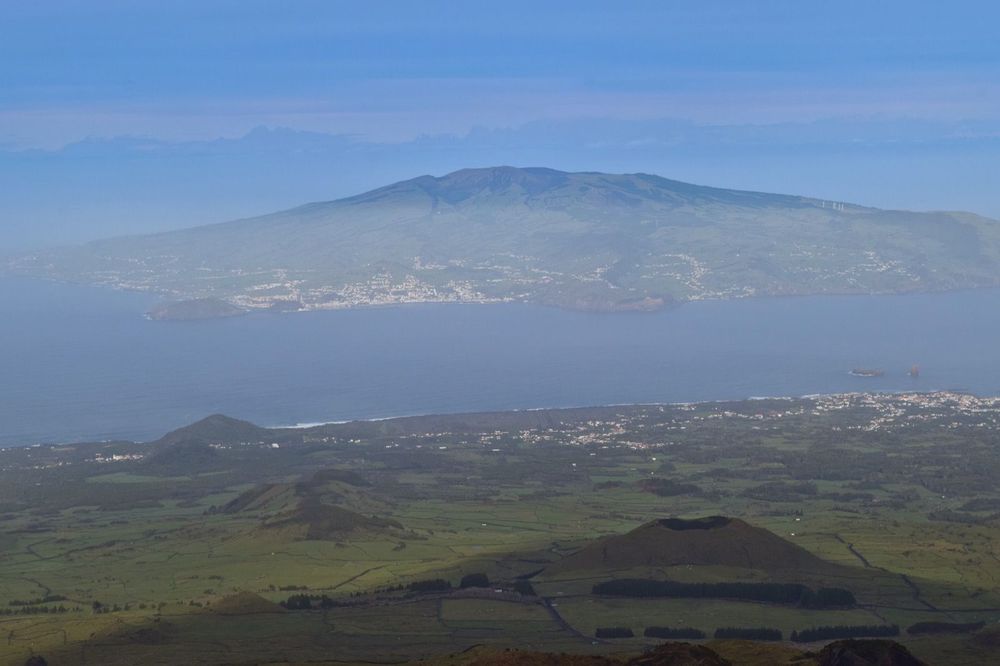
Nine islands, scattered across a thousand kilometers of open Atlantic, each with its own volcano, its own cheese, its own way of talking. The Azores are not one place but several, and the joy of a trip here is hopping between them: a ferry at dawn, a different island by lunch, a new caldera to stare into by dusk.
The catch is that getting around takes a little planning, and most first-timers get one thing wrong. They assume you can ferry your way around the whole archipelago. You cannot. Learn the single rule that governs island-hopping here and the rest falls into place. For the bigger picture of the islands themselves, start with our complete Azores travel guide, then come back here for the how.
Read on for how the ferries and flights actually work, three slow itineraries that beat racing through all nine, and when to come.
Key Takeaways
- The Azores split into three island groups, and there are no ferries between them. Ferry within a group, fly between groups. The one rule →
- The Central "triangle" of Faial, Pico and Sao Jorge has year-round ferries, which makes it the best pure island-hop. Ferries explained →
- The Eastern group (Sao Miguel, Santa Maria) and the remote West (Flores, Corvo) mean flying, so budget for SATA. Flights →
- Slow beats fast: two or three islands in a week, not all nine. The nine islands →
- Come May to October for the calmest seas and the full ferry network, and build in a buffer day for weather. When to go →
The Three Island Groups, Explained
Before you book anything, picture the map. The Azores fall into three groups, and the gaps between them are wide stretches of ocean.
The Eastern group is Sao Miguel, the big green gateway island, plus little sun-baked Santa Maria. The Central group is a cluster of five: Faial, Pico, Sao Jorge, Graciosa and Terceira. The Western group is just two far-flung specks, Flores and Corvo, closer to Canada than to mainland Portugal.
"Slow travel" here does not mean seeing everything slowly. It means choosing a group, settling into two or three of its islands, and letting the ferry, not a packed flight schedule, set your pace. Try to tick off all nine in ten days and you will spend the trip in airport queues. Pick a corner of the archipelago and you will actually remember it.
The One Rule: Ferry Within a Group, Fly Between Groups
Here is the rule that decides every Azores itinerary: within an island group you can take a ferry, but to cross between groups you have to fly.
The long inter-group ferries were scrapped around 2022, so today no boat connects the Eastern, Central and Western groups across the open ocean. The only sea links left run inside the groups. That means the Eastern group has no useful inter-island ferry at all, and the only way from Sao Miguel to Santa Maria, or out to remote Flores, is on a small SATA plane.
"Plan the ferries for the island group you're staying in, and treat every group-to-group leg as a flight you book early. Get that one distinction right and an Azores trip stops being confusing." - Guidekin team
Get this backward and you will build a dream route that simply does not exist. Get it right and planning is easy.
Azores Ferries, Explained
All inter-island ferries are run by one operator, Atlanticoline, and the service comes in two tiers: a year-round core and a summer-only expansion.
The year-round workhorse is the Central triangle. The Blue Line links Faial (port: Horta) and Pico (port: Madalena) in about 30 minutes, running three or four times a day in winter and roughly doubling that in summer; the Green Line stretches the same run on to Sao Jorge (port: Velas), a longer leg of up to two hours. Locals ride the Faial to Pico crossing like a bus, walking on without a reservation to commute, shop or tour the Pico vineyards, and at around 8 euros one-way (2026) it is the cheapest, most scenic short hop in the islands, with Mount Pico rising straight ahead the whole way over. Out west, the Pink Line connects Flores and Corvo in about 40 minutes, year-round, weather permitting.
From roughly June to September, seasonal lines open up and stitch the whole Central group together, adding Terceira and Graciosa to the triangle on a handful of fixed weekdays. This is the only window when you can island-hop all five Central islands by sea, and even then the longer routes run just a couple of days a week, so the timetable, not your mood, sets the itinerary.
Local tip: For the triangle, you rarely need to book ahead as a foot passenger, but bringing a rental car across is a different story. Reserve the vehicle crossing in advance, and remember that most island car-rental contracts do not allow you to take the car off the island anyway, so it is often cheaper to drop one car and pick up another.
Planning tip: In winter, the network shrinks back to the triangle and the Flores to Corvo link, and rough seas cancel sailings when waves top about four meters, most often from November to March. Never build an off-season trip around a single ferry leg with no flight backup. Book tickets at atlanticoline.pt, and prebook if you are bringing a car.
Inter-Island Flights: When You Have to Fly
Every flight between the islands is run by SATA Air Acores on small Bombardier Dash 8 turboprops, the kind that seat somewhere between 37 and 80 passengers. Ponta Delgada on Sao Miguel is the main hub, with the most routes and frequencies, while Lajes on Terceira acts as a second hub feeding the Central group. Hops run from about 20 minutes up to roughly an hour and a half for the long haul out to Flores, and in summer 2026 the airline plans something like 572 flights a week across sixteen routes, with extra capacity on the busy Ponta Delgada runs to Terceira, Pico, Horta and Flores.
You will fly for any cross-group leg: to reach Santa Maria, about 30 minutes from Ponta Delgada with no ferry alternative, or to get out to the Western group, where Flores is roughly a 90-minute flight. Sao Miguel to Terceira or Pico takes around 50 minutes. Expect to pay somewhere around 60 to 120 euros one-way as a non-resident, depending on the route and how early you book.
Local tip: You will see a famous "Azores Fare" of about 61 euros round-trip quoted all over the internet. Ignore it. That subsidized fare is for people with tax residence in the Azores only, and tourists do not qualify. Budget the real fares, and book inter-island flights the moment your dates are fixed, because the planes are tiny, seats sell out months ahead in summer, and the timetable changes day to day.
The Nine Islands, Island by Island
Each island has a clear personality, which makes choosing easy once you know what you are after. Here is the one-line version, with a link to the full guide for the ones you want to dig into.
- Sao Miguel is the green giant and the best first base. Its twin lakes fill the 5km-wide Sete Cidades caldera, the geothermal valley of Furnas slow-cooks cozido (a stew) in the volcanic ground, and whale boats leave Ponta Delgada almost daily, so give it at least four days. Read our complete Sao Miguel guide.
- Santa Maria is the warm, sunny one, the only island with natural golden-sand beaches, plus a red-earth barreiro (badland) that looks transplanted from Mars. A 30-minute flight from Sao Miguel, it rewards three or four unhurried days. See the Santa Maria guide.
- Terceira pairs the UNESCO-listed old town of Angra do Heroismo, on the heritage list since 1983, with the summer tourada a corda (rope bullfight) that runs through village streets daily from May to September. More in the Terceira guide.
- Graciosa, the "White Island" and a UNESCO Biosphere Reserve, is pure calm: you climb down 183 steps into the Furna do Enxofre lava cave to a sulphurous lake, then soak in the Carapacho thermal springs at around 40°C. Read the Graciosa guide.
- Sao Jorge is a long, narrow ridge fringed with more than 40 fajas (flat coastal shelves left by old lava flows and landslides) and famous for a sharp, aged DOP cheese; two or three days gets you the best fajas and the Serra do Topo hike. Read the Sao Jorge guide.
- Pico is wine and the climb. Its lava-walled currais (vineyard plots) form a UNESCO World Heritage landscape inscribed in 2004, and Mount Pico, at 2,351m (7,713ft), is Portugal's highest peak, a 7 to 10-hour round-trip best tackled between June and September. See the Pico guide.
- Faial is the sailors' island: the moon-grey Capelinhos volcano that erupted across 1957 and 1958, a forested caldeira (crater) about 2km wide, and Horta's marina, where visiting crews paint their boat names along the dock for luck. More in the Faial guide.
- Flores is the waterfall island, all cascading cliffs and crater lakes, with the 180m-plus Cascata da Ribeira Grande among the tallest in the archipelago. Home to roughly 4,000 people and arguably the prettiest of the nine, it deserves two or three days. Read the Flores guide.
- Corvo is the smallest and quietest of all: about 17 sq km, some 430 residents, one village, and a 3.5km-wide green crater you can circle on foot in a morning. Leave the car on Flores and walk it. See the Corvo guide.
Three Slow Itineraries
You do not need a complicated plan. Pick one of these three and adjust the days to your trip. For a first visit, we recommend the Central Triangle, because it is the only route where ferries, not flights, carry you the whole way.
The Central Triangle by ferry (7 days, no flights once you land)
This is the purest slow-hop, since the year-round triangle ferries do all the work and you never touch an airport between islands. Fly into Horta on Faial and give it a day or two for the harbor-front, the painted marina and a drive up to the 2km-wide caldeira. Take the 30-minute Blue Line across to Pico for two or three days of volcanic wine, the UNESCO vineyards and, if your legs are willing, the long pre-dawn climb up the 2,351m peak. Then ride the Green Line on to Sao Jorge for two days of clifftop fajas and that famously sharp cheese. Three islands, one ticket type, zero flights.
The Eastern group (7 to 9 days, one short flight)
Base on Sao Miguel for five or six days and work the headliners at a human pace: the twin lakes of Sete Cidades, the geothermal steam and hot-spring pools of Furnas, the cliff-ringed crater lake of Lagoa do Fogo, and a morning whale-watching trip from Ponta Delgada. Then take a 30-minute SATA hop to Santa Maria for three or four days of golden beaches and red-rock badlands, an island most visitors never bother to reach. Sunny, low-stress, and almost entirely on the ground.
The Western add-on (4 to 5 days, weather-dependent)
For the adventurous, fly out to Flores for waterfalls, crater lakes and some of the most dramatic coastline in the Atlantic, then take the short Pink Line ferry or a quick flight across to tiny Corvo to walk the crater rim for a day. This is the most remote and most weather-exposed corner of the archipelago, so bolt it onto a longer trip rather than gambling on it as your only stop, and keep a spare day in hand in case the wind has other plans.
Planning tip: Whatever you choose, resist adding a fourth island. Each one means another car rental, another check-in and another weather-dependent connection, and the hours lost in transit are hours you could have spent on a trail or at a tasting. Two or three islands done properly will always beat a blurred lap of all nine.
Detour: Whichever route you choose, a single whale-watching trip is worth building in. Browse Azores whale-watching tours and book the morning slot for the calmest seas.
Azores Island-Hopping at a Glance
| Connection | Mode | Typical time | Indicative price (2026) | Year-round? |
|---|---|---|---|---|
| Faial to Pico (Blue Line) | Ferry | ~30 min | ~€8 one-way | Yes |
| Faial/Pico to Sao Jorge (Green Line) | Ferry | up to ~2 hrs | ~€15-25 | Yes |
| Flores to Corvo (Pink Line) | Ferry | ~40 min | ~€16 | Yes (weather permitting) |
| Across the full Central group | Ferry | varies | varies | Summer only (Jun-Sep) |
| Between island groups | Flight (SATA) | 20 min to 1.5 hrs | ~€60-120 one-way | Yes |
| Sao Miguel to Santa Maria | Flight (SATA) | ~30 min | ~€60-120 | Yes (no ferry) |
Fares and schedules change often. Treat these as ballpark figures and confirm on atlanticoline.pt and azoresairlines.pt before you book.
Getting Around Each Island
A rental car is effectively essential on all eight of the larger islands, because the best of the Azores, the crater rims, the coastal miradouros (viewpoints) and the levada-side trails, sit far apart and bus service is thin. Book the car with your accommodation, especially in summer when island fleets are small.
The one exception is Corvo. It is tiny, walkable, and has just one village, so you can leave the car on Flores and arrive on foot.
Where to Base Yourself
On each island, stay near the main port town and you keep your options open. On Faial that means Horta, the little harbor city where the triangle ferries dock and the sailors' bars line the marina, so you can walk to your boat in the morning and still be back for dinner. On Pico, base in Madalena, a short stroll from the ferry and ringed by the lava-walled vineyards. On Sao Jorge, the ferry town of Velas puts you within easy reach of the island's best fajas.
On the bigger islands the calculation shifts. On Sao Miguel we recommend a couple of nights in or near Ponta Delgada, then a move east toward Furnas so you wake up beside the hot springs instead of driving an hour to reach them. The Azores look small on a map, but the roads are winding and slow, and an hour as the crow flies is rarely an hour in the car.
Local tip: On the smaller islands, family-run guesthouses tend to beat the hotels on both price and local knowledge. The owner will tell you which trail reopened after the rain, which miradouro catches the best sunset, and which restaurant the boat crews actually eat at.
When to Go
Aim for May to October. That is when the seas are calmest, the seasonal ferries run, and the weather gives you the best odds on the high trails and crossings. June to September is the peak window for the full Central-group ferry network and the Mount Pico climb. If the trip is built around walking, the hiking in the Azores guide pairs the best trail with every island route here.
Whales decide the shoulder seasons. The migratory giants, blue, fin and sei whales, pass through from roughly March to June, with April and May the best months. Summer brings calmer water and dependable sightings of resident sperm whales and dolphins. You can book a boat tour across most of that window.
Winter is for storm-watchers and the patient. Ferries thin out to the core links, flights get cancelled, and the green turns greener under the rain.
Practical Tips
- Book flights first. Inter-island planes are small and sell out months ahead in summer, so lock in any group-to-group leg as soon as your dates are set.
- Buffer days. Weather cancels both ferries and flights, so never schedule a tight connection to your international flight home. Leave a day of slack.
- The fare trap. The cheap "Azores Fare" is residents-only. Tourists pay standard fares of roughly 60 to 120 euros one-way.
- Cars. Reserve a rental on each island in advance; only Corvo is walkable.
- Pack layers. Four seasons in a day is not a cliche here, it is the forecast. Bring a rain shell and grippy shoes for wet trails.
- Cash. Smaller islands and family guesthouses still like cash, so carry some.
FAQ
Can you island-hop the Azores by ferry only?
Only within a single island group. The Central group (Faial, Pico, Sao Jorge) has year-round ferries, and Flores connects to Corvo in the west. To cross between the three groups, you have to fly, because there are no inter-group ferries.
How many Azores islands should you visit in a week?
One or two. A week suits the Central triangle by ferry, or Sao Miguel plus a short flight to Santa Maria. For three islands, give yourself ten days. Trying to see all nine in a single trip means living in airports.
Which Azores island is best for a first visit?
Sao Miguel. It is the largest and most connected, with the headline sights (Sete Cidades, Furnas) and the most reliable whale watching, and it makes the easiest base before you hop onward.
Do you need a car in the Azores?
On all the larger islands, yes, because the sights are spread out and buses are limited. The exception is tiny Corvo, which you can walk.
When is the best time for island-hopping?
May to October, when seas are calmest and the seasonal ferries run. For whales, aim for April to June; for the calmest crossings and the Pico climb, June to September.
Are the ferries reliable in winter?
Less so. Outside summer, only the Faial-Pico-Sao Jorge triangle and the Flores-Corvo line run, and rough seas cancel sailings when waves top about four meters. Always keep a flight or a spare day as backup.
Start With One Island
The Azores reward patience. Pick a group, learn the one rule, book your flights early, and let the ferries carry you between volcanoes at sea level. Two islands done slowly will stay with you longer than nine done in a blur. And whichever group you choose, leave yourself one afternoon with no plan at all, the kind where you follow a coast road to a miradouro you never knew existed and stay there until the light finally goes. When you are ready to plan the details, browse Azores tours and experiences and build the trip around the islands that pulled at you most.