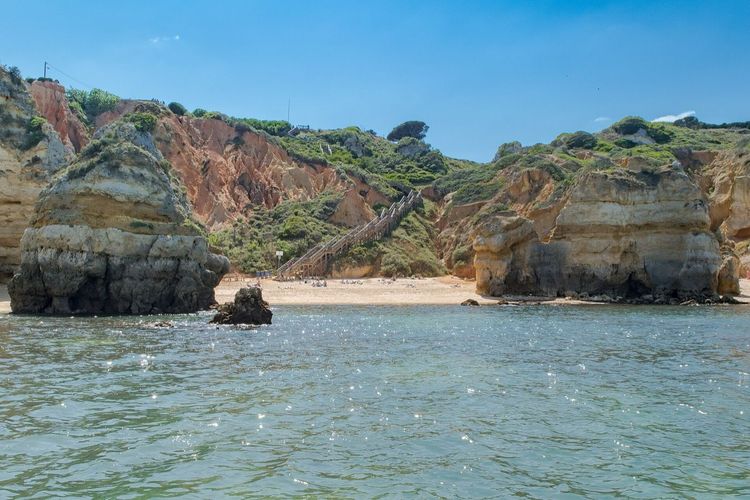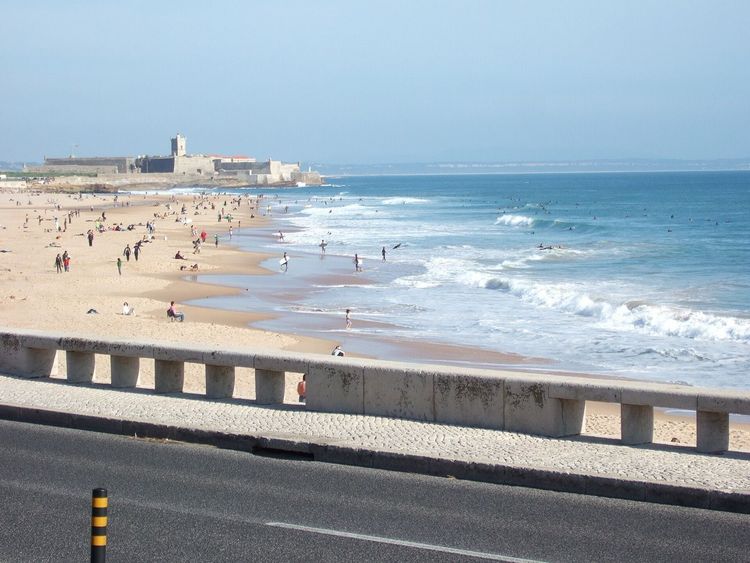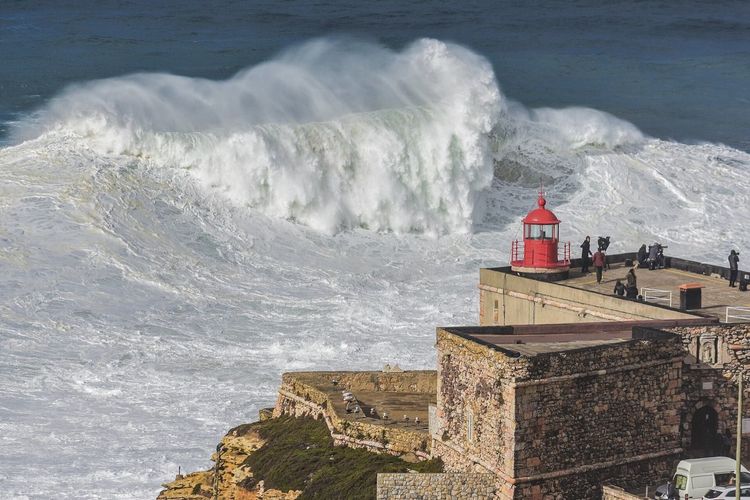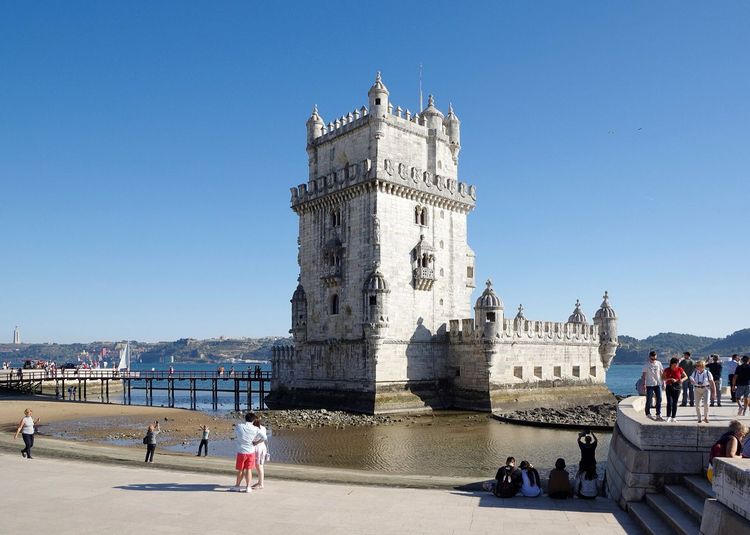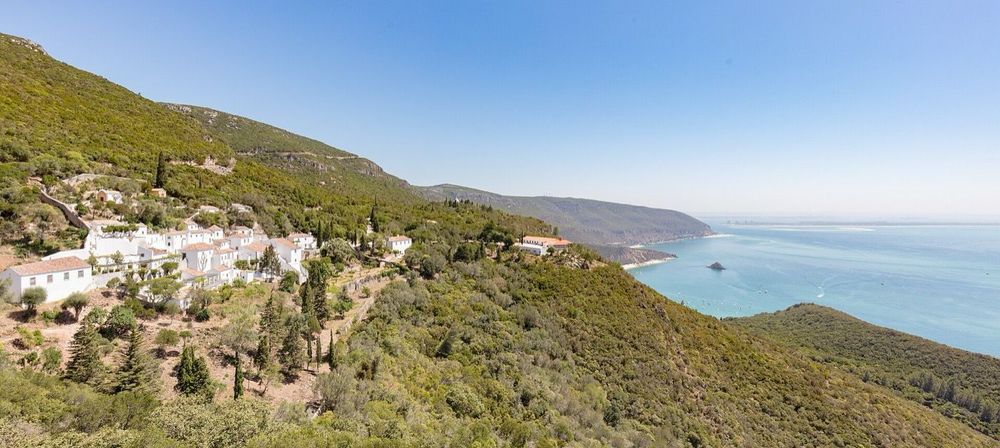
Forty minutes south of Lisbon, a limestone ridge rises to 501m, drops into the Atlantic, and spends its whole length pretending to be the Mediterranean. That's Arrábida Natural Park: white cliffs, green scrub, and a string of pale beaches between Sesimbra and Setúbal that have been photographed onto half of Portugal's postcards. Protected since 1976, it packs the country's highest coastal cliff, a 16th-century convent, a marine park and a resident dolphin pod into one compact peninsula. This guide covers the beaches, the ridge walks, the summer access rules that catch drivers out, and the wine villages behind the mountain, all checked for 2026. Bring swimwear and walking shoes in the same bag. You'll need both before lunch.
Key Takeaways
- Arrábida Natural Park sits on the Setúbal Peninsula, about 40 minutes' drive from Lisbon, between Sesimbra and Setúbal. The lay of the →
- The beaches are the headline: Galapinhos, Galapos, Figueirinha and the Portinho da Arrábida bay, white sand under limestone cliffs. The beaches, west to →
- Entry is free, but in high summer the beach road closes to private cars for most of the day. Park in Setúbal and ride bus 4470 or 4474 instead. Is Arrábida park free →
- The ridge tops out at Formosinho (501m), and the Serra do Risco drops ~380m straight into the sea, the highest coastal cliff in mainland Portugal. Walks on the ridge →
- May, June and September are the sweet months: warm sea, open roads, space on the sand. When to go →
Is Arrábida worth visiting?
Yes: Arrábida has the best beach-and-cliff scenery within an hour of Lisbon, pairing white limestone, turquoise water and mountain trails like nowhere else near the capital. The catch is access, because summer crowds forced the park to regulate its one beach road, and the drivers who don't know the system lose half a day to it. Learn the rules below and you'll skip that queue entirely.
Think of it as two parks in one. Below the cliffs runs a coastline that wins European beach awards and hides Roman ruins behind a car park. Above them, a proper little mountain range carries footpaths through juniper and rosemary scrub, wild peonies in spring, and 'miradouros' (viewpoints) that put the whole blue sweep at your feet. Most visitors only meet the beaches. The ridge is where the park earns the word natural.
The lay of the land: one ridge, two towns
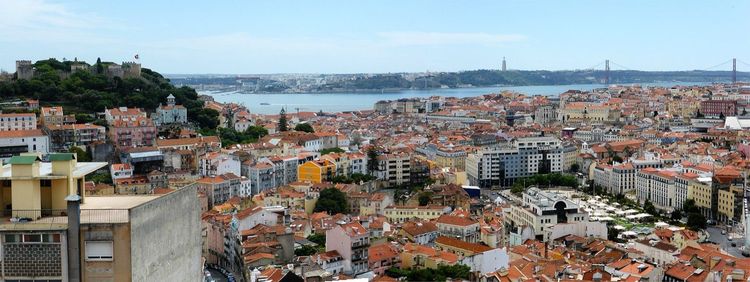
The park stretches roughly 35km along the south coast of the Setúbal Peninsula, with a fishing town at each end. Sesimbra anchors the west, all whitewash and grilled fish under a Moorish castle. Setúbal holds the east, a working port with a ferry to the Tróia sands across the estuary. Between them rises the Serra da Arrábida itself, topping out at Formosinho (501m).
A third corner completes the triangle inland: Palmela, whose hilltop castle watches the whole peninsula from the north and marks where the vineyards take over from the scrub. Most day-trippers never see it. Their loss, and shorter queues for you at the castle café.
The spine road is the Estrada de Escarpa, a ribbon of tarmac along the crest with pull-offs where you will absolutely stop. Drive it west to east and you'll collect the sequence in the right order: first the high scrubland, then the sudden reveal of the coast, then the corkscrew descent towards Setúbal with the estuary widening ahead. The classic view drops from the Portinho 'miradouro': the bay curled below, the water shading from glass-green to deep blue, Tróia's sandbar floating across the strait.
Stand up there on a clear morning and the scene argues with your geography. White rock, dark green scrub, a sea two shades too bright for this ocean. Ask the botanists and they'll take the sea's side: half the plants on this ridge belong to the Mediterranean, stranded here on the Atlantic's doorstep.
West of the viewpoints, the Serra do Risco cliff falls about 380m sheer into the water, the highest sea cliff on the Portuguese mainland. There's no barrier and no drama about it. Just a path, a long drop, and seabirds riding the updraft below your boots.
The beaches, west to east
The swimming heart of the park is a 4km chain of coves on the Setúbal side. Here's the honest ranking, with the practical bits the postcards skip.
| Beach | The draw | Facilities | Crowds |
|---|---|---|---|
| Figueirinha | Easy sand, shallow water, families | Café, toilets, bus stop (4474) | Heaviest |
| Galapos | Quieter curve under the cliffs | None worth counting | Moderate |
| Galapinhos | The famous one: pines to the sand | None, and that's the charm | Heavy by 11am |
| Creiro | Broad sand, Roman ruins behind | Cafés, toilets, bus terminus (4470) | Heavy |
| Portinho da Arrábida | Postcard bay, fort with a small museum | Restaurants on stilts | Heavy |
| Coelhos | Smallest, wildest pocket of sand | Nothing at all | Lightest |
| Albarquel | City beach at Setúbal's edge | Full service, year-round | Local |
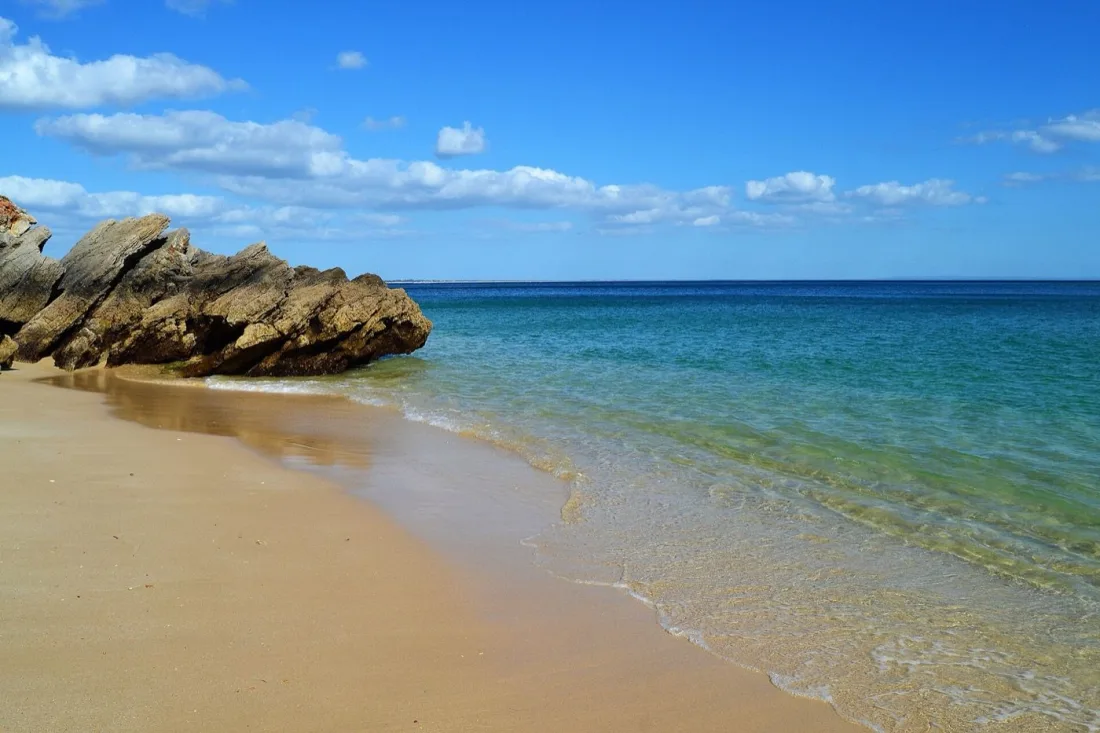
Photo: Carla Marques da Silva, CC BY-SA 4.0 (Wikimedia Commons)
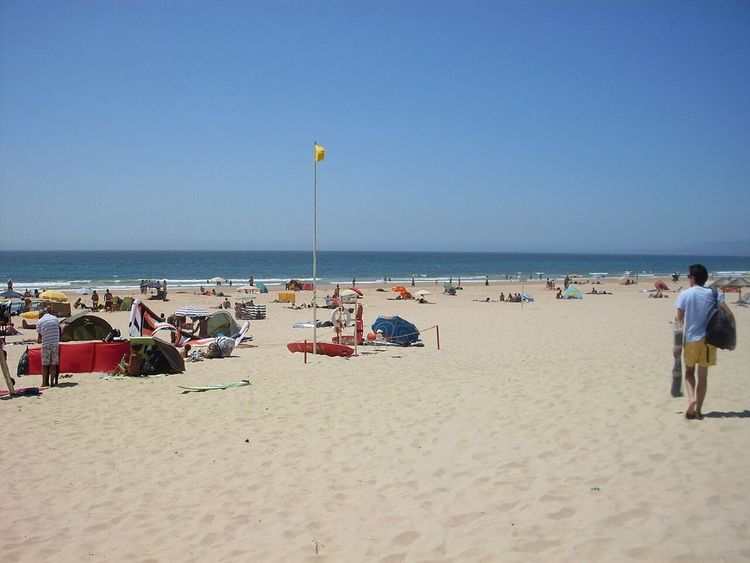
Galapinhos took a European best beach award back in 2017 and has been paying the popularity tax ever since. It's still worth it: pines lean over the sand, the water turns proper lagoon colours, and at low tide you can walk across the rocks from Galapos next door. Go before 10am or after 5pm in summer. The light is better at both ends anyway.
Portinho da Arrábida is the one to combine with lunch. The bay holds a 17th-century fort with a small oceanographic museum, restaurants stand on stilts over the water, and the whole cove looks staged for the photo you'll take from the ridge later.
Two footnotes reward the curious. Behind Creiro's car park sit the ruins of a Roman fish-salting station, tanks cut into the rock where workers processed the catch nearly two thousand years before the first parasol arrived. And from Coelhos, the smallest cove, a rough path threads the rocks with nobody on it even in August, because a beach without a bar filters its public beautifully. Pack in your own water and the place is yours.
Is Arrábida park free to enter?
Yes, Arrábida Natural Park is free to enter year-round, with no ticket, gate or booking for the park itself. What summer regulates is the driving. In high season the beach road out of Setúbal closes to private cars for most of the day, with staff on the barriers, and the calendar shifts a little every year, so check locally before you commit to driving in.
The version that always works: park in Setúbal and ride the bus. As of July 2026, line 4470 runs from Setúbal's ITS terminal through Azeitão to Praia do Creiro, and line 4474 shuttles to Figueirinha. A ticket costs a couple of euros each way. Older blogs still name line 4472 for this run. That line is gone, which tells you how fast the details move here and why the barrier staff spend their summers repeating directions.
Three more rules save the day trip. Carparks inside the park that stay open fill by about 9am in July and August. Motorhomes and campervans are turned away at the entrances full stop, so vanlifers sleep outside the park and bus in like everyone else. And the Sesimbra side stays drivable when the Setúbal side is closed, which makes the west end the better base for anyone allergic to timetables.
Walks on the ridge
Arrábida's trail network is compact, and criminally underused by the beach crowd below it. Marked routes climb from the villages and the Escarpa road onto the crest, through scrub that smells of rosemary after rain and cistus resin in the heat. The network is mapped by the Arrábida Trails project, which gathers the marked walking routes around Palmela, Sesimbra and Setúbal plus a long-distance traverse for anyone who wants the whole ridge in one go.
Two walks justify the boots on their own. The climb to Formosinho (501m) from the convent side gives you the summit trig point, the estuary glittering east and, on sharp days, Lisbon's bridges pinned across the northern haze. And the clifftop path near the Serra do Risco delivers that ~380m drop with nesting seabirds below and the odd wild goat auditing your footwork. Neither walk is long. Both are steep and stony with zero shade, so carry more water than looks reasonable and start before the heat does. Your knees will grumble on the loose limestone coming down. That's standard, and the sea fixes it.
You'll notice the crowds thin the moment the path gains 50m of height. That's the Arrábida trade: ten minutes of climbing buys you a private balcony over one of the busiest coastlines in Portugal. For where these trails sit in the national picture, the hiking in Portugal guide puts the whole country on one map.
In and on the water
The sea below the cliffs is a protected marine park in its own right, running along some 38km of coast with around 1,400 recorded species in its waters. For swimmers that translates simply: visibility that feels borrowed from somewhere more tropical, and rock reefs within snorkelling distance of the sand at Galapos, Coelhos and the Portinho bay. Bring a mask in your beach bag. Ten metres offshore you'll be tracking wrasse and bream over white stone, and the little Anicha islet off Portinho concentrates the fish life like a magnet.
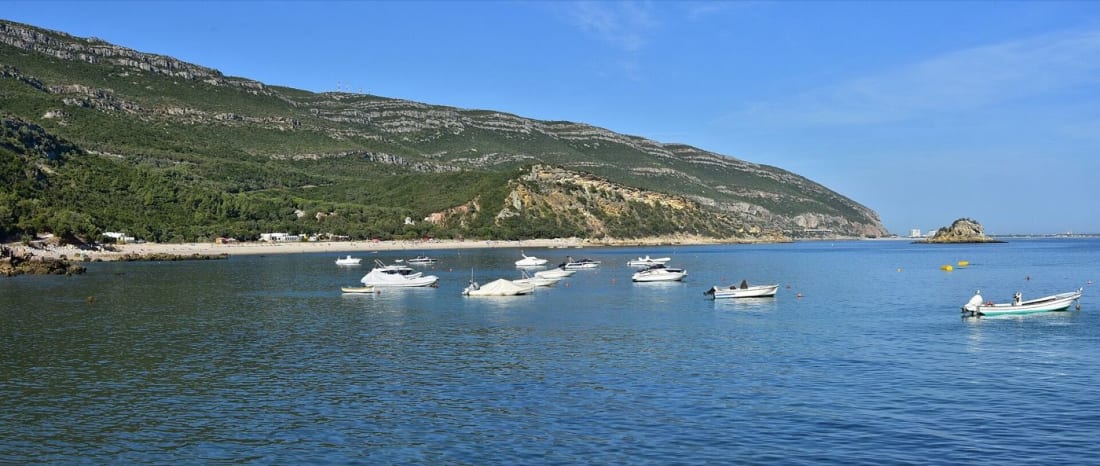
Photo: pedrik, CC BY 2.0 (Wikimedia Commons)
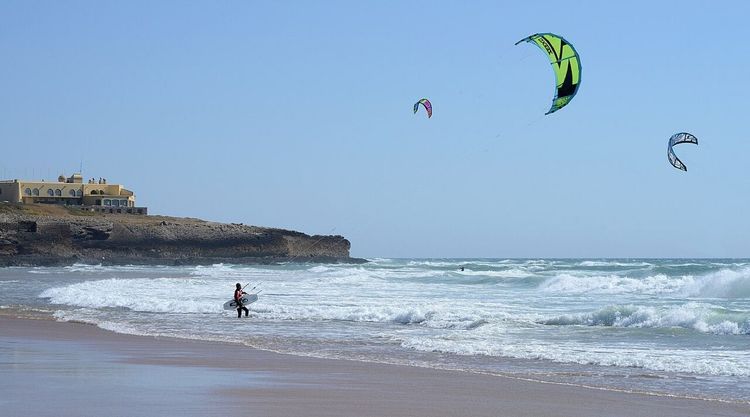
Operators out of Sesimbra and Setúbal run the wet menu: sea kayaking under the cliffs, coasteering along the Sesimbra shore, dive trips onto the reefs and wrecks. The signature outing is the dolphin boat. The Sado estuary next door holds one of Europe's very few resident bottlenose pods, a few dozen animals that have worked these channels for generations, and sightings on a calm morning are the rule rather than the jackpot. Book the first departure. The estuary is glass at 9am and chop by 3pm.
Beyond the sand: convent, cape and wine villages
Halfway up the hillside above Portinho hangs the Convento da Arrábida, a white 16th-century Franciscan convent folded into the green slope, now run by a cultural foundation and visitable by arrangement. Even from the road it recalibrates the view: monks picked this exposure for contemplation four centuries before anyone called it a 'miradouro'.
Drive 25 minutes west and the ridge ends at Cabo Espichel, a windswept cape where a huge 18th-century pilgrimage sanctuary stares down the Atlantic. Walk to the cliff edge north of the church and you're looking at dinosaur tracks: sauropod footprints stitched across the tilted limestone slabs, left in Jurassic mud and now hanging over the sea. Locals once read them as the hoofprints of a giant mule carrying the Virgin Mary uphill. Geology tells a drier story and the cliff doesn't care either way.
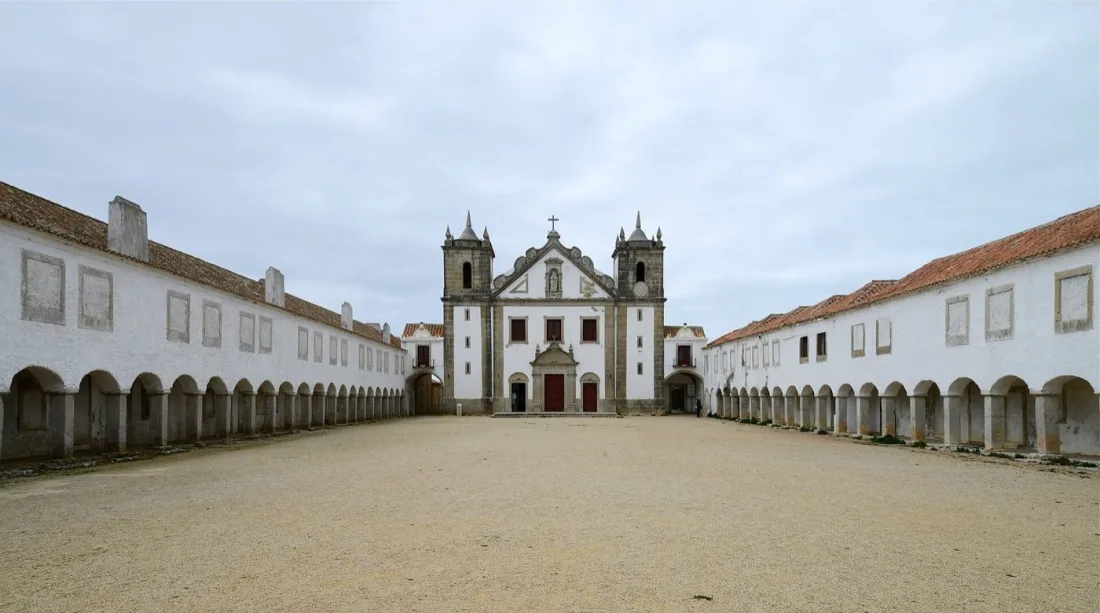
Photo: Alvesgaspar, CC BY-SA 4.0 (Wikimedia Commons)
Sesimbra itself deserves more than a lunch stop. The Moorish castle above town is free to enter with ramparts you can walk in full, the harbour still lands a serious fishing fleet every morning, and the seafront grills what came off the boats by noon. It's the kind of town where the beach day and the history lesson share a postcode.
Behind the mountain, Azeitão does the aftermath. The village pours 'moscatel de Setúbal' (the region's fortified muscat), ages a small ewe's-milk cheese with a cult following, and bakes 'tortas de Azeitão', rolled sponge cakes with egg cream. Wine houses here have been at it since 1834, and a cellar tour plus tasting slots neatly into a beach day's late afternoon. Sesimbra adds the castle: free to enter, ramparts open, the whole coast laid out from the walls.
When to go
May, June and September are Arrábida at its best: the sea warms toward 20°C, the road rules relax, and the light stays long without the July crush. Spring adds the botany show, with orchids and wild peonies through the scrub in April and May, and it's the season for walking the ridge without cooking on it.
July and August bring the full package of restrictions, full carparks and full sand, though early mornings still deliver the goods to anyone on the first bus. October runs on residual heat: the sea holds its late-summer temperature for weeks after the crowds leave, and locals treat it as a private extension of the season. Winter flips the park's character entirely. The trails come into their own, the sea goes glassy between storms, and you can stand at the Risco with the entire cliff to yourself. Swimming in January is for the committed. The views don't have an off-season.
Arrábida in one day
The park compresses well if you sequence it with the sun. You'll want the beach first, not last: ride the earliest 4470 from Setúbal or park before 9am, and spend the cool hours on Galapinhos or Coelhos while the water is at its clearest. By noon the sand fills and you should be climbing out of it.
Give the middle of the day to the ridge, when the beaches are at their worst and the views are not. Drive or bus back up to the Escarpa, walk a stretch of clifftop towards the Risco or put in the short climb from the convent side, then let the 'miradouros' do their work. Late afternoon belongs behind the mountain: Azeitão for a cellar visit and a cheese plate at 5pm, or the run west to Cabo Espichel for the dinosaur tracks with the light going gold. Finish at a fish table in Setúbal or Sesimbra. One day, four different parks. You'll sleep well.
Staying over stretches the formula nicely. Setúbal has the town hotels and the transport, Sesimbra has beachfront rooms with castle views, and Azeitão hides guesthouses among the vineyards for anyone who prefers waking up to vines. Campers use the sites around Outão, outside the park boundary, and bus in. Two days here means one for the coves and one for the ridge and the cape, which is the ratio the park actually deserves.
Getting there from Lisbon
By car, cross the Tagus on the 25 de Abril or Vasco da Gama bridge and you're at the park edge in about 40 minutes, traffic permitting. Without a car, take the train or bus to Setúbal and connect to the 4470 or 4474 beach buses in season. It's a genuine day trip either way, and it stacks well against the region's other classics in the best day trips from Lisbon rundown.
The zero-logistics route is a tour. Day trips from Lisbon pair the Escarpa viewpoints and a beach stop with Azeitão wine tasting or a jeep run through the back hills, and the catalogue of Arrábida and Sesimbra tours covers the reliable operators. If you're weighing Arrábida against Sintra for your one free day, the Sintra day trip guide makes the comparison honest: palaces and forest mist there, limestone and swimming here. Different drugs entirely.
FAQ
What is the best beach in Arrábida?
Praia dos Galapinhos is Arrábida's best beach for scenery, a pine-backed cove with lagoon-clear water that took a European best beach title in 2017. For facilities and easy access with kids, Figueirinha wins; for solitude, walk down to Coelhos.
How do I get to Arrábida from Lisbon without a car?
Take a train or express bus from Lisbon to Setúbal, then the seasonal beach buses: line 4470 to Praia do Creiro or line 4474 to Figueirinha. Door to sand runs about 90 minutes each way in summer.
Can you swim at Arrábida?
Yes, the swimming is the point: the coves face south, sheltered from the Atlantic swell, and the water is calm and clear, a few degrees warmer than Lisbon's ocean beaches. It still peaks at around 20 to 21°C in late summer, so it refreshes rather than pampers.
Are you guaranteed to see the Sado dolphins?
No trip is guaranteed, but the Sado pod is resident year-round, and reputable operators report sightings on the large majority of calm-weather departures. Morning trips see calmer water and better odds.
Are campervans allowed in Arrábida Natural Park?
No, motorhomes and campervans are barred from the park's beach road, restrictions or not. Park outside, in or above Setúbal, and take the bus in like everyone else.
Is Sesimbra or Setúbal the better base?
Sesimbra suits beach-and-fish days with castle views and drivable access to the west end, while Setúbal wins on transport and dolphin boats. For a first visit, Setúbal's logistics edge it: trains from Lisbon, the beach buses and the estuary departures all start there.
The table at the end of the ridge
Finish where the peninsula's appetite leads. In Setúbal that means 'choco frito' (fried cuttlefish), a paper-wrapped pile of it with lemon and a cold beer at a mercado-side grill, eaten while the ferry crosses to Tróia behind you. Sesimbra answers with swordfish grilled whole on the seafront. Either way, close with a torta de Azeitão and a small glass of moscatel, because the mountain that gave you the morning also grows the dessert. Then drive the Escarpa one last time with the windows down. The ridge looks even better when you've earned it.