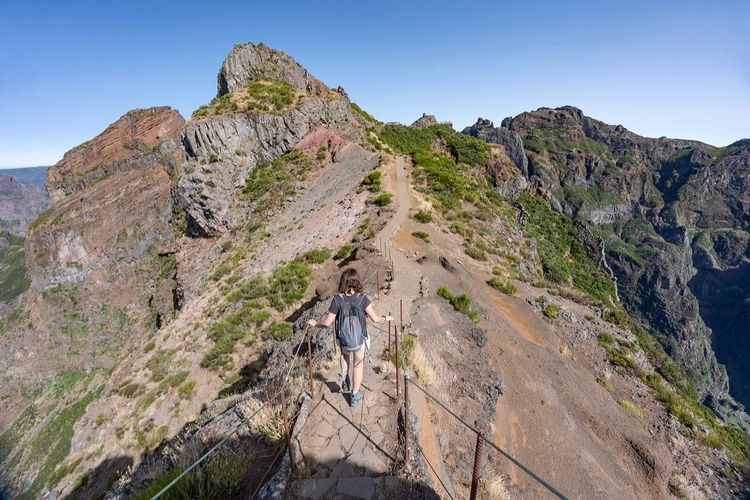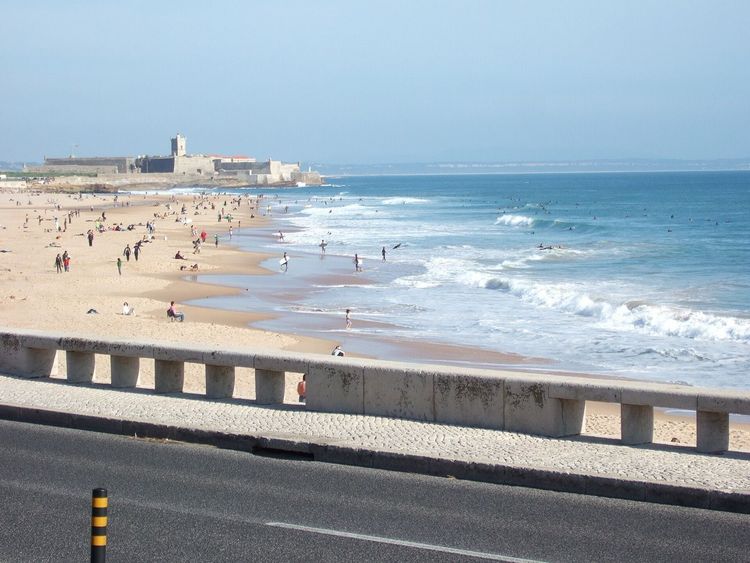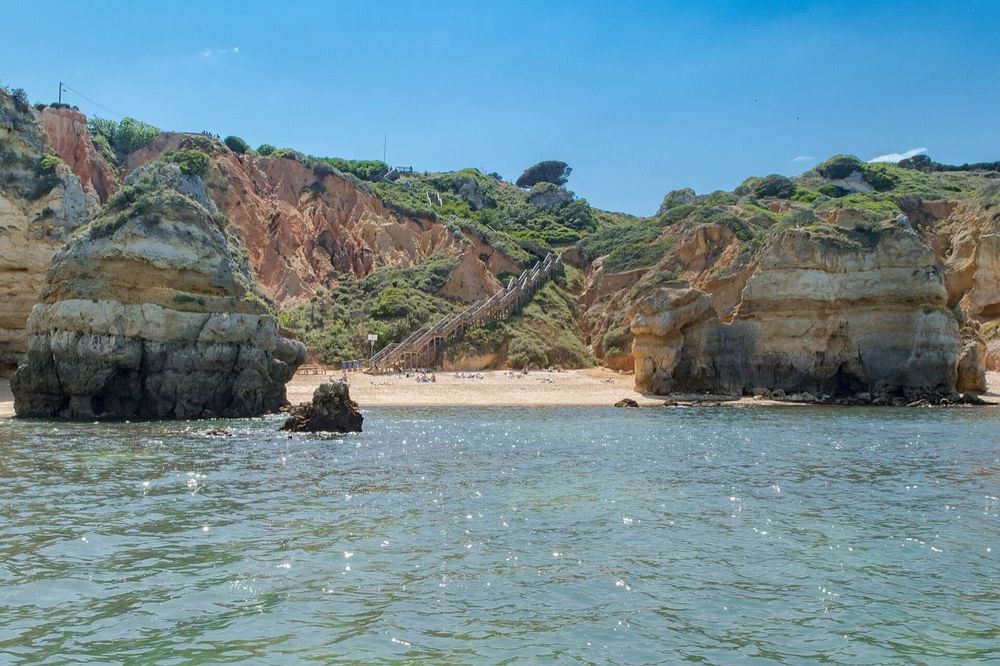
Ask ten Portuguese where the best beach in the country is and you will get ten different answers, delivered with total conviction. The fisherman in Sesimbra swears by his bay. The Alentejo farmer points at 40km of sand with nobody on it. The Algarve waiter shrugs, because his office view settled the argument years ago. Portugal packs 943km of mainland coast plus two archipelagos into a small country, and almost all of it faces the open Atlantic.
That variety is the real story, and it is why your beach hunt here starts with picking a coast, then the sand. Golden coves under ochre cliffs, wild surf sand, calm lagoon islands, black volcanic shores: each region does one thing brilliantly and the others halfheartedly. This guide walks the whole coastline region by region, with the water temperatures nobody prints in brochures, the months that actually work, and links to our deeper guides for each stretch. One promise before you start packing: the sea is cooler than the postcards suggest, and by the end you will know exactly where it is warmest.
Key Takeaways
- The Algarve has Portugal's most famous beaches and its warmest sea, from the Marinha cliffs to the lagoon islands past Tavira. The Algarve →
- The warmest water in the country sits along the eastern Algarve, reaching 22 to 24°C by late summer. Warmest water →
- Lisbon has no city beach yet four coastlines within an hour, reachable by train, bus and ferry. The Lisbon coast →
- For empty sand, the Alentejo and Costa Vicentina hide the wildest coastline in southern Europe. The wild southwest →
- Porto Santo island carries 9km of uninterrupted golden sand, the longest single beach in Portugal. The islands →
What part of Portugal has the best beaches?
The Algarve has the best beaches in Portugal for most visitors: the warmest and calmest sea, the famous cliff-backed coves, and the longest season. The honest footnote is that everyone knows it, so July and August turn the postcard spots into a shared experience.
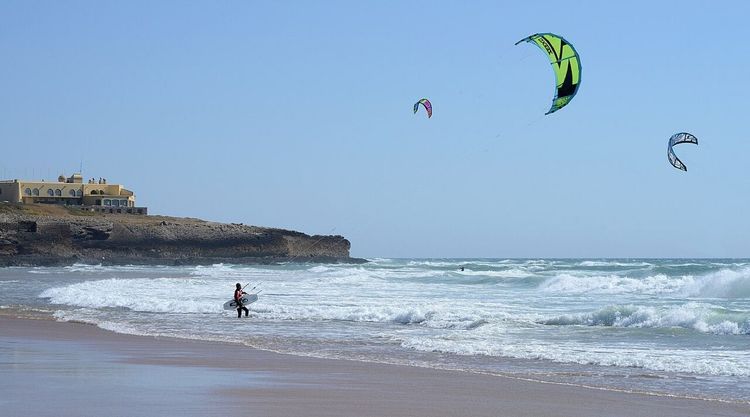
Rankings depend on what you want from the sand. For scenery and swimmable water, the Algarve wins. For solitude, the Alentejo coast is unmatched anywhere south of Scandinavia. For surf, the west coast from Peniche down to Sagres is world class. And for a beach day stolen from a city break, Lisbon's coasts are the most convenient in Europe. The regions below run roughly by popularity, and your right answer is usually a combination of two.
Portugal's beach coasts at a glance
| Coast | Signature beach | Water | Best for |
|---|---|---|---|
| Central Algarve | Praia da Marinha | 20-22°C, calm | Cliff coves, boat trips |
| Eastern Algarve | Ilha de Tavira | 22-24°C, warmest | Lagoon islands, families |
| Western Algarve & Vicentina | Praia da Bordeira | 18-20°C, surfy | Wild sand, surf |
| Lisbon coasts | Carcavelos, Galapinhos | 17-19°C | Train-ride beach days |
| Alentejo | Praia do Malhão | 17-19°C | Emptiness, dunes |
| Silver Coast | São Martinho do Porto | 16-18°C | Calm bay, surf towns nearby |
| Islands | Porto Santo | 19-23°C | 9km of golden sand, volcano shores |
The Algarve: coves, cliffs and the warmest sea
Start where everyone starts, because the cliché is earned. The central Algarve between Lagos and Albufeira is a run of small bays cut into falésias (the region's ochre limestone cliffs), and the roll call reads like a highlight reel: Marinha with its double arch, Camilo at the bottom of a long wooden staircase, Dona Ana framed by rock stacks. Praia da Falésia by Albufeira topped Tripadvisor's world beach ranking in 2024, and on a June morning, with 6km of red cliff glowing over white sand, the jury's logic is hard to fault.
Head east of Faro and you watch the coast change species entirely. The cliffs stop and the ria (the Ria Formosa coastal lagoon) begins, sheltering a chain of ilhas (barrier islands) with Caribbean-grade sand: Tavira with its famous anchor cemetery at Barril, Culatra, Armona, and the empty spit of Deserta. Ferries and water taxis shuttle out from Faro, Olhão and Tavira all summer. West of Lagos, the coast turns wild around Sagres, and Bordeira and Amado unroll surf sand below dark headlands. The full ranked list, cove by cove, lives in our Algarve beaches guide, with the famous sea cave covered in the Benagil guide.
Planning tip: The classic coves shrink at high tide, and some nearly vanish. Check the tide table before committing your morning to Marinha or Camilo, and go at low tide for double the sand.
Your base logistics are simple: Faro anchors the east and the lagoon, Albufeira sits closest to the celebrity cliffs, and boat trips run from both; our Albufeira guide sorts its beaches by how far you have to walk.
The Lisbon coast: beach days by train
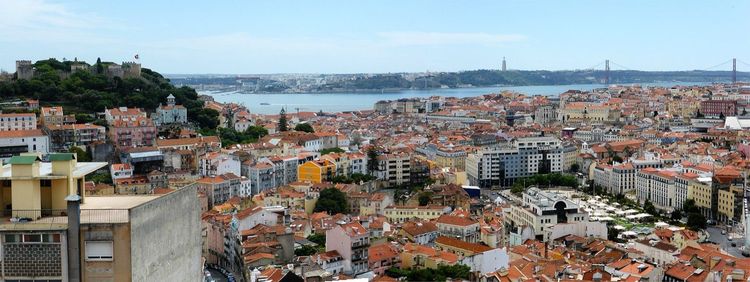
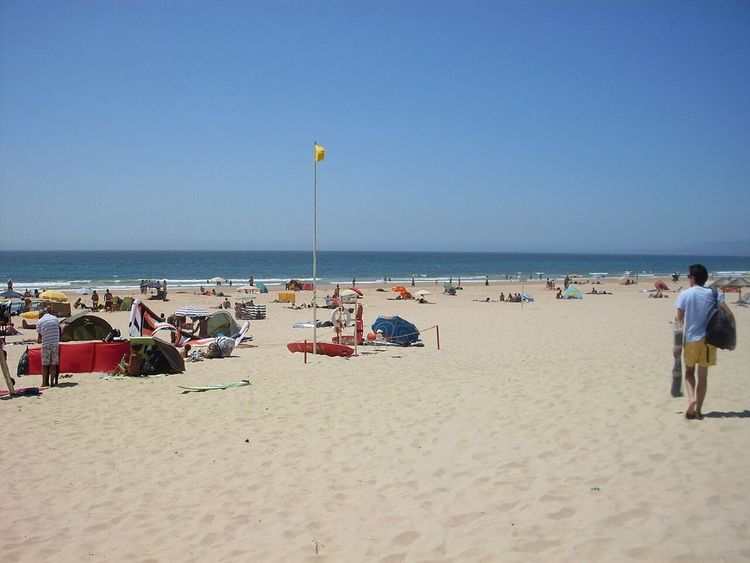
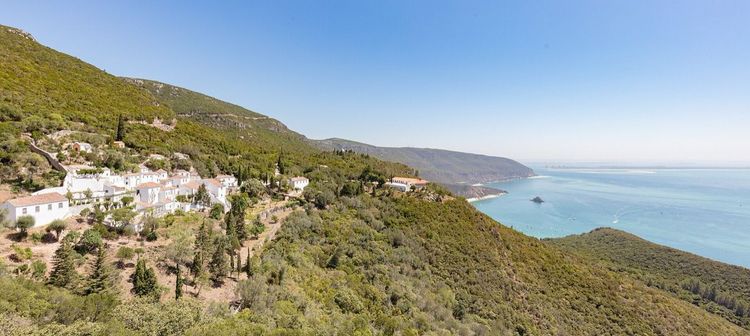
Lisbon performs a magic trick every summer weekend: a capital city with no beach empties onto four different coastlines within the hour. Carcavelos delivers the easy train-ride sand, Costa da Caparica gives locals 15km of surf and sunset bars, Guincho supplies wind and drama, and the Arrábida coves south of the city produce water so improbably turquoise that first-timers assume filters.
We wrote the full breakdown, transport included, in our beaches near Lisbon guide and beach-by-beach guides to Costa da Caparica and Praia do Guincho, and the Arrábida guide covers the summer access rules for those famous coves. The short version for your planning: this is the best region in Portugal for combining city and sand without a car, and you never need to book anything.
Local tip: Lisbon's coasts are the busiest in the country on summer Sundays. If your beach day is flexible, take it midweek and give the weekend to museums and pastéis; the same sand doubles in size on a Tuesday.
The Alentejo and Costa Vicentina: the empty quarter
Between the Sado estuary and the Algarve border runs the least developed shoreline in southern Europe, and it is the answer for anyone whose ideal beach contains no other people. Comporta and Carvalhal put miles of pale sand behind rice paddies an hour from Lisbon. Further south, Malhão and the coves around Vila Nova de Milfontes serve dunes, cliffs and the occasional surfer. At Odeceixe, the Seixe river curls around the beach so children paddle the warm river side while the Atlantic works the other, one of the cleverest beach designs nature has managed anywhere.
Ask an Alentejano why the coast is so empty and you will get a look of mild pity. The land is vast, the summer is long, and the idea of queueing for sand has simply never caught on here.
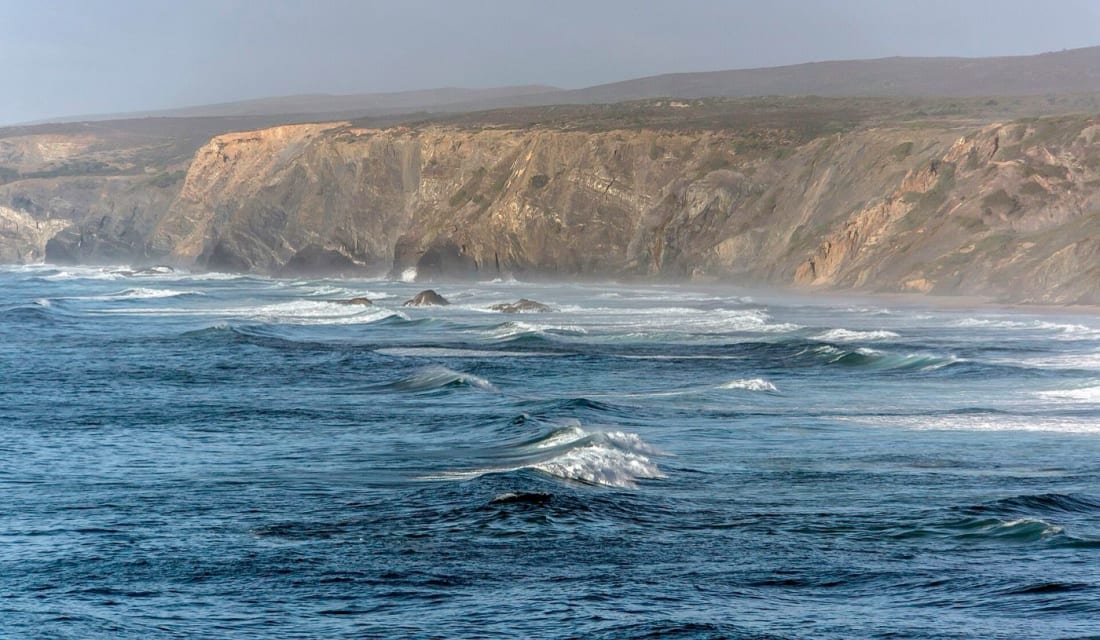
Photo: Pedro Ponce Asensio, CC BY-SA 4.0 (Wikimedia Commons)
This is also walking country: the clifftop path above these beaches is the Fisherman's Trail, and our stage-by-stage guide doubles as a directory of swim stops. Bring a car, more water than you think, and no schedule.
Detour: From Milfontes, drive 20 minutes to the tiny fishing harbour at Azenha do Mar, where a cliff-edge marisqueira (a no-frills seafood house) serves barnacles and crab to people still sandy from the beach below. Order what the next table ordered.
The Silver Coast: a shell-shaped bay and serious surf
North of Lisbon, the Costa de Prata trades warmth for character. São Martinho do Porto is the family favourite: a bay shaped like a near-perfect concha (shell), where the ocean enters through a gap in the cliffs and arrives flat, shallow and two degrees kinder. Twenty minutes away, Nazaré runs a split personality, calm town beach all summer, then the biggest surfable waves on the planet each winter, a spectacle our Nazaré guide times to the month. Peniche and Baleal, further south, are Portugal's surf-school capital, with beginner waves on one side of the peninsula whatever the wind does.
Manage your swim expectations here: the water rarely beats 18°C even in September. The compensation is atmosphere, seafood rice, and towns that still feel Portuguese in mid-August.
The islands: Porto Santo, Madeira and the Azores
Portugal's single longest beach is not on the mainland at all. Porto Santo, a 2-hour ferry from Madeira, is essentially one 9km arc of soft golden sand backed by a dry hill or two, with locals crediting the warm sands themselves with therapeutic powers. September water reaches a graceful 23°C. Our Porto Santo guide covers the ferry, the vines and the beach bars.
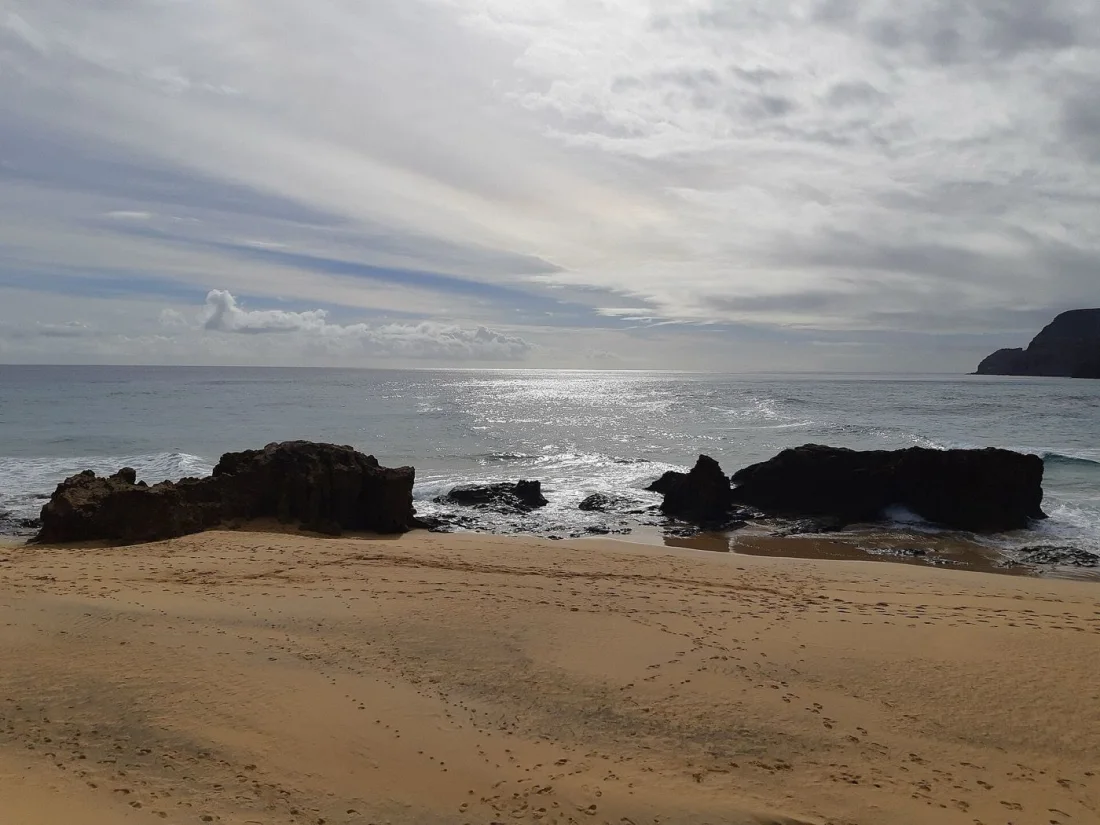
Photo: Asurnipal, CC BY-SA 4.0 (Wikimedia Commons)
Madeira itself plays a different game: mostly pebble coves, one black-sand beauty at Seixal under green cliffs, and the volcanic poças (natural lava rock pools) at Porto Moniz, where you swim in ocean water held safely inside black stone. The Azores follow the same volcanic logic, with warm-current water arriving surprisingly mild: Santa Maria island keeps the archipelago's pale-sand showpiece at Praia Formosa, while São Miguel's black-sand Santa Bárbara hosts surf schools with a volcano as backdrop.
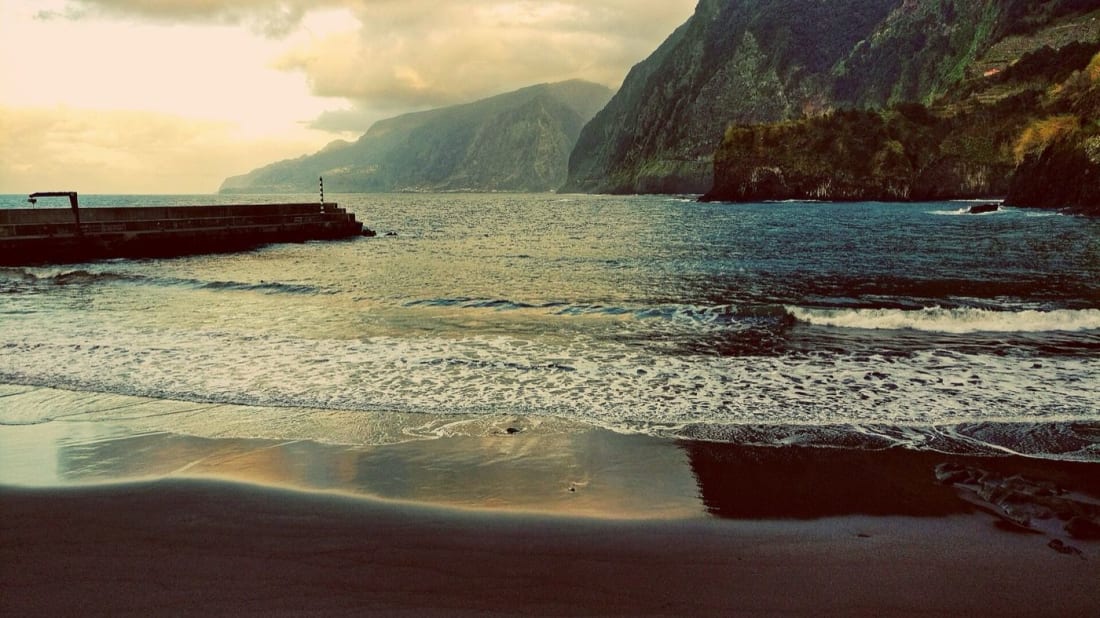
Photo: VinceTraveller, CC BY 2.0 (Wikimedia Commons)
Planning tip: Island beach trips are weather bets. Build your days so the beach is the flexible slot, not the fixed one, and keep a pool, a poça or a spa as the rainy-day fallback.
What is the warmest beach in Portugal?
The warmest sea in Portugal laps the eastern Algarve's lagoon islands, where shallow water over sandbanks reaches 22 to 24°C in August and September. Ilha de Tavira, Cabanas and Culatra are the reliable picks, and the effect strengthens the further east you go towards Spain.
Everywhere else, manage expectations by region: the central Algarve holds 20 to 22°C in high summer, Lisbon's coasts 17 to 19°C, and the west and north rarely leave the teens. September is the secret month nationwide, when the ocean peaks after a summer of heating while the crowds drain away. If warm water is the whole point of your trip, book the east Algarve or Porto Santo and skip the romantic west.
When to go for a beach holiday
June and September are the smart months: sunshine reliability close to peak, sea at its best in September, prices and crowds a class below August. July and August work best in regions with room to absorb them, meaning the Alentejo, the west coast and the lagoon islands rather than the small central-Algarve coves. May and October still deliver beach days more often than northern Europeans expect, especially in the south, though the época balnear (the official lifeguarded bathing season) runs roughly June to mid-September, and outside it many beach restaurants shutter.
Winter beaches are their own reward here. You get empty Bordeira in January, giant waves at Nazaré, seafood lunches with the ocean raging usefully in the background: the coast never really closes, it just changes audience.
Practical Tips
Planning tip: Respect the flag system without exception: red means no entering the water, yellow means paddling only. The Atlantic generates rips even on innocent-looking days, and lifeguards here wave people out constantly. Portugal maintains one of Europe's largest rosters of Blue Flag beaches, renewed each season, and flagged beaches list lifeguard hours on site.
Local tip: The Portuguese beach day has a rhythm worth copying: arrive by 10, swim before lunch, then a long marisqueira or grill lunch through the hottest hours, and return to the sand after 4pm when the light softens. Nobody bakes through 1pm here except tourists.
Planning tip: Parking is the hidden tax on famous beaches. At Marinha, Camilo or Galapinhos in summer, the carparks fill before 10am; arrive early, or use boat trips and shuttles instead of fighting for tarmac.
Detour: For one wildcard beach memory, take the Faro ferry to Ilha Deserta in late September: a restaurant, a boardwalk, and several kilometres of sand at the southernmost tip of mainland Portugal, often with more birds than people.
FAQ
Is Spain or Portugal better for beaches?
Portugal wins on scenery, wild coastline and surf; Spain's Mediterranean wins on warm, calm water and resort convenience. If your ideal day is dramatic cliffs and cool clean Atlantic, choose Portugal; if it is a 26°C sea, choose the Med.
Are there white sandy beaches in Portugal?
Yes: the barrier islands of the Ria Formosa (Tavira, Armona, Deserta) and the Comporta stretch south of Lisbon carry pale, fine sand that photographs tropical. Porto Santo's 9km beach adds a golden version offshore.
What is the nicest seaside town in Portugal?
Tavira takes our vote: a Roman bridge, tiled townhouses, and lagoon islands with the country's warmest water a ferry ride away. Cascais and Sesimbra are the strongest runners-up near Lisbon, and Lagos wins for cove-hopping energy.
Is Portugal good for a beach holiday?
Yes, with one adjustment: treat it as a beach-plus holiday. The sea runs cooler than the Mediterranean, so the winning formula pairs mornings on the sand with food, towns and boat trips, and the Algarve in September comes closest to a pure fly-and-flop.
Which city in Portugal has the best beaches?
Lagos has the best city-adjacent beaches in the country, with Camilo, Dona Ana and Porto de Mós inside walking or cycling distance of town. Among the big cities, Lisbon offers the widest choice within an hour.
Does Portugal have beaches everywhere along its coast?
Practically yes: the mainland coast runs 943km and sand dominates most of it, from the Minho river to the Guadiana. The stretches without beaches, like Arrábida's cliffs or Madeira's rocky shore, tend to compensate with coves and natural pools.
The last swim
There is a moment that repeats along this entire coastline in late September: the crowds have flown home, the water is at its annual warmest, and the beach restaurants stop rushing anyone. Your grilled fish arrives, the falésias go copper in the low light, and whichever region you picked feels briefly like the obvious answer. Choose your coast with honest priorities, warm water east, wilderness south of Lisbon, drama west, and let the Atlantic argue its case. It has 943km of evidence and no closing time.