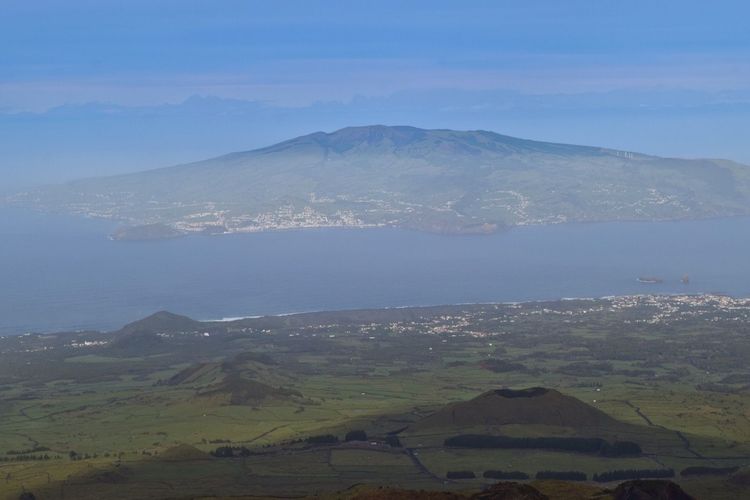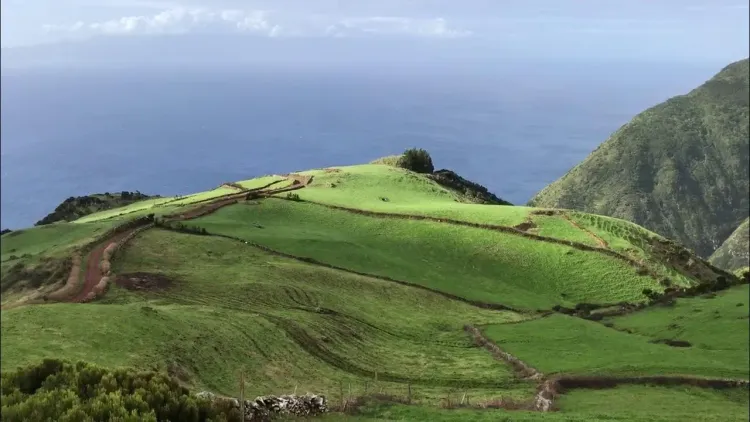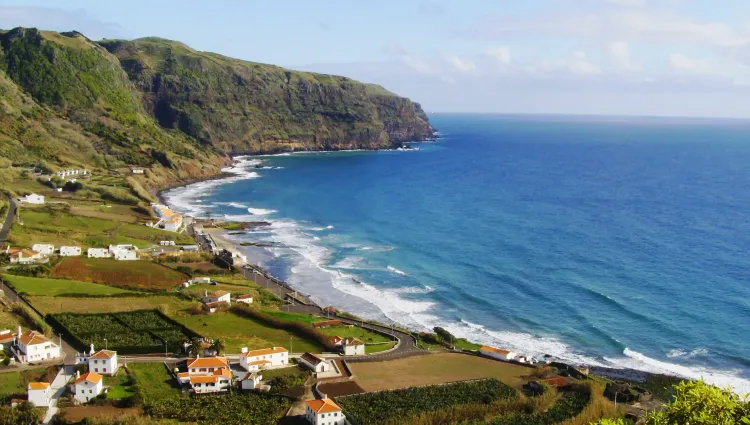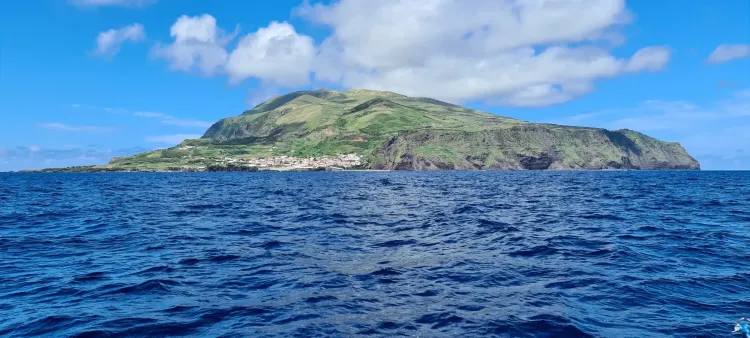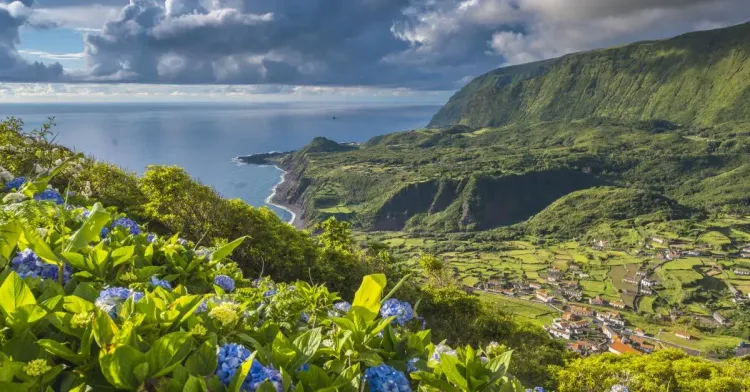
Some islands shout. Graciosa whispers. The second-smallest and flattest of the Azores, it draws fewer visitors than almost anywhere else in the archipelago, which is precisely the point: here you can walk a crater rim, soak in a seaside hot spring and drive the whole island in a morning without queuing for any of it. This is the slow traveler's Azores, and it rewards the people who choose it over the headline islands. Nothing here is engineered for tourism, which is exactly the charm. The island simply goes about its day, and you are welcome to fall into step with it.
They call it the White Island, the Ilha Branca, and most guides will tell you it is for the whitewashed houses. That is only half true. The deeper, more local answer is geological: the island is built on trachyte, a pale volcanic rock that turns whiter as it weathers, which is why the map is dotted with names like Pedras Brancas (White Stones) and Serra Branca (White Hills). Learn that and you already see Graciosa the way its 4,000-odd residents do.
Getting here is half the adventure, so if you are still plotting your route, start with our Azores island-hopping guide. Read on for how to reach Graciosa, the lava cave you climb down into, where to soak, and when to come.
Key Takeaways
- Graciosa is the quiet, flat White Island of the Azores Central group, best for slow travelers who want solitude over crowds. Why Graciosa →
- You reach it by a 30-minute SATA flight from Terceira, or a long summer ferry; rent a car before you arrive. Getting there →
- The Furna do Enxofre, Europe's largest volcanic dome, is the one sight you cannot miss: 183 steps down into a live volcano. The lava cave →
- Soak at the Carapacho thermal baths, where the sea-edge water has run warm since 1750. Thermal baths →
- Two or three unhurried days is the sweet spot, ideally between May and September. When to go →
Why Graciosa, the White Island
Graciosa covers about 61 sq km, runs roughly 12km long by 7km wide, and tops out at just 405m, which makes it the flattest island in the Azores and the easiest to drive. The whole island has been a UNESCO Biosphere Reserve since 2007, and the pace of life matches the landscape: whitewashed villages, vineyards grown in black lava, almost no light pollution, and trails where you can go a whole afternoon without passing another hiker.
This was once the breadbasket of the Azores, its hillsides striped with grain and dotted with windmills, and that farming calm still defines it. Vines have grown in the black lava since the early 1500s, the cattle outnumber the cars, and the inland trails are so empty you measure the walk in birdsong rather than other hikers. Where Sao Miguel and Pico pull the crowds, Graciosa stays gloriously off the checklist; the writer Raul Brandao folded it into his 1926 book "The Unknown Islands," and a century later the name still fits.
Local tip: Treat Graciosa as the anti-checklist island. Do not try to "tick it off" in an afternoon between flights. Its reward is the unhurried hour, the empty miradouro (viewpoint), the conversation with the only other person at the thermal pool, so give it the time the other islands do not leave you.
How to Get to Graciosa, and Around
There are no direct flights from outside the archipelago, so you fly first into Ponta Delgada on Sao Miguel or into Terceira, then connect. The workhorse route is the short SATA Air Acores hop from Terceira (Lajes), about 30 minutes, into little Graciosa Airport, which sits barely 2km from the main town. Book that connecting leg before you land in the Azores, because the planes are small and the flights are few. If you are coming straight from Ponta Delgada, the direct flight runs closer to 50 minutes. The airport is tiny and the run into Santa Cruz takes barely five minutes, so you can land, pick up a car and be standing at a clifftop miradouro before lunch. We'd fly in and out through the same hub, usually Terceira, to keep the connections simple and leave a buffer for the Atlantic weather, which can bump a small turboprop to the next slot.
In summer, roughly June to September, you can also arrive by sea on Atlanticoline's seasonal White Line, which links the whole Central group and calls at Graciosa's port of Vila da Praia on a couple of fixed days a week. Be warned: it is a long, scenic crossing, around three and a half hours from Terceira, so treat it as part of the trip rather than a quick shuttle. Most travelers route through Terceira anyway, which makes it a natural first or last stop on a Central-group trip.
Once you land, rent a car. Graciosa is small and flat, so the farthest corner is maybe 30 minutes away, but the bus service is thin and the handful of rental companies sell out, so book ahead. The island is also genuinely good for cycling, if you would rather freewheel the coast.
Planning tip: Arrange the rental car and your Furna do Enxofre visit at the same time you book the flight. The car desk at the airport is tiny, and the cave's guided slots need booking ahead (more on that below). Lock both in early and the rest of Graciosa runs itself.
The Furna do Enxofre: Into a Volcano
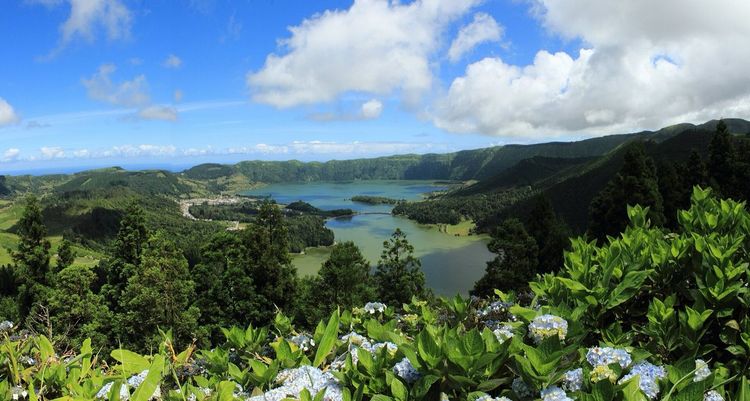
This is the reason most people finally come to Graciosa, and it lives up to the trip. Inside the Caldeira da Graciosa, a green crater at the island's southeast end, the Furna do Enxofre is a vast lava cavern that holds the largest volcanic dome in Europe, roughly 194m long and around 50m high at its center. You reach it by climbing down a spiral staircase of 183 steps inside a 37m tower, descending into a domed chamber with a cold underground lake about 11m deep and a fumarole field that still hisses out sulphurous gas. It is genuinely otherworldly, and a little eerie.
There are not many places on earth where you can walk down into a still-breathing volcano, and Graciosa lets you do it on a quiet weekday morning with a guide and, at most, a small group. The whole crater is a protected Natural Monument, and the cavern's lake and fumaroles make it a listed wetland of international importance, which is why the access is careful and the visitor numbers are kept low. That restraint is exactly what keeps it special.
Entry is about 5 euros for adults (2026), with reduced rates for children and seniors and free admission for Azores residents. The visitor center keeps seasonal hours: daily from 9am to 5pm between April and October, and Tuesday to Saturday in winter, with last entry half an hour before closing.
Planning tip: Guided descents need booking ahead, usually at least 72 hours in advance, and run in small groups for about 40 to 60 minutes, so do not leave it to the day itself. The air down there carries carbon dioxide and sulphur, so the visit is paced and supervised, and that is a good thing.
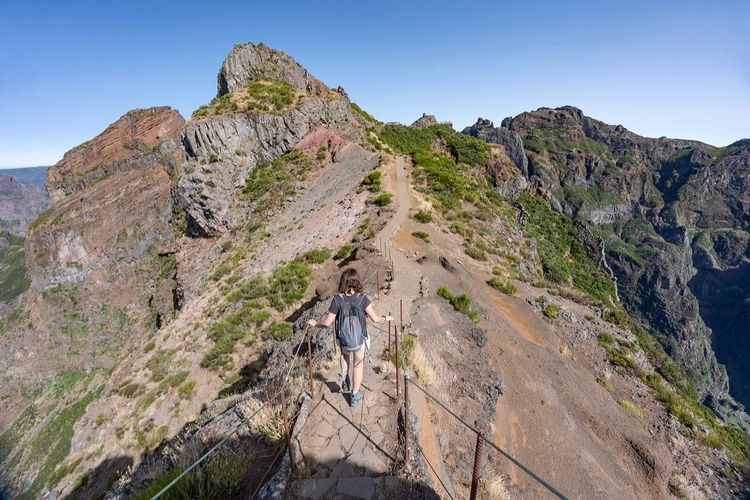
Up top, walk part of the Volta a Caldeira trail along the crater rim to the Furna da Maria Encantada, a short lava tube with a natural rock window that frames the caldera, named for an old island legend. It is free, quiet, and the best view on Graciosa.
Soak at the Carapacho Thermal Baths
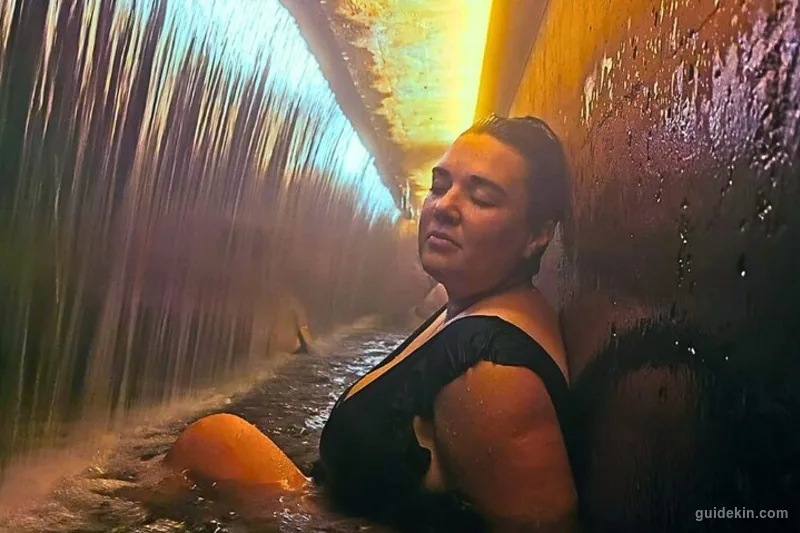
On the island's south coast, where the lava meets the Atlantic, the Termas do Carapacho have been drawing people to the water since about 1750. The springs run warm, somewhere around 35 to 40 degrees Celsius, rich in magnesium and sodium, and there is a small indoor spa for a proper soak. Just outside, free natural seawater pools let you alternate the warm mineral water with a cold Atlantic plunge, which is exactly as good as it sounds after a day of walking. Generations of islanders have come here to ease aching joints, and you will often share the water with locals rather than tour groups, which tells you everything about Graciosa. We'd time it for late afternoon, when the light goes gold over the water and the day-trippers, the few there are, have already driven back toward the airport.
Local tip: The indoor baths keep limited, seasonal hours and the official listings do not always publish them, so call ahead before you build an afternoon around a soak. If the spa is closed, the free seaside pools at Carapacho are open to the sky regardless.
Santa Cruz, the Windmills and the Caldeira
The capital, Santa Cruz da Graciosa, is a slow, handsome little town of tile-paved streets around the Rossio square, where two centuries-old stone water tanks, the tanques, still mirror the sky. They once held the town's rainwater, and today they sit like quiet mirrors at its heart, ringed by low white houses and a baroque church. It is the kind of square where the afternoon slows right down and the cafe tables fill toward evening, so linger a while before you chase the sights. Climb (or drive) up Monte da Ajuda, the 192m hill above town crowned by three small white chapels, for the panorama that puts the whole island in one frame.
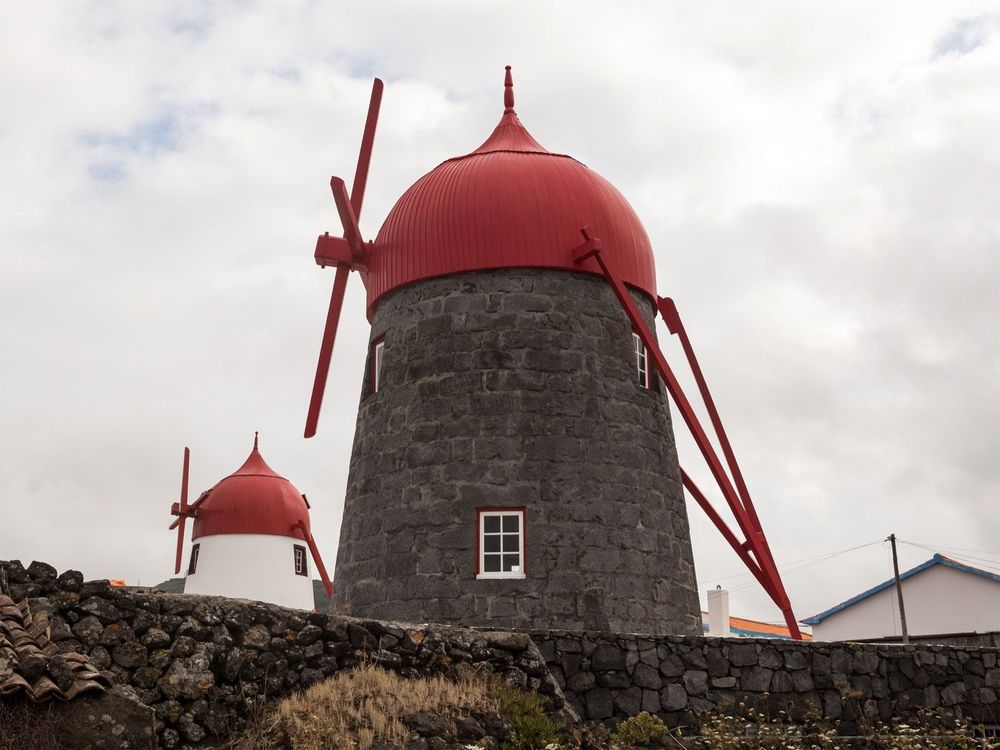
Then there are the windmills. Graciosa's are unlike any others in the Azores: Flemish in origin, with a whitewashed cone-shaped body and a bright red, onion-domed top edged in blue. About 20 survive, and the clever part is the dome itself, which rotates to face the wind on a long wooden pole that reaches nearly to the ground. A few have been restored as quirky places to stay.
Give the rest of the island an afternoon and it keeps giving. Drive out to the Ponta da Barca lighthouse on the windswept northwest tip, where the cliffs drop into white water, or lace up for the Serra Branca trail along the western ridge, one of the quietest and most cinematic walks in the Central group. Neither costs a cent, and on most days you will share them with nobody.
"If you do one thing on Graciosa beyond the cave, make it the crater rim at golden hour. You will likely have the view, and the island's silence, entirely to yourself." - Guidekin team
Where to Swim
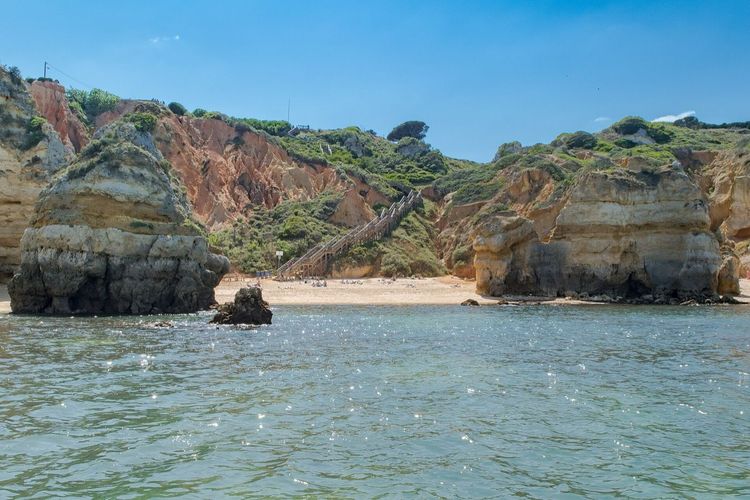
Graciosa swaps sandy beaches for volcanic swimming, and the water is some of the clearest in the Azores. The natural and built sea pools at Carapacho are the headline, paired with the thermal baths above them. For something wilder, the red-clay coast at Barro Vermelho and the pools at Barra and Boqueirao give you flat rock, ladders into deep blue, and almost no one else. The calm bay at Praia is the gentlest spot for a relaxed dip. On a warm afternoon the local kids cannonball off the rocks while their parents drift in the warm pool above, and that easy, unhurried scene is Graciosa in miniature. Bring water shoes for the volcanic rock and a towel you do not mind getting salty, and you are set for the day.
Offshore from Praia village sits the Ilheu da Praia, a small basalt islet that is a protected seabird reserve. Come at dusk in summer and you can hear the eerie calls of nesting cagarros (Cory's shearwaters), one of the great wildlife soundtracks of the Azores.
What to Eat and Drink
Graciosa eats and drinks better than an island this size has any right to. Vines have grown here since the early 1500s, planted in biscoitos, the black lava beds that trap the heat, and the Verdelho-based white is the one to order; the island also turns out a fiery aguardente (grape brandy) and a sweeter herbal liqueur called Angelica.
On the table you will find a spicy, deep-yellow island cheese and, for dessert, the local star: the queijada da Graciosa, a small sweet tart of fresh cheese, sugar, eggs and cinnamon that locals buy by the boxful. You will find them in the bakeries around Santa Cruz, often still warm, and at the island's festivals through the summer. Pair one with a coffee in the Rossio and you have the most Graciosa hour there is.
For something to carry home, ask a grocer for a wedge of that yellow cheese and a bottle of the Verdelho, or a nip of the Angelica liqueur if you have a sweet tooth. They travel well, and they taste like the island long after you have flown back to the mainland. We'd skip the few places that feel built for passing tour groups and eat where the menu is short, handwritten and crowded with locals at lunch, the same rule that serves you well anywhere in the Azores.
Where to Stay
Base yourself in Santa Cruz da Graciosa. The capital holds the island's best run of guesthouses and small hotels, the few restaurants worth your evenings, and the short two-kilometer hop to the airport, and it leaves the Rossio square and Monte da Ajuda on your doorstep. For a slower, sea-level stay, the Praia and Carapacho areas in the south sit closest to the swimming and the thermal baths.
If you want a night you will actually remember, we recommend one of the restored windmills. A handful of Graciosa's red-domed mills have been turned into quirky little two-level stays, the bedroom tucked up in the old grinding floor, the windows framing lava fields and open sea. They book out fast in summer, so reserve well ahead.
Otherwise the island runs on family-run casas (guesthouses) and rural cottages rather than resorts, which suits its whole character. Whatever you pick, choose somewhere with parking and ask the owner for the day's tip: which trail is dry, where the cagarros are nesting tonight, which kitchen is actually open.
Graciosa at a Glance
| Sight | What it is | Time | Cost (2026) |
|---|---|---|---|
| Furna do Enxofre | Europe's largest volcanic dome, 183 steps down | 1-1.5 hrs | ~€5 (residents free) |
| Termas do Carapacho | Seaside thermal baths since 1750 | 1-2 hrs | ~€3 indoor, pools free |
| Caldeira + Furna da Maria Encantada | Crater-rim walk and lava-window viewpoint | 1-2 hrs | Free |
| Santa Cruz + Monte da Ajuda | Town square, tanks, chapel-topped hill | 1-2 hrs | Free |
| Ilheu da Praia | Protected seabird islet (view from shore) | 30 min | Free |
When to Go
Aim for May to September, when the weather is warmest and driest and the seas are calm enough for the summer ferry; even in peak season Graciosa stays quiet while the bigger islands fill up. Summer highs sit around a mild 18 to 25 degrees Celsius, so pack layers either way.
If wildlife is your priority, the Azores' whale watching peaks in spring, with April and May best for the big migratory blue and fin whales, while resident sperm whales and dolphins show year-round; you can book an Azores whale-watching trip from the larger islands you pass through. For something different, come in late winter: Graciosa's Carnival, with its strong Brazilian flavor, is one of the liveliest in the Azores.
Practical Tips
- Book the connections early. The Terceira to Graciosa flights are small and infrequent, so reserve the inter-island leg as soon as your dates are set.
- Reserve a car. With limited rentals and thin buses, a pre-booked car is the difference between seeing the island and seeing the airport.
- Pre-book the cave. Furna do Enxofre guided visits want roughly 72 hours' notice, so do not save it for the last morning.
- Call the thermal baths. Indoor hours at Carapacho shift with the season, so confirm before you go; the free seaside pools are always there.
- Stay two or three days. A day is enough for the cave and the baths, but Graciosa's gift is the slow extra day.
- Bring cash. Small island, small businesses; not everywhere takes cards.
FAQ
Is Graciosa worth visiting?
Yes, if you value quiet over crowds. It is the least-visited island in the Azores, with a genuine volcanic cave you descend into, seaside thermal baths and almost no tourists. Skip it only if you need beaches and nightlife.
How do you get to Graciosa?
Fly into Ponta Delgada or Terceira from the mainland, then take a short SATA Air Acores flight, usually the 30-minute hop from Terceira. In summer, Atlanticoline's seasonal ferry also calls at Graciosa from the other Central-group islands.
How many days do you need on Graciosa?
Two to three. One day covers the Furna do Enxofre and the Carapacho baths, but a second and third let you walk the caldera, swim the natural pools and settle into the island's slow rhythm.
Do you need to book the Furna do Enxofre in advance?
For the guided descent, yes. Slots are limited and usually need booking about 72 hours ahead, and the visit runs in small supervised groups because of the gases in the cave.
When is the best time to visit Graciosa?
May to September for the warmest, driest weather and the summer ferry. For whales, aim for April to May; for a lively cultural moment, the late-winter Carnival is famous across the Azores.
Do you need a car on Graciosa?
Effectively yes. The island is small and flat, but bus service is limited, so a rental car (booked ahead) is the practical way around. Cyclists will also enjoy the gentle terrain.
Give the White Island a Day Longer
Graciosa is the island you almost skip and then wish you had stayed on. It asks for almost nothing and hands back the rarest thing in modern travel: room to breathe, time to notice, and a whole crater rim that is yours alone at golden hour. Climb down into the volcano, soak where the locals have soaked for more than 270 years, and let an afternoon go by with nothing on the schedule but a crater, a cheese tart and the wind turning a red windmill. When you are ready to plan the trip, browse Azores tours and experiences and build the kind of slow, unhurried week the White Island was made for in the first place.