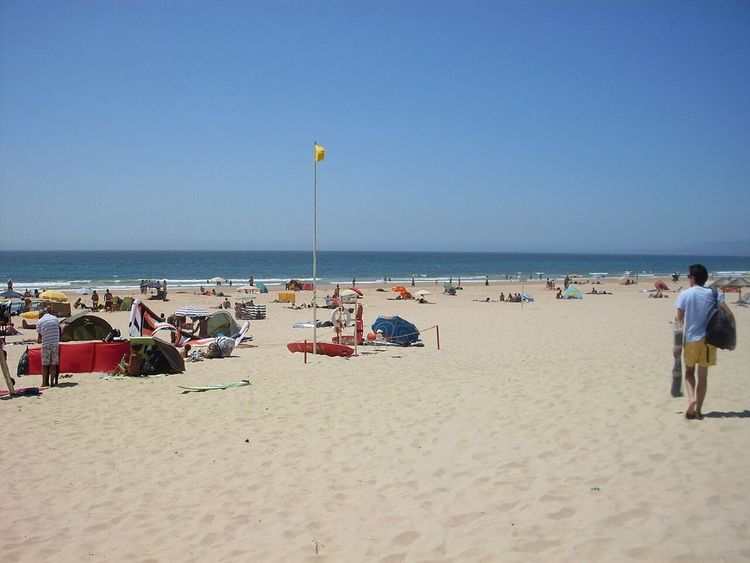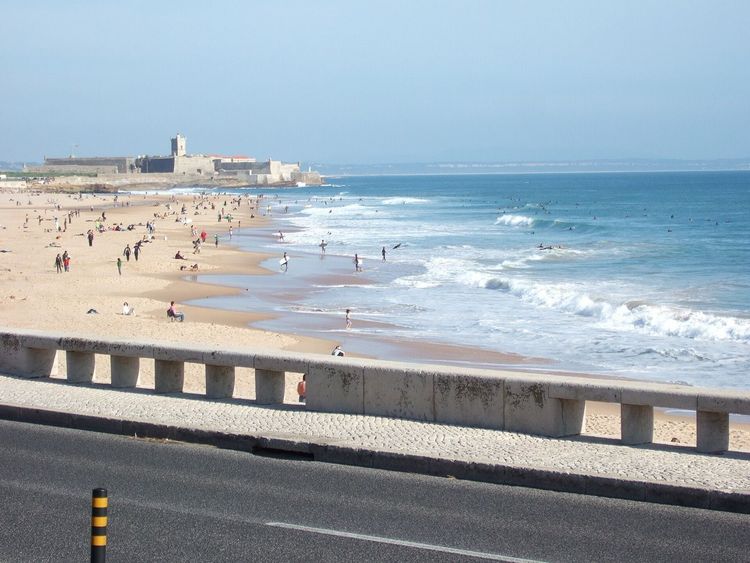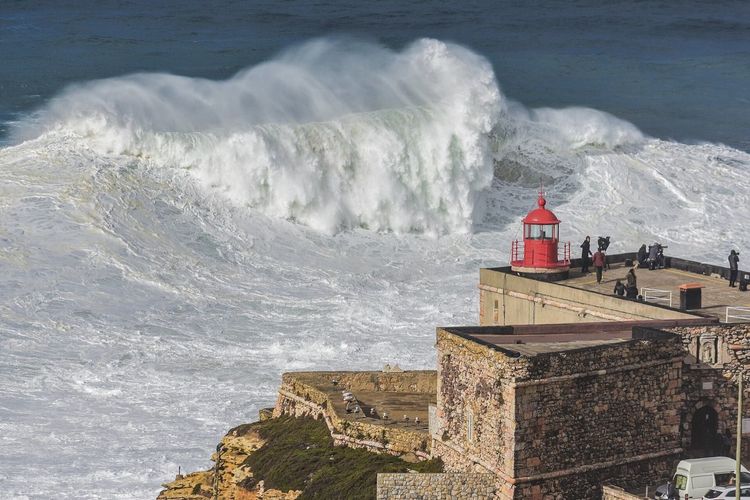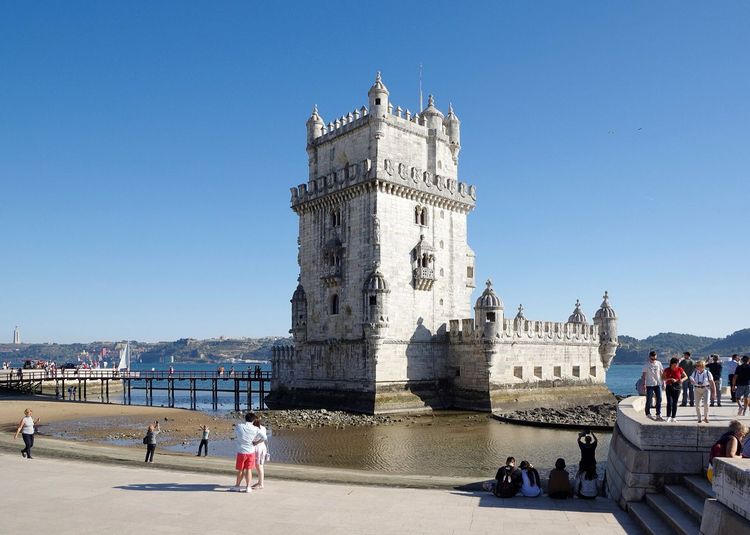
The first thing you notice at Praia do Guincho is that the sand is moving. It travels in low ribbons across the beach, piles against the wooden walkways, and stings the back of your legs if you walk into it. Behind all of that the Serra de Sintra rises green and abrupt, and in front of it the Atlantic arrives without having touched anything since America.
This is the wildest beach within an easy trip of Lisbon, and the wind is the reason. It is what draws the windsurfers, what makes the dunes behind the road one of the last living dune systems on this coast, and what sends unprepared families back to their cars by two in the afternoon. Come prepared for it and Guincho is the best beach day near the capital. Ignore it and you will spend three hours eating sand.
Key Takeaways
- Swimming here is for confident swimmers only. Currents are strong, and lifeguards work June to mid-September. The swimming answer →
- Public transport comes from Cascais, not Lisbon: the MobiCascais M43 circular runs to the beach on hydrogen buses. Getting there →
- The nortada wind builds through the afternoon, so mornings are calm and afternoons are not. Working with the wind →
- The Cresmina dune boardwalk behind the beach runs about 2km through a protected dune system, free to walk. The dunes →
- Guincho hosted Portugal's first international windsurfing event in 1986, and it still draws the wave tour. The 1986 story →
Can you swim at Praia do Guincho?
Yes, but only if you are a confident swimmer. Guincho is an exposed Atlantic beach break with strong currents and rip channels, and lifeguards are on duty only from June to mid-September.
That is the honest version, and it matters more here than at the sheltered beaches along the Cascais line, because the waves that make this place famous also dig deep channels between the sandbanks, and those channels pull. Portuguese beaches all run the same flag system set by the environment agency, so read the flag before you read anything else: green means swim, yellow means wade only, and a bandeira vermelha (red flag) means stay out of the water entirely.
In practice most people at Guincho spend more time on the sand than in the sea, swimming in short bursts, coming out cold and warming up on a towel. On a red-flag August afternoon, families with small children are better off at Praia da Cresmina, the smaller beach just south past the fortress, or back at Carcavelos on the train line.
| Beach | Wind | Swimming | Best for |
|---|---|---|---|
| Guincho | Strong, builds after lunch | Confident swimmers, lifeguards in season | Wind sports, dunes, scale |
| Cresmina | Noticeably calmer | Easier, still Atlantic | Families on a blowy day |
| Abano | Exposed, no facilities | Unsupervised | Quiet, nude sunbathing |
| Cascais town beaches | Sheltered | Calm and shallow | Children, a short walk to lunch |
| Carcavelos | Moderate | Easiest of the four | Learning to surf, train access |
Local rule of thumb: if you cannot see a lifeguard chair and the flag from where you have laid your towel, you have chosen the wrong stretch of sand.
How do you get to Praia do Guincho?
Ride the Cascais train out of Cais do Sodré, roughly 35 minutes, then change to the MobiCascais M43 circular bus for the beach itself. By car it is about 35 minutes from central Lisbon and 10 minutes from Cascais.
Here is where most guides go wrong. Guincho sits outside the Carris Metropolitana network that covers the rest of the Lisbon region, so the line numbers you see quoted for Caparica or Sintra are no help. We checked the operator's route data on 26 July 2026: the CM buses running between Cascais and Sintra do not stop anywhere near this beach. The local operator is MobiCascais, and its M43 runs as a circular from Cascais station in two variants, one via Areia and one via Quinta da Marinha. The buses on it run on hydrogen, which makes the ride to the windiest beach on the coast quietly appropriate. First departures are around 07:40 and the last run back leaves in the early evening, so check the app before you settle into a sunset.
The better arrival, if your legs are willing, is the ciclovia (cycle path). It runs about 9km from Cascais marina along the cliffs, past Boca do Inferno and the Oitavos headland, and delivers you to the dunes with the whole bay opening up in front of you. MobiCascais runs a shared-bike scheme in town, and the ride is flat enough that ordinary holiday fitness covers it.
If you drive, the beach car park is paid and small, and on a hot Sunday it fills by eleven. The overflow spills along the road, which is legal in places and towed in others.
Planning tip: Buy your Cascais train ticket as a return before you leave Cais do Sodré. The queue at Cascais station on a summer evening is longer than the ride itself.
Working with the wind
Guincho's wind has a name and a schedule. The nortada (summer north wind) sets in along this coast from about May onwards and usually builds through the afternoon, so a beach that felt calm at ten can be unusable by four. Mornings are the window, and arriving by ten buys you glassy water, low light on the dunes and space on the sand.
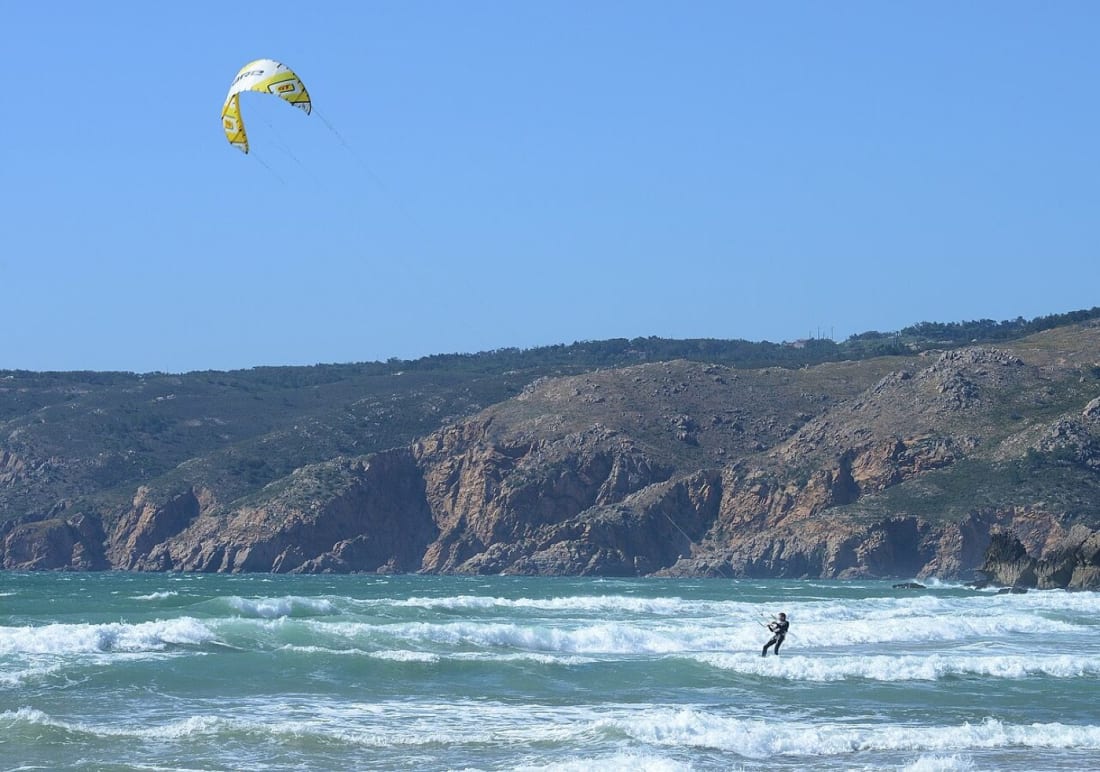
Photo: Alvesgaspar, CC BY-SA 3.0 (Wikimedia Commons)
The bay is not uniform either. The northern end picks up some shelter from the Sintra hills when the wind is hard, which is why you will see towels clustered up there on blowy days while the middle of the beach empties out. Come with a windbreak, the folding fabric kind every Portuguese family carries, and you turn a difficult afternoon into a fine one.
There is a payoff for all this. The same wind that shortens your beach day builds the biggest dunes on the Lisbon coast and keeps the water clean and cold, and it is why the sunsets here look like the end of a continent, which is precisely what they are.
Local tip: Skip the umbrella. It will either snap or leave at speed, and every summer somebody's parasol goes cartwheeling down the beach to general applause.
The dunes behind the beach
Cross the road from the sand and the landscape changes completely. The Guincho-Cresmina dunes sit inside the Sintra-Cascais Natural Park, and they are a rare thing on this coast: a live dune system, still moving, still building, rather than a stabilised one buried under a car park.
The Duna da Cresmina interpretation centre sits at the southern end with a small permanent exhibition, and from it a boardwalk runs about 2km through the dune with panels naming what grows and nests there. It takes under an hour at a slow pace, costs nothing, and gives you somewhere to be on an afternoon when the beach itself has turned into a sandblaster.
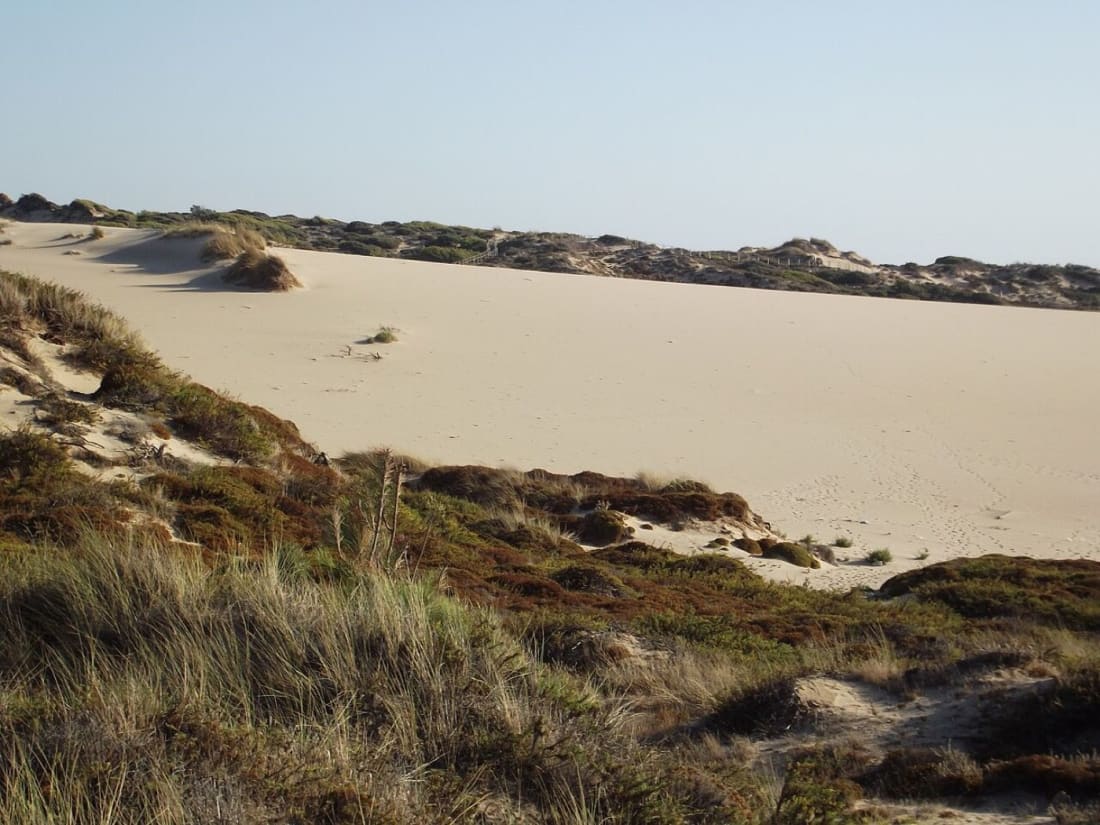
Photo: Roundtheworld, CC BY-SA 4.0 (Wikimedia Commons)
Walk it and the beach makes more sense afterwards. You see how the sand moves inland, how the marram grass holds it, and why the walkways over the dunes have rules about staying on them.
Detour: Continue north past the beach and the road reaches Praia do Abano, a small cove with no facilities and no crowds. People sunbathe nude there, though it holds no official naturist status, so wander in expecting a quiet cove rather than a scene.
Surfers, windsurfers and the 1986 story
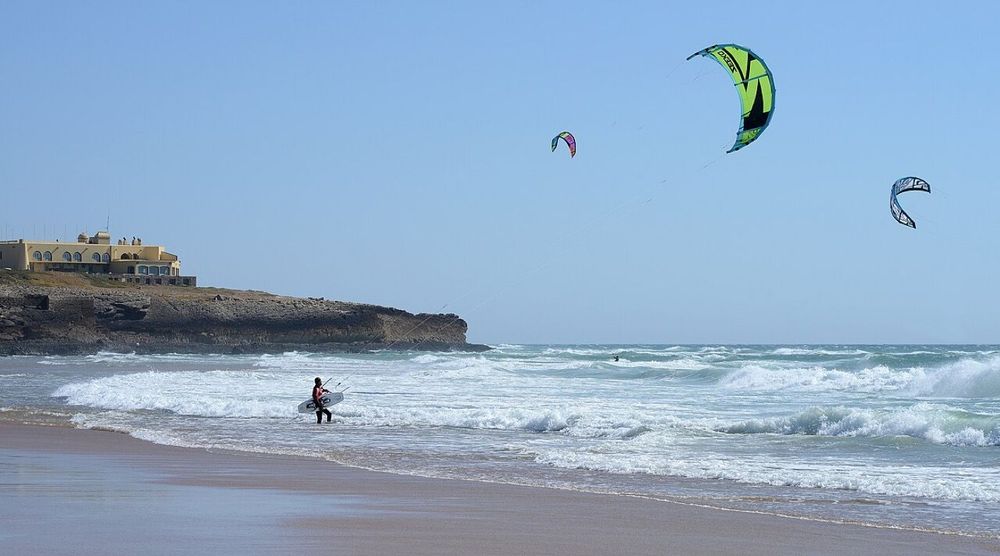
Guincho earned its reputation in the wind sports before it earned it with tourists. Portugal's first big international windsurfing event landed here in 1986, with Robby Naish and Björn Dunkerbeck among the names on the water, and the beach has been on the wave tour circuit on and off ever since. As of July 2026 no dates have been published for this year's Guincho Wave Classic, so treat a contest as a bonus rather than a plan.
For surfers the beach works most of the year, and it holds swell when Carcavelos has gone flat. Summer brings smaller, friendlier waves and a run of surf schools along the sand between June and September. Autumn is the local secret: September through November combines real swell with lighter wind and thinner crowds, which our surfing in Portugal guide covers in more detail. Winter is for people who already know what they are doing.
The beach has one more claim, and it is the kind that makes people stop mid-towel. The opening sequence of On Her Majesty's Secret Service was filmed here in May 1969, with Bond pulling Tracy out of this exact surf before the fight on the sand. The dunes in the background have shifted since. The light has not.
Is Praia do Guincho worth visiting?
Yes, if you want the wild Atlantic and you are equipped for wind. Choose Cascais town beaches or Carcavelos instead if you want warm shallow water, a short walk to lunch and no sand in your bag.
Set it against the alternatives before you commit a day. Our beaches near Lisbon guide lines up all four coasts, and Costa da Caparica offers the same Atlantic swell with an easier bus from the city and a longer run of beach bars. For the wider picture, the best beaches in Portugal guide places this coast against the Algarve and the islands.
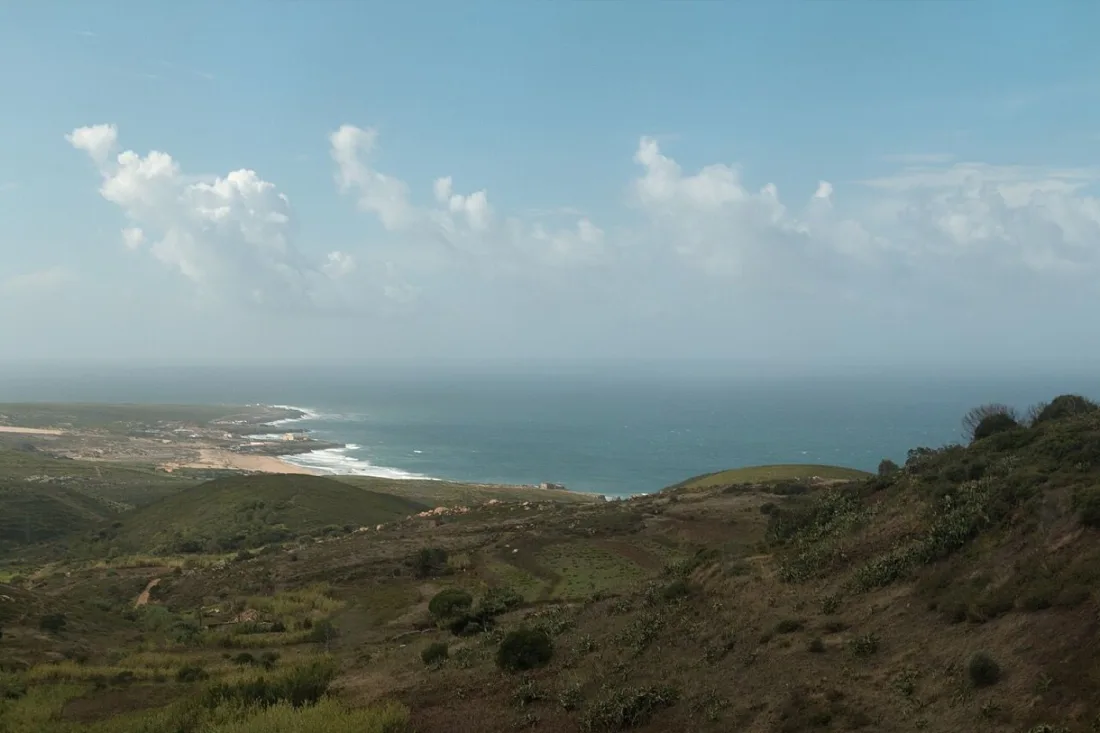
Photo: Daniel VILLAFRUELA, CC BY-SA 3.0 (Wikimedia Commons)
What Guincho gives you that none of them do is scale. The sand runs wide, the dunes climb behind it, the Sintra hills close the northern end, and there is nothing built on the horizon. An hour from a European capital, that is worth some sand in your sandwiches.
Practical Tips
Planning tip: Come in the morning and leave by mid-afternoon in July and August. The wind pattern is that predictable, and you will have had the better half of the day.
Local tip: Eat late and eat well. The restaurants along the beach road serve the fish that the nortada keeps arriving, and the fortress at the south end holds a Michelin star it has kept since 2001, which is an unusual thing to find at the end of a beach road.
Planning tip: Bring one more layer than you think. Guincho runs several degrees cooler than Lisbon on the same afternoon, and the wind takes the rest.
Local tip: Watch where the windsurf vans park. They read the forecast better than any app, and a full car park at the northern end on a weekday means the wind is on and the show is worth watching from your towel.
FAQ
Is Praia do Guincho clothing optional?
No, Guincho is a regular family beach with lifeguards in season. Praia do Abano, the small cove just north, is where people sunbathe nude, though it carries no official naturist designation from the Portuguese federation.
How far is Praia do Guincho from Lisbon?
Guincho is about 35km west of central Lisbon, roughly 35 minutes by car. By public transport, take the train from Cais do Sodré to Cascais, then the MobiCascais M43 bus, which brings the total to a little over an hour.
When are the lifeguards on duty at Guincho?
Lifeguards work the beach from June to mid-September, the official bathing season. Outside those months there is no supervision, and the flag posts stand empty, so treat the water accordingly.
Is Guincho good for learning to surf?
In summer, yes. Smaller swells and gentler inside waves suit beginners, and surf schools run on the beach from June to September. From autumn onwards the waves get heavy and the rips get serious, so lessons then belong at Carcavelos.
What is the wind like at Guincho in summer?
Strong, and stronger after lunch. The nortada north wind builds through the afternoon on most summer days, which is why windsurfers love the place and sunbathers arrive early.
Where can you eat at Praia do Guincho?
Several restaurants sit along the beach road, most of them grilling fish with a view of the water. At the southern end, the 17th-century fortress houses a Relais & Châteaux hotel whose restaurant has held a Michelin star since 2001.
The last light
Around eight on a summer evening the wind drops as suddenly as it arrived, and the beach fills again with people who timed it right. The windsurfers come in, the kite lines come down, and the whole bay turns the colour of the dunes for about twenty minutes.
Nobody swims at that hour. Everybody stays.