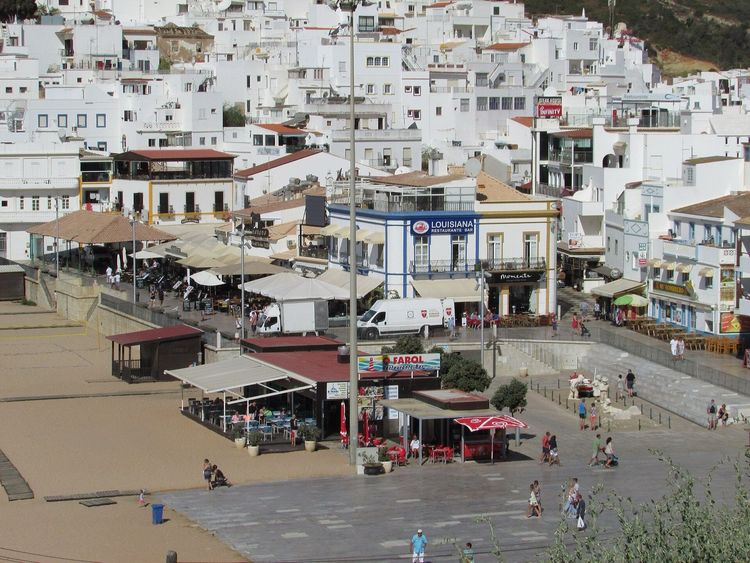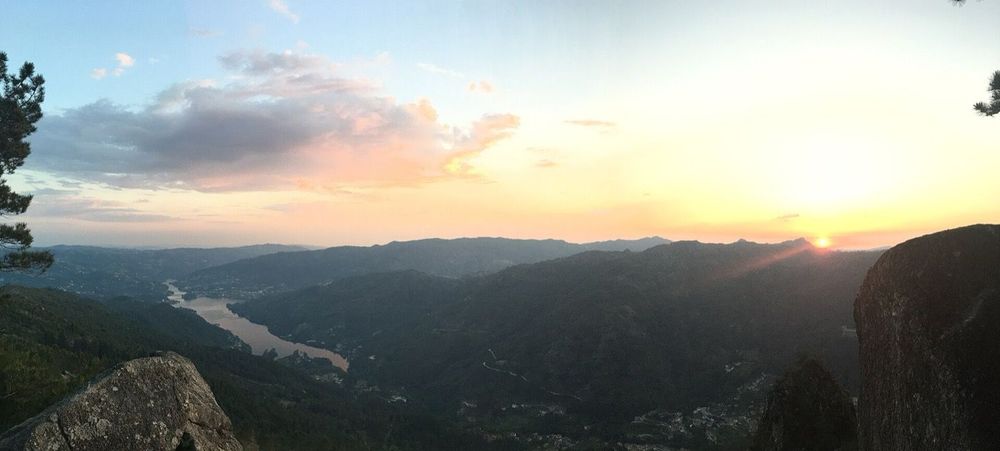
Portugal has exactly one national park, and it spent the title well. Peneda-Gerês (pronounced zheh-RESH) covers some 70,000 hectares (270 square miles) of granite mountains folded into the country's far northwest corner, hard against the Spanish border. Wolves still hunt here. Wild ponies graze the high plateaus, villages store their grain in stone huts on stilts, and a Roman road runs through the middle with its milestones still standing. It's a 90-minute drive from Porto and it feels like a different century.
The park earned its status in 1971 and has resisted becoming a theme park ever since. That's the promise and the warning in one: Gerês rewards visitors who plan like hikers and frustrates the ones who expect signposted convenience. This guide covers both halves honestly, the granite-and-waterfall glory and the parking-lot realities, so you can build the trip that fits.
Key Takeaways
- Peneda-Gerês is Portugal's only national park: 70,000 hectares of granite peaks, waterfall lagoons and stone villages on the Spanish border, established in 1971. Is Peneda-Gerês worth visiting? →
- Entry is free. The one toll is the Mata de Albergaria forest road at about €1.50, transit only, with no stopping allowed inside the old-growth forest. Rules, kit and small →
- You need a car, and in summer you need an early start: the park's small car parks routinely fill by 11am, and some zones close to motor traffic on peak weekends. When to visit →
- The best bases are Vila do Gerês for waterfalls and viewpoints, and the Soajo or Peneda side for villages and quiet trails. Two nights covers the essentials, three does it justice. Where is the best →
- May, June and September are the sweet months: warm enough to swim the lagoons, free of the August squeeze. When to visit →
Is Peneda-Gerês worth visiting?
Yes: Peneda-Gerês packs swimmable waterfalls, granite ridgelines, wolf country and some of Iberia's most memorable villages into one park 90 minutes from Porto. It's the easiest yes in northern Portugal. If your Portugal itinerary is all coastline and custard tarts, this is the correction.
The honest qualifier is that Gerês asks more of you than most Portuguese destinations. Distances inside the park are slow and winding, the best corners hide behind 20-minute walks or rough tracks, and August weekends bring half of Braga to the same three lagoons. Visitors who day-trip in expecting a drive-through safari leave underwhelmed. Visitors who stay two nights and start early tend to rank it top three in the country. The variable is planning, and this park punishes the lack of it politely but consistently.
How do I get to Peneda-Gerês?
Drive. From Porto, the Vila do Gerês side takes about 1 hour 30 minutes via Braga; from Braga itself it's around 50 minutes. The Peneda and Soajo side, further north, runs closer to 2 hours from Porto via Ponte da Barca or Arcos de Valdevez. Buses do exist, from Braga to Vila do Gerês several times a day, and they'll deliver you to the thermal town and its nearest trails. For everything beyond, the park's geography wins: attractions scatter across five river valleys with no useful transit between them.
Recalibrate your driving maths before you plan. Park roads average 30 to 40km/h once the hairpins start, so a distance your map calls 25 minutes will cost you 50, and that's before you brake for the first garrano standing in the lane with no intention of moving. Give the horn a polite tap before blind bends the way locals do, and pull into passing bays on the single-track stretches.
Being late here is a scenery problem rather than a real one. Build slack into the plan and the park stops feeling like an obstacle course.
The alternative to driving yourself is letting someone else do the mountain roads. Day tours from Porto and Braga bundle the viewpoints, a waterfall stop and usually a village visit; our Peneda-Gerês tours page compares the options running this year. For a first taste without logistics, it's the honest shortcut, and the drivers know which car parks still have space at noon.
One warning saves the most grief. The road through Mata de Albergaria, the park's ancient oak forest, is a transit route with a toll of about €1.50, and stopping inside is prohibited and enforced. To see the forest and the Portela do Homem waterfall at its far end, you park near the old border post on the Spanish side and walk back in. On summer holiday weekends, rangers close several park roads to private cars entirely. It's the park choosing trees over traffic, which is exactly the right call and mildly inconvenient, in that order.
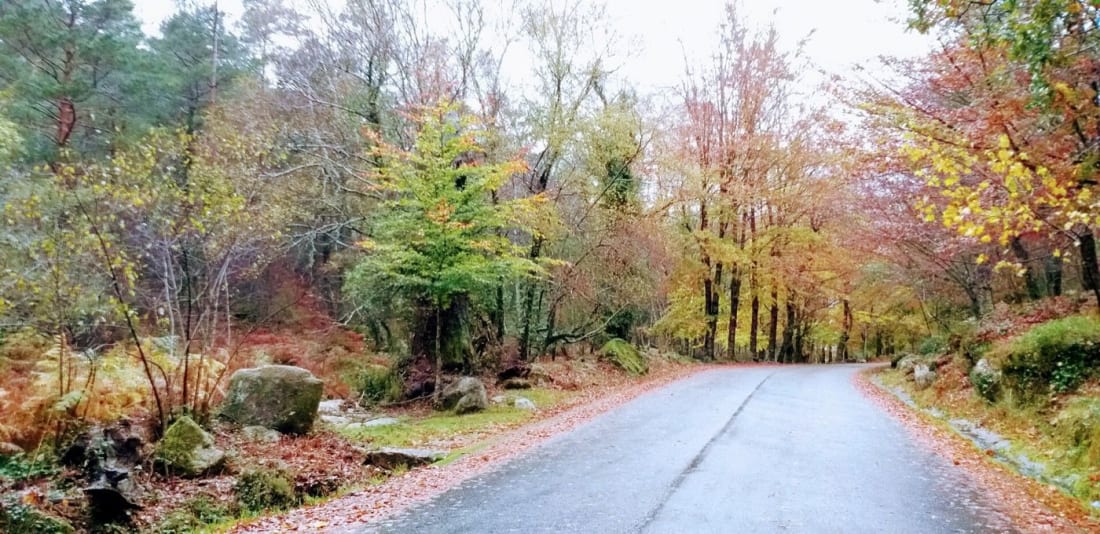
Photo: José Amorim, CC BY-SA 4.0 (Wikimedia Commons)
The five faces of the park
Gerês is really five landscapes sharing one boundary, and knowing them saves you from the classic mistake of trying to see everything from one base.
Vila do Gerês and the waterfall country
The 19th-century spa town of Vila do Gerês is the park's busiest hub, a spine of faded thermal hotels in a steep green valley. From here the classics stack up: the Pedra Bela viewpoint at 800m (2,600ft), the Arado waterfall with its stone pools, and the swimming lagoons along the Rio Caldo arm of the Caniçada reservoir. The Tahiti waterfall (officially Fecha de Barjas) earns its nickname with turquoise water, and earns its queues by appearing on every feed in Portugal each July.
This is the side to base on for a first visit, with a caveat the postcards skip: it's the crowded side. Arrive at the famous spots before 10am or after 5pm in summer, and treat the middle of the day as reservoir-swimming and long-lunch time. The lagoons are genuinely warm by late June, which is not a sentence anyone writes about the Atlantic.
The town's other asset works year-round. The thermal springs that built Vila do Gerês in the first place still run, and the baths have treated arthritic knees and hiking-adjacent complaints since the 18th century, when the Braga gentry came up by mule. A soak costs less than dinner, the faded belle-époque buildings around the buvette give the town its charm, and after a day on granite staircases you'll consider the whole institution a personal gift.
Mata de Albergaria and the Homem valley
The old-growth forest is the park's sanctuary: oaks and hollies that predate the country's borders, the Homem river running clear beneath, and the no-stopping rule keeping it blessedly quiet. Walk in from Portela do Homem and you'll trade ten minutes of effort for the park's most cathedral-like scenery. The Roman Geira road threads this valley, and its milestones, some carved with emperors' names, still line the route that once linked Braga to Astorga. Standing on 2,000-year-old paving with nobody else in sight is a reliably strange feeling.
The Homem valley also keeps the park's most haunting story. In 1972 a dam flooded Vilarinho da Furna, a village that had governed itself by communal council for centuries, and its 300 residents watched the water take their houses. In dry late summers the reservoir drops and the village returns: walls, lanes and doorsteps rising from the water like a rumour.
The story has a keeper. The ethnographic museum in Campo do Gerês holds the village's memory properly, in a building raised with stones the residents salvaged themselves.
Soajo, Lindoso and the espigueiros
On the park's western edge, two villages keep Portugal's most photographed granaries. The 'espigueiros' are narrow granite huts raised on mushroom-shaped stilts, built from the 18th century onward to dry corn above the rats and rain, and both Soajo and Lindoso cluster dozens of them on bare rock platforms like small stone cemeteries for grain. They're still used. Come at golden hour, bring respect along with the camera, and stay for dinner in Soajo, which has quietly become the park's best village for eating.
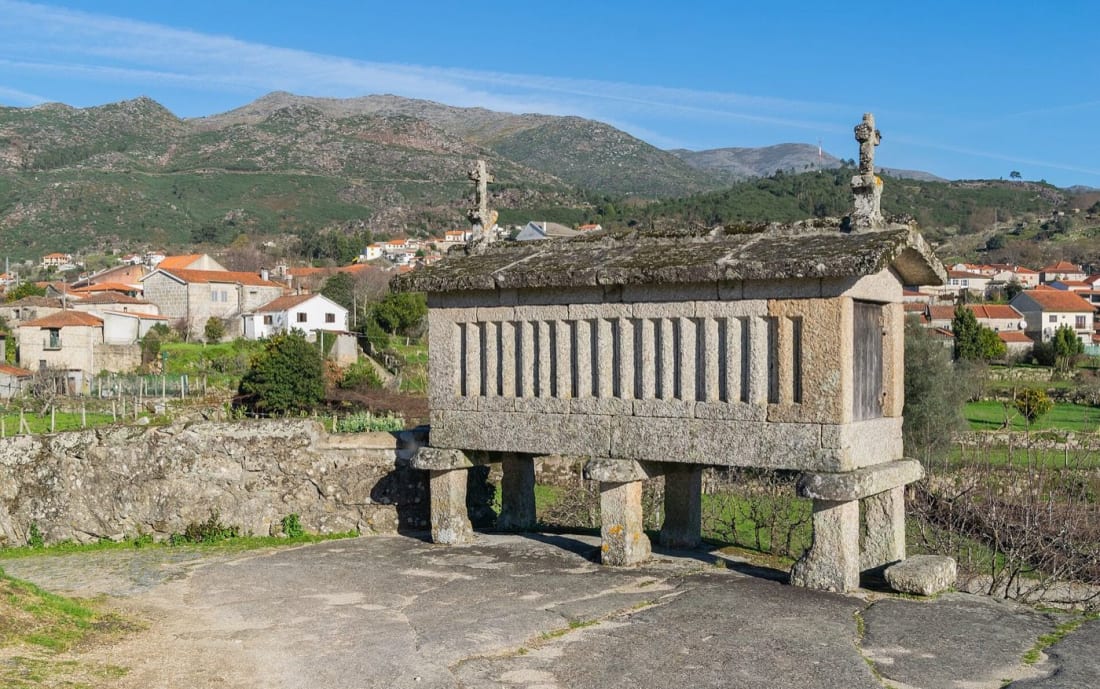
Photo: Krzysztof Golik, CC BY-SA 4.0 (Wikimedia Commons)
The Peneda valley and Castro Laboreiro
The park's north is its wildest quarter. The sanctuary of Nossa Senhora da Peneda sits under a 300m rock face, a miniature Bom Jesus staircase in the middle of nowhere, and the villages above it, Castro Laboreiro chief among them, ran on seasonal migration within living memory: whole communities moving between winter and summer hamlets with their herds. The stone-slab houses remain, along with a castle ruin and the park's emptiest marked trails. If your idea of a national park involves not seeing other people, aim here.
Pitões das Júnias and the eastern plateau
Portugal's ceiling country: high moorland around the village of Pitões das Júnias (at about 1,100m, one of the highest villages in the country), with a ruined 12th-century monastery tucked in a fold below and a waterfall a short walk beyond it. The plateau is barrosã cattle territory, long-horned and unbothered, and the village smokehouses turn them into the north's best steaks. It's a long drive from everything, which is the filter and the point.
| Zone | Base | The moment | Crowd level |
|---|---|---|---|
| Vila do Gerês | Gerês town | Tahiti falls, Pedra Bela viewpoint | High in summer |
| Mata de Albergaria | Campo do Gerês | Old-growth forest, Roman milestones | Low (no stopping) |
| Soajo and Lindoso | Soajo | Espigueiros at golden hour | Medium |
| Peneda valley | Peneda / Castro Laboreiro | Sanctuary under the rock face | Low |
| Eastern plateau | Pitões das Júnias | Monastery ruin, high moorland | Low |
Where is the best hike in Peneda-Gerês?
For a first hike, take the Trilho dos Currais loop from the Pedra Bela area: 10km (6 miles) of shepherd paths, oak woods and granite viewpoints in about four hours. It's waymarked, reachable from the main base town, and generous with its scenery-per-effort ratio.
Beyond that single answer, the park holds a network of PR trails from easy riverside strolls to full mountain days, and one honest caveat that applies to all of them: waymarking here is thinner and older than what you'd find on Madeira's groomed trail system. Paint marks fade, junction signs go missing, and fog arrives with commitment. Download the GPS track for any route before you start, carry layers even in July, and treat the longer ridgelines as proper mountain undertakings. The upside of the roughness is solitude; even in August, walk 30 minutes from any car park and the park empties out.
Two shorter walks deserve their own line. The walk into Mata de Albergaria from Portela do Homem is barely a hike and delivers the park's best forest. And the path from Pitões das Júnias down to its monastery and waterfall, around 3km (1.9 miles) round trip, might be the highest-yield 45 minutes in the whole park.
For history on foot, walk a stage of the Geira instead. From Portela do Homem you'll follow the Roman road's original paving up the Homem valley, and you'll pass granite milestones planted 2,000 years ago, several still carrying legible dedications to the emperors who paid for the resurfacing. It's flat by park standards, shaded by the old forest, and you'll have the strange company of imperial infrastructure the whole way. Turn around whenever lunch calls; the Romans left the route conveniently linear.
Ask the shepherds about the fog and they'll give you the park's oldest advice: the mountain decides your schedule, you just get a vote. Start early, and when the cloud drops, be somewhere with a roof and a menu.
Are there wolves in Peneda-Gerês?
Yes. Peneda-Gerês holds one of Portugal's last stable populations of the Iberian wolf, part of the roughly 300 animals estimated across the country's north. Seeing one is another matter entirely: wolves here have survived precisely by avoiding people, and even researchers mostly meet them through camera traps and tracks. Treat a sighting as a lottery win, not a plan.
What you will see is the park's supporting cast, and it's excellent. Garrano ponies, a semi-wild native breed, graze the high plateaus in small herds and have the road-crossing rights locals grant them. Long-horned barrosã cattle wander at their own speed. Roe deer flicker through the oak woods at dawn, golden eagles work the ridgelines, and the rivers hold otters for the patient. The park's wildness is real; it just doesn't perform on demand.
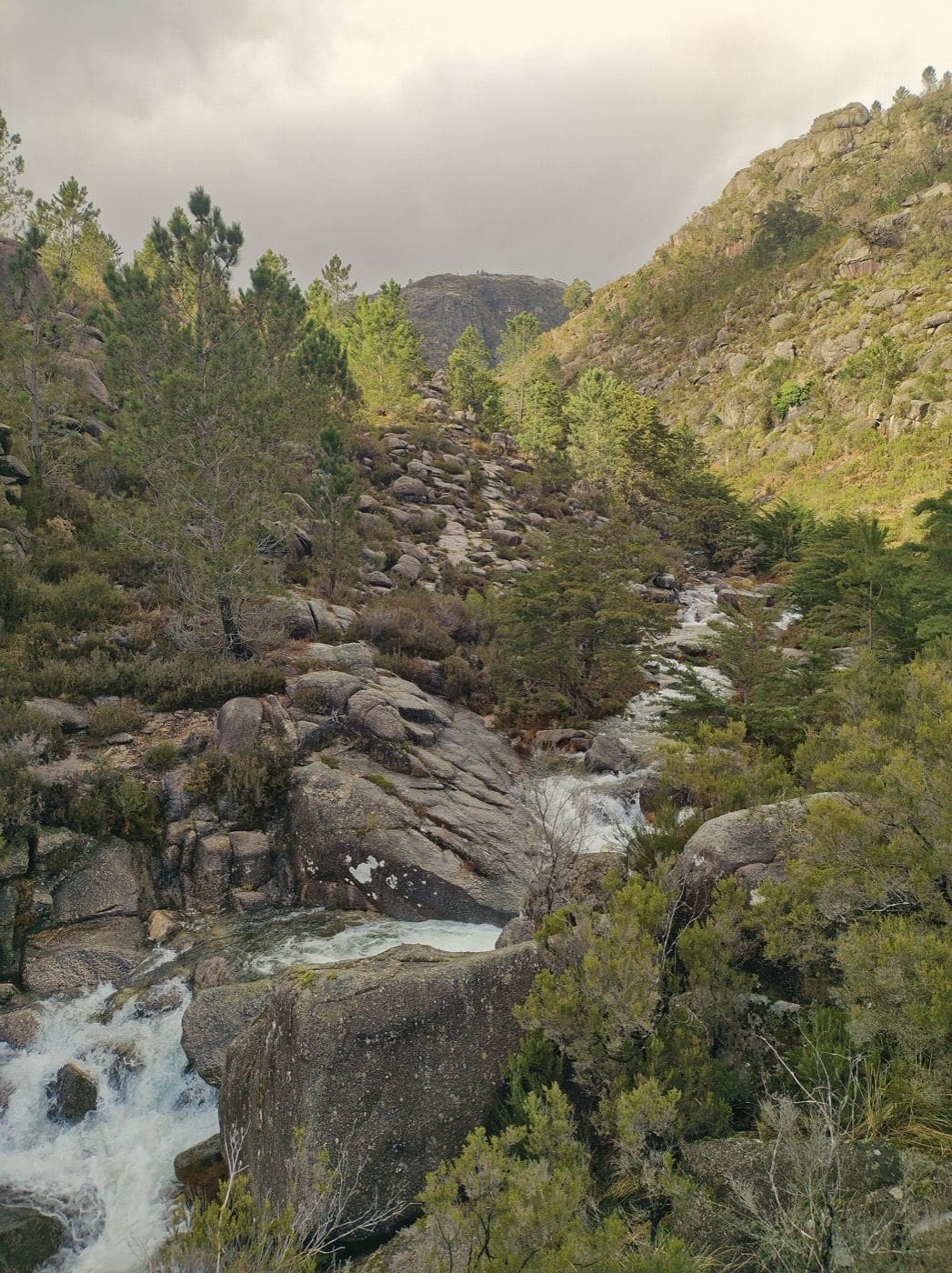
Photo: The Cosmonaut, CC BY-SA 4.0 (Wikimedia Commons)
When to visit
May, June and September are the park at its best. The waterfalls still run hard from spring rain, the lagoons warm up for swimming by mid-June, trails are dry enough to trust, and the villages have room at dinner. September adds golden light on the granite and the year's most stable weather.
July and August work with tactics. The park is at full capacity on weekends, the famous lagoons get loud by noon, and the small car parks fill by 11am, so the summer formula is the same as everywhere in this guide: dawn starts, big sights before 10am, water in the middle of the day, villages in the evening. Midweek visits dodge half the problem outright.
Whatever month you pick, protect your first morning. Set the alarm for first light, take your coffee to Pedra Bela or the nearest lagoon before 8am, and you'll meet the park everyone actually came for: mist working out of the valleys, ponies on the road, granite going gold, and not one other engine within earshot. The crowds are a midday phenomenon here. Your alarm clock is the only ticket the park sells.
Winter is the secret season for a certain kind of visitor. From November to March the park runs wet and close to empty, with the waterfalls at maximum violence and daytime temperatures around 8 to 14°C in the valleys. Some trails turn to streams and the high plateau gets genuinely raw, so it's a boots-and-fireplace trip rather than a swimming one. The thermal baths in Vila do Gerês, working since the 18th century, suddenly make complete sense.
A two-day plan that actually works
Day one belongs to the Gerês side, run in crowd-dodging order. You'll want to be at the Tahiti waterfall by 9am while the pools are still glass, then up to Pedra Bela before the haze builds. Take the middle of the day at the Rio Caldo lagoons with a picnic, drive the Mata de Albergaria transit in the late afternoon, and walk in from Portela do Homem when the forest light goes golden. Dinner in Vila do Gerês, feet in the thermal baths if the knees request it.
Day two crosses to the villages. Morning at Soajo's espigueiros before the light flattens, a slow lunch of local smoked meats, then the drive north through the Peneda valley to the sanctuary under its rock face. If energy holds, Castro Laboreiro adds the castle ruin and the plateau views; if it doesn't, the Lindoso granaries sit right on the road out. You'll cover barely 120km (75 miles) across the two days and feel like you crossed a small country.
With a third day, pick one: the Trilho dos Currais hike done properly, or the long drive to Pitões das Júnias for the monastery, the waterfall and the steak. Both answers win. The roads decide how much daylight each one costs you.
Where to stay and what it costs
Pick your base by your priorities. Vila do Gerês puts you nearest the waterfalls and viewpoints, with faded-grand spa hotels and guesthouses mostly in the €50 to €100 range. Campo do Gerês is quieter and better placed for the forest and reservoir. On the west side, Soajo's stone houses converted to rural tourism lodgings run €60 to €90 and come with the espigueiros as neighbours. The Peneda side offers the fewest beds and the most silence. Wild camping is banned inside the park, and the handful of official campsites charge around €10 to €12 a tent.
Daily costs stay northern-Portugal friendly. A full dinner in a village grill house lands at €15 to €25 with wine, picnic supplies come from municipal markets in Braga or Arcos de Valdevez on the way in, and the park itself charges nothing beyond that €1.50 forest transit and parking here and there. For pairing the park with the rest of a northern trip, our Douro Valley guide covers the wine country an hour southeast, and walkers wanting a multi-day route by the ocean can compare this granite world with the Fisherman's Trail down south.
Rules, kit and small print
The park's rules are few and firmly meant. No wild camping, no fires outside designated spots (this is a landscape that burns, and locals have long memories), dogs on leads around livestock, and drones only with a permit nobody casually gets. Leave the garranos and cattle unfed and unpatted, close any gate you open, and take the no-stopping rule in Mata de Albergaria literally, because the fines are real.
Kit-wise, treat Gerês as mountains that happen to be in Portugal. Proper shoes over sandals for anything beyond the lagoon car parks, layers and a rain shell in every season, 2 litres of water on trail days, and swim gear always, because the park manufactures spontaneous swimming opportunities. Fill the fuel tank in Braga or Arcos de Valdevez on the way in, since stations inside the park are scarce, and download offline maps for the same reason your phone will show one bar of signal in the best valleys.
The last table
Finish where the park's food logic leads: a grill house in Pitões das Júnias or Soajo, ordering posta barrosã, a thick-cut steak from those long-horned cattle you've been braking for all day, with roast potatoes, vinho verde tinto poured into bowls if the house is traditional, and no dessert menu required beyond the local honey. The meal costs less than the fuel that got you there and settles the day's argument about whether the drive was worth it. It was.
Gerês is the wildest chapter of a bigger story: the hiking in Portugal guide covers the country's other walking regions, from Madeira's ridges to the southwest coast.
FAQ
How long should you spend in Peneda-Gerês?
Two nights is the working minimum: one day for the Gerês waterfall side, one for the villages and a proper hike. Three nights lets you add the Peneda valley or the eastern plateau without rushing. A single day trip from Porto works as a trailer, best done early and midweek, but the park's character lives in its mornings and evenings.
What are the main villages in Peneda-Gerês?
Soajo and Lindoso, famous for their espigueiro granaries, are the headline pair on the west side. Castro Laboreiro holds the wild north, Pitões das Júnias crowns the eastern plateau, and Ermida and Fafião sit handily between the Gerês valley and the high country. Vila do Gerês itself is the spa-town hub rather than a traditional village.
Can you swim in Peneda-Gerês?
Yes, and it's a highlight: the lagoons along Rio Caldo and the Caniçada reservoir, plus river pools below several waterfalls, warm to very swimmable by late June. Water below the bigger falls stays cold year-round, currents deserve respect after rain, and the most famous pools get crowded by noon in August. Mornings fix that.
Is there an entrance fee for Peneda-Gerês?
No. As of July 2026 the park itself is free to enter, with two small exceptions: the roughly €1.50 transit toll for the Mata de Albergaria forest road, and paid or time-limited parking at a few honeypot spots in summer. Current access notices are published by the park authority on Natural.PT. No booking portals, no time slots, no tickets, a increasingly rare arrangement worth enjoying.
Is Peneda-Gerês worth it as a day trip from Porto?
As a first taste, yes: a 90-minute drive or an organised tour delivers the viewpoints, a waterfall and a village in one long day. You'll see the park's face but not its character, which emerges at dawn and after the day-trippers leave. If Gerês climbs your list mid-visit, that's normal, and it's the argument for the two-night return.