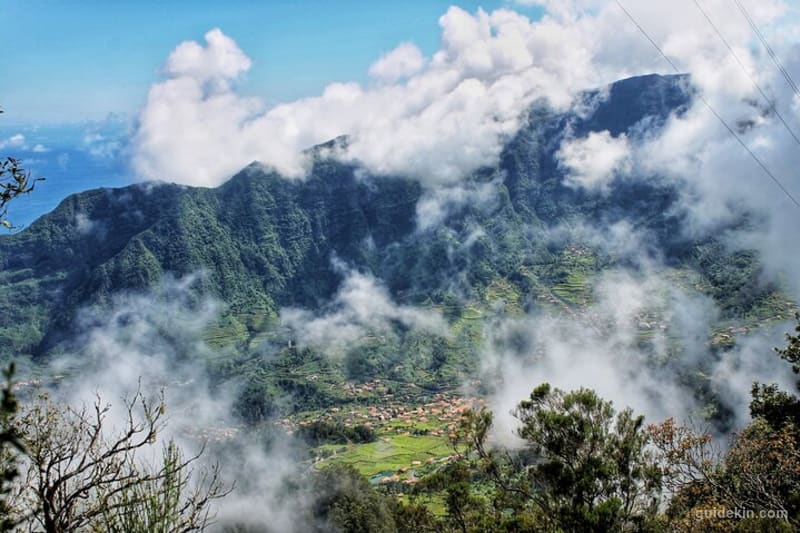
Madeira's third-highest peak has a road running straight to its summit, which sounds like cheating, and honestly, it is. The road is only the doorstep, though. From the top of Pico do Arieiro (1,818m), the PR1 trail runs across the spine of the island to Pico Ruivo (1,862m), the highest point on Madeira, and it adds up to the best single day of walking the island offers. Locals call the ridge a 'vereda', a footpath cut into the mountain, and this one spends its whole length in the sky.
2026 is the year the walk came back. A wildfire in August 2024 closed the full traverse for almost two years, and it reopened in late April 2026 with new rules attached: a booking system, an entry fee and a one-way direction. The old advice, including most of what ranks on Google, is now wrong. Here's how the walk actually works this summer.
Key Takeaways
- The PR1 reopened in late April 2026 after the 2024 wildfire closure. As of July 2026 the full traverse runs Friday to Sunday only, and it's one-way: Pico do Arieiro to Pico Ruivo, no reverse. Is the PR1 in →
- Book before you go on the SIMplifica portal. The full route costs €10.50 per adult, and rangers check tickets on the trail between 8am and 4pm. Is the PR1 in →
- Count on 7km of ridge walking plus a 2.8km descent to the Achada do Teixeira car park, around 4 to 5 hours in total, with roughly 1,000m of cumulative climbing on stone staircases. How hard is the →
- The one-way rule makes the return logistics the real puzzle: a guided tour with transfer, two cars, or a pre-arranged taxi from Achada do Teixeira. The one-way problem, solved →
- It runs about 10°C colder up there than in Funchal. Bring layers, water and real shoes. When to walk it →
Is the PR1 in Madeira open?
Yes, with conditions. As of July 2026 the full PR1 traverse between Pico do Arieiro and Pico Ruivo runs Friday to Sunday only; from Monday to Thursday, repair crews keep working and only the first 1.2km, from the Arieiro summit to the Pedra Rija viewpoint, is walkable. Ignore the map apps still showing the trail as closed: that was true for most of 2024 and 2025, and it isn't anymore.
The reopening came with three permanent-looking changes. The route is now one-way, Arieiro to Ruivo, so you can't double back to your car. Entry is paid: €10.50 for the full traverse (€4.50 for the short Pedra Rija section, free under 12), plus €4 an hour for parking at Arieiro. And booking on SIMplifica, the regional government's portal, is mandatory, with rangers scanning tickets along the route between 8am and 4pm. Book a day or two ahead for summer weekends; the daily capacity is capped.
Ask anyone who guides up here and they'll tell you the same thing about the new system: the fee stings less than the fog. Check the weather harder than you check your ticket.
The walk itself
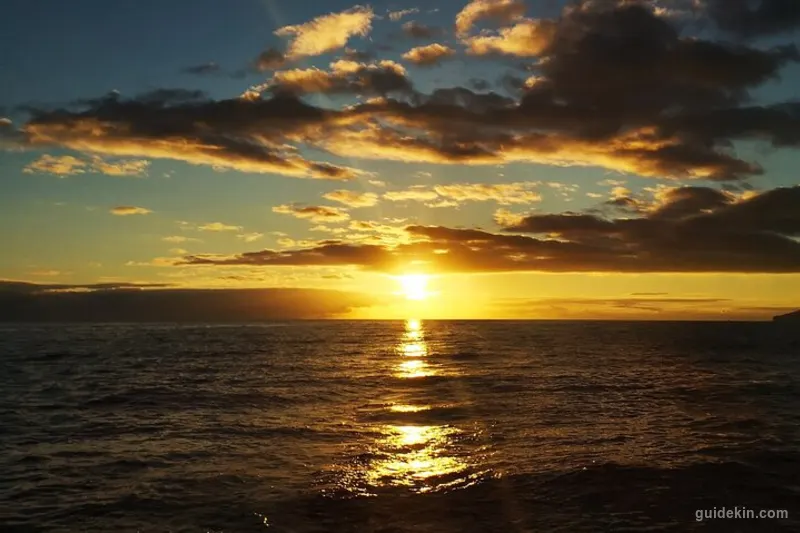
The classic move is to start before dawn. The parking at Arieiro fills early on summer weekends, and sunrise from the ridge is the island's great free spectacle: you'll watch the peaks rise out of a sea of cloud while the sky burns orange over the Atlantic. Walk the first kilometre by head torch and you'll have the Pedra Rija viewpoint mostly to yourself while the tour buses are still asleep in Funchal.
The opening stretch sets the tone fast. A few minutes past the radar station you'll reach Ninho da Manta, the 'Buzzard's Nest' viewpoint, a railed balcony hanging over the Fajã da Nogueira valley some 600m below. It's the postcard shot of the whole route and a useful self-test: if this platform feels fine, the rest of the ridge will too.
Historically the trail split here into an east and a west variant, and the west side spent years shut by rockfall even before the fire. The reopened 2026 route follows a single waymarked line, which removes the old guesswork about which tunnel was passable this month.
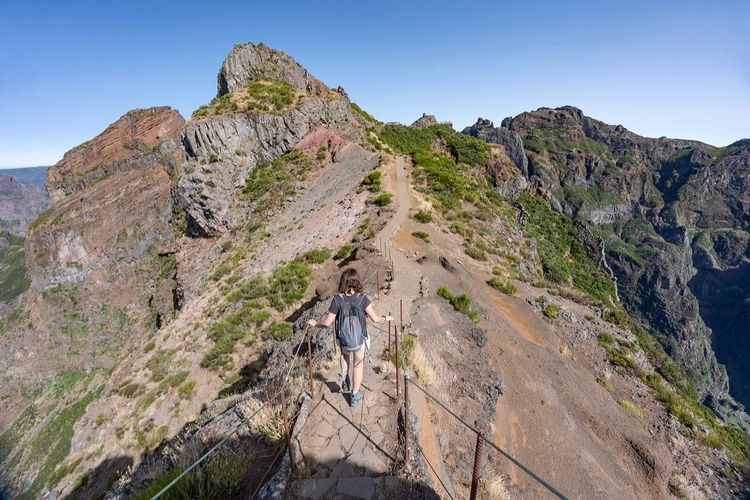
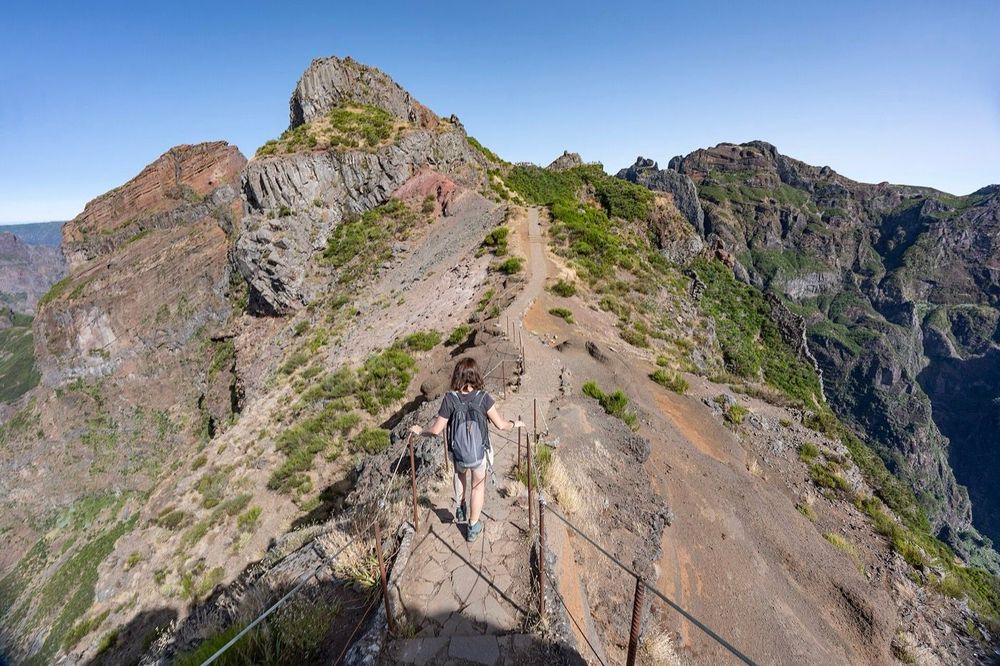
The trail runs in two personalities. The first is exposed and airy: staircases carved into the cliff face in the 1960s, fenced ledges hanging over the Fajã da Nogueira valley, and the knife-edge section around Pico das Torres that gave the walk its Instagram nickname, the Stairway to Heaven. Four tunnels, bored by hand through the rock, punch through the ridges where the path can't go around. A head torch beats a phone light in every one of them.
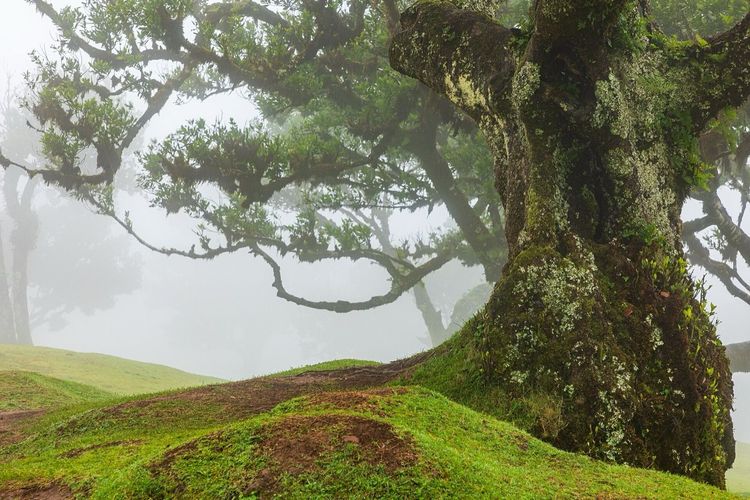
Then the mountain softens. Near the Ruivo shelter you'll walk through ancient tree heather, twisted trunks the height of houses, before the final broad climb to the summit marker at 1,862m. On a clear day the view runs across the whole island and out to the Desertas islands. The waymarking is clear the entire way, so the weather makes the real decisions up here. Fog turns the ridge from spectacular to pointless in about 20 minutes, and strong wind makes the staircases genuinely hostile.
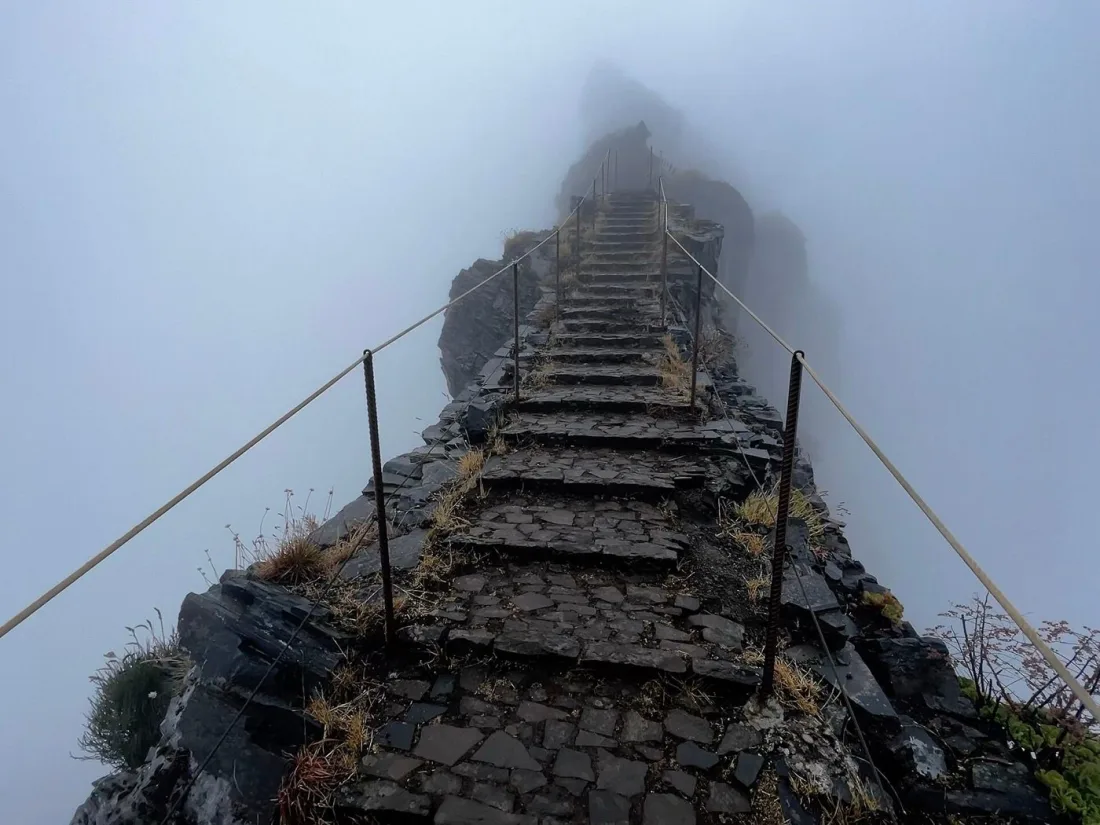
Photo: Krzysztof Popławski, CC BY 4.0 (Wikimedia Commons)
How hard is the PR1?
The PR1 is a moderate-to-hard mountain walk: 7km of ridge plus a 2.8km descent, with roughly 1,000m of cumulative ascent on stone staircases. The distances read easy on paper. The staircases read otherwise. Your knees will file complaints on the way down, and the ridge repays every step of it.
The honest filter is heights, and it's about exposure rather than fitness. The path is never technical and there are cables and fences on the airiest stretches, but the drops beside the trail fall away for hundreds of metres, and in places the walkway runs barely two boots wide. If a fenced ledge above a 300m drop sounds like a dealbreaker, it will be. Sure-footed teenagers manage the route every weekend; so do fit hikers in their seventies.
Two numbers matter more than the distance. It runs about 10°C colder at 1,800m than at sea level, with wind on top, so the t-shirt that worked in Funchal won't work here. And there's exactly one place to buy anything: the shelter below Ruivo's summit sells drinks whenever its shutters happen to be open, which is a plan you shouldn't rely on.
Carry a litre of water each, a warm layer, sunscreen and actual hiking shoes. Every season the rescue teams collect somebody who tried the staircases in flip-flops. Don't be that hiker.
The full kit list stays short: a litre of water per person, a windproof layer over something warm, sunscreen (the UV at 1,800m doesn't negotiate), a head torch for the tunnels and shoes with actual grip. Poles help on the descent if your knees have opinions. Phone coverage comes and goes along the ridge, so download the offline map and tell someone your plan, the standard mountain admin that takes 90 seconds and matters once a decade.
How long does the PR1 take?
Most walkers need 4 to 5 hours in total: 3 to 4 for the ridge to Pico Ruivo, plus about 40 minutes down to Achada do Teixeira. That makes it a comfortable half day with photo stops built in. The official estimate for the traverse alone is 3h30. Add the sunrise start and a long stare from the summit, and you'll still be eating lunch by early afternoon.
| PR1 at a glance (July 2026) | |
|---|---|
| Route | Pico do Arieiro (1,818m) to Pico Ruivo (1,862m), one-way |
| Distance | 7km ridge + 2.8km descent to Achada do Teixeira |
| Time | 4 to 5 hours total |
| Days open | Friday to Sunday (Mon-Thu: first 1.2km only) |
| Fee | €10.50 full route, €4.50 Pedra Rija section, under-12s free |
| Booking | Mandatory, SIMplifica portal, ticket checks 8am to 4pm |
| Parking | €4 per hour at Arieiro |
When to walk it
Summer is the reliable season, with one honest caveat: you're sharing. July and August weekends put the day's full booking quota on the ridge, so the earliest SIMplifica slots are the ones worth fighting for. You'll start in near-darkness at around 12 to 15°C, watch the sunrise around 6:15am, and be off the exposed sections before the midday sun makes the staircases feel like an oven set to grill.
Autumn and late spring often beat summer on clarity. The cloud sea that makes the sunrise famous is a physics trick, moist Atlantic air trapped below an inversion layer, and it performs most reliably outside the hottest months. Winter walking is possible and quiet, with real caveats: storms strip the ridge of visibility for days, overnight ice turns the northern staircases treacherous, and works closures get more frequent. Whatever the month, check the forecast for 1,800m rather than for Funchal, because they're two different climates that happen to share an island.
The one-way problem, solved four ways
Since you can't walk back to your car, the exit is the bit to plan first. You'll finish the descent at Achada do Teixeira, a car park on the Santana side of the mountains, a solid 45-minute drive from where you started. Four ways to handle it:
- A guided tour. The simplest fix: transport to Arieiro, a guide across the ridge, a bus waiting at Achada do Teixeira. Several operators on our Madeira hiking tours page run exactly this format, and on this particular trail the transfer alone justifies the ticket.
- Two cars. If you're two households, leave one at Achada do Teixeira the evening before or that morning, drive the other to Arieiro. Old trick, still the cheapest.
- A taxi from Achada do Teixeira. Possible and normal, with one caveat: agree the price before you walk, and expect it to be a serious fraction of a tour price. Coverage up there is patchy, so don't plan to summon one on the day.
- Skip the traverse, climb Ruivo anyway. Any day of the week, the PR1.2 path from Achada do Teixeira runs up to Pico Ruivo and back in about 5.6km round trip. You'll trade the famous staircases for an easier, shorter climb to the same summit view.
If it's your first hiking trip to the island, our Madeira hiking guide puts the PR1 next to the island's other big walks, and the levada guide covers the gentler water-channel paths for the recovery day after.
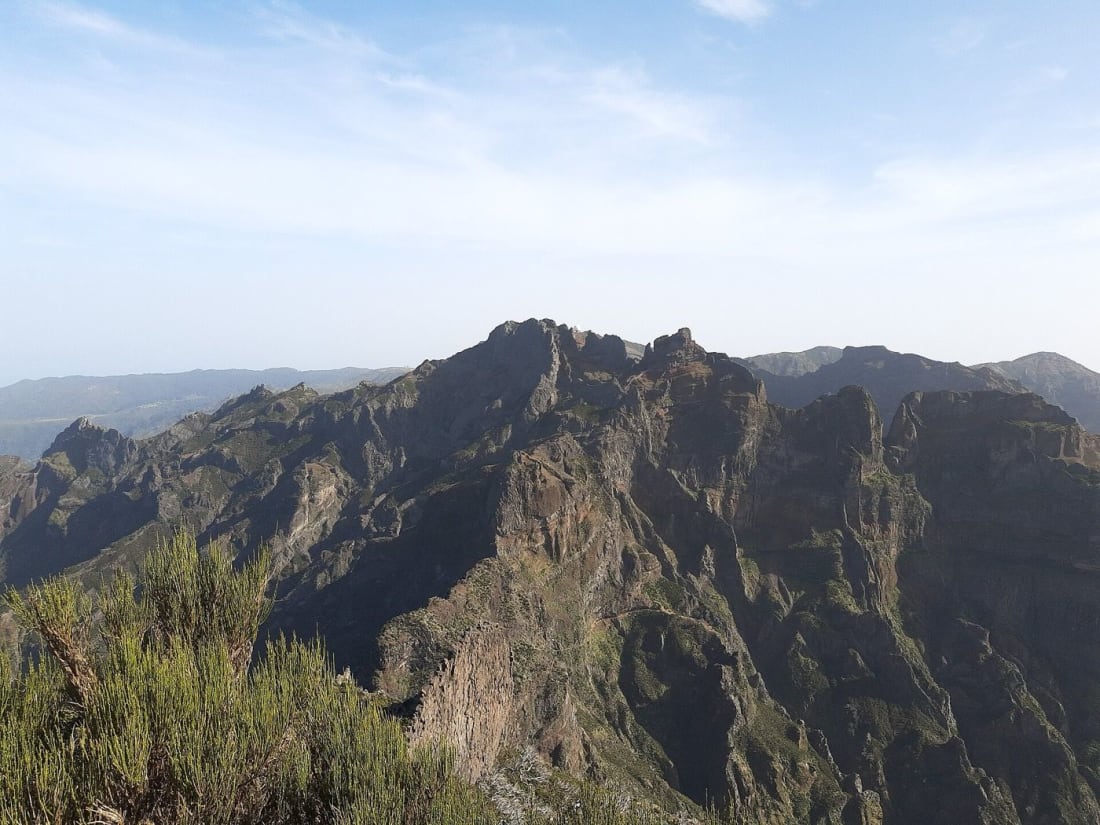
Photo: Gerda Arendt, CC BY-SA 4.0 (Wikimedia Commons)
After the ridge
End the day the way the mountain guides do: drive down into Curral das Freiras, the village at the bottom of the crater-like valley the ridge overlooks, where the grill houses serve 'espetada', beef skewers hung from laurel sticks, with a cold Coral beer. You'll have earned both, and the view from the valley floor back up to where you walked is the best dessert on the island.
FAQ
How much does the PR1 cost in 2026?
The full Arieiro to Ruivo traverse costs €10.50 per adult, booked through the SIMplifica portal. The short section to Pedra Rija is €4.50, and children under 12 walk free. Parking at Pico do Arieiro is charged separately at €4 per hour, which is one more argument for arranging a drop-off.
How do I book the PR1?
Book on simplifica.madeira.gov.pt: pick the trail, choose a date and entry slot, pay by card and keep the digital ticket on your phone. Rangers check tickets along the route between 8am and 4pm, and summer weekend slots can sell out a few days ahead.
Which is better, Pico Ruivo or Pico do Arieiro?
Arieiro has the sunrise, the road access and the drama of the first staircases. Ruivo is the higher summit at 1,862m with the wider panorama. The honest answer is that the ridge between them is the actual attraction, which is why the traverse beats either peak on its own.
Is Pico Ruivo worth it if I skip the full traverse?
Yes. The PR1.2 route from Achada do Teixeira reaches the summit in about 2.8km each way with modest climbing, runs any day of the week, and delivers the same top-of-the-island view. You'll miss the staircases and tunnels, which is either the point or the loss, depending on your head for heights.
Is the Stairway to Heaven open?
The Stairway to Heaven is the nickname for the PR1's staircase section around Pico das Torres, so its status is the trail's status. As of July 2026 that means open Friday to Sunday, one-way from Arieiro, on a booked ticket. Check SIMplifica for the current state before you drive up, since sections still close for works and weather.