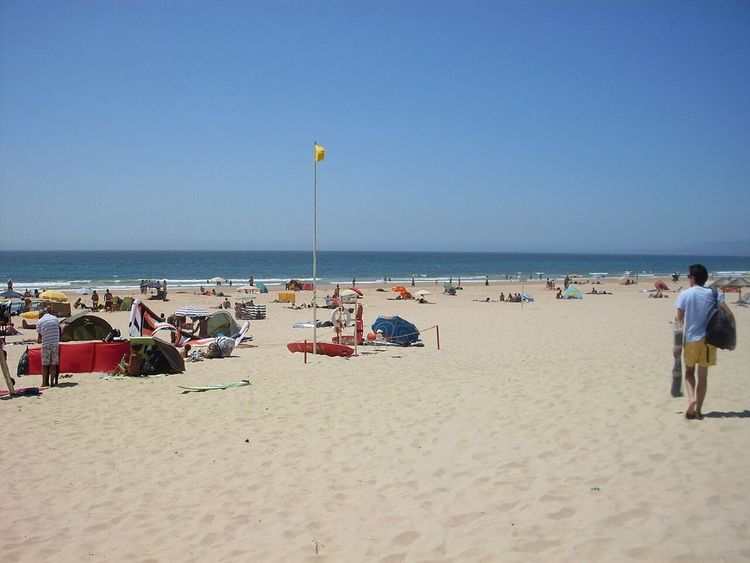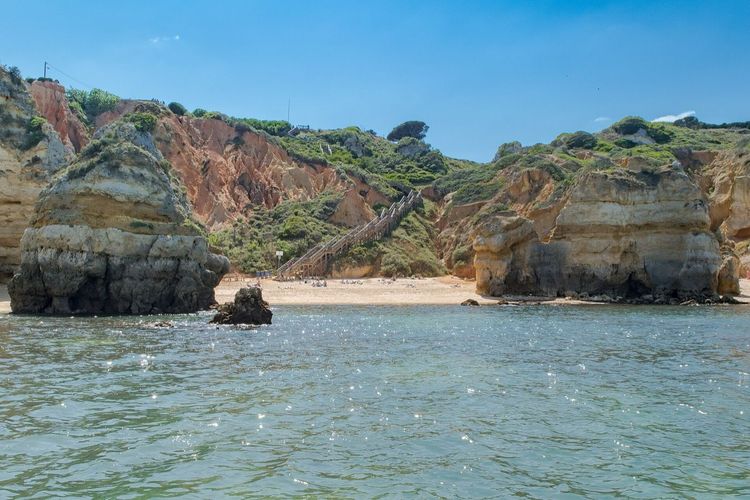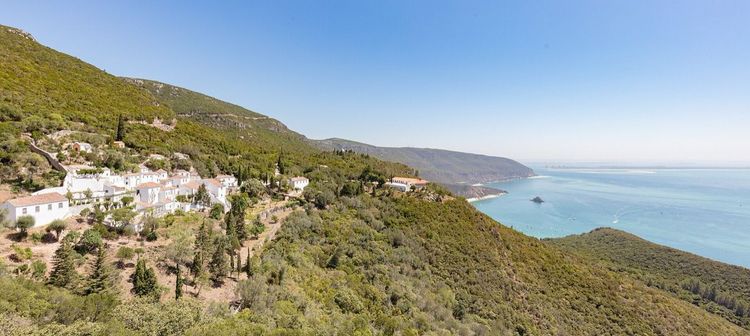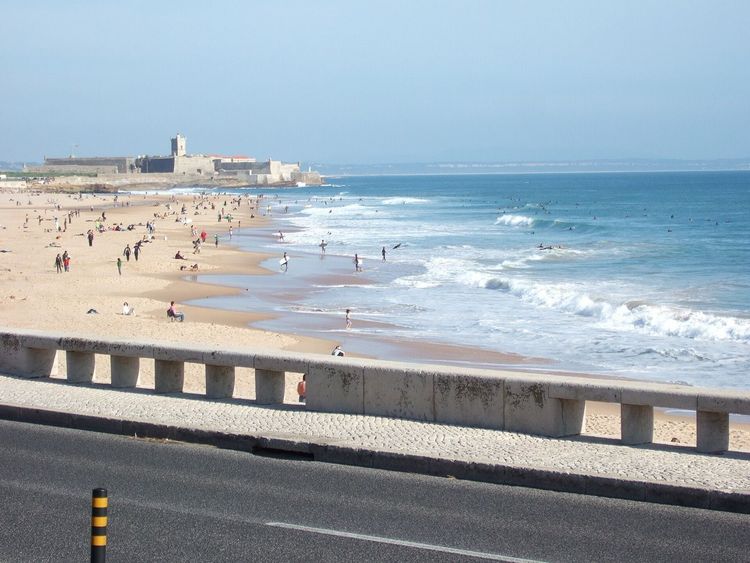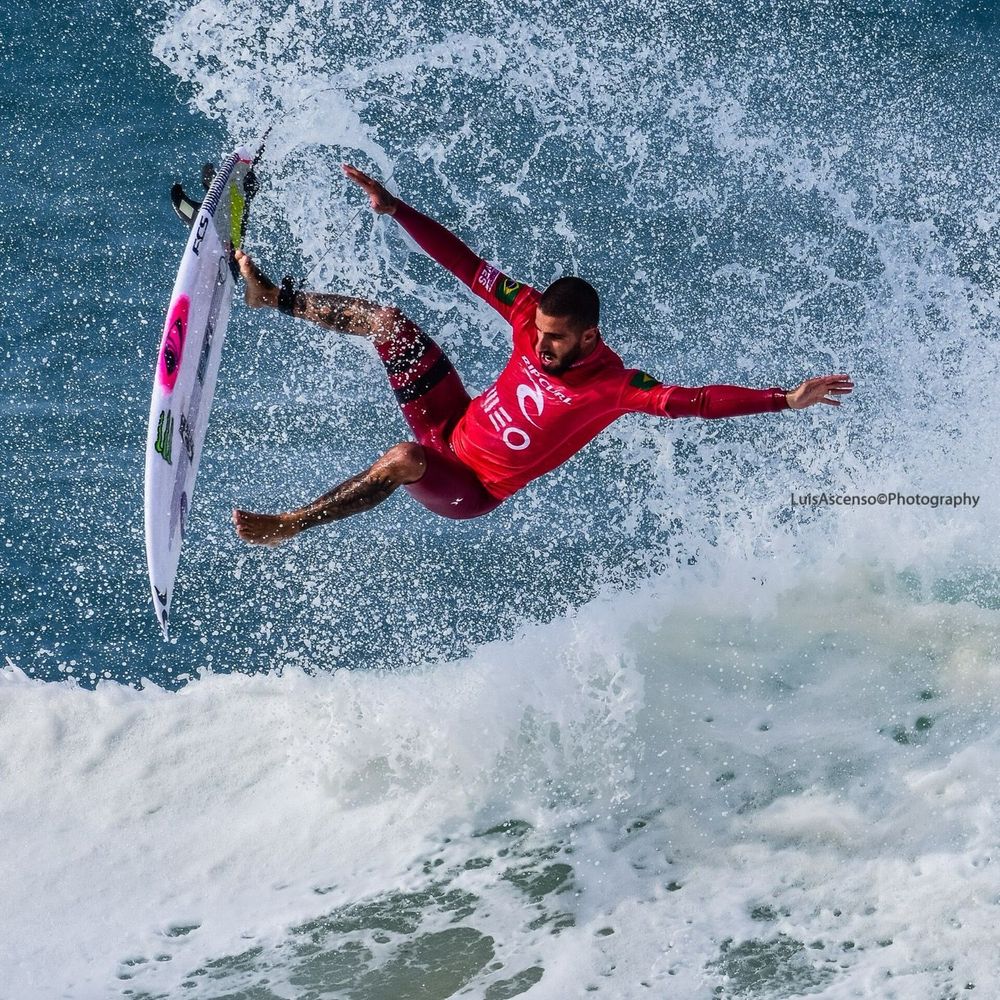
Portugal faces the Atlantic along more than 800km (500 miles) of coastline, and almost every kilometre of it catches swell. The same low-pressure systems that batter Ireland and Scotland send long, organised lines of groundswell down here, where they meet warmer water, 300 days of sunshine a year and a coast that bends through every compass point from Porto to Faro. That geometry is the whole trick. Somewhere in Portugal, on almost any day of the year, a wave is working.
You'll find the full range here: mellow beach breaks where a first-timer can stand up by lunch, world-class reef points that get compared to Indonesia, and at Nazaré, the biggest rideable waves on the planet. The infrastructure grew to match. Surf schools run year-round, camps feed and board you for a week at package prices, and three international airports sit within an hour of good waves.
Key Takeaways
- Portugal has surf for every level, every month of the year: beginner beach breaks near Lisbon and Porto, world-class reefs at Ericeira, and giant waves at Nazaré from October to March. Which part of Portugal →
- The prime season is September to November: clean groundswell, water around 18°C (64°F) and offshore mornings. Summer is smaller and friendlier, which makes June to August the best window for learning. What are the best →
- Ericeira is Europe's only World Surfing Reserve. Peniche calls itself the Wave Capital and hosts a world tour stop at Supertubos most years. Which part of Portugal →
- Budget roughly €25 to €45 for a group lesson, €15 to €25 a day for board and wetsuit hire, and €300 to €700 for a week at a surf camp with lessons included. Learning here →
- Bring rubber. The Atlantic runs 14 to 20°C (57 to 68°F) depending on season, so you'll want a 3/2 wetsuit in summer and a 4/3 in winter. Pack for the Atlantic, →
Does Portugal have good surf?
Portugal has some of the most consistent surf in Europe, and by most measures the best. The west coast picks up practically every swell the North Atlantic produces, wave-rich stretches like Peniche and Ericeira offer a dozen different breaks within a 15-minute drive, and the country holds two world-scale trump cards: a World Surfing Reserve and the biggest waves ever surfed.
Consistency is the honest headline. Plenty of places produce a better wave on their best day. Very few produce a rideable one this reliably, across so many spots, with this little effort between you and the water. The south coast adds a second system entirely: when winter storms blow out everything facing west, the Algarve's southern shore is often clean, smaller and sunny.
There's a price, and it's temperature. This is the Atlantic, and it never pretends otherwise. Even in August the sea rarely passes 20°C (68°F), and in February it sits around 14°C (57°F). A good wetsuit solves it. Pretending you're in the tropics does not.
The scene has depth to go with the geography. Portugal has produced world-tour surfers and world champions at the junior level, the world's big-wave circus winters here, and surfing is taught in some schools the way skiing is taught in Austria. For a visitor that translates into small conveniences everywhere: forecast chat with the man at the bakery, ding repair in every town, and nobody blinking when you walk into a restaurant with wet hair at 3pm.
Which part of Portugal is best for surfing?
For most travellers the best surfing in Portugal is the stretch between Peniche and Lisbon, which packs the most quality breaks and schools into an hour of the airport. Beginners get the most options around Baleal, Carcavelos and Matosinhos. Experienced surfers will point the car at Ericeira's reefs or the wilder west coast of the Alentejo. Here's the map, region by region.
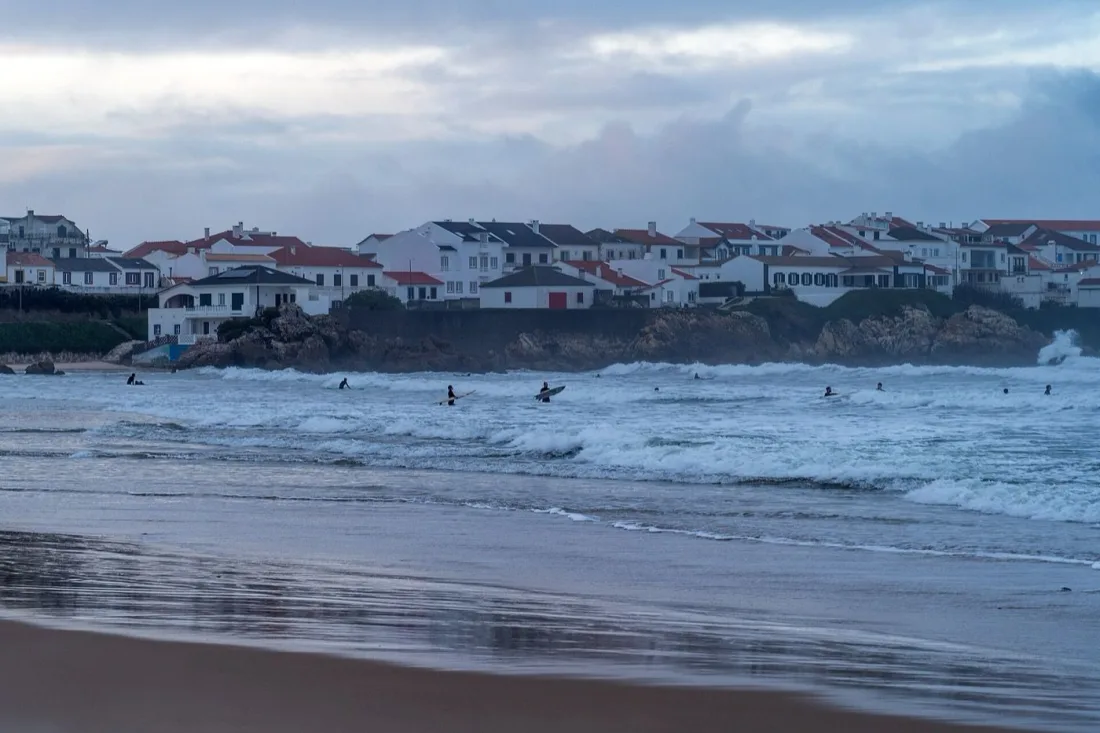
Photo: Alexkom000, CC BY 4.0 (Wikimedia Commons)
Peniche and Baleal
Peniche (pronounced pe-NEESH) is a working fishing town on a peninsula 90km (56 miles) north of Lisbon, and it markets itself as the 'Capital da Onda', the Wave Capital. The claim holds up. Supertubos, a heavy, hollow beach break just south of town, is often called the European Pipeline, and the world tour has stopped here most years since 2009. Watching that contest from the sand costs nothing.
The peninsula is the practical magic. Baleal, ten minutes up the road, is a near-island connected by a sandbar, with beaches facing opposite directions. Wind ruining one side usually means the other is groomed clean, so schools operate here almost every day of the year. You'll share the whitewater with a lot of other students at weekends. That's the trade for a wave that almost never takes a day off.
Beyond the famous names, the peninsula hides a dozen smaller peaks that soak up the crowd. Lagide, on Baleal's north side, is a long left over flat rock that intermediates fall in love with. Cantinho da Baía next door is the nursery, wide and forgiving. If you've got a week here, you'll likely surf four different breaks without moving your car more than ten minutes. The town itself stays a fishing port first: expect trawlers, fish auctions at the harbour and dinner prices that haven't heard of the world tour.
Ericeira
Ericeira (pronounced eh-ree-SAY-rah) is a whitewashed clifftop town 50 minutes northwest of Lisbon, and since 2011 it has been a World Surfing Reserve, the only one in Europe. The protected zone covers about 4km of coast and seven named waves, from the long walls of Ribeira d'Ilhas to Coxos, a right-hand point over rock that experienced surfers rank with anything on the continent.
The reefs are the reason to come and the reason to be honest with yourself. Most of the reserve breaks over rock and wants solid intermediates or better. Beginners aren't shut out: Foz do Lizandro, the sand-bottomed river mouth just south of town, hosts most of the lessons. The town itself might be the best surf base in the country, all fish grills, board shops and pastelarias within a five-minute walk.
A word on the queue at the famous spots. Coxos on a good day gathers the best surfers within 100km, and it isn't the place to learn duck-diving. São Julião, a wide sandy stretch 10 minutes south, and Ribeira d'Ilhas on its smaller days give you room to progress without anyone's eyebrows going up. Base yourself in town, check three breaks on foot before breakfast, and you'll understand quickly why half the surf industry in Portugal has an office here.
Lisbon's city beaches
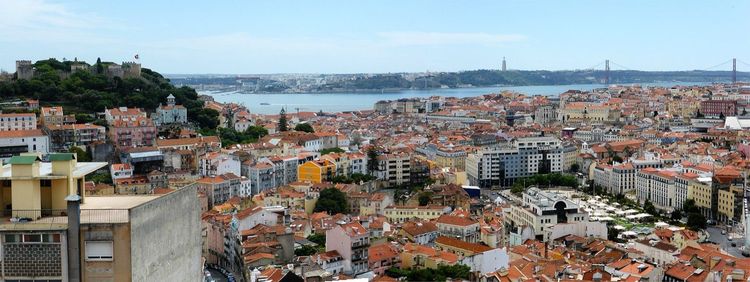
Lisbon is one of the few European capitals where you can ride a train to the surf. Carcavelos, the city's main beach break, sits 20 minutes from Cais do Sodré station on the Cascais line, and on a clean autumn day it delivers proper peaks in front of a 16th-century fort. It gets crowded, it gets scrappy in summer, and it remains a minor miracle: a real wave on public transport.
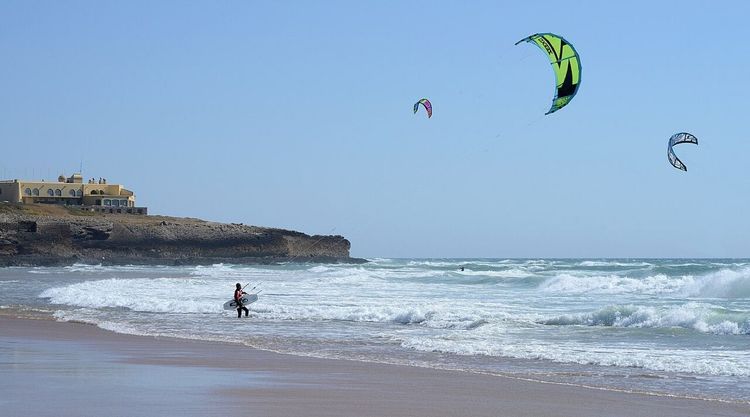
Across the river, Costa da Caparica runs south in one long ribbon of beach breaks, the training ground for half of Lisbon. Further west, Guincho catches more swell and a lot more wind, which is why the kitesurfers love it and June afternoons belong to them. If you're basing in the capital, surf lessons around Lisbon run year-round and most schools handle transport from the city.
Caparica deserves a longer look than most visitors give it. The 8km strip south of the bridge splits into named beaches, each with its own bar and its own crowd, and in summer a tiny beach train shuttles between them. Waves stay in the learner-to-intermediate band most of the year, which is precisely the appeal: you'll get 20 attempts at a takeoff in a session instead of 5, and the caipirinha shack is 40m from the whitewater. Progress loves repetition.
Basing in Lisbon also keeps the serious spots inside day-trip range, and you'll appreciate that flexibility the first time the forecast flips overnight. Ericeira is 50 minutes away, Peniche just over an hour, and even Nazaré works as a big-swell spectator run. Plenty of surfers do a whole trip this way: city apartment, rental car, and a different stretch of coast every morning while the evenings stay full of bifanas and viewpoints.
Nazaré
Nazaré, 120km (75 miles) north of Lisbon, is a normal fishing town with an abnormal piece of seabed. An underwater canyon roughly 5,000m deep aims at Praia do Norte and focuses winter swell into waves that have passed 26m (86ft). From October to March, on the handful of days a giant swell lands, the clifftop by the lighthouse becomes one of the great free spectacles in sport.
To be clear, nobody learns to surf at Praia do Norte, and the town beach is an average wave at best. Nazaré earns its place on this list as a day trip, and it's the one you'll still be describing at dinner parties in ten years. The full story of the canyon, the records and the viewing logistics is in our Nazaré big waves guide.
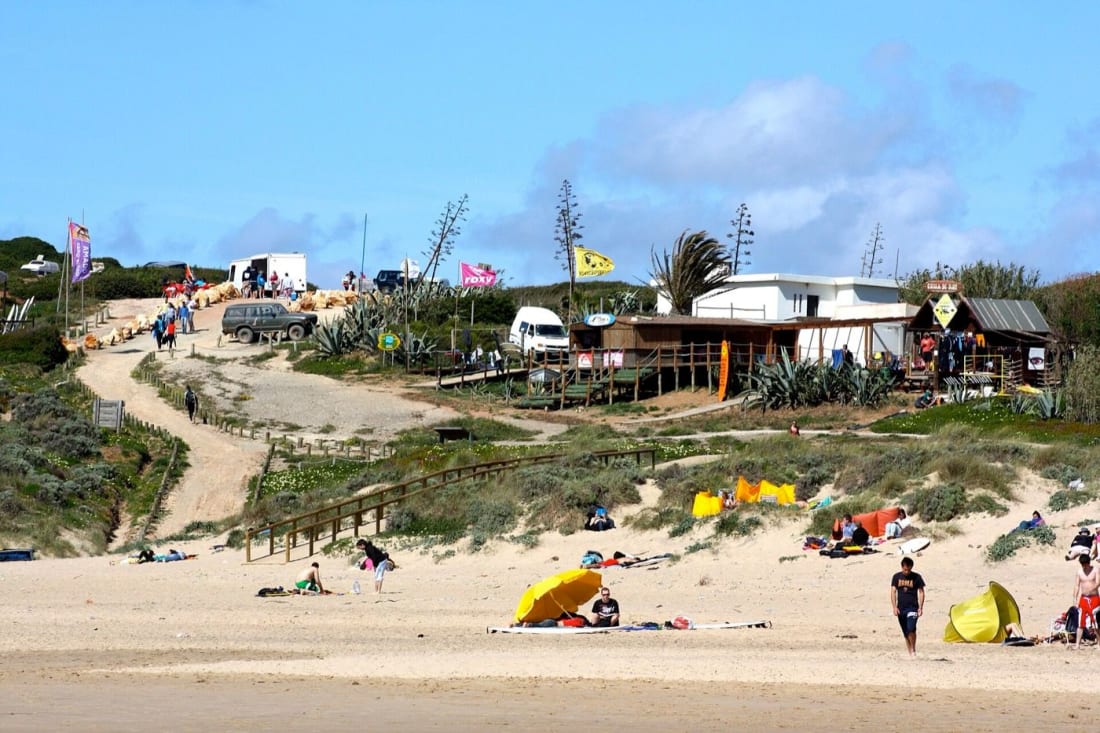
Photo: Kyle Taylor, CC BY 2.0 (Wikimedia Commons)
Costa Vicentina and the Alentejo
South of Lisbon the crowds thin out fast. The Costa Vicentina, the protected strip running down the Alentejo into the western Algarve, is where Portuguese surfers go on their own holidays: cliff-backed beaches, cold clean water and villages that still smell of grilled fish rather than sunscreen. Swell arrives with the same reliability as up north and the lineups run at half the density.
Arrifana is the anchor in the south, a crescent bay that organises messy swell into something surfable, with a fishing hamlet stacked on the cliff above. Praia do Amado, a few headlands down, is one big sandy classroom, home to some of the longest-running schools in the country. Neither has much nightlife. Ask anyone who surfs here why they drove three hours past Lisbon and they'll tell you: that's the point.
Plan the practicalities a little more carefully down here. Villages sit 10 to 20 minutes' drive from the sand, fuel stations thin out, and the best beach of the day might have a dirt-road approach and no lifeguard outside July and August. That's the deal you're accepting, and the reward is surfing a clean peak with six people out while the car parks of Peniche overflow. Odeceixe, where a river wraps around the beach, might be the prettiest classroom on the entire coast.
Sagres and the Algarve
Sagres sits on Portugal's southwestern corner, which is a cheat code. Within 15 minutes you have beaches facing west (Beliche, Tonel) and south (Mareta), so something is nearly always working and something is nearly always sheltered. Winter here means surfing in sunshine while the rest of Europe scrapes ice off windscreens, which is why the vans migrate down every November.
The south coast proper, from Lagos east, is smaller and gentler. Meia Praia and Porto de Mós pick up enough south and west swell to run lessons most of the year, and when a big winter storm closes out the entire west coast, this shore often offers the only clean waves in the country. Pair a surf morning with the rest of the region using our guide to things to do in the Algarve.
The daily routine in the far south writes itself around wind. Mornings are usually glassy on the south shore, so you'll surf Mareta or Meia Praia early, eat a long lunch, then either chase the west coast in the afternoon or surrender to the beach. From November to March the region fills with a rolling population of van-lifers and winter regulars, and the vibe in the Sagres car parks lands somewhere between a ski resort and a fishing village. It works better than it sounds.
Porto and the north
Matosinhos, Porto's beach suburb, might be the easiest place in Iberia to try surfing: a long, protected beach break at the end of a metro line, ringed by schools and cheap board hire. The wave is soft and forgiving, which is exactly what you want on day one. Espinho, 20 minutes south, adds a more serious right-hander for when you outgrow it.
The catch up north is climate. The water is a degree or two colder than Lisbon's, the fog rolls in more often, and winter sessions want boots and a hood. In exchange you get Porto at your back for the evenings, which is a fair deal by any accounting.
Espinho is the north's quiet overachiever. The right-hander off the breakwater gets properly good on a winter groundswell, the town has run a surf scene since the 1970s, and you can reach it on the suburban train with a board under your arm. Further up, Viana do Castelo and the beaches toward the Spanish border see a fraction of the traffic of anywhere else on this page. Cold, yes. Empty, also yes.
| Region | Base town | Best for | Prime months | Marquee spots |
|---|---|---|---|---|
| Peniche | Baleal | All levels, consistency | Sep-Nov | Supertubos, Baleal, Lagide |
| Ericeira | Ericeira | Intermediate+, reefs | Sep-Nov | Ribeira d'Ilhas, Coxos |
| Lisbon coast | Lisbon / Cascais | Beginners, no-car trips | Sep-Nov, Jun-Aug | Carcavelos, Caparica, Guincho |
| Nazaré | Nazaré | Watching giants | Oct-Mar | Praia do Norte |
| Costa Vicentina | Aljezur | Escaping crowds | Sep-Nov | Arrifana, Amado |
| Algarve south | Sagres / Lagos | Winter sun, learners | Oct-Apr | Beliche, Mareta, Meia Praia |
| Porto north | Matosinhos | First lessons, city base | Jun-Oct | Matosinhos, Espinho |
What are the best months to surf in Portugal?
September to November is the best time to surf in Portugal for most levels. The first serious groundswells arrive while the water holds its summer warmth at 17 to 19°C (63 to 66°F), mornings blow light offshore, and the summer crowds have flown home. If you can only pick one window and you already know your way around a board, pick autumn.
The rest of the calendar splits neatly by level. As of summer 2026, nothing about this pattern has changed in living memory, so you can plan on it.
- December to February is the heavy season. Storm swells stack up, the west coast regularly hits 3 to 5m faces, and Nazaré does its famous thing. Experts feast. Everyone else drives south to the Algarve, where winter days of 17°C (63°F) and clean chest-high waves are routine.
- March to May is the sleeper. Swell stays reliable, crowds stay thin, prices stay low. The water is at its coldest, around 14 to 15°C (57 to 59°F), so bring the thick wetsuit.
- June to August is beginner gold. The Atlantic goes small, most days run 1 to 1.5m of soft windswell, and every school in the country is running double shifts. Advanced surfers will be hunting the few reefs that still work. Learners will have the best month of their lives.
One planning note: the seasons also move sideways. A February week that's unrideable in Ericeira can be perfect in Lagos, four hours south. Timing matters less in Portugal than mobility does, and our month-by-month look at the south coast in the Algarve seasons guide covers that half of the equation.
For planning numbers, think in wave heights rather than months. A typical July day on the west coast runs 0.8 to 1.5m; October averages 1.5 to 2.5m with clean 3m days mixed in; January regularly serves 3 to 5m faces and picks the surfers rather than the other way around. The south coast usually runs at half those figures. None of it is a promise, and that's rather the charm: you'll check the forecast each evening like everyone else in the house.
Ask anyone who's chased swell here for a decade and they'll tell you the same thing: Portugal doesn't really have a surf season. It has a volume dial, and autumn is when someone turns it up.
Learning here: camps, lessons and what they cost
Portugal is arguably the easiest place in Europe to learn to surf, and the pricing reflects a mature market rather than a boutique one. A group lesson typically runs €25 to €45 for around two hours, wetsuit and board included. Private coaching lands between €50 and €80. Renting a board and wetsuit on your own costs about €15 to €25 a day, less by the week.
Surf camps are the packaged version, and the format is standardised by now: shared or private rooms, breakfast, five mornings of lessons, video review at the better ones, yoga at roughly all of them. Expect €300 to €700 for the week depending on season and how close your bed is to the sand. Baleal, Ericeira and the Amado area hold the biggest clusters, and hundreds of camps compete nationwide, which keeps quality up and prices sane.
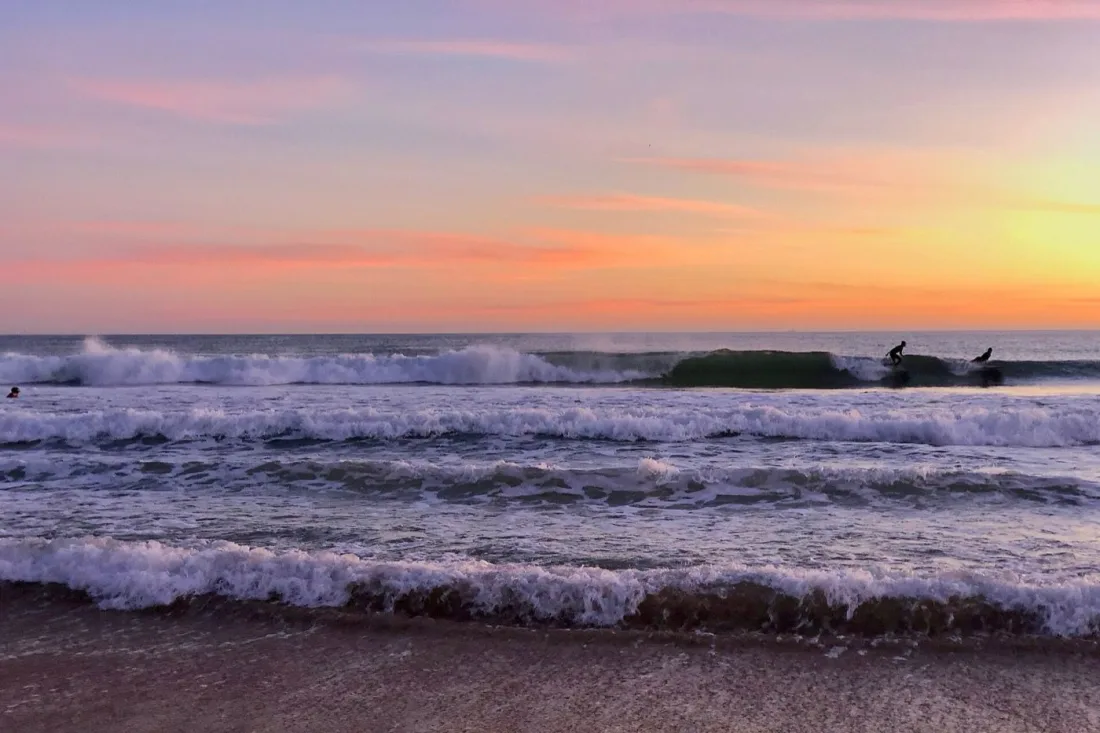
Photo: Sonse, CC BY 2.0 (Wikimedia Commons)
Two honest tips from the water. First, book the morning slot: Portuguese afternoons bring onshore wind almost on schedule, and whitewater at 9am is a friendlier teacher. Second, if you're past the whitewater stage, say so loudly when booking. Schools default beginners to the foam unless you push, and a green-wave coach is worth the upcharge.
What a week at a surf camp actually looks like
The standard Portuguese surf camp week follows a rhythm that hasn't changed much in a decade, because it works. You'll get five days of coached surfing, usually one two-hour session each morning when the wind is kindest, with theory on the beach before you paddle and often video review at dinner. Afternoons are yours: a second free surf on rented boards, a skate bowl, a trip to the nearest viewpoint, or honest napping.
Group sizes matter more than glossy websites, so ask directly. The legal and sensible ratio is around 8 students per instructor in the water; the good camps run 5 or 6. Ask too whether coaches rotate with your group all week (better) or reshuffle daily (worse), and whether 'video analysis' means a coach talking you through your own takeoff or a highlights reel for Instagram. The difference shows up in how fast you improve.
Costs cluster tightly. A dorm bed with breakfast and daily lessons runs €300 to €450 a week in the shoulder months, rising to €450 to €700 in July and August. Private rooms add €150 to €300. Baleal and Ericeira carry the widest choice, the Amado area the mellowest scene, and Matosinhos the cheapest city-based versions. Book the morning-lesson camps and you won't regret a single 7am alarm.
Pack for the Atlantic, not the postcard
The single most common mistake visitors make is packing for the air temperature instead of the water. Lisbon in August feels tropical at 30°C (86°F); the sea that afternoon is 18°C (64°F) and will let you know it. Year-round, the kit answer looks like this:
- Summer (Jun-Sep): a 3/2 wetsuit covers everyone except the genuinely cold-blooded. On the south coast in late August you might get away with a spring suit.
- Winter (Nov-Mar): a 4/3 with sealed seams is the standard, plus boots in the north. Hoods appear north of Porto and on dawn patrols.
- Always: reef booties for Ericeira's rock, sunscreen regardless of month, and a 20 to 30 litre drybag for wet kit, because you will be changing in a car park. Everyone does.
Boards are easy to rent everywhere, so unless you're particular about your equipment, flying with a coffin bag is optional. Airlines connecting Lisbon, Porto and Faro charge €30 to €60 each way for a board bag when they charge at all, and every surf town has at least one shop doing decent hire and ding repair.
If you're staying longer than a fortnight, buying second-hand often beats renting. Ericeira, Baleal and Caparica all have shops with used racks where €150 to €250 gets a serviceable board, and they'll usually buy it back at the end of your stay for a third less. Wetsuits are the item worth buying new and taking home; a decent 3/2 starts around €120 here, and surf-shop staff will size you honestly because they don't want the return.
Rent a car unless you're staying at one break
Portugal's surf logistics reward mobility more than any other factor. The coast changes character every 20km, wind that ruins one beach grooms another, and the difference between a wasted day and the session of your trip is often a 40-minute drive. A small rental runs €25 to €45 a day in summer and can drop under €20 in the off-season, and the A8 motorway puts Lisbon airport 55 minutes from Baleal.
The no-car version still works, with narrower horizons. Buses run from Lisbon's Campo Grande to Peniche and Ericeira roughly hourly and take about 90 minutes; the train reaches Carcavelos and Caparica's buses leave from the south side of the bridge; Porto's metro rolls straight to Matosinhos sand. Pick one base, accept its moods, and you'll still surf most days.
Where you fly into shapes the trip. Lisbon serves the Peniche-Ericeira-Caparica triangle, Faro owns the Algarve and the southern Costa Vicentina, and Porto covers the north. As a rule of thumb, nowhere on this page is more than 90 minutes from one of the three.
Where the giant waves fit in
You can't talk about surfing in Portugal without the elephant off the headland. Nazaré's Praia do Norte holds the world records, including the 26.2m (86ft) wave that made Sebastian Steudtner a household name, and between October and March the town becomes big-wave surfing's global stage. None of it is participatory for normal humans, and all of it is worth seeing once.
Treat it as theatre and it slots neatly into any surf trip on this coast: check the forecast for a red-letter swell, drive to the lighthouse, stand with a few thousand other people and recalibrate your sense of scale. The physics, the records, the safest viewing spots and the honest answer about danger all live in our dedicated Nazaré big waves guide.
Lineup etiquette and staying safe
Portuguese beaches run on a flag system, and it's enforced: green means swim and surf freely, yellow means experienced surfers only, red means the lifeguards would like everyone out of the water, and a checkered flag marks zones reserved for board sports. Lifeguards staff the main beaches from mid-June to mid-September. Outside those months you're on your own judgement, which is exactly when the ocean gets bigger.
Rips deserve one honest paragraph. Almost every beach break here digs channels of water moving seaward, and they're the taxi the locals use to paddle out. If one catches you unprepared, don't fight it straight back to shore; paddle across it, parallel to the beach, and it lets go within 30 or 40m. Ask the lifeguard or any school where the day's rips are running. They'll point them out in ten seconds and you'll spot them yourself by day three.
In the lineup, the rules are the same as everywhere: the surfer closest to the peak has priority, paddling around someone to jump the queue makes enemies fast, and a smile plus 'bom dia' buys more waves than a €900 board. At serious reefs like Coxos or a heavy Supertubos day, watch from the shoulder first. At every school beach in the country, none of this pressure exists and the water is full of people falling happily.
A last practical word
One last budgeting note, because it decides trips: Portugal remains cheap for a surf destination of this quality. A galão (milky coffee) at the beach bar is €1.50 to €2, a proper lunch menu runs €9 to €13, and a week of camp, car and flights from most of Europe still lands under what three days costs in the better-known corners of France. Your wallet won't be the reason you go home.
End the day the way the locals do. At Ribeira d'Ilhas the restaurant above the sand serves grilled fish and cold Sagres beer with a straight view of the lineup, and at Baleal the beach-road grills do the same for the Peniche crew. Order the 'dourada', a whole grilled sea bream, count the sets rolling in while you eat, and start planning tomorrow's dawn patrol.
And the dawn patrol is worth planning. The classic Portuguese surf morning starts in the dark at a pastelaria counter, a galão in one hand and a warm pastel de nata in the other, then delivers you to the sand just as the first light shows what the night's swell built. Twenty minutes later you're in the water with the regulars, and the whole country is still asleep behind you. That's the routine that turns one trip here into an annual one.
FAQ
Does Portugal have good surf for beginners?
Portugal is one of the best countries in the world to learn, with soft, sandy beach breaks near every major city and a huge, competitively priced school scene. Matosinhos, Carcavelos, Baleal, Foz do Lizandro and Praia do Amado are the classic first-wave beaches, and summer's small windswell makes June to August the friendliest learning window.
What is the surfing capital of Portugal?
Peniche officially brands itself 'Capital da Onda', the Wave Capital, and backs the title with Supertubos and a world tour stop most years. Ericeira has the stronger pure-quality claim as Europe's only World Surfing Reserve. In practice they sit 45 minutes apart, so most trips simply include both.
Is surfing better in Morocco or Portugal?
They're different trips rather than rivals. Portugal wins on consistency, wave variety, infrastructure and ease of travel from Europe. Morocco wins on warmer winter water and long sandy right points like Anchor Point. A fair rule: learn or chase variety in Portugal, escape deep winter cold in Morocco.
How many surfers have died at Nazaré?
One professional big-wave surfer has died at Praia do Norte: Brazilian Márcio Freire, in January 2023 during a tow session. Given the size of what gets ridden there, the safety record is remarkable, built on jet-ski teams, spotters and years of drilled rescue routines. The full context is in our Nazaré guide.
Do you need a wetsuit in Portugal?
Yes, essentially year-round. The Atlantic here runs from about 14°C (57°F) in late winter to 19 or 20°C (66 to 68°F) in early autumn. A 3/2 suit covers summer, a 4/3 covers winter, and only on the warmest south-coast August days do locals trade down to a spring suit or trunks.