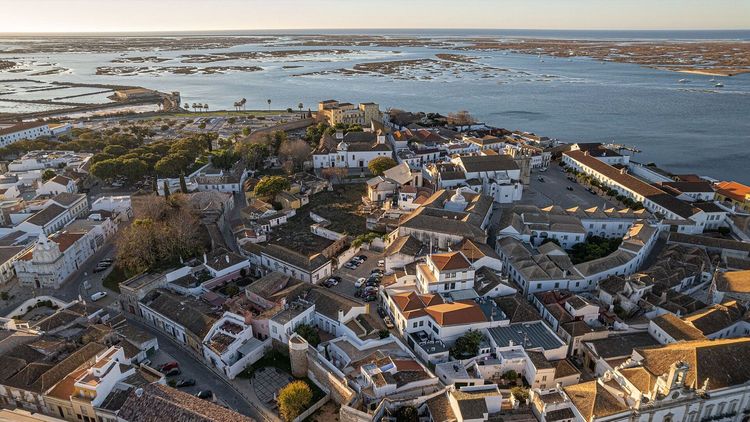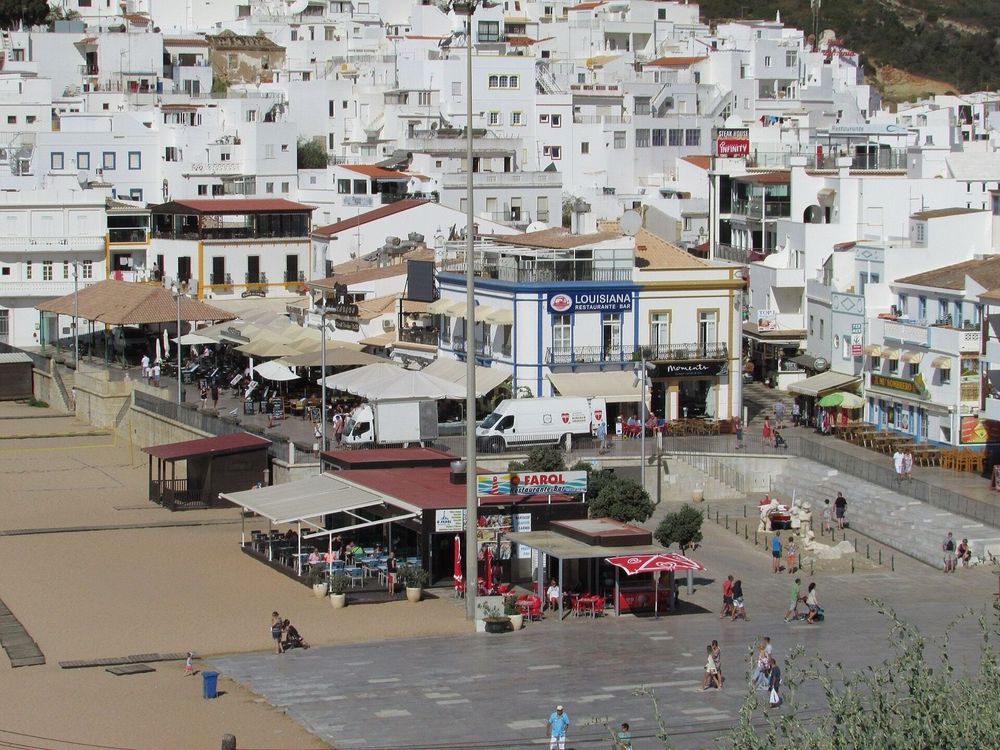
There is a free public lift in the middle of Albufeira that drops you 28 metres from the town square onto the sand. Plenty of visitors never find it, because they are staying two kilometres east in a part of town that shares the name and almost nothing else.
That gap is the thing to understand before you book. Albufeira works as three separate places wearing one postcode, and the one you sleep in decides whether your week is quiet dinners in whitewashed lanes or shots poured on a neon street at two in the morning. Both exist. Both are fine. Getting them mixed up is the mistake.
So this is a local's guide to the things to do in Albufeira, written around that split: where each part of town actually sits, which beaches reward the walk, what the new street rules mean for you, and which famous sights sold as "Albufeira" are really a half-hour drive away.
Key Takeaways
- Albufeira is three towns in one: the Old Town, the Strip at Areias de São João, and the marina. See the split →
- The Strip is not at the marina, whatever the guidebooks say. It sits about 2 km east of the Old Town. Where things are →
- Albufeira holds 24 Blue Flags in 2026, more than any other Portuguese council, yet its main beach lost one. Beaches →
- Street rules carry real fines since June 2025, including swimwear away from the beach. The rules →
- Benagil, Marinha and the water parks are day trips, not Albufeira. Plan the driving. Day trips →
Three Albufeiras, and Why the Wrong One Ruins the Trip
The Albufeira Strip runs along Avenida Doutor Francisco Sá Carneiro in Areias de São João, roughly two kilometres east of the Old Town, and the marina sits about a kilometre and a half west of it. Three places, three directions, one name.
Get this wrong and the holiday sours in the first evening. Two of the three guides ranking highest for this town put the Strip at the marina. One of them tells you to avoid the marina precisely because the Strip is there. It is not, and the marina is the calmest of the three after dark, a horseshoe of painted apartment blocks with fish restaurants and a handful of bars that close at a civilised hour.
Here is how the three break down.
The Old Town is the historic core above Praia dos Pescadores: white houses, cobbles, a square full of café tables, and something like a hundred restaurants packed into a few lanes. It has nightlife, but the crowd skews older and the noise stops earlier. Families and couples belong here.
Areias de São João, which everyone calls the Strip or the New Town, is a grid of hotels and apartment blocks behind Praia da Oura. The avenue itself is themed bars, clubs and karaoke, loudest from late June through August and at its wildest at weekends. If you are twenty-two and this is the point of the trip, book here. If you are not, do not.
The marina is west, past the old fishing harbour, and it is a working departure point more than a destination. Boats leave from here for the caves, the dolphins and the deep-sea fishing, and the restaurants around the pontoons feed the people getting on and off them.
A useful rule of thumb: if the listing photo shows a swimming pool and a shuttle bus, you are being sold Areias de São João. If it shows a lane too narrow for a car, you are in the Old Town.
Browse tours and experiences in Albufeira and you will see the same geography in the pickup points, which is often the fastest way to work out where a hotel really is.
What Is Albufeira Best Known For?
Albufeira is best known for two things at once: the Algarve's biggest concentration of beaches and nightlife, and a whitewashed old fishing town that survived the resort growing around it.
The council counts 24 Blue Flag beaches in 2026, the highest total of any municipality in Portugal, plus 13 accessible beaches. That is the real headline. The Strip gets the reputation, and the town has leaned into it for forty years, yet most of Albufeira's coastline is quiet cliff-backed sand that empties out the moment you walk five minutes from a car park.
The old fishing village underneath all of it is still legible if you look. Boats worked off Praia dos Pescadores (Fishermen's Beach) within living memory, and the lanes above it were laid out long before anyone thought of putting a hotel here. For the wider regional picture, our guide to things to do in the Algarve sets Albufeira against the coasts either side of it.
The Old Town, and the Lift That Gets You Into It
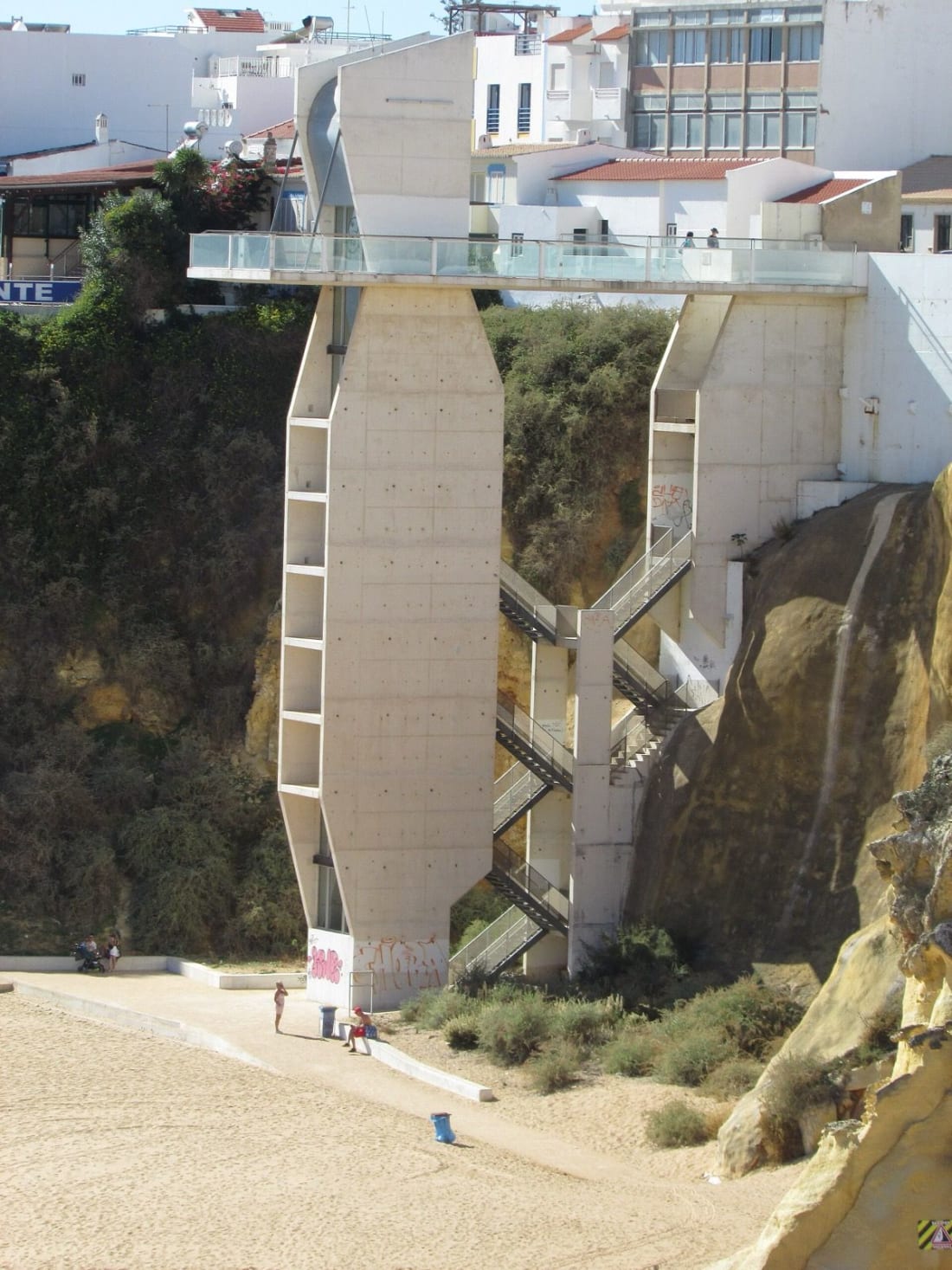
Photo: Kolforn, CC BY-SA 4.0 (Wikimedia Commons)
Three routes take you from the Old Town down to the water, and each one is a small piece of engineering worth using.
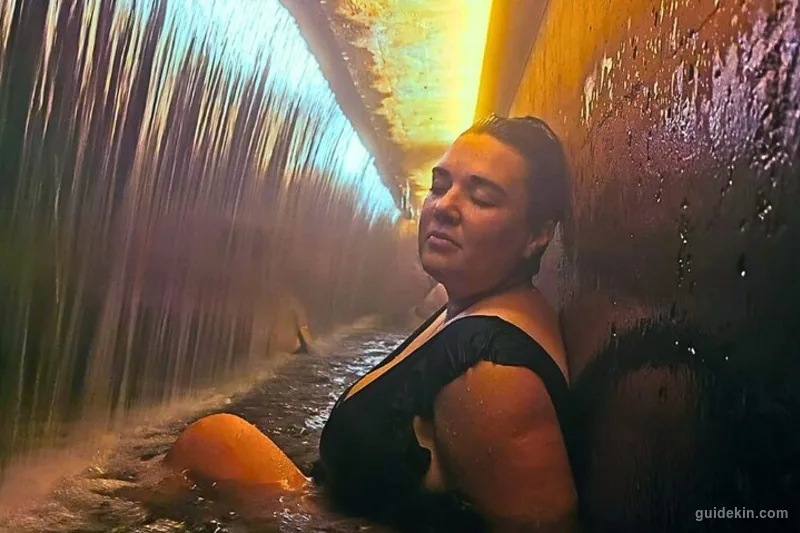
The Elevador do Peneco opened on 20 May 2009, stands 28 metres tall, carries 13 people, and costs nothing. It runs from the Rossio (the upper square) straight down to Praia do Peneco, and it is the only step-free way onto the sand for anyone with a wheelchair or a pushchair. Second, a tunnel cut through the arriba (the limestone sea cliff) runs from the narrow streets of the historic centre out onto the middle of the beach. Third, escalators climb from Largo 25 de Abril at the bottom back up into town, which matters more than it sounds at four in the afternoon in August.
Above them sits Largo Engenheiro Duarte Pacheco, the old town square, where every esplanada (café terrace) runs its tables to the edges and the evening passeio (the stroll people take before dinner) fills the space between them. Rua 5 de Outubro, the lane above the tunnel, is the main shopping run.
The Museu Municipal de Arqueologia on Praça da República charges €3.13 and is genuinely good for the price, four sections covering prehistoric, Roman, Islamic and early modern finds from the surrounding countryside. It opens 09:30 to 17:30 Wednesday to Friday, and 09:30 to 12:30 plus 13:30 to 17:30 on Tuesdays, Saturdays, Sundays and holidays. Mondays it is closed. Entry is free for under-14s, students, teachers and pensioners.
One correction worth making, because several guides repeat it. Albufeira's Moorish castle does not survive. The 1755 earthquake brought down two sea bastions, three towers and much of the walls, and what is left today is a stretch of wall and a single tower near the old North Gate on Rua Joaquim Pedro Samora. It is a back street, and it takes about ninety seconds to see. Go for the fact of it, and skip anyone promising castle views over the beach.
Detour: the Igreja de São Sebastião off Praça Miguel Bombarda holds the sacred art collection and takes ten minutes. Pair it with the museum and you have covered the town's history before lunch.
The Beaches, Sorted by How Far You Will Walk
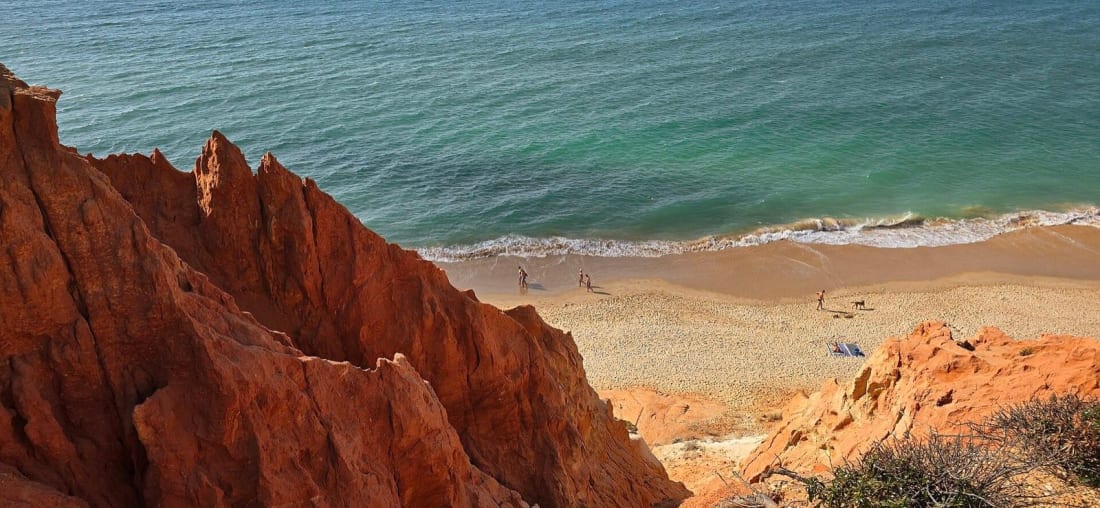
Photo: Watty62, CC BY-SA 4.0 (Wikimedia Commons)
Albufeira's coast runs about twenty kilometres, and the character changes every few hundred metres of it. The town beaches you reach on foot; the good ones need a bus, a bike or a car.
Start with the news, because it is the sort of thing nobody prints. Praia dos Pescadores, the main town beach, lost its Blue Flag in 2026 on water quality. The Blue Flag association calls it a one-off tied to weather during the previous época balnear (bathing season) rather than a lasting problem, and the beach is still lifeguarded, still busy and still the postcard shot. It simply is not certified this year, which sits oddly in the council that holds more flags than any other in the country.
| Beach | What it is like | Getting there | Blue Flag 2026 |
|---|---|---|---|
| Pescadores / Peneco | The town beach, 1.3 km, busy, lifeguarded | Lift, tunnel or steps from the Old Town | Peneco yes, Pescadores no |
| Alemães | The quieter eastern end of the same sand | Walk 10 min east along the front | Yes |
| Oura | Golden, small, packed in summer | Below the Strip, walkable from Areias | Yes |
| Santa Eulália | Low cliffs, calmer, hotel crowd | Bus or 25 min walk east | Yes |
| Olhos de Água | Freshwater springs in the sand at low tide | 7 km east, bus or car | Yes |
| Falésia | Six kilometres of orange cliff and sand | 10 km east, car or taxi | Yes |
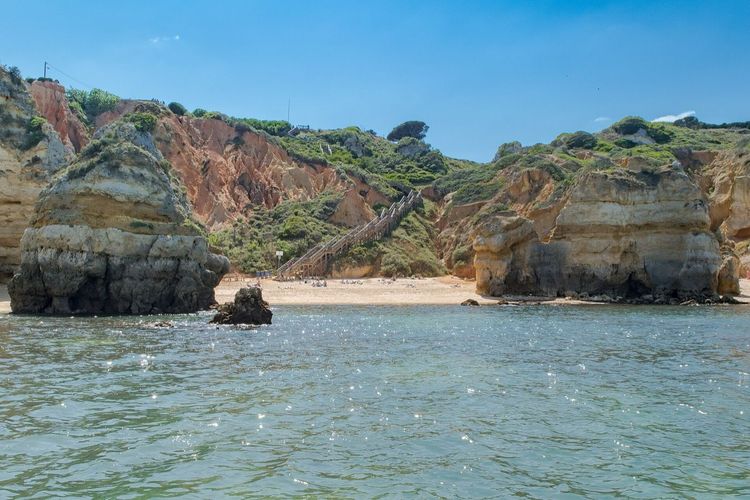
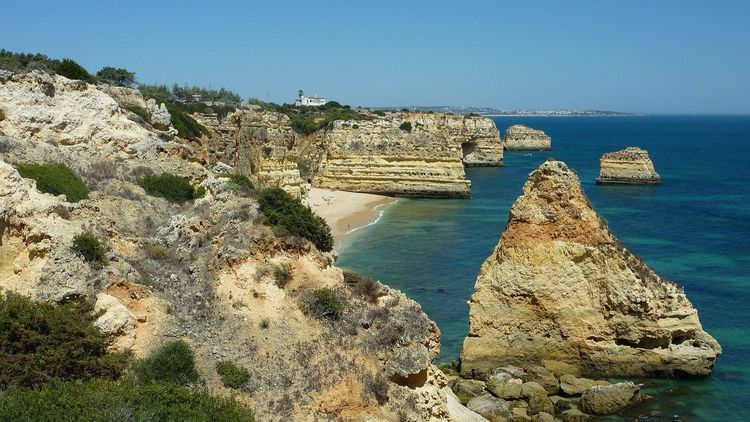
| São Rafael | Cliffs, arches, the prettiest cove near town | 4 km west, car or taxi | Yes |
| Coelha / Castelo / Evaristo | Small coves, steps down, low crowds | West by car | Yes |
| Salgados / Galé | Long flat sand backed by a lagoon | 10 km west by car | Yes |
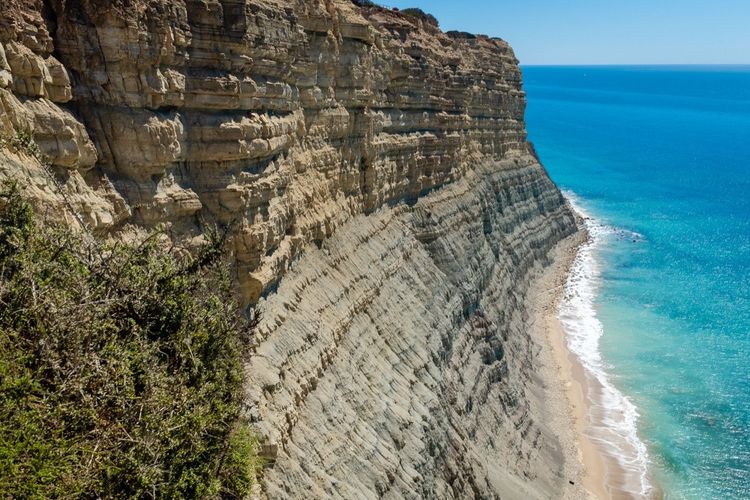
Praia da Falésia deserves its own line, and its name is a description: falésia means cliff. It came fifth in Tripadvisor's Travellers' Choice ranking of the world's beaches for 2026, and it is the only Portuguese beach in that year's World's 50 Best Beaches list. Guides still quote the 2024 award, when it took first place worldwide, so if you see "the best beach in the world" on a page, you are reading something two years stale. The beach itself is six kilometres of ochre cliff over pale sand, and the best access is at Açoteias or Alfamar rather than the busier Vilamoura end.
Olhos de Água is the one that rewards timing. Olhos de água means eyes of water, and at low tide freshwater springs push up through the sand and run to the sea in small channels. Arrive at high tide and you will not see any of it.
Local tip: check the tide table the night before. The springs show for roughly two hours either side of low water, and there is no other reason to time a beach visit here.
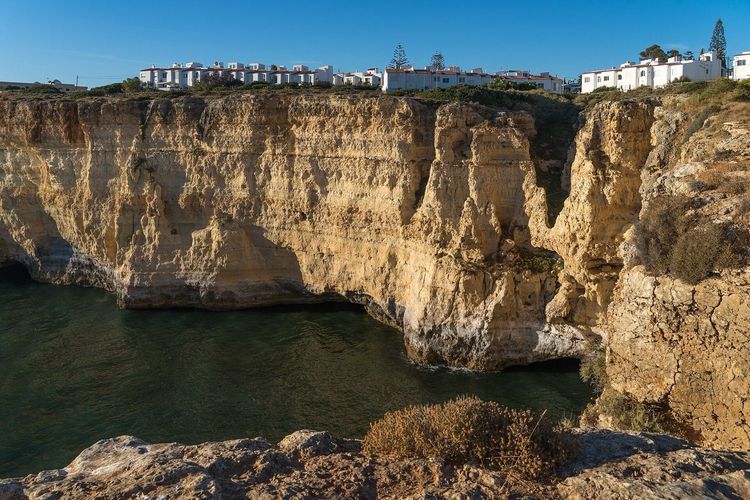
West of the marina the coast turns to coves under golden cliffs, and Praia de São Rafael is the one to pick if you only make one trip out there. Our guide to the best beaches in the Algarve covers how these compare with the coast further west, and the national picture is here.
Is Albufeira a Party Town?
Partly. The Strip at Areias de São João is one of Portugal's biggest nightlife strips, but it is contained: two kilometres away, the Old Town closes down at a normal hour and the marina is quieter still.
That containment is the whole design, and it is why families and stag groups can share a town without ruining each other's week. On the Strip you get themed bars, clubs running until sunrise, karaoke and promoters working the pavement. Peak intensity runs from late June to the end of August, and Thursday to Saturday nights are the loudest. Praia da Oura at the bottom of the avenue is where everyone recovers the next morning.
Old Town nightlife is a different animal. The bars around Rua Cândido dos Reis fill up from about ten, the crowd is broadly over thirty, and a lot of the evening happens at outdoor tables rather than inside a club. Live music is common, and so are places that shut by two.
The marina is the third option, mostly restaurant terraces and a few late bars that keep normal hours.
If you are booking accommodation and you value sleep, the practical test is distance from the avenue rather than the name of the neighbourhood. Three streets back from the Strip is already much quieter, and the hotel belt around Santa Eulália and Olhos de Água is quieter again.
Photo: Kolforn, CC BY-SA 4.0 (Wikimedia Commons)
The Street Rules That Changed, and the Fines Behind Them
This is the part almost no English guide mentions, and it applies to you the moment you step out of your hotel.
Albufeira's Código de Comportamentos (code of conduct) came into force on 24 June 2025, after the municipal assembly approved it on 6 June and it was published in the national gazette. It sets fines for behaviour in public space that had become normal here and was making residents miserable.
Wearing a bikini or swimming trunks away from the beach carries a fine of €300 to €1,500. The same band covers drinking alcohol in the street and urinating in public. Full nudity or sexual acts in public run from €500 to €1,800. A lower band of €150 to €750 covers sleeping rough, spitting, camping and cooking in public space.
The rules do not apply on the beaches themselves, in bathing zones, in the access routes and car parks that serve them, or in the outdoor areas of hotels. Walking from the sand to your apartment in a swimsuit is the grey area, and the safe move is to throw on a shirt and shorts once you leave the beach access.
As of July 2026 the code is a year old and under review. The mayor says it has produced less abuse but wants it revised and enforced harder, pointing out that the Polícia Municipal (the council's own police force) has nine officers on the street, with five or six more expected by the end of the year. A legal review is running now, and changes could take effect during this summer. Nobody has been bankrupted by a beach towel, and enforcement so far has leaned on warnings, yet the fines are real and the officers are out. The council publishes the current text on the Albufeira municipality site.
Boat Trips From the Marina, and Where Benagil Actually Is
Almost every boat you book in Albufeira leaves from the marina, west of town, and the two big sellers are dolphin watching and the sea caves.
Dolphin trips run in fast RIBs or larger catamarans, take about two hours, and morning departures give you the better odds. Cave trips run along the coast to the arches and grottoes west of here, and the smaller the boat, the further inside it can go. Both are easy to compare on our Albufeira boat and cave trips and dolphin watching pages.
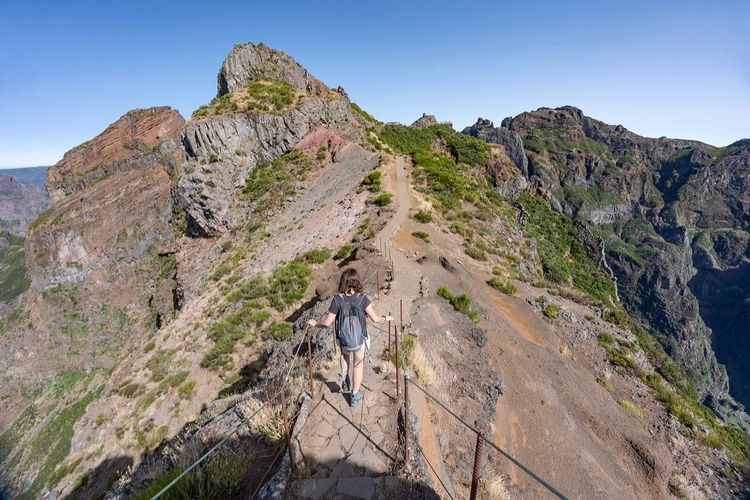
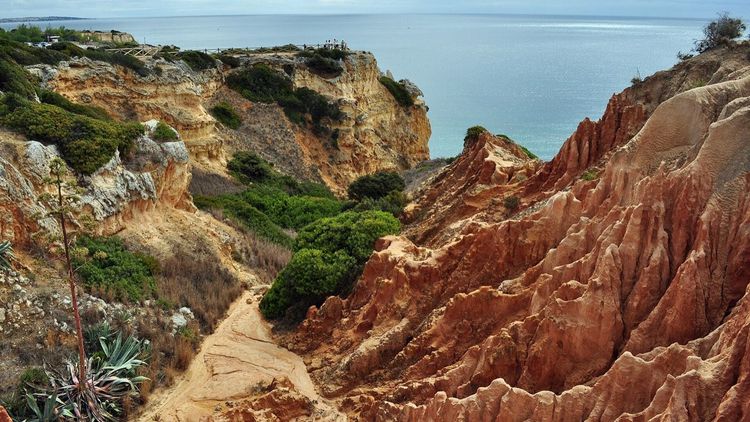
Now the honest part. Benagil, Praia da Marinha, Carvoeiro and the Seven Hanging Valleys walk are all sold as things to do in Albufeira, and none of them are in Albufeira. They sit in the neighbouring concelho (council district) of Lagoa, roughly 25 to 30 kilometres west, which is 30 to 40 minutes each way by road and rather longer by boat. They are worth the trip, and you should plan it as a day out rather than an afternoon. Our Benagil Cave guide covers the current rules, including the ban on landing inside the cave, and the Seven Hanging Valleys Trail guide covers the walk above it.
Planning tip: book the earliest cave departure of the day. By half past nine the boat traffic inside the arches is heavy enough to spoil the photographs and the calm.
Water Parks, and the Drive They Require
None of the Algarve's water parks are in Albufeira, which is worth knowing before you promise anyone a five-minute journey.
The closest is Zoomarine at Guia, about nine kilometres inland, part marine park and part water park. A high-season adult ticket is €37 at the gate and €33.50 online in 2026, and any guide quoting under €30 is running on old numbers. Beyond it, Aqualand at Alcantarilha is around 15 kilometres away, Aquashow at Quarteira around 19, and Slide & Splash at Lagoa around 30.
All four run shuttle pickups from the main hotel areas, which is usually cheaper and less stressful than parking. Buy online, go on a weekday, and arrive at opening if you want the big slides without a queue.
Getting Around Without a Car
You can do a good week here without hiring a car, as long as you accept that the western coves stay out of reach.
Albufeira has its own urban bus network, GIRO, run within the regional Vamus Algarve system: five colour-coded lines across 168 stops, linking the town centre, the marina, the campsite, Montechoro and Santa Eulália. The Orange line is the one that matters for arrivals, because it runs out to Ferreiras and the train station. Published fares are €1.40 for a single bought on board and €4 for a one-day tourist ticket covering all lines, with a rechargeable card at €3 and ten pre-bought tickets at €8. Treat those figures as a guide and confirm with the driver, because the English-language pages carrying them have not been updated since January 2020 and say so.
Two more things about arriving. The train station is at Ferreiras, about six kilometres north of the centre, so a train arrival always means a bus or taxi at the end. And Faro Airport is 36 kilometres east: public transport means two buses with a long wait in Faro, a private transfer runs around €32 for up to four people, shared minibuses start near €15 each, and an airport taxi will pass €80.
If you do drive, one piece of good news that older blogs miss. The A22 motorway along the Algarve has been toll-free since 1 January 2025, so budgeting for transponder charges on the coast road is out of date.
Planning tip: if you want the western coves for one day only, hire a car for that day rather than the week. Parking in the Old Town is difficult and expensive in August, and a car sitting outside your hotel earns nothing.
Day Trips Worth the Drive
Albufeira sits almost exactly in the middle of the Algarve coast, which makes it a strong base even though the town itself is not the reason to come.
Silves, 25 minutes north, is the old Moorish capital with a red sandstone castle and a cathedral above a quiet river town. Loulé, 30 minutes east, is best on a Saturday when the market fills the streets around its neo-Moorish market hall. Faro, 40 minutes east, gives you a walled old town, a bone chapel and boats into the Ria Formosa lagoon; our things to do in Faro guide has the detail. West, Carvoeiro and the Lagoa coast bring you to the cliff walks and the caves.
Inland, the countryside behind the coast is orange groves, cork oak and small wineries, and the easiest way in is a jeep safari or a wine tour that handles the driving for you.
Where to Eat, and What to Order
The rule here is simple: walk away from the water and away from anyone holding a laminated menu.
Order cataplana at least once, the shellfish and pork stew cooked and served in a hinged copper pan, sized for two and worth the twenty-minute wait. Grilled sardinhas are the summer standard, best from June to October when the fish are fat. A marisqueira (a shellfish restaurant) will do both better than a seafront terrace, and the ones that fill with Portuguese families at nine in the evening are the ones to book. For a lighter evening, a tasca (a plain neighbourhood tavern) serving petiscos (small sharing plates) costs a third as much and tastes of the place.
Then there is chicken. Guia, six kilometres inland, calls itself the capital of piri-piri chicken, and the claim has some history behind it: Ramires opened there in 1964 and the main street is now lined with competing churrasqueiras (charcoal grill houses), each insisting theirs is the original. Frango da Guia, split and grilled over coals and brushed with chilli oil, costs a fraction of a seafront main course and is one of the genuinely local things to eat here.
For groceries and atmosphere, the Mercado Municipal dos Caliços handles the daily shop. The big open-air feira (street market) at the same site, the one visitors mean when they ask about market day, runs on the first and third Tuesday of the month.
Local tip: order the bica (a short black coffee) standing at the counter after lunch. It costs under a euro inland and about three times that on a seafront terrace, which tells you most of what you need to know about pricing here.
When to Go
June and September are the sweet spot, with sea and sunshine close to peak and a fraction of the crowding.
July and August are hot, full and expensive, and the Strip is at its loudest. May and October still give you beach weather with a cooler sea, and prices drop noticeably. Winter is mild rather than warm, and Albufeira does not close: it has a large permanent population, so restaurants and cafés stay open through the low season even as the resort hotels thin out. The sea is chilly whenever you come, rarely passing 20°C even in August, which surprises people expecting the Mediterranean. Our guide to the best time to visit the Algarve breaks it down month by month.
What to Skip
Not everything sold here is worth your afternoon.
Skip the seafront restaurants with photographs of the food outside; the same money three streets inland buys a considerably better meal. Skip the tourist train that loops the resort, which covers ground you can walk. Skip the promise of "Moorish castle ruins" as a sight in its own right, for the reasons above. And skip trying to combine the Old Town and the Strip in one booking by staying halfway between them, because you end up walking twenty-five minutes to whichever one you actually wanted.
One more. If your reason for coming is the caves and cliffs at Benagil and Marinha, consider basing yourself in Carvoeiro or Lagoa instead. Albufeira is a fine base for the middle of the coast, and a mediocre one for a trip built entirely around the west.
Practical Tips
- Book the Old Town for quiet, Areias de São João for nightlife. The distance between them is about 2 km, and it decides your week.
- Cover up when you leave the beach. Swimwear in the street carries a €300 to €1,500 fine under the 2025 code of conduct.
- Use the Peneco lift. It is free, step-free and saves the climb back up from the sand.
- Go to Olhos de Água at low tide, or the springs that give the beach its name stay invisible.
- Carry some cash. Smaller marisqueiras and market stalls still prefer it, even though cards are widely accepted.
- Check the current Blue Flag list on the Blue Flag association site if beach certification matters to you; it changes yearly.
FAQ
Which is the nicest part of Albufeira?
The Old Town, for most people. It has the cobbled centre, the main beach, the museum and the best concentration of restaurants, and it is quieter after midnight than Areias de São João. If you want cliffs and space instead, the hotel belt around Santa Eulália and Olhos de Água is calmer again.
Is Albufeira cheap or expensive?
It is mid-range for Portugal and cheap by northern European standards, though the seafront charges a premium. A grilled chicken lunch in Guia or a set lunch inland runs a fraction of a marina dinner. July and August push accommodation prices up sharply; May, June, September and October are noticeably better value.
What day is market day in Albufeira?
The large open-air market at Caliços runs on the first and third Tuesday of each month. The covered Mercado Municipal dos Caliços is open for daily shopping, and Loulé's much bigger Saturday market is 30 minutes east if you want the regional one.
Is the Albufeira Strip safe?
Yes, in the ordinary sense: it is heavily policed and busy until dawn in summer. The usual crowd-and-alcohol precautions apply, watch your belongings, and be aware that the code of conduct now fines public drinking and disorder outside licensed areas.
Can you visit Albufeira without a car?
Yes for the town, the Strip, the marina and the beaches from Pescadores east to Olhos de Água, using the GIRO buses and taxis. No for the western coves such as São Rafael and Evaristo, or for the water parks, where a car or an organised trip saves a lot of time.
Which is nicer, Albufeira or Faro?
They answer different questions. Albufeira has the beaches, the boat trips and the nightlife; Faro has the old walled city, the cathedral, the bone chapel and the Ria Formosa lagoon with its island beaches. Faro is also the transport hub. Many people base in Albufeira and give Faro a day.
Making the Choice Before You Book
Albufeira gets written off as a resort town, and it earns some of that. It also has 24 Blue Flag beaches, a lift down a cliff that costs nothing, a fishing quarter that survived the boom around it, and a chicken village six kilometres inland that Portuguese families drive hours to reach.
The trick is deciding which Albufeira you are booking before you book it, not after you arrive. Pick the Old Town or the Strip or the quiet eastern hotels, learn the two-kilometre geography between them, and the town does the rest. When you are ready to plan the days, browse Albufeira tours and experiences, and read the Algarve guide for how this stretch of coast fits with the rest.