Key Takeaways
- Day 1 runs downhill from the Cathedral to the river. Walk the lower deck of the Dom Luis I bridge to reach the port lodges at water level. See the plan ->
- For a first port tour, pick Calem. It is central, easy, and museum-led. Save Graham's for a splurge. Compare the lodges ->
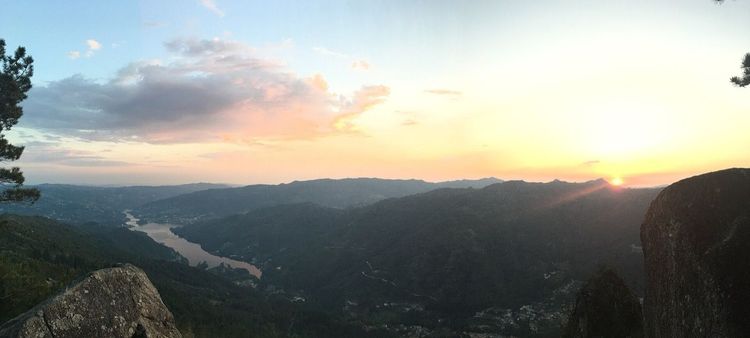
- Watch the sunset from Serra do Pilar, not the crowded lawn next door. The terrace faces west and sits higher. Why it wins ->
- Day 2 is the tile-and-tower day: 20,000 azulejos at Sao Bento, the Lello staircase, and the climb up Clerigos. Plan Day 2 ->
- The Douro Valley is the best reason to add a third day, but it is hard to self-drive. Take a driver or the train. Read the honest take ->
- Eat a francesinha at lunch, not dinner, and drink white port with tonic before you eat. What to order ->
Porto in 2 Days: The Short Version
Porto is small and steep. The old centre stacks up a hillside above the Douro, and you can cross most of it on foot in a day.
Two days is enough to see the city well. You get the river, the port cellars, the famous bookshop, a tower climb, and a proper francesinha lunch. Three days lets you add the Douro Valley, the wine country that feeds all those cellars in Gaia.
Here is the logic the Guidekin team uses for a first visit. Spend Day 1 on the river: start high at the Cathedral, walk down to Ribeira, then cross to the port lodges. Spend Day 2 on the streets above: the tiles at Sao Bento, the Lello bookshop, the Clerigos tower, and lunch at the Bolhao market.
Wear shoes you can walk in. The cobbles are real cobbles, and the climbs are steep. Gravity helps on the way down and works against you on the way back. We have built this plan so the hard part is always the return trip, never the start.
If you want to browse experiences before you go, all our Porto tours sit in one place, sorted by type.
Day 1: Ribeira, the Cathedral and the River
Start at the top.
The Se do Porto, the Cathedral, sits on the highest ground in the old town. It is a squat, fortress-like Romanesque building, and the forecourt in front of it, the Terreiro da Se, is a free, wide viewpoint. Stand there first. You look out over the tiled rooftops and straight down to the river. From here, everything is downhill.
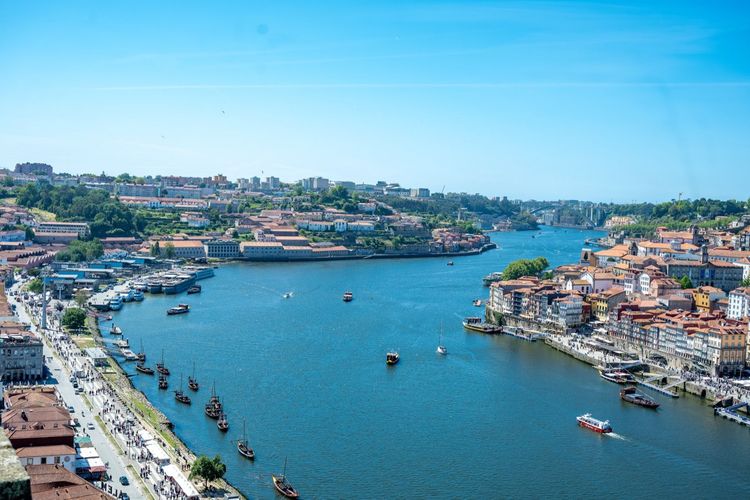
Walk down the narrow lanes toward the water. You will land in Ribeira, the UNESCO-listed riverside quarter where the colour-washed houses climb the slope behind the quay. Praca da Ribeira is the heart of it. This is the postcard Porto, and it is worth a slow coffee on the waterfront before you move.
Then comes the part most itineraries get wrong.
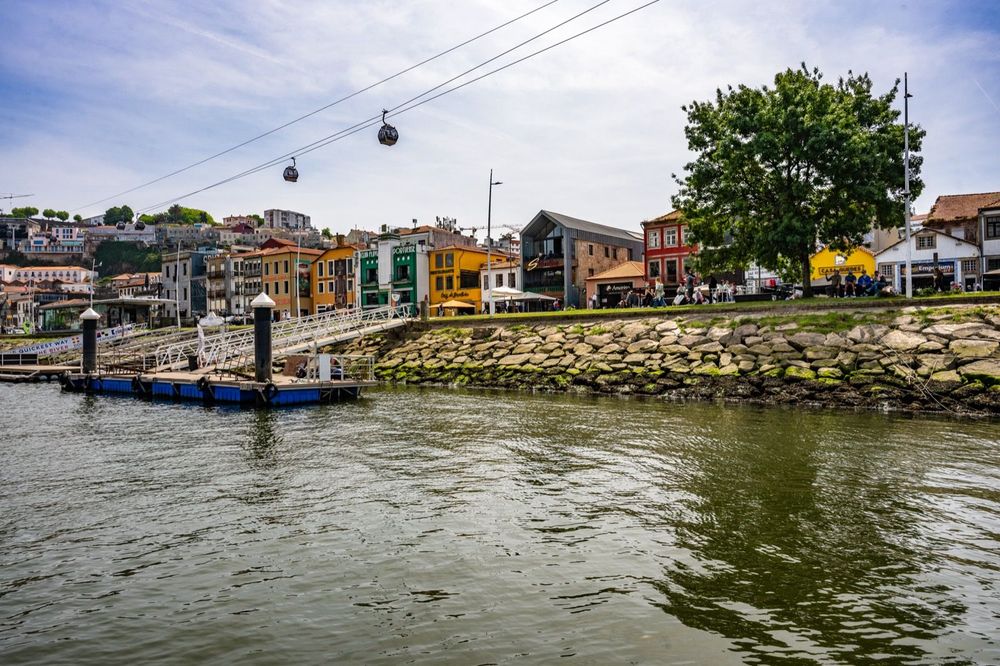
The Dom Luis I bridge has two decks, and both are walkable. The upper deck carries the metro and links to the hilltop. The lower deck sits right at river level, just above the water, and it connects Ribeira directly to the Gaia waterfront and its port lodges. Take the lower deck. You walk across the Douro a few metres above it, with the boats below you, and you arrive at the cellars without a single climb.
"Cross on the lower deck on Day 1, not the upper one. It puts you at river level and drops you straight at the Gaia lodges, no stairs, no detour." - The Guidekin team
If you want time on the water itself, the six-bridges cruise is the easy add. It is a roughly 50-minute loop on a rabelo-style boat that passes all six Porto and Gaia bridges. Boats leave constantly from both quays in season, they are cheap, and you do not need to book ahead. Just turn up at the Cais da Ribeira. You can also browse the Douro boat tours in advance if you would rather lock in a time and a sunset slot.
Port Wine in Vila Nova de Gaia
Gaia is a separate city across the river, and it is where the port lives.
For about three centuries, Portuguese law required all port to be aged here, in the cool riverside lodges. So the big houses cluster on the Gaia slope, a short walk from the bridge. A lodge tour is simple: a guided or audio walk through the dim barrel cellars, an explanation of how port is made and aged, and a seated tasting at the end, usually a white, a tawny, and a ruby.
Most lists name four lodges and leave you to guess. Here is the honest version.
| Lodge | Style | Good for |
|---|---|---|
| Calem (1859) | Central, museum-led, multilingual | A first port tour, easy and close to the bridge |
| Graham's (1890) | Premium, hilltop, vintage bottles | A splurge tasting with a view (longer walk) |
| Taylor's (1692) | One of the oldest, port-only, big terrace | History and the Baron Fladgate terrace bar |
| Sandeman (1790) | The black-caped Don logo, recognisable | A familiar name, central and quick |
If it is your first time, start with Calem. It is the closest to the bridge, the interactive museum makes the process easy to follow, and some evening tours end with a live Fado show. Save Graham's for the day you want the serious flight. Booking online ahead saves the queue and is usually a touch cheaper, and same-day slots often exist off-peak if you check the lodge site that morning. You can compare the wine and port tasting options to see what each tour includes.
The best sunset in Porto
When the tasting is done, climb to the Serra do Pilar.
It is a UNESCO-listed monastery on the Gaia hill, with a rare circular church and cloister built from 1538. The terrace out front is free, and it faces west. Because it sits slightly higher than the lawn at Jardim do Morro nearby, you look straight into the sunset with the Luis I bridge and the full Porto skyline laid out below. Everyone else piles onto the lawn. The Guidekin team sends you to the Serra do Pilar plaza instead.
Day 2: Sao Bento, Livraria Lello and Clerigos
Day 2 is compact. Everything sits within a ten-minute walk.
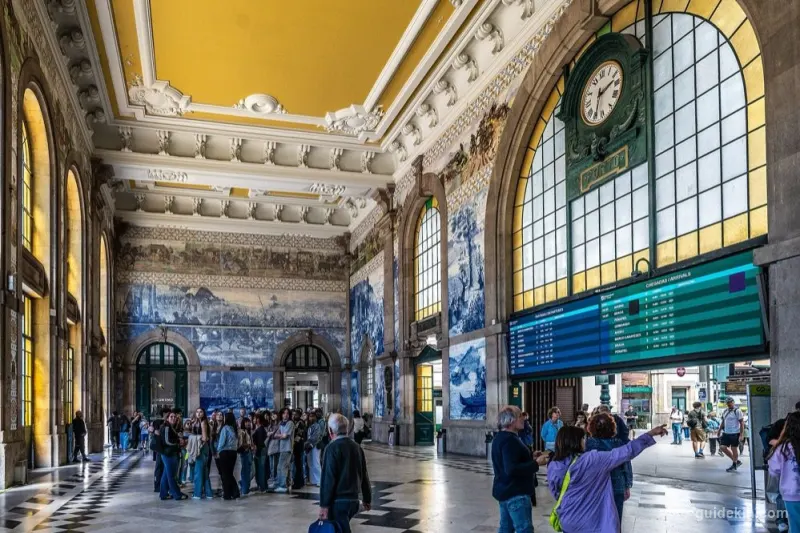
Start at Sao Bento railway station. It is a working station, free to walk into, and the entrance hall stops people in their tracks: the walls are covered in around 20,000 hand-painted azulejo tiles, each 15 by 15 centimetres, laid between 1905 and 1916. Forget the history lesson for a second and just look up. It is a train hall wallpapered floor to ceiling in blue-and-white tile.
A few minutes uphill is Livraria Lello, a 1906 bookshop with a curving crimson staircase and a stained-glass ceiling. It is one of the most photographed bookshops anywhere. Here is the ticket trick worth knowing: entry needs a paid voucher, around 8 euros for standard, and that amount is then deductible against any book you buy. So if you buy a book, the entry is effectively free. Book the timed slot online ahead, because the queue gets long.
Two minutes from Lello stands the Torre dos Clerigos, the baroque bell tower Nicolau Nasoni finished in 1763. It is about 75 metres tall, 225 steps to the top, and the reward is a full 360-degree view over the old town and the river. Do the climb early, before the steps fill up.
For lunch, walk to the Mercado do Bolhao. The 19th-century food market reopened in 2022 after a long renovation, and it now mixes fish and produce stalls with counters where you can eat. Grab a seat, order something simple, and watch the market work around you. If you want a coffee with more gilt and mirrors afterwards, the Majestic Cafe on Rua de Santa Catarina is the ornate 1921 spot a few streets over. It is more a photo-and-coffee stop than a meal.
Foz do Douro and the Coast
If you have an extra afternoon, go where the river meets the sea.
The vintage Tram 1 runs along the north bank from near Ribeira out to Foz. The cars date to the 1930s, all wood and brass, and the ride takes around 20 minutes. Buy a ticket on board, roughly 3 to 3.50 euros. This is Porto's original tram line, with a route going back to 1872, so the journey is half the point.
Foz is the breezy seaside district. There is a promenade, seafood restaurants, beach bars, and the Passeio Alegre garden. You can also see the Farol de Sao Miguel-o-Anjo, a small 1527 lighthouse often called the oldest in Europe.
The contrarian local pick: skip a third port tasting and take the tram to Foz for sunset instead. Grab a drink at a beach bar and watch the Atlantic. It is a different Porto, and most two-day itineraries leave it out entirely. Treat it as optional, but if the weather is good, it is the better way to end Day 2.
Day Trip: The Douro Valley
This is the honest one.
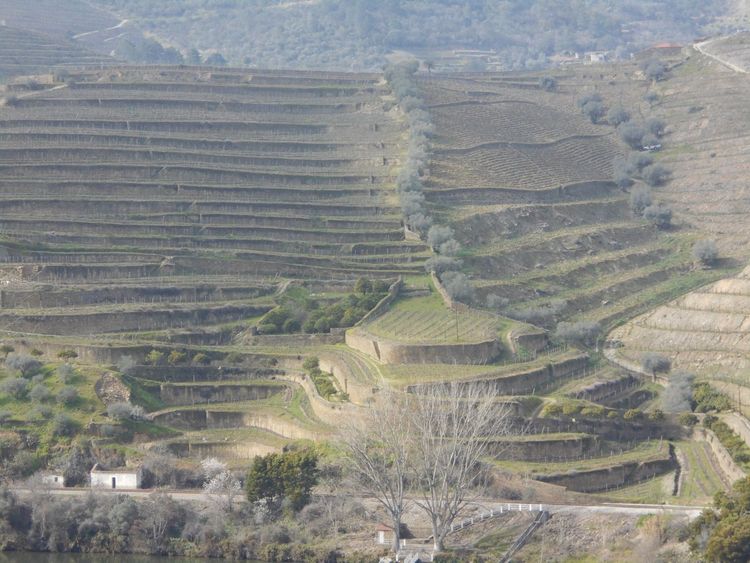
The Alto Douro is the world's oldest demarcated wine region, mapped out since 1756 and UNESCO-listed. The terraced vineyards are carved into steep slate hillsides along the river, and this is the source of the port aged back in Gaia. A good day combines a quinta visit and tasting, a short Douro river cruise, and a long lunch with a view.
It is the single best reason to add a third day to Porto.
But be honest with yourself about the driving. The roads are steep, narrow, and switchbacked, and some quintas sit at the end of gravel access lanes. It is slow and awkward to self-drive, and you cannot taste if you are the one behind the wheel. So the sensible options are a guided tour with a driver, or the train to Pinhao or Regua plus a local boat from there. Either way, someone else handles the road and you handle the wine.
The same lodge and wine tour operators in Porto run Douro day trips, so it is worth checking those first. And if you are pairing Porto with Lisbon, our guide to how day trips work from Lisbon walks through the same logic of train versus driver versus tour, and helps you decide which trips are worth the early start.
What to Eat: Francesinha, Bifana and Port
Porto food is hearty and direct. Three things to order, plus one drink.
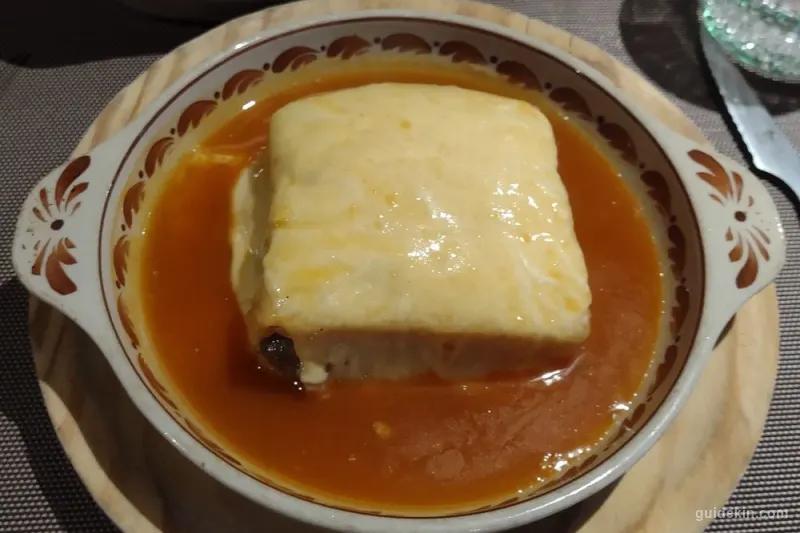
The francesinha is the city's signature monster. It is layered cured meats, steak, and sausage, sealed in melted cheese, then drowned in a hot beer-and-tomato sauce, usually crowned with a fried egg and ringed with chips. It is a lunch undertaking, best shared, not a casual snack. Where it is taken seriously: Cafe Santiago on Rua de Passos Manuel, family-run since 1959, with a francesinha that has landed on lists of the world's best sandwiches. Brasao and Lado B are other names locals trust.
The bifana is the lighter move: a simple marinated pork sandwich on a soft roll. Conga on Rua do Bonjardim has been doing it since 1976. Casa Guedes is famous for its pernil version, slow-roasted pork shoulder piled onto bread.
For a snack any time of day, the pastel de nata is the custard tart, best warm with a dusting of cinnamon.
And the drink to learn before you go: Porto tonico. It is chilled white port topped with tonic, a sprig of mint, and a slice of orange. It is the local aperitif, and it is exactly what you want on a Gaia terrace before dinner. Order one at sunset and you have done it like a local.
Getting Around and Best Time to Visit
Porto is walking-first. The metro, funicular, and trams handle the hills and the longer runs, but the core is best on foot.
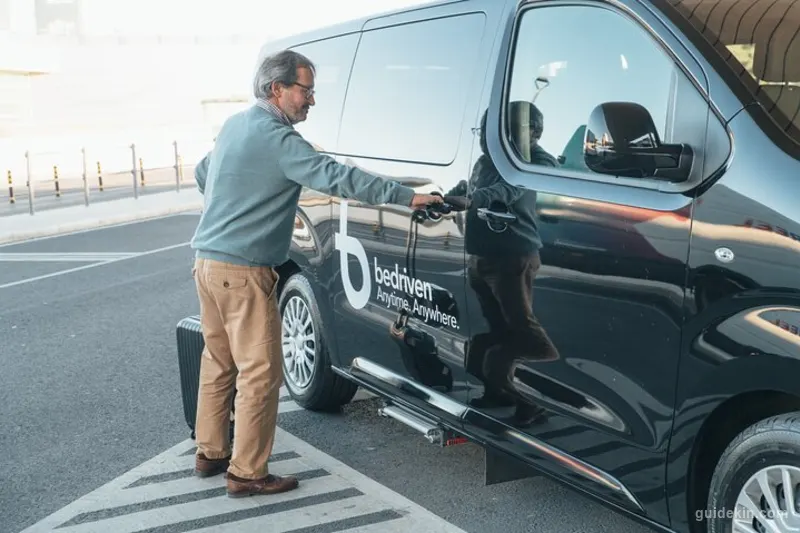
From the airport, the metro is the simplest arrival. Take Line E, the purple line, from Aeroporto Francisco Sa Carneiro into the centre, for example to Trindade. It runs every 20 minutes or so, takes about 27 to 30 minutes, and is cheap. No taxi needed.
In the city, expect steep streets and cobbles. The Guindais Funicular runs from Ribeira up to the upper-bridge level if you want to skip one of the climbs. Comfortable shoes matter more here than in most cities.
On timing: aim for the shoulder seasons. Late spring, May and June, and early autumn, September into early October, give you daytime temperatures around 18 to 24 degrees and thinner crowds. March and April are wetter. July and August are the hottest, around 25 to 28 degrees, and the most crowded. May, June, and September are the sweet spot.
Practical Tips
- Book ahead: Livraria Lello and any Douro Valley tour are the two to lock in early. Port lodge tours rarely sell out off-peak, but same-day online booking saves the queue. The six-bridges cruise is a walk-up.
- Airport transfer: Metro Line E to the centre, about 27 to 30 minutes, far cheaper than a taxi.
- Money on tickets: The Lello voucher is around 8 euros and comes off the price of any book you buy, so plan to buy one.
- Walk the lower deck: On Day 1, cross the Dom Luis I bridge on the lower deck to reach the lodges at river level without stairs.
- Where to stay: Base yourself near Ribeira, Sao Bento, or the Clerigos area to keep both days walkable.
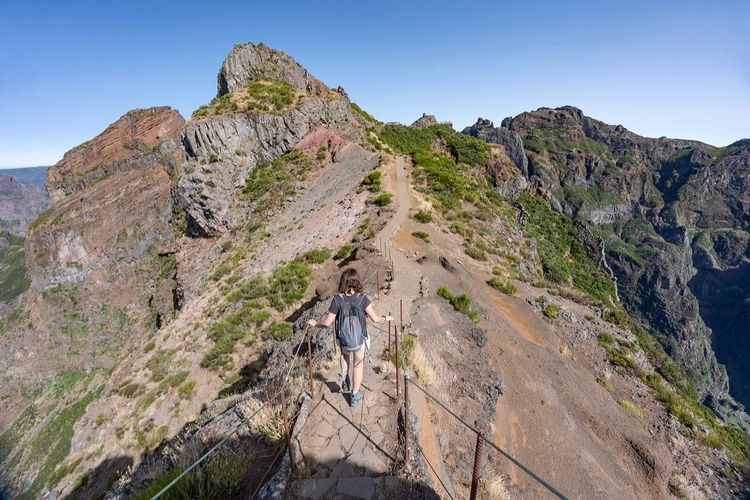
- Going island next: After the city, swap granite for an Atlantic island with our Madeira guide for a completely different side of Portugal.
FAQ
Is 2 days enough for Porto?
Yes, two days covers the city comfortably: the river and port cellars on Day 1, the tiles, bookshop, and tower on Day 2. Add a third day only if you want the Douro Valley, which deserves its own full day.
Is Porto worth visiting?
It is one of the most rewarding short city breaks in Portugal. You get a UNESCO riverfront, centuries-old port cellars, and a genuinely walkable centre, all at lower prices than Lisbon.
Do you need to book a port cellar tour in advance?
Not usually, off-peak. Booking online the same morning saves the queue and is often slightly cheaper, but lodges like Calem rarely sell out outside summer. In July and August, book ahead.
When is the best time to visit Porto?
Late spring, May to June, and September are the sweet spot, with mild temperatures and fewer crowds. July and August are hottest and busiest, while March and April tend to be wetter.
Is Porto walkable?
Very, but it is hilly and the streets are cobbled. The historic core is best on foot, with the metro, funicular, and trams covering the steeper climbs and the airport run. Bring comfortable shoes.
Is a Douro Valley day trip from Porto worth it?
Yes, if you have a third day. The terraced vineyards and a river cruise make a memorable day, but the roads are hard to self-drive and you cannot taste while driving, so take a guided tour with a driver or the train.
Make It a Trip Worth the Climb
Two days in Porto works because the city is small and the plan is honest. Day 1 flows downhill to the river and the port cellars. Day 2 stays up among the tiles and the tower. The lower deck of the bridge, the Serra do Pilar at sunset, and a Porto tonico before dinner are the three details that make it feel local rather than rushed.
If you only add one thing, make it the Douro. Just let someone else drive so you can taste, and pick the day trip that lines up with your third morning.