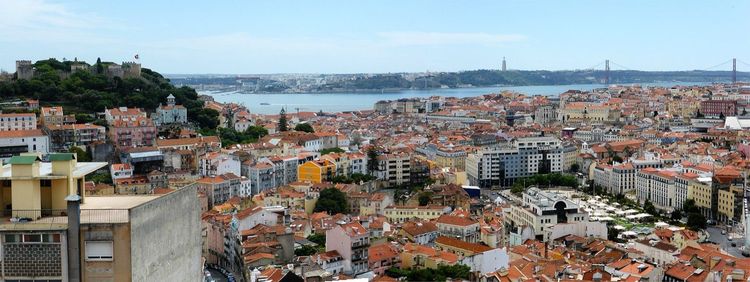
Alfama doesn't perform for visitors. It dries laundry between its windows, argues across alleys, and lets a stray cat hold the better seat in the sun. This is Lisbon's oldest neighborhood, a tangle of stairs and becos (dead-end alleys) folded onto the slope below the castle, and it rewards the people who slow down and look up instead of racing through with a checklist.
Most guides hand you a numbered list of sights and point you at a packed Tram 28. You can do better than that. Use this local's guide to the best things to do in Alfama: the corners actually worth your time, the ones worth skipping, and the timing that keeps you a step ahead of the crowds that pour in by mid-morning. If you've already wandered its elegant uphill neighbor, our Chiado neighborhood guide makes the natural other half of a Lisbon trip.
Read on for how to reach Alfama without the stress, what to see, where to hear real fado rather than a tourist show, where to eat and sleep, and a half-day walking route that runs downhill the smart way.
Key Takeaways
- Alfama is Lisbon's oldest neighborhood and the birthplace of fado, and it's best explored on foot from the top down. Jump to the history →
- Skip the Tram 28 scrum at midday. Walk up, ride before 9am, or take the quieter Tram 12E loop instead. How to get there →
- The big sights are worth it, but the free viewpoints over the rooftops are the real heart of the place. See the sights →
- For fado that moves you, choose a small neighborhood tasca over a polished dinner show. Where to hear fado →
- Wear shoes with grip, carry a little cash, and keep your bag in front of you on the tram. Practical tips →
A Short History of Alfama
Alfama took its name from the Arabic al-hamma (hot springs or baths), a clue to who shaped it first. When the Moors held Lisbon, this hillside between the castle and the river was the city itself, and the maze you walk today, all blind turns and sudden staircases, is essentially their street plan, never straightened out by the centuries that followed.
Then came the morning of November 1, 1755. The Great Lisbon Earthquake, and the fire and tsunami that followed it, flattened much of the capital and killed tens of thousands. Alfama, built on hard bedrock high above the water, was one of the very few districts to largely survive. That is why it feels older than everywhere else in Lisbon: it genuinely is, and the rest of the city was rebuilt around it.
For centuries this was a working neighborhood of fishermen, dock hands and washerwomen, poor enough to be overlooked and proud enough not to mind. Out of its taverns, courtyards and doorways came fado, the city's melancholy song, and one of its greatest voices, Amália Rodrigues, grew up on these slopes before carrying the music to the world. Fado joined UNESCO's list of Intangible Cultural Heritage of Humanity in 2011, but in Alfama it never needed a stage. It still drifts out of open windows after dark.
Local tip: Pair Alfama with its scruffier neighbor Mouraria, just over the hill, where fado was also born and where far fewer visitors go. The two districts together tell the whole story of working-class Lisbon, and the walk between them takes only a few minutes.
How to Get to Alfama and Beat the Crowds
Alfama climbs the Colina de São Jorge, the castle hill, so every route in is a route up. Four of them make sense, depending on your knees and your patience.
Walking is the honest option. From the Baixa riverfront it's about a 25-minute climb to the Portas do Sol viewpoint, following the tram tracks uphill, and from the Sé cathedral it's barely 5 minutes more to the same spot. The metro station at Terreiro do Paço sits a short stroll from the foot of the climb, so you can ride the underground most of the way and walk the rest.
Then there's Tram 28E, the canary-yellow icon that rattles from Martim Moniz out to Prazeres, roughly 7km (4.3 miles) in about 45 minutes, with Alfama stops at the Sé and Largo das Portas do Sol. It is genuinely lovely, and it is genuinely a problem. The carriages are packed from mid-morning to early evening, the queue at Martim Moniz can run over an hour in summer, and the route is one of the city's worst spots for pickpockets working the crush near the doors.
So here is the move that locals make. Ride before 9am, when the morning light is on the tiles and there are seats to spare, or skip the 28 altogether for the Tram 12E, a circular line that loops Martim Moniz, Mouraria and Alfama in about 25 minutes with queues that rarely pass five. Same hill, same rattling charm, a fraction of the stress. The little 737 bus from Praça da Figueira also climbs the tight lanes and drops you just below the castle walls, almost always with a seat free.
Planning tip: A ticket bought onboard runs about €3.30 (2026) and is cash only, while a rechargeable Navegante card brings a single ride down to around €1.90. If you plan to ride a lot, a 24-hour pass (about €7) covers trams, buses and the metro and pays for itself quickly.
"On the Tram 28, keep nothing in your back pockets and wear your bag on your front. The view is worth it. A lifted wallet is not." - Guidekin team
The Best Things to Do in Alfama
Start at the top and let the hill carry you down. The Castelo de São Jorge crowns the spot where Lisbon began, with ramparts to walk, peacocks strutting underfoot, and the whole city spread out below the battlements. Adult entry is around €17 (2026) and children under 12 go free; it opens daily, roughly 9am to 9pm in summer and 9am to 6pm in the colder months. Buy online to skip the worst of the ticket line in high season.
A short way downhill, the Sé de Lisboa is the city's cathedral and its oldest church, begun in 1147 on the foundations of a mosque, soon after the Christian reconquest. Its twin towers look built to withstand a siege, which, in those uncertain early years, they more or less were. Stepping into the nave is free; the full ticket (about €7, 2026) opens the cloister, the treasury and the high choir, where the city's medieval layers are easiest to read.
Two quieter heavyweights reward the walk east. The Mosteiro de São Vicente de Fora holds the royal tombs of the Bragança kings and the largest collection of Baroque azulejos (painted ceramic tiles) in Lisbon, including a famous run of panels illustrating La Fontaine's fables along the cloister. A few minutes on, the great white dome of the Panteão Nacional (National Pantheon) shelters Portugal's honored dead, the fado legend Amália Rodrigues among them, and its terrace offers one of the best high views in the neighborhood.
Down near the cathedral, look for the Igreja de Santo António, built over the birthplace of Lisbon's patron saint, whose June feast turns the whole neighborhood upside down. Closer to the river, the Casa dos Bicos, its facade studded with stone spikes, houses the José Saramago Foundation, dedicated to Portugal's only Nobel laureate in literature.
Detour: Step into the Museu do Aljube, a former political prison that lays out the hard story of Portugal's 20th-century dictatorship and the peaceful 1974 Carnation Revolution that ended it. It is sobering, often quiet, and it gives all the pretty tilework some real weight.
Alfama's Best Viewpoints
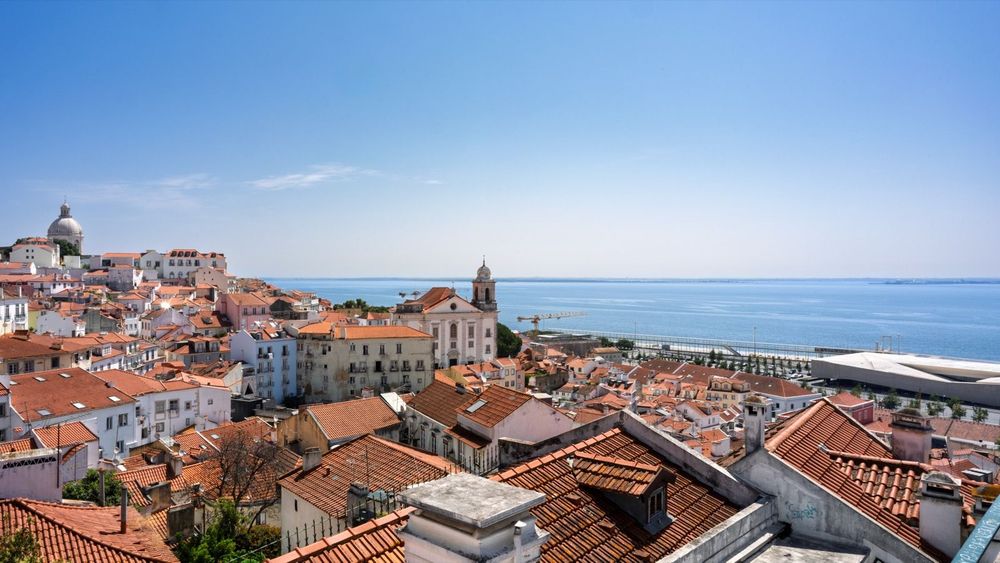
If Alfama has a living room, it's the pair of miradouros (viewpoints) clustered around Largo das Portas do Sol. The Miradouro de Santa Luzia sits behind a tiled pergola, framed by azulejo panels of old Lisbon and draped in bougainvillea, while its neighbor, the Miradouro das Portas do Sol, throws open the full sweep of terracotta roofs tumbling down to the Tagus. Both are free, and neither ever closes.
They are also where every tour group stops for the identical photo. So take your shot, then keep walking.
Local tip: Come for the early light, before the first coaches arrive, or climb two or three streets higher to a smaller, half-hidden terrace where the view is just as wide and the crowd has vanished. Late afternoon, when the sun drops and the river turns to copper, is the other window worth catching, ideally with a glass of something in hand.
Fado in Alfama: Where to Actually Hear It
This is the reason many people come, and the easiest thing in Lisbon to get wrong. Fado is sung by a fadista (fado singer), backed by the teardrop-shaped guitarra portuguesa (Portuguese guitar) and a classical guitar, and its whole subject is saudade, that untranslatable ache of longing for something loved and gone. Start at the Museu do Fado (Fado Museum) on Largo do Chafariz de Dentro (about €5, 2026, closed Mondays) for the history and the voices, then go and hear it sung in a room.
Here is the choice nobody spells out for you. A casa de fado is a professional dinner show, polished, ticketed and reliable, where a set menu tends to run €45 to €60 a head; Clube de Fado and Parreirinha de Alfama, opened by the great Argentina Santos back in 1939, are the names that draw the big voices. A fado vadio tasca is the older, rawer thing: amateur and professional singers take turns through the night, nobody is formally booked, and a waiter might set down your plate and then stand up to sing the next song himself.
For most travelers chasing the real feeling, the small tasca wins. A Baiuca squeezes maybe six tables into one room and takes bookings only by phone, while Tasca do Chico on Rua dos Remédios runs fado vadio from Thursday to Sunday with a minimum spend of around €10. The food is plain, the wine is cheap, and the hush when the guitar starts is the real thing. Reserve where you can, because these places are tiny and word has spread.
One rule holds in every fado room, professional or amateur, and it is not optional.
"When the guitar starts, the room goes silent. No talking, no cutlery, no phones. Conversation waits for the gap between songs." - Guidekin team
Want the easy version, with the gamble taken out of it? Browse vetted Alfama experiences and book a fado evening led by a local guide, rather than trusting a flyer pushed at you on the street.
Where to Eat and Drink in Alfama
Eat where the menu is short, handwritten and in one language. The best restaurants in Alfama hide in plain sight: tiny family tascas (taverns) cluster along streets like Rua de São Pedro, serving petiscos (small sharing plates), grilled fish, and house wine poured from a jug. Order a plate of bacalhau (salt cod), some cheese and olives to start, and whatever the day's special happens to be, chalked on a board by the door.
From a ground-floor window you'll often spot someone selling ginjinha (sour cherry liqueur) for a euro or two, sometimes poured into a little chocolate cup you eat afterward. Take it, drink it on the step, and watch the street go by. That is the local pace, and it costs almost nothing. If you can only book one sit-down meal here, we'd steer you toward a tasca over a view-first terrace restaurant: the food is better and the bill is kinder.
In June the whole neighborhood becomes one long open-air party for the Festas de Santo António, and the smell that hangs over every alley is sardinhas assadas, whole sardines grilled over charcoal and served on a slab of bread. Sardine season peaks in those weeks, so the fish is at its very best, and tables spill into the lanes until well past midnight.
Local tip: Never follow a host with a laminated, six-language menu who waves you inside with a smile. That is the universal sign of a tourist trap. The good tascas don't need to chase anyone, and a guided Lisbon food tour is the fastest way to find them if you only have one evening to spare.
A Self-Guided Walk Through Alfama
The smart way to walk Alfama is downhill, so start high and let gravity do the climbing for you. And if you get lost in the maze, which you will, just keep heading downhill toward the river and you'll come out in the flat, gridded Baixa.
A rough route runs like this. Begin at the Castelo de São Jorge for the view and the history, then wind down through the lanes to the Miradouro das Portas do Sol. Drop to the Sé cathedral, loop east past São Vicente de Fora and the Panteão Nacional, and finish down by the river. Allow about 2 to 3 hours to walk it at a gentle pace, or 4 to 5 if you stop for museums, viewpoints and a long lunch along the way.
If your visit lands on a Tuesday or a Saturday, time the loop to pass Campo de Santa Clara, where the Feira da Ladra flea market has been spreading its blankets of bric-a-brac, old tiles and honest junk since 1882. Arrive early for the finds, and haggle gently.
Planning tip: Alfama is paved in calçada portuguesa (traditional Portuguese cobblestone), polished slick by centuries of footfall and treacherous in the wet. Wear shoes with real grip, not flat sneakers or sandals, and you'll enjoy the hills instead of fighting them. Prefer some company and context? A small-group Lisbon walking tour turns the maze from a worry into the whole point of the morning.
Where to Stay in Alfama
Sleeping in Alfama means trading easy taxi access for waking up inside the postcard, to church bells and the clatter of the first tram. At the top end, Santiago de Alfama fills a restored 15th-century building with quiet luxury, while Memmo Alfama hides a design hotel and a rooftop wine bar down a lane near the cathedral, its terrace pointed straight at the river. Solar do Castelo tucks a small hotel inside the castle walls themselves.
For lighter budgets, the neighborhood is full of guesthouses and apartments in old buildings, many up several flights of stairs and short on lifts. Pack light, ask about the climb before you book, and remember that the same steep lanes that make the views also make the luggage interesting.
Local tip: A room near the top of the hill saves your legs at the end of every day, because in Alfama you can always wander downhill for dinner and ride or stroll back up later.
Alfama Sights at a Glance
| Sight | Best for | Time | Cost (2026) |
|---|---|---|---|
| Castelo de São Jorge | Views and history | 1.5-2 hrs | ~€17 (under 12 free) |
| Sé de Lisboa | Oldest church in Lisbon | 30-45 min | Nave free, full ticket ~€7 |
| Museu do Fado | Fado history before a show | 1 hr | ~€5 |
| Panteão Nacional | Dome view, Amália's tomb | 45 min | ~€10 |
| Miradouros (Santa Luzia, Portas do Sol) | The classic Alfama view | 20-30 min | Free, open 24h |
| Feira da Ladra | Flea-market browsing | 1 hr | Free (Tue and Sat only) |
Practical Tips
- When to go: Early morning is the magic window, with empty lanes, soft light and quiet viewpoints. Weekdays beat weekends, and spring or autumn beats the heat and crowds of July and August.
- Shoes: The cobbles are steep and slippery, so bring grip and leave the smooth-soled shoes at the hotel.
- Cash: Many tascas and the smallest fado spots prefer cash, so carry some euros rather than relying on a card.
- Tram 28: Ride it early or take the Tram 12E loop instead, and keep your bag zipped and in front of you either way.
- June festivities: For the Festas de Santo António (peaking the night of June 12-13), expect grilled sardines, street parties and crowds until dawn. Book a room far ahead or stay elsewhere and visit by day.
- Tickets: A Lisboa Card covers free or discounted entry to many sights and includes public transport, which adds up fast over two or three days of sightseeing.
FAQ
What is the best time to visit Alfama?
Go early in the morning, ideally before 9am, when the viewpoints are quiet and Tram 28 still has empty seats. Late afternoon is the other good window, when the low sun turns the rooftops and the river gold and the tascas start to fill.
Is Alfama worth visiting, and how long do you need?
Yes. It's the oldest, most atmospheric corner of Lisbon and the spiritual home of fado. A focused visit takes a half day on foot, and you'll want to add an evening if you plan to hear fado over dinner.
Do you need to book fado in Alfama in advance?
For the professional casas de fado, yes, especially in high season. The small fado vadio tascas are tiny, so booking helps there too, and places like A Baiuca take reservations only by phone.
Is the Tram 28 worth it, or just a tourist trap?
The ride is genuinely scenic, but midday crowds and pickpockets spoil it. Ride before 9am, or take the quieter circular Tram 12E for the same streets with a fraction of the hassle.
Is Alfama safe to walk at night?
Yes, Alfama is generally safe after dark, and wandering between fado houses is part of its charm. The real risk is pickpocketing in daytime crowds and on Tram 28, so the night-time advice is simpler: watch your footing on the slick, steep cobbles and carry a small flashlight or use your phone for the darker stairs.
How is Alfama different from Bairro Alto or Chiado?
Alfama is older, residential and tied to fado; Bairro Alto is the late-night drinking district; Chiado is the elegant shopping and cafe quarter. For more ways to build out your trip, see our guide to the best day trips from Lisbon once you've explored the city itself.
Make Alfama Your Lisbon Evening
Give Alfama the slow hour it asks for. Climb to a viewpoint at dusk, follow the sound of a guitar into a backstreet tasca, order the house wine, and let the song do the rest. When you're ready to turn the maze into an easy night out, book a local-led fado or walking experience and let someone who knows every staircase lead the way.