Most visitors climb straight past Mouraria on their way to the castle, and that is their loss. This steep, tangled quarter on the north slope of Lisbon's castle hill is grittier than postcard Alfama next door, and far more alive. It is the city's oldest melting pot, the true birthplace of fado, and the one neighborhood where you can eat your way around the world in a single afternoon. Come for the fado, stay for the everything else.
The name tells the first story. Mouraria means "the Moorish quarter," because this is where the Moors who survived the Christian conquest of 1147 were allowed to live, walled off below the castle, until they and the city's Jews were expelled in 1497. Out of that crowded, working-class warren came fado, and out of today's version comes the sound of fifty languages on one street. If you have already done elegant Chiado and its tiled cousins, this is the antidote.
Read on for how to reach Mouraria, where fado was really born, and how to eat like the whole world lives here, because it does.
Key Takeaways
- Mouraria is Lisbon's oldest and most multicultural quarter, grittier and more local than neighboring Alfama. A short history →
- It is the real birthplace of fado, where the legendary Maria Severa lived and sang in the 1800s. The birthplace of fado →
- The squares and tiled stairways, from Martim Moniz to Largo do Intendente, are free and full of street art. Squares and streets →
- With around 50 nationalities packed into a few streets, this is the best eating in Lisbon, from roast cod to Mozambican stew. Where to eat →
- Walk up rather than drive, keep an eye on your bag around Martim Moniz, and pair it with Alfama. Practical tips →
A Short History: Moorish Quarter to Melting Pot
When King Afonso Henriques took Lisbon from the Moors in 1147, the Muslims who were not killed were pushed into this slope below the new Christian castle. That is literally what the name records: Mouraria, the place of the mouros, the Moors. They lived here, taxed and walled in, until the expulsion of 1497 emptied the quarter of Moors and Jews alike.
What stayed was the shape of the place: a medieval tangle of stairs and blind alleys that never got the grand rebuild the rest of Lisbon received after the 1755 earthquake. For most of the last two centuries Mouraria was poor, overlooked and a little dangerous, a neighborhood of dockworkers, washerwomen, sailors and the singers who turned their hard luck into song.
That same poverty is why fado was born here rather than in a salon. And that same cheap, central, crowded housing is why, over the last few decades, Mouraria became the landing pad for Lisbon's immigrants. First came families from the former Portuguese colonies, from Mozambique, Angola and Cape Verde, after the 1974 revolution, and then waves from China, India, Bangladesh and Nepal. Around 50 nationalities now live and work in these few hundred meters of streets, with the Bangladeshi community among the largest, and the result is the most genuinely diverse corner of the city.
Local tip: Read Mouraria as the working-class twin of polished Alfama. They share a hill and a history, but where Alfama performs for visitors, Mouraria simply gets on with its day, which is exactly why it is worth your time.
How to Get to Mouraria
Mouraria spills downhill to Praca Martim Moniz, which makes arriving easy. The Martim Moniz metro station sits on the green line, just steps from the square, and the famous Tram 28 starts its rattle here, with Tram 12 looping through too. From the Baixa it is a short, steep walk: head up from Rua da Madalena, through Largo Adelino Amaro da Costa, and climb Rua do Regedor toward the church of Sao Cristovao and the quarter's most colorful lanes.
Honestly, walking up is the way to do it. The neighborhood reveals itself in stairways and sudden squares that no tram window can show you, and the climb from the Baixa takes only ten or fifteen minutes.
Planning tip: Mouraria sits directly between the Baixa, the castle and Alfama, so the smart move is to chain them. Walk up through Mouraria in the late morning, cross to the castle, then drift down into Alfama for the evening; our Alfama guide picks up exactly where this one leaves off.
The Real Birthplace of Fado
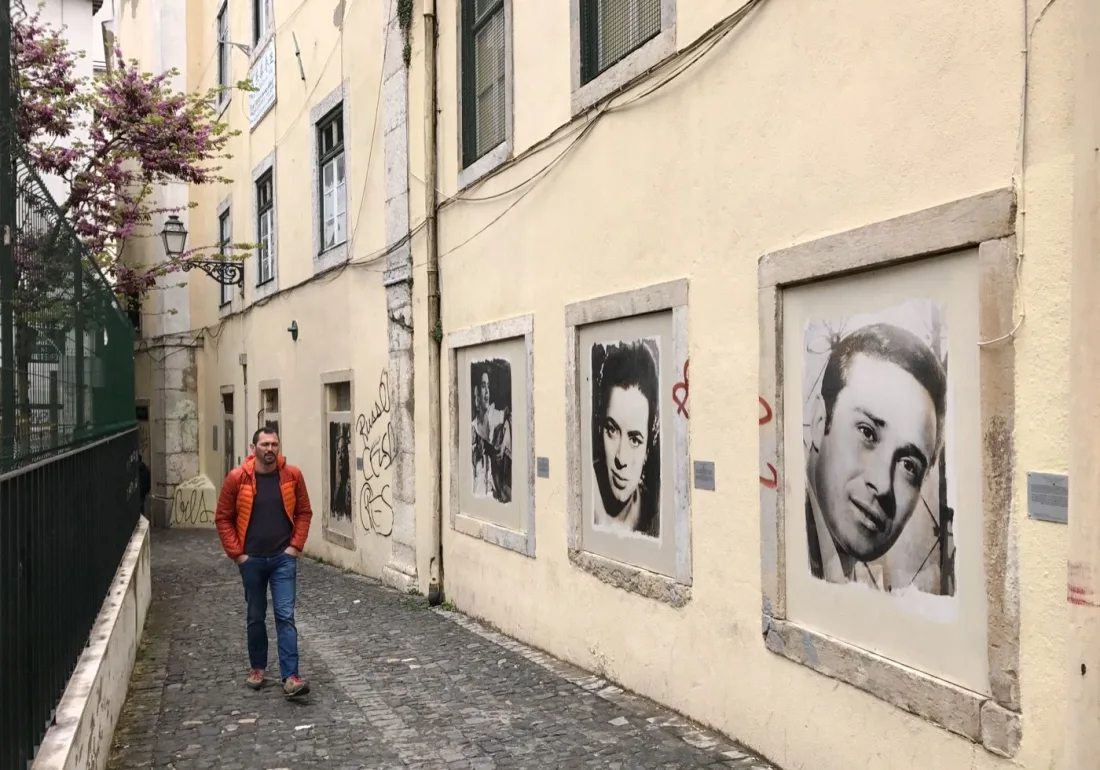
Portraits of fado legends watch over a Mouraria backstreet, a tribute in the genre’s birthplace. Photo: Vernaccia, CC BY 2.0 (Wikimedia Commons)
Alfama gets the tour buses, but ask any fadista (fado singer) where the music was born and they will point you here. In the 1800s Mouraria was home to Maria Severa Onofriana, the first great fado singer, a young woman of the streets whose voice and doomed romance with the aristocratic Count of Vimioso carried fado from the taverns of the poor into the drawing rooms of the rich. Born around 1820, she died in 1846 at just 26, and almost two centuries later her name still anchors the genre; fado, at least the Lisbon kind, would not sound the way it does without her.
Severa's legend only grew after her death. Her story became the first Portuguese sound film, "A Severa," in 1931, and her name turned into shorthand for fado's whole bittersweet soul, that ache the Portuguese call saudade. The teardrop-shaped guitarra portuguesa (the twelve-string Portuguese guitar) that defines the genre's sound was already wailing in these alleys in her day.
You can stand where she lived. On Rua do Capelao, the small Largo da Severa marks her house, now rebuilt and carrying a plaque to "Maria Severa Onofriana, considered in her time the sublime expression of fado." A guitar is set into the calcada (the patterned stone pavement) underfoot, and the building today holds Maria da Mouraria, the quarter's one proper fado house, where you can hear it sung over dinner.
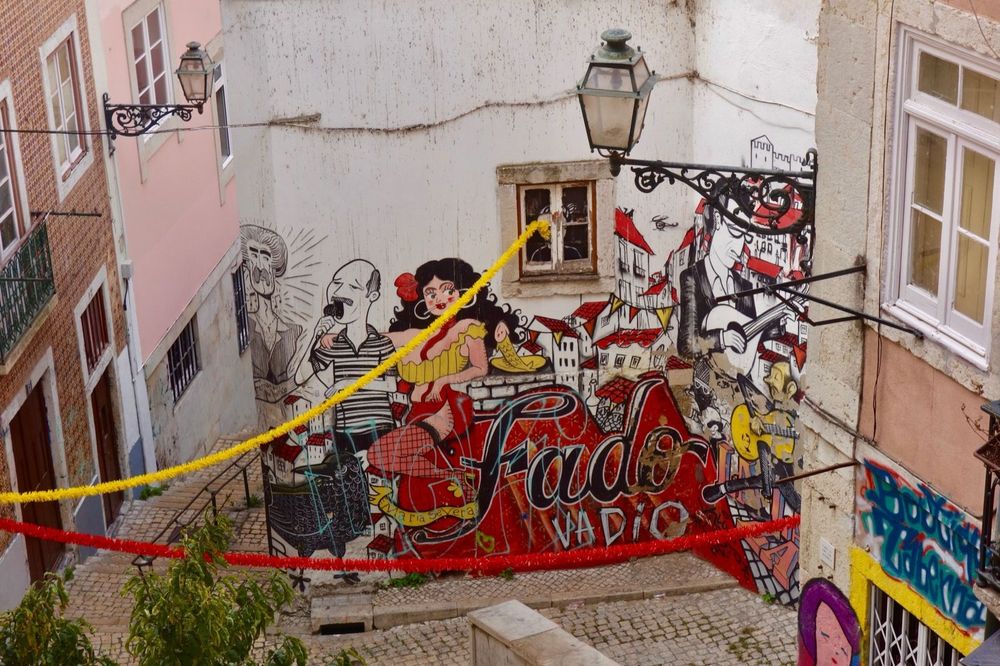
The neighborhood wears its music on its walls. The huge Fado Vadio mural on the Escadinhas de Sao Cristovao, a medieval stairway with a little square halfway up, is a collective tribute to the amateur singers who still perform unannounced in local taverns, and the lanes are dotted with the Berco do Fado, the "cradle of fado" tributes, including a bronze that honors the singers who came up out of these alleys. Look for the faces of fado greats glazed onto tiles on house corners as you climb.
Local tip: The polished dinner-show fado you book in Alfama is descended from exactly this, the fado vadio (amateur, take-turns fado) of Mouraria's taverns. If you would rather hear the source than the souvenir, this is the hill for it.
"If you want the real thing, skip the set-menu fado shows and ask in a Mouraria tasca whether anyone is singing tonight. The unannounced voice, in a room of locals, is what the tourist dinners are imitating." - Guidekin team
The Squares and Tiled Streets
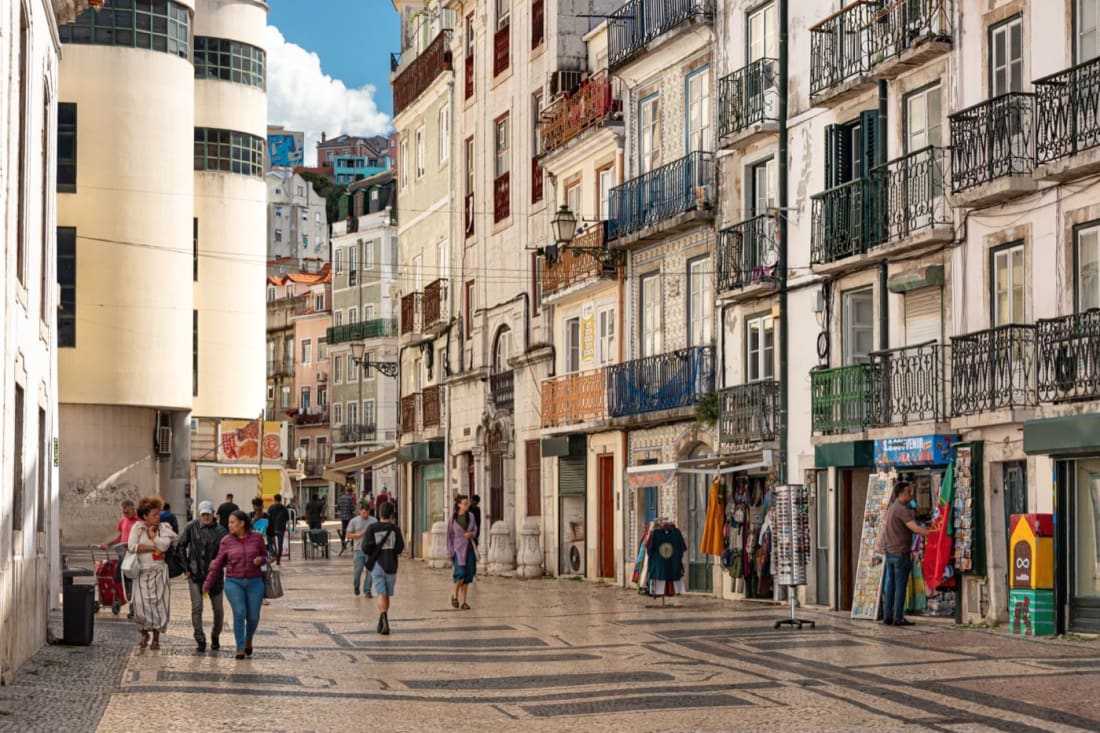
Rua da Mouraria, lined with tiled façades and patterned calçada. Photo: Jorge Franganillo, CC BY 2.0 (Wikimedia Commons)
Mouraria's sights are mostly free, and the joy is the wandering. Start at Martim Moniz, the broad square at the foot of the hill, part transport hub, part open-air crossroads of the city's communities, with kiosks selling everything from Nepalese momos (dumplings) to Portuguese beer. It is named for the knight said to have wedged himself in a castle gate during the 1147 siege so the Christian army could storm in, and these days the storming is gentler: weekend food fairs, kids on bikes, and old men playing cards in the shade. The square has been redesigned more than once in the past 15 years, and locals still argue about which version they liked best.
Climb to Largo do Intendente, once the most notorious square in Lisbon and now its most photogenic comeback story. For decades this was a no-go corner of drugs and sex work; the turning point came in 2012, when the city even moved a municipal department here to force the square's rehabilitation. The square is anchored by the spectacular blue-and-white tiled facade of the old Viuva Lamego ceramics house, a 19th-century azulejo showpiece, and through the 2010s it filled with design shops, the cultural space Casa Independente and a clutch of cafes, though longtime locals will tell you, not without an eye-roll, that the gentrification has gone far enough. It is a fascinating place to read the new Lisbon against the old, all on one small square.
Between the two, lose yourself on the Escadinhas de Sao Cristovao, climbing past the fado mural to the Igreja de Sao Cristovao at the top. The little church was first raised in the 13th century, rebuilt in the 16th, and painted inside with saints across a wooden ceiling. Step in. It is free, dim and almost always empty. That hush, at the top of one of Lisbon's most storied stairways, tells you everything about how far Mouraria still flies under the radar.
Eating Around the World
Here is Mouraria's real superpower. With around 50 nationalities in a handful of streets, this is the best and most adventurous eating in Lisbon, and most of it is cheap. Wander Rua do Benformoso and the lanes off Martim Moniz and you will pass Bangladeshi and Indian kitchens, Chinese grocers, Nepalese momo counters, Vietnamese pho, Turkish grills and Goan curry houses, often side by side. Locals come here to shop for spices they cannot find anywhere else in the city, and the no-frills food court inside the Centro Comercial da Mouraria hides some of the most authentic Chinese cooking in Lisbon, the kind with a menu only half-translated and a dining room full of homesick regulars.
But the soul of the place is its old institutions. Ze da Mouraria is the tasca everyone means when they say "the best roast cod in Lisbon," a no-frills room serving thick, boneless slices of bacalhau (salt cod) with chickpeas, good olive oil and roast potatoes in portions built for two; there are no reservations, so go early or wait. A few streets away, Cantinho do Aziz has been cooking the food of Mozambique for over 35 years, and its muamba (a chicken stew rich with palm oil) and prawns in okra and coconut are the gateway to Lisbon's African table. For more of that, Zambeze plates Mozambican and Cape Verdean dishes with a view over the rooftops, and the bakeries between them sell Indian sweets and Bengali snacks by the tray.
Detour: For a guided version that gets you past the language barriers and into the kitchens you would never find alone, a small-group Lisbon food tour through Mouraria and Martim Moniz is one of the best-value experiences in the city.
A Half-Day Wander Through Mouraria
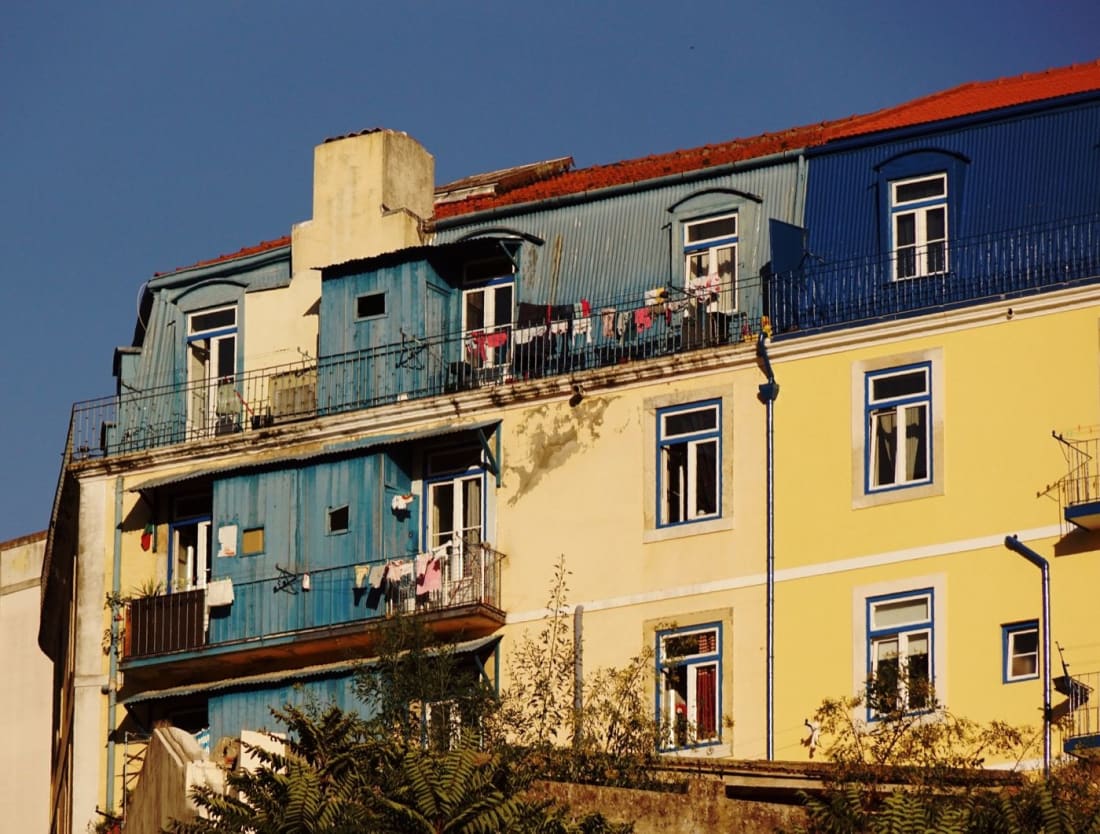
Laundry and weathered façades catch the late light in Mouraria. Photo: Jens Cederskjold, CC BY-SA 2.0 (Wikimedia Commons)
You do not need a fixed plan here, but if you like a thread to follow, this one runs about two to three hours, longer if you stop to eat. Start at Martim Moniz, grab a coffee among the kiosks, and walk up Rua do Benformoso to feel the neighborhood's many languages at once. Cut across to Largo do Intendente for the tiled Viuva Lamego facade and a browse of its design shops, then climb the Escadinhas de Sao Cristovao, pausing at the fado mural and the small church at the top.
From there, thread through the lanes to Largo da Severa on Rua do Capelao, where fado was born, and find the guitar set into the stones underfoot. Finish with a long, late lunch at a tasca, or keep climbing to the castle and drop down into Alfama for the evening, turning two quarters into one unhurried day.
Planning tip: Save the hill for the morning and the food for after. The climbs are short but steep, the squares are at their quietest before noon, and a plate of roast cod always tastes better once the walking is done.
Mouraria at a Glance
| Spot | What it is | Time | Cost |
|---|---|---|---|
| Martim Moniz | Multicultural square, tram and metro hub | 30 min | Free |
| Largo do Intendente | Tiled Viuva Lamego facade, hip square | 30-45 min | Free |
| Escadinhas de Sao Cristovao | Fado-mural stairway + 13th-century church | 45 min | Free |
| Largo da Severa (Rua do Capelao) | Birthplace of the first fadista | 20 min | Free |
| Ze da Mouraria | Lisbon's famous roast-cod tasca | 1-1.5 hrs | Budget |
| Maria da Mouraria | The quarter's fado house (dinner + show) | Evening | Mid-high |
Where to Stay
Mouraria has quietly become a clever place to base yourself: central, but a notch cheaper and far more local than the postcard quarters. Around Largo do Intendente you will find a growing crop of design-minded boutique hotels and guesthouses carved out of old tiled buildings, all within a few minutes of the metro and the trams. Lower down, toward Martim Moniz, the options run more budget and practical, which is handy if you are catching an early train or a flight.
We'd weigh the trade-off honestly. Staying here drops you into the middle of the real city, with the multicultural markets and the best cheap food in Lisbon on your doorstep, but the lanes are steep and a few of the squares stay busy late, so ask for a quieter back room if you sleep lightly. For calm with the same easy access, the upper streets toward the castle are gentler than the busy crossroads below.
When to Go
Mouraria is good year-round, but it peaks in June, during the Festas de Santo Antonio. The neighborhood's marcha popular (a costumed neighborhood parade) is among the proudest and most decorated in the city, and the streets fill with grilled sardines, paper garlands and music until dawn. If you want the festival energy, come in the second week of June; if you want the quiet, come any other morning, when the quarter belongs to its residents. The marchas wind down Avenida da Liberdade on the night of June 12, the eve of Santo Antonio, and Mouraria's has carried off the title more often than almost any other neighborhood, a point of fierce local pride. Weather-wise, late spring through early autumn is the warmest and driest stretch, but Mouraria shrugs off a grey day better than the postcard quarters, because so much of its life happens indoors, in tascas, tiled cafes and crowded little kitchens.
For the best light and the calmest streets, we recommend the morning. The squares wake slowly, the bakeries open, and you will have the murals and the stairways more or less to yourself before the day heats up.
Practical Tips
- Walk, don't drive. The lanes are steep, narrow and often stepped, so a car is a liability. Arrive on foot, by tram or by metro to Martim Moniz.
- Mind your bag. Mouraria is safe and welcoming, but Martim Moniz and the busy trams are pickpocket spots like anywhere crowded in Lisbon, so keep your bag zipped and in front.
- Bring cash. Many of the small tascas and immigrant-run kitchens prefer cash, and portions are generous, so come hungry.
- Pair it with Alfama and the castle. All three sit on the same hill, so do them as one slow loop rather than three separate trips.
- Go early or book. Ze da Mouraria fills fast and takes no reservations, and the fado house does, so plan accordingly.
- Come curious. The whole point of Mouraria is difference, so order the dish you cannot pronounce and talk to the person behind the counter.
FAQ
Is Mouraria safe to visit?
Yes. Mouraria is a lively, welcoming neighborhood that has shed its old rough reputation, and it is fine to walk by day and evening. The only real caution is pickpocketing around the crowded Martim Moniz square and on Tram 28, the same as anywhere busy in Lisbon.
Is Mouraria worth visiting?
Very much so, if you want the real, lived-in Lisbon. It is the birthplace of fado and the city's most multicultural quarter, with the best cheap eating in town. Most travelers spend two or three hours here, often as a bridge between the Baixa and the castle, and leave wishing they had eaten their way down a few more streets. Skip it only if you want polished and postcard-perfect over authentic.
How is Mouraria different from Alfama?
They are neighbors on the same castle hill and share fado roots, but Alfama is the prettier, more touristed quarter of viewpoints and tour groups, while Mouraria is grittier, more diverse and more local. Think of Alfama as the polished show and Mouraria as the rehearsal room where the show was first written. If you only have time for one and you want atmosphere over postcards, this is the one, and most travelers happily pair the two.
Where can you hear fado in Mouraria?
Maria da Mouraria, on Largo da Severa where the first fadista lived, is the neighborhood's main fado house. For something rawer, ask in the local tascas about fado vadio, the unannounced amateur singing that started it all.
What is the best food in Mouraria?
The roast cod at Ze da Mouraria is the local legend, and Cantinho do Aziz is the place for Mozambican food. Beyond them, the streets around Martim Moniz and Rua do Benformoso serve some of the best Indian, Nepalese, Chinese and African food in Lisbon.
How do you get to Mouraria?
Take the metro green line to Martim Moniz, ride Tram 28 or 12, or walk up from the Baixa via Rua da Madalena. Walking is the most rewarding way in.
Let Mouraria Surprise You
Mouraria is the Lisbon that does not try to charm you, and ends up charming you most. It is loud, steep and a little rough at the edges. It is also the most honest square mile in the city. Trace a fado mural up a stairway, eat a stew from a country you have never visited, and listen for a voice rising out of an open tavern door at dusk. When you are ready to turn the wandering into a proper day out, browse walking tours in Lisbon and let a local lead you through the quarter where the city's song began. For the wider city, our Lisbon tours and experiences are the place to start. Either way, give the quarter longer than you planned, because it has a quiet way of making you miss your next stop.