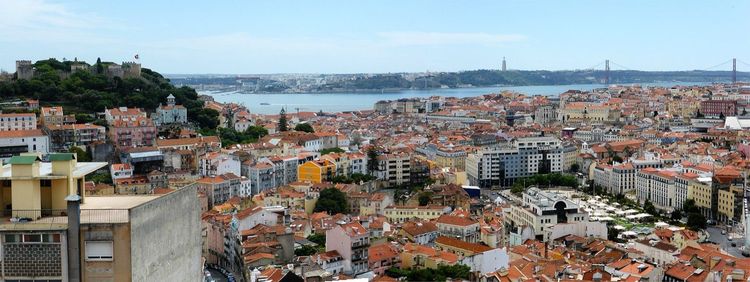
Lisbon is a city of seven hills, and where you sleep on them shapes the whole trip. Pick the wrong bairro (neighborhood) and the days vanish into hauling tired legs up cobbled slopes just to reach a morning coffee. Pick the right one and the city unfolds from your doorstep, all river light, rattling trams and the smell of sardinhas assadas (grilled sardines) drifting up the stairwell. The good news is that Lisbon is compact, and almost every central district puts the main sights within a short walk or a single Metro ride.
This guide breaks down the best areas to stay in Lisbon by the kind of trip you want, not by a hotel's star rating. You'll find the flat, central pick for first-timers, the soulful old quarters for atmosphere, the leafy streets for a calmer base, and an honest word on which areas to think twice about after dark. Most visitors do well with two to four nights somewhere central, then use it as a launchpad for a day in Sintra or on the coast. For the bigger picture of the city, pair this with our complete Lisbon travel guide.
Read on for the seven neighborhoods worth your nights, a quick comparison table, the safety lowdown, and the practical tips that save you both money and sore feet.
Key Takeaways
- Baixa is the easy, flat, central pick for a first visit, with every tram and Metro line right at the door. Where first-timers should stay →
- For atmosphere and live fado, base yourself in Alfama, but pack shoes with grip for the hills. The soulful choice →
- Book a street back from Bairro Alto's bar core if you sleep lightly, since the noise there runs until the small hours. Style and nightlife →
- Lisbon is one of Europe's safer capitals, but a few areas reward a little street sense. The safety lowdown →
- Weigh up every district side by side before booking a thing. The quick table →
- Book central stays early for summer, and lean on a Navegante card to skip ticket queues. Practical tips →
Baixa: Best for First-Timers

Photo: Berthold Werner, CC BY-SA 4.0 (Wikimedia Commons)
If this is your first time in Lisbon, start here. The Baixa (literally the "lower town") is the flat, grid-planned heart of the city, rebuilt on dead-straight lines after the 1755 earthquake flattened the medieval streets that stood before it. That grid is its gift to weary travelers. While the rest of Lisbon tilts and climbs, Baixa stays level, which makes it the kindest base for anyone with a suitcase, a stroller or complaining knees.
Most of the postcard sights lie within a 10-minute walk. The riverside Praça do Comércio opens onto the Tagus at one end, the cafes of Rossio and Praça da Figueira hum at the other, and two of the city's four Metro lines, the blue and the green, run beneath the district alongside the trams and the airport Aerobus. Hotels here span the full range, from polished boutiques on Rua Augusta to mid-range guesthouses tucked above the shops, so budgets from backpacker to boutique find a fit without losing the central spot. Reckon on roughly €110 to €190 a night for a comfortable mid-range double in July, dropping closer to €70 in winter.
The trade-off is character. Baixa is busy, a little touristy, and it empties at night once the day-trippers drift home, so it feels more useful than romantic. For a short, sight-packed first trip, that practicality is exactly the point.
The grid shades into two handy neighbors. Restauradores and the streets climbing toward Avenida sit close to the airport Metro line, while the riverside around Cais do Sodré keeps the late bars within reach. Wherever you land in Baixa, a Metro entrance, a tram stop and the Tagus are rarely more than a flat ten-minute walk away.
Local tip: Skip the waiter-touting restaurants on pedestrianized Rua Augusta, where the location is the only thing worth ordering, and walk five minutes to the tascas around Rua dos Correeiros for better food at half the price.
Chiado and Bairro Alto: Smart by Day and Loud by Night
Climb the hill west of Baixa and you reach two neighbors with split personalities. Chiado is Lisbon at its most elegant, a quarter of literary cafes, century-old bookshops, theaters and the city's smartest shopping along Rua Garrett. It is central, walkable and well connected, and it makes a refined base if you like a little polish with your sightseeing. The ruined arches of the Carmo Convent and the wrought-iron Santa Justa lift, built in 1902 and rising 45 meters to a rooftop terrace, sit right on its edge. For the full picture of the quarter, see our Chiado neighborhood guide.
Just uphill, Bairro Alto flips the script after dark. By day it dozes, almost residential, its narrow lanes shuttered and quiet. By night it becomes the city's oldest party, with tiny bars spilling drinkers onto the cobbles until the small hours. That makes it a thrill to visit and a challenge to sleep in.
Planning tip: If you want the central location without the 3am singalong, book a room in Chiado or on the Bairro Alto fringes facing a back street, not in the bar-lined core around Rua da Atalaia and Rua do Norte. Light sleepers should ask for an interior room and pack earplugs.
Both districts sit beside the Elevador da Glória, the yellow funicular that hauls you up to the São Pedro de Alcântara miradouro (viewpoint), one of the finest free views in the city. From here, the whole castle hill glows gold at sunset. Both quarters connect to the riverfront in under ten minutes on foot and to the airport in about twenty by Metro, which makes them a practical as well as a handsome base for travelers arriving without a car.
Alfama: Best for Atmosphere and Fado

Photo: Shadowgate, CC BY 2.0 (Wikimedia Commons)
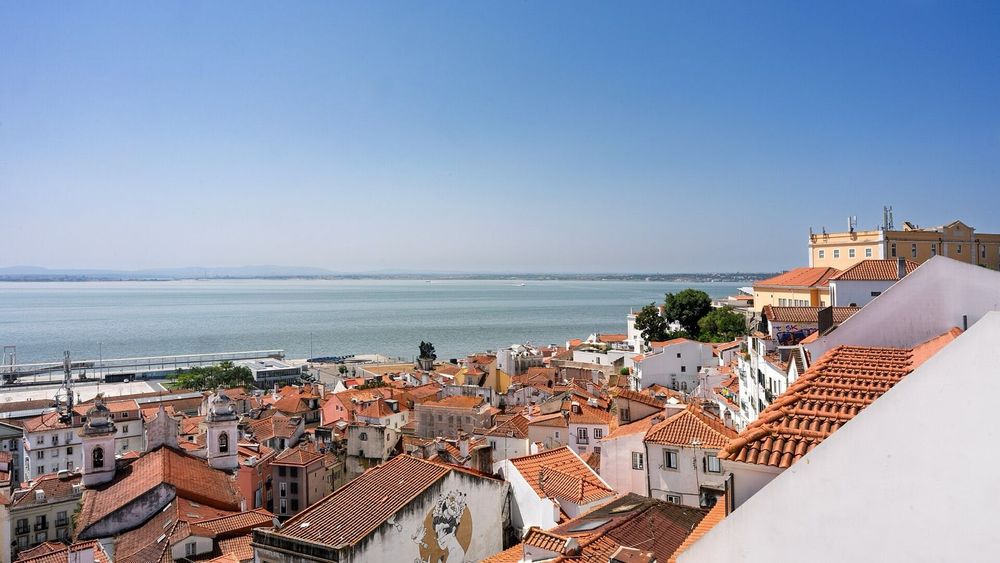
For soul, nothing beats Alfama. Lisbon's oldest quarter is a tangle of stairs and blind alleys folded below the castle, the one district that largely survived the 1755 earthquake, and it still feels lived-in rather than staged. Laundry hangs between the windows, fado (the city's mournful, century-old song) drifts from open doorways after dark, and the rooftops tumble in a sea of terracotta down to the river. Read our full Alfama neighborhood guide before you choose a room here.
It is the most atmospheric place to sleep, with small guesthouses and azulejo-fronted (tile-faced) townhouses rather than the big chain hotels of the flatlands below, each one a little world of creaking wooden stairs, tiny landings and unexpected rooftop views. The catch is the climb. Alfama is steep, the lanes are too narrow for a taxi to reach many front doors, and every miradouro here is earned on foot. The Castelo de São Jorge crowns the hill just above, with adult entry around €17 in 2026 and gates open daily from 9am. Heavy suitcases and Alfama do not mix.
Local tip: Plenty of locals will steer you toward hearing fado in a backstreet tasca (tavern) rather than at a polished dinner show. Stay in the neighborhood and you can wander out after 9pm and stumble onto the real thing for the price of a glass of wine.
The famous Tram 28 grinds through these lanes by day, charming for ten minutes and a pickpocket's favorite the rest of the time, so keep your bag in front of you in the crush. The upside of staying here is that you can ride it at dawn, before the queues build, when the light is on the tiles and there are seats to spare.
Alfama suits romantics, photographers and returning visitors far more than anyone arriving with heavy bags or small children. It comes into its own in the evenings, once the day's tour groups have drained away and the lanes belong to their residents again, with the smell of grilled fish and the sound of a distant guitar drifting on the cooling air.
Príncipe Real and Avenida da Liberdade: Leafy and Upmarket
For central but calmer, look just north of the old center. Príncipe Real is the city's most stylish quarter, a leafy grid of 19th-century mansions now filled with design shops, garden cafes and some of Lisbon's best restaurants, gathered around a square shaded by a vast, spreading cedar. It is quietly upmarket, walkable to everything, and a longtime favorite of the city's LGBTQ scene.
A few minutes downhill runs Avenida da Liberdade, Lisbon's grand, tree-lined boulevard, modeled on the Parisian Champs-Élysées and lined with five-star hotels and designer flagships. This is where you stay for luxury and shopping, with the airport a quick Metro ride straight up the line.
Neither area is cheap, with five-star doubles on the Avenida often topping €300 in summer, but both give space, greenery and a residential calm that the tourist-heavy core lacks. They suit slower travelers, returning visitors and anyone who would rather feel like a resident than a guest. Tram 24 and the Metro's blue and yellow lines put the center about eight minutes away.
Detour: Walk ten minutes from Príncipe Real to the Jardim do Torel, a pocket-garden miradouro that most visitors never find, and claim a bench for a quiet picnic above the rooftops.
Cais do Sodré: Best for Food and the Riverfront
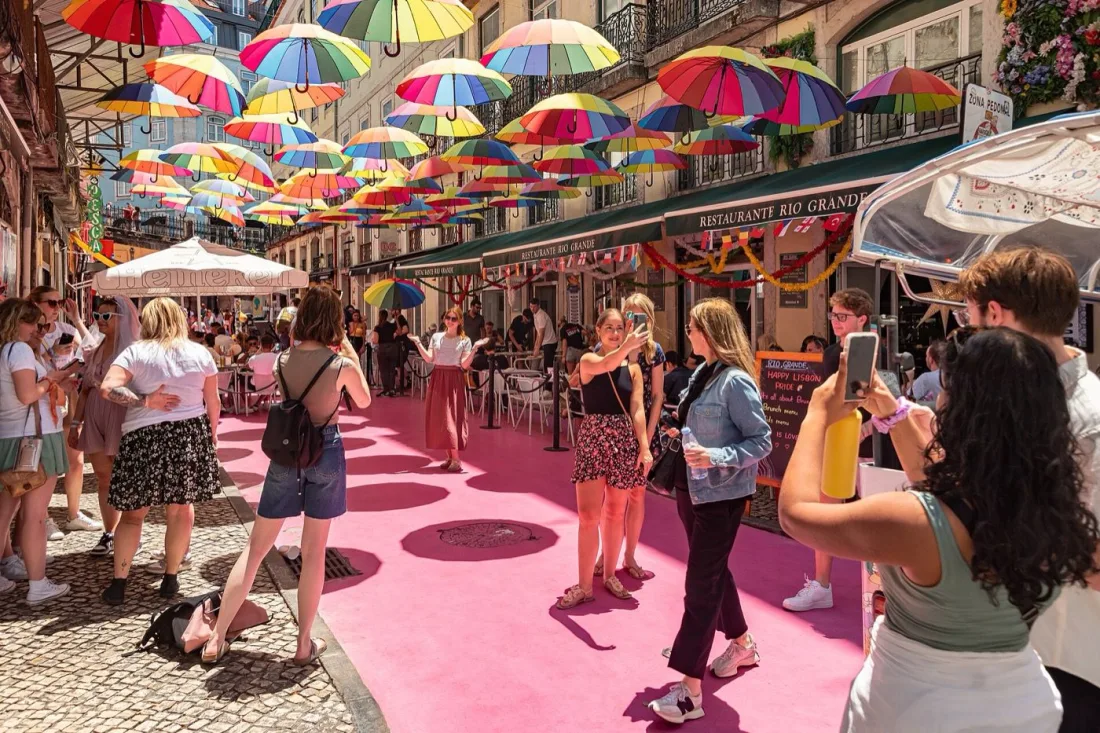
Photo: Jorge Franganillo, CC BY 2.0 (Wikimedia Commons)
Once Lisbon's rough dockside, Cais do Sodré has reinvented itself as the city's eating-and-drinking hub without fully scrubbing off its edge. At its heart sits the Time Out Market, where around 30 of the city's best kitchens share one roof, and the old sailors' lane of Rua Nova do Carvalho, now painted pink underfoot and lined with late bars.
Stay here for food, river views and a train line that runs straight out to the beaches at Cascais in about 40 minutes. The riverfront ribeira fills with sunset crowds, and the ferries across the Tagus to the south bank leave from the terminal next door.
Planning tip: Like Bairro Alto, the bar core gets loud at weekends, so book a room on the streets climbing toward Chiado rather than on Pink Street itself if you value sleep over stumbling distance home.
It is a strong pick for younger travelers and anyone who plans the day around the next good meal. From a base here, petiscos (small sharing plates) at a dozen market stalls make an easy evening's grazing, with a riverside walk to work them off afterward.
It is also one of the simplest bases for a day on the coast, since trains to Cascais and Estoril leave the Cais do Sodré terminal every twenty minutes or so, and the ferries across the Tagus to the south bank go from the very same waterfront. For a younger traveler who wants food, river and rail in one spot, little else in the city competes.
Belém and Parque das Nações: Best for Families and Space
Two riverside districts trade the tangle of the old center for room to breathe. Belém, about 6km (3.7 miles) west, is where Portugal's age of exploration is written in stone, home to the Torre de Belém, the Mosteiro dos Jerónimos and the original pastéis de nata (custard tarts) baked to a guarded recipe since 1837. Lines for the monastery can run 30 minutes by late morning, so arrive near the 9:30am opening or book a timed ticket ahead. It is green, flat and spread out, with gardens and museums made for families, though the tram or train is your link to the nightlife.
East of the center, Parque das Nações is modern Lisbon: wide promenades, a cable car and the Oceanário, one of Europe's great aquariums, all built for the Expo 98 world's fair, which drew more than 11 million visitors and left the district its wide, walkable bones. It is clean, calm and stroller-friendly, with reliable chain hotels and fast airport access, yet it lacks the character that draws most people to Lisbon in the first place.
Local tip: Families often get the best of both worlds by staying central and visiting Belém on a half-day trip, rather than basing out there and commuting in. Both districts shine for a day. Neither is the obvious place to sleep on a short visit.
That said, families and slower travelers planning several river-and-garden days can do very well out here, trading the buzz of the center for space, calm and the easiest parking in Lisbon. The tram and train keep the old town a short, scenic ride away for whenever the monuments and museums have worn the children out.
Mouraria: Best for Value and a Local Feel
Right beside Alfama, over the back of the castle hill, Mouraria is the other birthplace of fado and the city's most multicultural quarter, where dozens of nationalities share a few steep streets. It draws a fraction of Alfama's visitors, which keeps prices lower and the feel refreshingly real. Our Mouraria neighborhood guide maps out the best of the lanes.
Stay here for value, authenticity and some of the cheapest good food in Lisbon, from Bangladeshi and Chinese kitchens to old Portuguese tascas where a hearty lunch under €10 barely dents a budget. It is central, a short walk from both Baixa and the castle, and well served by the Martim Moniz Metro and tram stops.
The trade-off is grit. Parts of Mouraria around Martim Moniz feel scruffier than the postcard districts, and the steep lanes are every bit as demanding as Alfama's. This is the best-value central base in the city for travelers who care more about a real neighborhood than a buffed-up one, and who don't mind a hill on the way home.
Graça and Estrela: Views and Leafy Calm
Two hilltop quarters reward anyone who wants to feel more like a resident than a guest. Graça, just above Alfama and Mouraria, is a proudly local neighborhood of rattling trams, corner tascas and two of the city's greatest viewpoints, the Miradouro da Senhora do Monte and the Miradouro da Graça. It is central enough to walk into town, residential enough to fall quiet at night, and threaded by the Tram 28 for the days your legs give out. Prices here sit comfortably below the postcard core.
Across the city to the west, Estrela is the elegant, green and faintly aristocratic choice. Built around the great white Basílica da Estrela and its shaded garden, the district mixes embassies, antique shops and grand 19th-century prédios (apartment buildings) with a calm, grown-up air. It suits returning visitors, couples and anyone after a refined, low-key base a short tram ride from Chiado.
Stay in Graça for the views and the local feel, and in Estrela for the gardens and the quiet. Both sit on the Tram 28 line, which is a gift for sightseeing and, at rush hour, a reminder to keep your bag close.
Santos and Alcântara: Design, Docks and Late Nights
Along the river west of the center, a string of former industrial districts, their armazéns (warehouses) reborn as studios and bars, has become the city's creative heart. Santos, the old design quarter, is full of studios, concept stores and a lively bar scene, an easy and stylish base for younger travelers who want the nightlife without the Bairro Alto crush. The riverside bars of Cais do Sodré and the Time Out Market are a short walk or tram ride east.
Further out, Alcântara is dominated by LX Factory, a converted industrial complex of bookshops, restaurants, studios and street art beneath the 25 de Abril bridge, with the docks and their waterfront clubs alongside. It is less handy for the old-town sights, but it rewards anyone drawn to modern, creative Lisbon, and the train and tram link it fast to the center and out to Belém.
The Tram 15E runs the riverside the whole way from Praça da Figueira through Alcântara to Belém, so a base in Santos or Alcântara puts the monuments of Belém a scenic ride away, well ahead of the coaches bussing in from town.
Is Lisbon Safe? The Areas to Know
Lisbon is one of Europe's safer capitals, and violent crime against visitors is rare. The thing you actually need to guard against is pickpocketing, which feeds on the tourist crush. Tram 28, the Santa Justa lift queue, Rossio and the airport Metro line are the classic hotspots. Keep phones off the cafe table and a bag in front of you on a packed tram, and most of the risk melts away. The official Visit Lisboa tourism site keeps current visitor guidance if you want to read further.
A few areas reward a little extra street sense after dark. The bar cores of Bairro Alto and Cais do Sodré draw the usual late-night drift, and Martim Moniz and Intendente, much improved and increasingly fashionable, can still feel edgy on their quieter fringes late at night. None of this should keep you away. It simply means staying aware, exactly as you would in any large city. The national emergency number is 112.
Planning tip: Wherever you book, screenshot the accommodation's address and a walking map before you arrive. Lisbon's mobile signal drops in the deep alleys of Alfama and Mouraria, and those lanes are not built for blind GPS-following with a suitcase in tow.
"Lisbon rewards the curious traveler, not the careless one. Stay central, keep your wits about you on the busy trams, and you'll find one of Europe's gentlest big cities." - Guidekin team
How to Choose Your Base
With so many options, the smart move is to match the neighborhood to the trip rather than hunt for a single best area. The choices sort neatly by what you want most from the city.
First-time visitors who want everything walkable should book Baixa or Chiado. Travelers chasing atmosphere, and willing to climb for it, belong in Alfama or Graça. Night owls want Bairro Alto, Cais do Sodré or Santos, ideally a street back from the loudest lanes. For a calm, stylish base, Príncipe Real and Estrela are hard to beat, while Avenida da Liberdade is the address for luxury and serious shopping.
Families do best with the flat ground and space of Belém or Parque das Nações, or a central, level base in Baixa. Budget travelers and anyone after the most local feel should look to Mouraria and Graça. Get that one decision right and the rest of the trip arranges itself around it.
It also helps to think in trade-offs rather than a single winner. Central means convenient but busier and pricier; atmospheric means beautiful but hilly; value means a little farther out or a little rougher around the edges. No neighborhood wins on every count, which is the quiet secret of a city built across seven hills, and the reason locals will give you a different answer depending on what they love most about home.
Planning tip: Whatever you pick, stay central and walkable on a first visit. Lisbon's hills and cobbles make a far-flung bargain feel a lot less like one after the third uphill walk home with the day's shopping.
The Best Areas for Families
Traveling with children shifts the priorities toward space, flat ground and easy logistics, and a few areas deliver all three. Belém is the standout: green, level and spread along the river, with gardens to run in, monuments to climb and the custard tarts as a reliable bribe. Parque das Nações is the other family favorite, purpose-built and stroller-friendly, with the Oceanário aquarium, a cable car and wide, traffic-free promenades.
If you would rather stay central, flat Baixa keeps tired young legs close to everything and puts you a short walk from the river and the castle hill. Wherever you base, a ground-floor or lift-served apartment with a kitchen takes the stress out of early bedtimes and fussy eaters.
One word of warning: skip a base up in Alfama or Graça with small children and heavy gear, however pretty the photos. The stairs, the cobbles and the lack of car access turn charming into exhausting by the second day.
At a Glance: Which Lisbon Neighborhood Fits You
Here is every neighborhood side by side, with the kind of traveler each one suits best, so the final call comes down to priorities rather than guesswork. A single euro symbol marks the most affordable districts, while four signals the premium addresses where summer rates climb most steeply. Treat the price bands as a rough guide for a comfortable mid-range double in high season; you'll find cheaper rooms in every district if you book ahead.
| Neighborhood | Best for | Vibe | Walk to centre | Price band |
|---|---|---|---|---|
| Baixa | First-timers | Central, flat, busy | You're in it | €€ |
| Chiado | Style and shopping | Elegant, polished | 5 min | €€€ |
| Bairro Alto | Nightlife | Sleepy by day, loud by night | 10 min | €€ |
| Alfama | Atmosphere and fado | Old, steep, romantic | 10 min | €€ |
| Príncipe Real | Quiet and stylish | Leafy, residential | 15 min | €€€ |
| Avenida da Liberdade | Luxury and shopping | Grand, upscale | 10 min | €€€€ |
| Cais do Sodré | Food and riverfront | Buzzy, young | 5 min | €€ |
| Belém | Families and museums | Green, spread out | Tram ride | €€ |
| Mouraria | Value and local life | Gritty, multicultural | 10 min | € |
| Graça | Local life and views | Residential, hilly | 12 min | €€ |
| Santos / Alcântara | Design and nightlife | Creative, riverside | 15 min | €€ |
Apartment or Hotel?
Lisbon does both well, and the right call depends on the trip. Hotels and guesthouses cluster in Baixa, Chiado and along Avenida da Liberdade, from polished boutiques to simple rooms above the shops, and they make the easiest, most serviced base for a short first visit. Many of the old townhouses in Alfama and Graça have become characterful small guesthouses, long on charm and often short on lifts.
Short-term apartments are everywhere and frequently better value for families, groups or longer stays, giving you a kitchen, a washing machine and a neighborhood to live in rather than just sleep in. The trade-off is the climb, since plenty sit in walk-up buildings on stepped streets, so check for a lift and read the location carefully if stairs are a worry.
Whichever you book, confirm exactly how you collect the keys and reach the door before you arrive. Addresses in the old quarters can defeat a taxi, and a top-floor walk-up with a heavy case is the one Lisbon surprise nobody enjoys.
Staying in Lisbon on a Budget
Lisbon remains one of Western Europe's better-value capitals, and a little neighborhood know-how stretches a budget a long way. Mouraria gives you the most central authenticity for the least money, while Graça, Anjos and the upper streets of Baixa near Martim Moniz offer honest, well-connected rooms below the postcard prices. Staying two or three Metro stops out, around Arroios or Areeiro, cuts costs sharply while keeping you a ten-minute ride from the center.
The bigger savings, though, come from timing. Rooms cost the most in July, August and over the June festivals, and the least in the wet winter months, so the shoulder windows of May, late September and October stretch a budget furthest.
Whatever your budget, book early for summer. The good-value central rooms are the first to vanish, leaving a choice between paying up and staying inconveniently far out.
Getting In From the Airport
Lisbon's airport sits just inside the city, about 7km (4.5 miles) from the center, so transfers stay short whichever base you choose. The Metro's red line runs straight from the terminal and links into the rest of the network, the cheapest way in for anyone near a station. The Aerobus shuttle loops down to Baixa and Cais do Sodré, and a taxi or rideshare to a central address takes 15 to 25 minutes outside rush hour, for roughly 15 to 20 euros.
Some bases simply arrive easier than others. Avenida da Liberdade, Saldanha and Parque das Nações sit almost on the airport Metro line, while the stepped lanes of Alfama, Mouraria and Graça mean a taxi gets you only so close before the walking, and the stairs, begin.
If you land late or loaded with luggage, pick a base with simple street access and take a taxi rather than wrestling cases up a hillside at midnight. The few euros saved on the Metro rarely beat the sanity saved on the climb.
Practical Tips
- From the airport: Lisbon's airport sits just 7km (4.5 miles) from the center. The Metro red line, the Aerobus and a taxi (roughly €15 to €20 to Baixa) all reach town in 20 to 40 minutes. The Metro is cheapest; a taxi or rideshare is easiest with luggage and a hillside address that no car can quite reach.
- When to book: Central districts fill fast for summer and for the June Santos Populares, the street festivals that take over Alfama and Mouraria. Book two to three months ahead for July and August for far more choice and better prices.
- Getting around: Pick up a rechargeable Navegante card and tap on for each ride. A single trip costs about €1.90 against roughly €3.30 bought onboard a tram, and a 24-hour pass (around €7) covers the trams, buses, Metro and funiculars run by Carris. For the hills, the elétrico (tram) lines and the funiculars spare your legs.
- Budget: Expect to pay most for a bed on Avenida da Liberdade and in Chiado, and least in Mouraria and the outer districts. The shoulder months of May, September and October stretch your money furthest, with summer warmth but smaller crowds.
- Where not to stay: No central neighborhood is truly unsafe, but a room right on a Bairro Alto or Pink Street party block will cost you sleep, and a too-cheap deal far out in the suburbs will cost you time and tram fares. Stay central and you rarely regret it.
- Apartments and lifts: If you book a short-term apartment in the old quarters, check explicitly for an elevator, since many are walk-ups of four or five steep floors with no shortcut around the stairs.
- Do more from your base: Once you've settled in, a guided walking tour is the fastest way to read the city's hills, and the train makes the best day trips from Lisbon an easy add-on.
FAQ
Where should I stay in Lisbon for the first time?
Baixa and Chiado are the easiest first bases: central, walkable and connected to every tram and Metro line. Baixa is flatter and a touch cheaper, while Chiado is more elegant and a short stroll uphill. Both keep the main sights within a 10-minute walk.
Which Lisbon neighborhood is best for nightlife?
Bairro Alto is the city's traditional bar quarter, with Cais do Sodré and its Pink Street close behind. Stay nearby for the buzz, but book a room a street or two back if you hope to sleep before 3am.
Is Lisbon safe for tourists?
Yes. Lisbon is one of Western Europe's safer capitals, with rare violent crime. The real risk is pickpocketing on packed trams and in tourist crowds, so keep your bag in front of you and your phone put away in busy spots.
What is the best area to stay in Lisbon for families?
Belém and Parque das Nações offer space, gardens and big-hitter attractions like the Oceanário. If you would rather stay central, flat Baixa keeps tired young legs close to everything and the trams.
How many nights do you need in Lisbon?
Two to four nights cover the main neighborhoods and sights, with a spare day for Sintra or the coast. Pick one central base and lean on the trams and Metro rather than moving hotels mid-trip.
Where is the best value place to stay in Lisbon?
Mouraria gives you a central, authentic base for less than the postcard districts. The outer reaches of Baixa and the slopes of Graça also stretch a budget without stranding you far from the action.
Which Lisbon neighborhood is best for couples?
Alfama and Graça for romance and rooftop views, Príncipe Real and Estrela for a stylish, quiet base, and Chiado for elegance within walking distance of everything. All reward a slow evening stroll between the miradouros.
Where should I stay in Lisbon for nightlife?
Bairro Alto is the traditional bar quarter, with Cais do Sodré and stylish Santos close behind. Book a room a street or two back from the busiest lanes if you want to enjoy the night and still sleep before dawn.
Where to Book Your Lisbon Base
For most first visits, the smart move is simple. Book something central and walkable in Baixa or Chiado, keep your nights under one roof, and let the trams carry you up the hills. Lisbon repays a central base more than almost any European capital, largely because its hills punish a long daily commute. Get the location right and Lisbon stops being a city you tackle and becomes one you simply step out into each morning.
Whichever bairro you choose, remember that the neighborhoods are small and close, so no single decision locks you out of the rest. From a base in Baixa you can walk to Alfama for dinner, ride a tram to Belém in the morning, and be on a beach train within the hour. The point is less about finding the one perfect address than about picking a comfortable, central, well-connected base and letting the city come to you. When you're ready to fill the days, browse our handpicked Lisbon tours and experiences and build the trip around the neighborhood you've chosen.