Lisbon eats well, and it eats with its whole history on the plate. This is a city of salt cod and grilled sardines, of custard tarts still warm from the oven, and of tiny tascas (family taverns) where lunch arrives on a paper tablecloth and nobody hands you a menu in five languages. You can spend three euros on the best sandwich of your trip, or one hundred and fifty on a tasting menu two streets away, and both can be unforgettable.
The trick is knowing where locals actually eat, which is rarely where the photo menus and the pavement touts are. This guide covers what to eat, the tascas, markets and cervejarias (beer-and-seafood halls) worth your appetite, and how to handle the small rituals, from the couvert to the late dinner hour, that catch visitors out. For where these places sit on the map, pair it with our complete Lisbon travel guide.
Read on for the dishes worth crossing town for, the best places to find them, and the practical tips that keep you eating like a local.
Key Takeaways
- Eat at least one lunch in a tasca, the family taverns where Lisbon eats best and cheapest. Where the soul is →
- Order bacalhau, grilled sardines and a bifana before anything else, then finish on a custard tart. What to order →
- For seafood, follow locals to a cervejaria like Cervejaria Ramiro, not a riverfront tourist trap. Seafood done right →
- Graze a food hall like the Time Out Market when you want choice and a quick bite. Markets and halls →
- Eat with live fado in Alfama or Mouraria for the full Lisbon evening. Dinner with fado →
- Learn the couvert rule before your first meal, or pay for bread you never ordered. Practical tips →
The Dishes Worth Crossing Town For
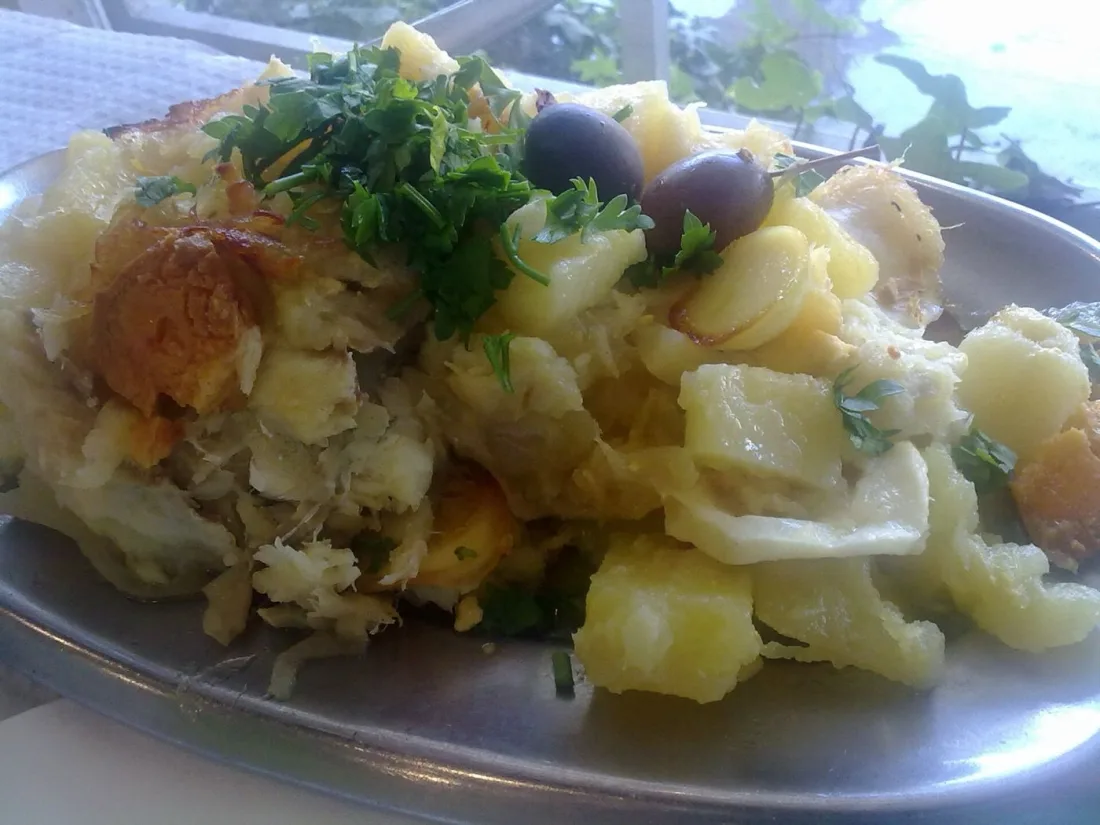
Photo: Adriao, CC BY-SA 3.0 (Wikimedia Commons)
Start with bacalhau (salt cod), the national obsession. Locals will tell you there are 365 ways to cook it, one for every day of the year, and the two you should try first are bacalhau à Brás, shredded with straw potatoes, egg and olives, and bacalhau à lagareiro, roasted with garlic and a flood of olive oil. Neither tastes remotely like the dried slabs in the shop windows.
In summer, the city turns to sardinhas assadas (grilled sardines), smoking on every corner grill through June and best eaten on bread with a glass of cold vinho verde. Year round, the humble bifana, a thin pork steak simmered in garlic and white wine and stuffed into a soft roll, is the sandwich locals queue for at lunch.
Order petiscos (small sharing plates) the way Lisboetas do, a few at a time with wine: amêijoas à Bulhão Pato (clams in garlic and coriander), grilled octopus, peixinhos da horta (battered green beans), a slice of queijo da Serra. And leave room for arroz de marisco, the soupy seafood rice that arrives in a pot built for sharing.
Beyond cod and pork, look for caldo verde, a comforting kale and potato soup, to start; frango piri-piri, spicy grilled chicken, for a casual feast; and slow-cooked cozido à portuguesa, a hearty boiled dinner of meats and vegetables, on a cold day. The Portuguese kitchen is honest and generous rather than fussy, leaning on good olive oil, salt cod, fresh Atlantic fish and the day's bread, and the best versions of all of it come from kitchens that have cooked the same plates for decades.
Lisbon snacks well too. Through summer, locals crack through bowls of caracóis, small garlicky snails, with a beer, nibble the salty lupini beans called tremoços before dinner, and grab a prego, a quick steak sandwich in a soft roll, on the way home from the beach. None of it is fancy, all of it is good, and most of it costs only a euro or two.
To drink, go local and inexpensive. A glass of crisp vinho verde suits the seafood, a Lisbon or Alentejo red stands up to the meat and the cod, and a short, strong espresso closes the meal. Save the port for afterwards, poured the Portuguese way in a small glass alongside the bill.
Local tip: Anything described as the prato do dia (dish of the day) on a handwritten board is usually the cook's best work and the best value in the house. Order it before you reach for the printed menu.
Eat in a Tasca: The Soul of Lisbon Dining
If you do one thing with your appetite in Lisbon, eat lunch in a tasca. These small, family-run taverns serve home-style cooking in big portions at small prices, and they are where the city genuinely eats. Expect a paper tablecloth, a short menu chalked on a board, house wine by the jug, and a prato do dia for somewhere around 8 to 12 euros.
The classics earn their reputations. Zé da Mouraria, tucked in the multicultural lanes of Mouraria, plates enormous portions of bacalhau to a daily queue. Taberna da Rua das Flores in Chiado is tiny, takes no bookings, and rewards the wait with inventive daily specials. For a newer, looser take on the form, O Velho Eurico near the cathedral has a young kitchen reworking the classics.
Part of the joy is how little it costs. A two-course lunch with wine and a coffee can come in under 15 euros, and the portions are built for working appetites, often big enough to share between two. Order the house wine without fear, since the cheap vinho da casa is usually a perfectly drinkable local red or vinho verde, poured from a jug and charged by the glass or the litre. For a polished, modern spin on the tradition, where chefs apply fine-dining technique to humble plates, book a table at Tasca da Esquina over in Campo de Ourique.
"Skip the restaurants with photo menus and a tout at the door. The best meal in Lisbon is almost always the tasca with a paper tablecloth and a queue of locals." - Guidekin team
Planning tip: Most tascas take no reservations and fill fast, so arrive when they open, around 12:30pm for lunch or 7:30pm for dinner, or expect to queue. Cash is still king in the older places, so carry some. Our guides to Mouraria and the wider city map out the best-eating quarters.
Markets and Food Halls
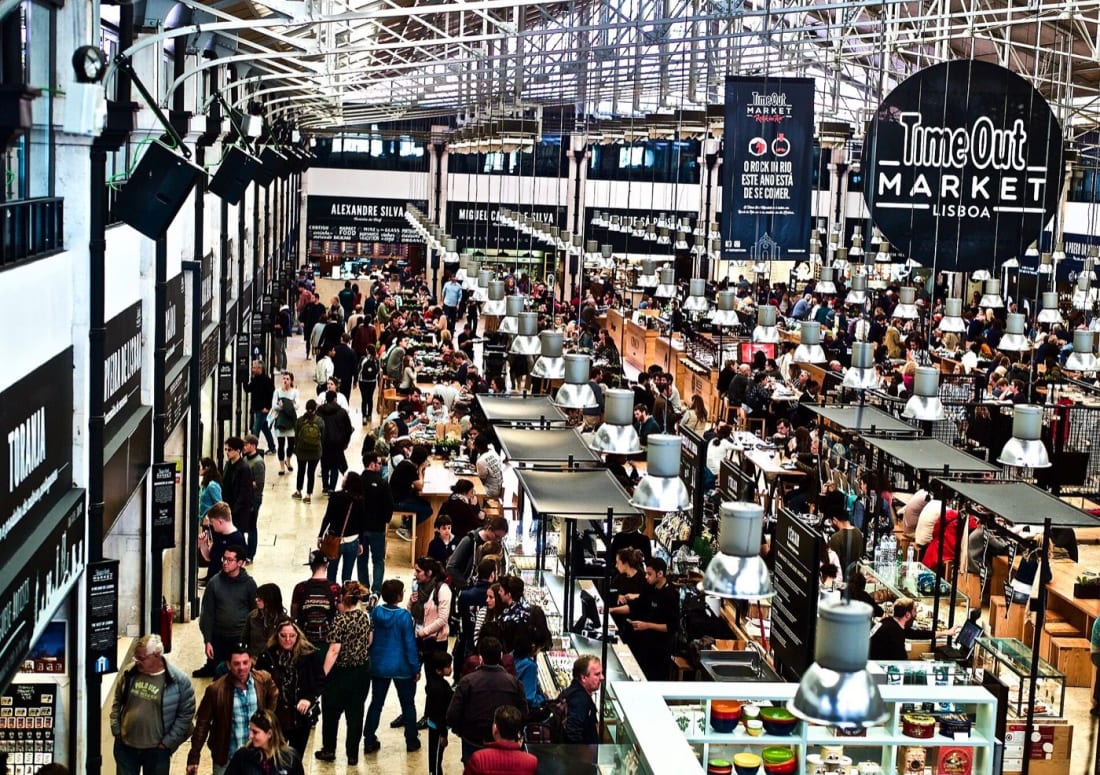
Photo: Pedro Ribeiro Simões, CC BY 2.0 (Wikimedia Commons)
When you want variety in one stop, head for a market. The famous one is the Time Out Market in the old Mercado da Ribeira at Cais do Sodré, where around 30 of the city's best kitchens, including big-name chefs, share a single hall of communal tables. It is busy and not cheap by Lisbon standards, with most dishes from 8 to 15 euros, but the quality is high and the choice unbeatable when a group wants different things.
For something more local, the Mercado de Campo de Ourique is a smaller neighborhood version, a working produce market ringed by food stalls and loved by residents. Across town, the fresh-fish hall of the Mercado 31 de Janeiro hides a simple lunchtime grill where you point at the catch and they cook it.
The Time Out Market works best away from the crush, since the communal tables fill to bursting at weekend lunchtimes and on warm summer evenings, so aim for an early or late slot to find a seat. Beyond the headline halls, almost every neighborhood keeps a covered municipal market where you can assemble a cheap picnic of bread, cheese, olives and fruit from the stalls, then carry it off to the nearest miradouro for lunch with a view over the rooftops.
Detour: Steps from the Time Out hall, drop into Conserveira de Lisboa or a bar like Sol e Pesca for Portugal's beautifully tinned fish, the conservas that make a cheap, delicious and very portable edible souvenir.
For Seafood, Go Where the Locals Go
Lisbon does shellfish with serious pride, and the place to understand that is a cervejaria, a bustling beer hall built around a marble seafood counter. The legend is Cervejaria Ramiro on Avenida Almirante Reis, where you queue with locals for garlicky prawns, percebes (goose barnacles), crab and clams, washed down with cold beer and finished, by tradition, with a steak sandwich. A blowout here runs perhaps 40 to 60 euros a head, and it is worth every cent.
Beyond Ramiro, the city keeps a handful of grand old marisqueiras where the seafood arrives on ice and the waiters wear waistcoats, plus plenty of humbler spots doing the same shellfish for less. Wherever you land, the ritual holds: a tower of crab, prawns and clams to share, bread and butter, cold beer or a crisp white, and a long, unhurried evening of cracking shells and mopping up the garlic.
The contrarian rule matters most with seafood. The pretty restaurants lined up along the riverfront and the busiest tourist squares tend to charge the most for the least, often reheating what a good cervejaria sells fresh. Walk a few streets inland and your money goes twice as far.
Local tip: Seafood is usually priced by weight, shown per kilo on the menu. Ask the waiter to weigh your choice and quote the price before it hits the grill, so the bill holds no surprises.
Pastéis de Nata and the Sweet Stuff
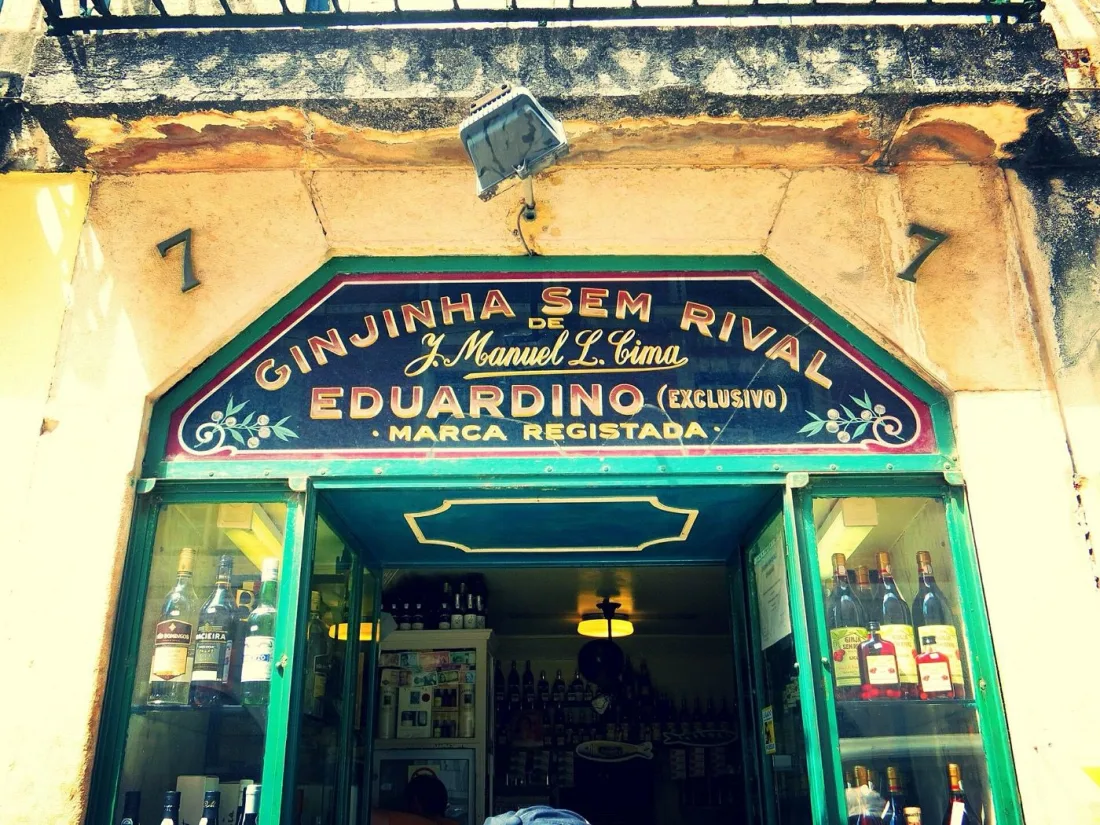
Photo: Edna Winti, CC BY 2.0 (Wikimedia Commons)
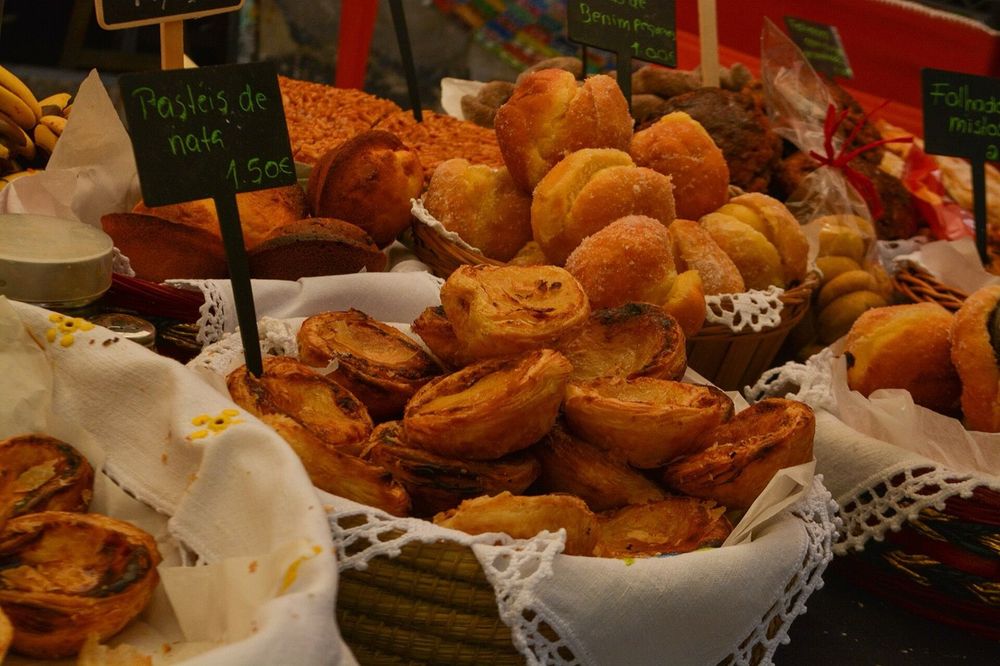
No meal in Lisbon really ends until you have had a pastel de nata, the warm custard tart in a shell of shattering pastry, dusted with cinnamon. The original and most famous come from Pastéis de Belém, baking to a guarded 1837 recipe near the Jerónimos monastery, where the queue moves fast and the tarts arrive hot. In the center, Manteigaria in Chiado bakes them all day and rings a bell when a fresh tray lands.
Beyond the tart, the city's old pastelarias are an institution. Confeitaria Nacional on Praça da Figueira has been serving cakes since 1829, and the queijadas and almond sweets reward a detour. For a drink with your sugar, join the ritual at A Ginjinha, a hole-in-the-wall by Rossio pouring shots of sour-cherry liqueur since 1840 for about a euro and a half.
The custard tart has cousins worth meeting too, from the dense almond queijadas to the simple bolo de arroz and the eggy convent sweets born in Portugal's monasteries. Most Lisboetas take theirs standing at the counter with a short, strong espresso, a quick daily ritual that costs a couple of euros and leaves any chain cafe far behind.
Planning tip: A custard tart at a neighborhood bakery costs around 1.30 euros against the inflated prices near the big sights, so buy them where the locals do. Eat them on the spot, warm, because they are never as good cold.
Dinner with Fado
For the most Lisbon evening of all, eat where the city's mournful music is born. In Alfama and Mouraria, a handful of small casas de fado (fado houses) serve hearty Portuguese dinners between sets of live song. The food is rarely the headline, but the room, lit low and hushed when the singing starts, is the point.
Choose a small neighborhood house over a slick dinner-show theater, and you will pay less for something far more real. Tasca do Chico, with rooms in Bairro Alto and Alfama, keeps it raw and unannounced, the singing breaking out among the petiscos. Our Alfama neighborhood guide lists more places to hear the real thing.
Dinner here unfolds slowly, in long courses with pauses for each song, so plan for a leisurely two or three hours rather than a quick bite. Book ahead for the better-known houses, since the good small rooms hold only a handful of tables and fill on word of mouth alone.
Local tip: Most fado houses ask for a minimum spend rather than a ticket, and they expect quiet during each song. Arrive after 9pm, order a few petiscos and a bottle, and settle in for the long, slow rhythm of the night.
Where to Eat by Neighborhood
Lisbon's flavors shift street by street. Cais do Sodré pairs the Time Out Market with a strip of buzzy modern bars and restaurants. Avenida da Liberdade and Chiado hold the smart rooms and the Michelin stars, from José Avillez's two-starred Belcanto to Alma and Marlene, where a tasting menu climbs past 150 euros.
For atmosphere and value, the old quarters win. Mouraria serves the city's best cheap and multicultural food, Graça and Campo de Ourique are full of honest neighborhood tascas, and Príncipe Real leans stylish and modern. Pick a base near the eating you care about most, something our guide to where to stay in Lisbon can help with.
Detour: For a memorable lunch with a view, the riverside cervejarias and rooftop terraces around the Mercado da Ribeira and the Santa Catarina viewpoint let you eat well while the Tagus does the entertaining.
Out in Campo de Ourique, a genuinely residential quarter, you eat alongside families at prices the center has quietly forgotten, while up in Graça the tascas come with some of the finest rooftop views in the city. Down by the water at Belém, the queues form for custard tarts rather than dinner, but the riverside gardens make a fine place to eat one in the sun.
Lisbon's dining scene has also grown outward in recent years, with Nepalese and Indian kitchens crowding Mouraria, a wave of brunch spots and natural-wine bars rising across Príncipe Real and Santos, and young Portuguese chefs returning home to open small, ambitious rooms. You can eat your way around the world here without ever leaving the city, yet the heart of Lisbon's table stays exactly where it has always been: a plate of cod, a jug of house wine, and a tasca full of people who came for the food and not the photo.
At a Glance: What to Eat and Where
A quick cheat sheet for your first few meals, from a one-euro shot to a special-occasion blowout.
| Dish or experience | What it is | Where to try it | Rough cost |
|---|---|---|---|
| Bacalhau à Brás | Salt cod, egg and straw potatoes | Any good tasca | €10 to €14 |
| Bifana | Garlicky pork sandwich | O Trevo, corner snack bars | €2 to €3 |
| Grilled sardines | Summer charcoal classic | Festivals, grills, tascas | €8 to €12 |
| Seafood feast | Prawns, clams, crab | Cervejaria Ramiro | €40 to €60 |
| Pastel de nata | Warm custard tart | Pastéis de Belém, Manteigaria | €1.30 |
| Ginjinha | Sour-cherry liqueur shot | A Ginjinha, by Rossio | €1.50 |
| Tasting menu | Modern Portuguese fine dining | Belcanto, Alma | €150 and up |
Practical Tips
- The couvert: The bread, olives and cheese a waiter places on your table are not free. Eat them and they appear on the bill, usually a few euros. Wave them away if you do not want them, with no offense taken.
- Meal times: Lisbon eats late. Lunch runs roughly 1pm to 3pm, and dinner kitchens often open around 7:30pm or 8pm and serve till late. Turn up at 6pm and you may find the kitchen still cold.
- Tipping: A service charge is rare and tipping is not obligatory. For good service, rounding up or leaving 5 to 10 percent is generous and appreciated.
- Reservations: Book ahead for the smart rooms and the Michelin tables, sometimes weeks out. Tascas mostly take no bookings, so go early or queue.
- Cash and cards: Cards work almost everywhere now, but the oldest tascas, market stalls and ginjinha bars still prefer cash, so keep a few small notes on you.
- Water and bread: Tap water is safe to drink, though restaurants pour bottled by default, so ask for tap water if you would rather. Like the couvert, any bread you eat is added to the bill.
- Eat like a local: Join a Lisbon food tour on your first day to map the flavors, then return on your own to the places you liked best. The official Visit Lisboa site lists seasonal food events.
FAQ
What food is Lisbon famous for?
Salt cod (bacalhau), grilled sardines, the bifana pork sandwich, fresh seafood and the pastel de nata custard tart. Most dishes are simple, generous and built around the Atlantic and the country's love of cod.
Where do locals actually eat in Lisbon?
In neighborhood tascas, family-run taverns in quarters like Mouraria, Graça and Campo de Ourique, where a daily special costs around 8 to 12 euros. Locals also favor cervejarias for seafood over the riverfront tourist restaurants.
What is the best area in Lisbon for restaurants?
Cais do Sodré for the Time Out Market and modern bars, Chiado and Avenida da Liberdade for fine dining, and Mouraria for cheap, authentic food. Each quarter has its own flavor.
How much does it cost to eat in Lisbon?
It is good value by Western European standards. A tasca lunch runs 8 to 12 euros, a custard tart about 1.30 euros, and a seafood feast or tasting menu far more. You can eat very well on a modest budget.
What is a couvert and do I have to pay for it?
The couvert is the bread, olives and small plates brought to your table before you order. It is not free, so you pay for what you eat, usually a few euros. Send it back if you do not want it.
When should I eat dinner in Lisbon?
Late by northern European habits. Dinner service usually starts around 7:30pm or 8pm and runs well into the night, so aim for 8pm or later to eat when the locals do.
Where to Start Eating
For your first meal, keep it simple: find a busy tasca at lunch, order the prato do dia and a glass of house red, and finish with a custard tart down the street. Do that once and the city's whole way of eating, generous, unfussy and rooted in the Atlantic, falls into place. From there it only gets better: a seafood blowout one night, a fado dinner the next, a custard tart for breakfast and a ginjinha before bed. When you are ready to go deeper, browse our handpicked Lisbon food experiences and let a local guide lead the way to the next great plate.